Last updated: November 19, 2026
Quick Answer: braising heart-healthy meals for tender texture takes 6 steps—choose the pot, add a small amount of low-sodium liquid, simmer gently, cover tightly, finish the sauce, and rest briefly. This guide to How to Braise Heart-Healthy Meals for Tender Texture shows how a covered pot, a small amount of liquid, and low heat can turn chicken thighs, beans, cabbage, tomatoes, and herbs into soft, rich food with a sauce that tastes fuller than it looks.
Key takeaways
- Use a covered pot and low heat so the food softens slowly instead of drying out.
- Choose ingredients that bring their own body, such as chicken thighs, white beans, cabbage, tomatoes, and herbs.
- Keep the braising liquid low in sodium, then finish the sauce at the end so the flavor feels complete.
- Lean cuts need more time and gentler heat than you might expect, or they turn dry.
- Braising works best when you care more about tenderness and steady flavor than crisp edges.
What makes braising a good heart-healthy method?
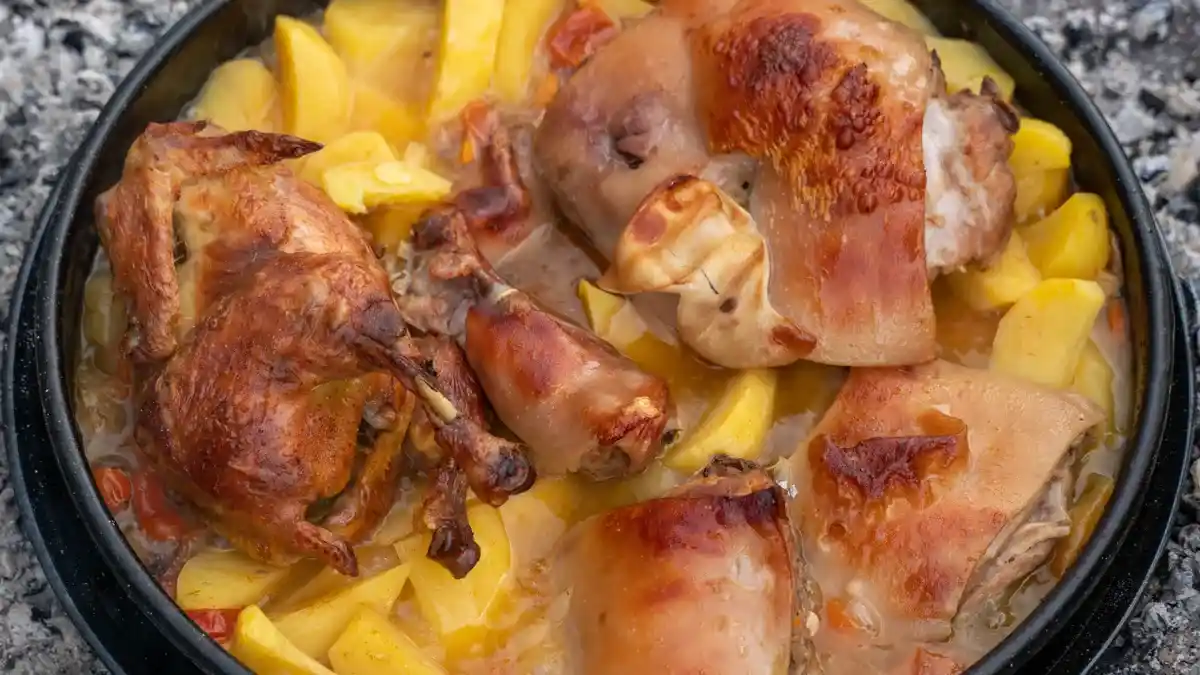
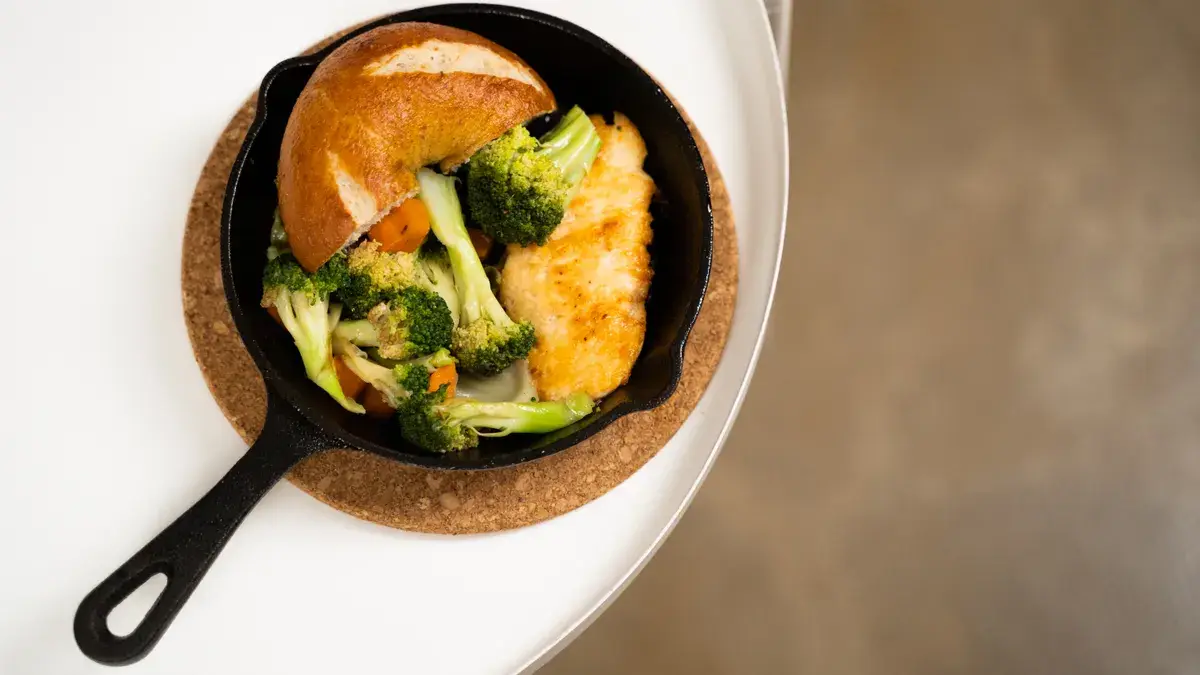
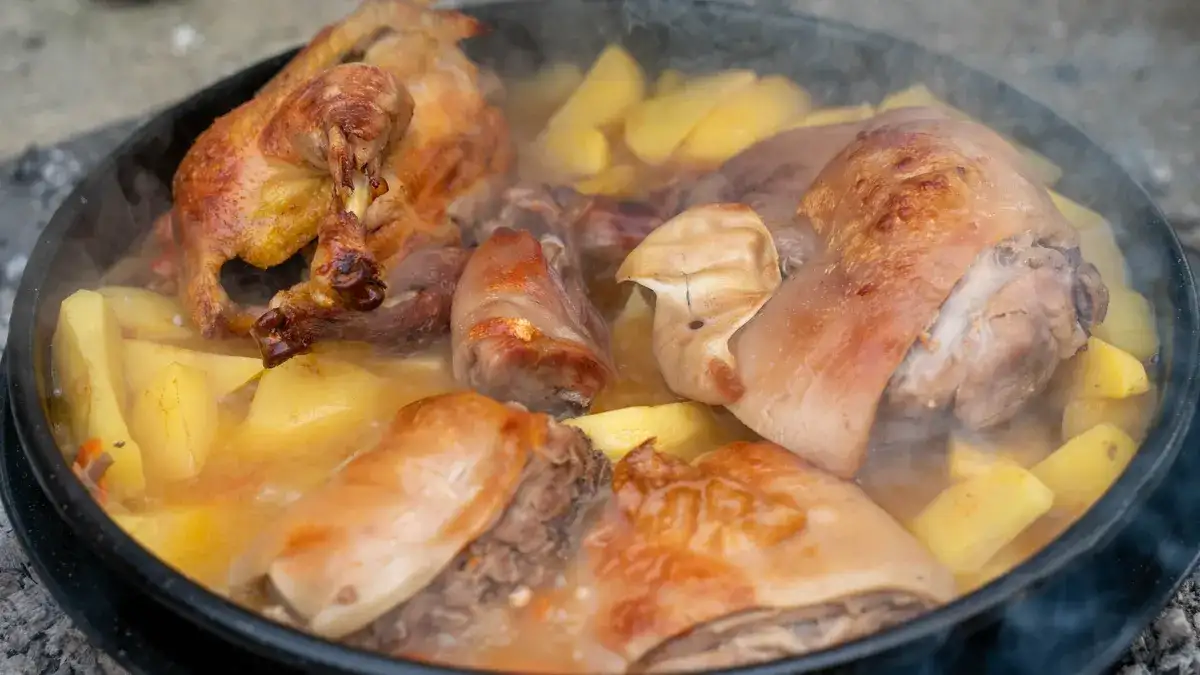
Braising is a good heart-healthy method because it builds tenderness with moisture, not heavy fat. You start with a little liquid, cover the pot, and cook gently until the food softens and the sauce thickens around it.
That matters for readers who want satisfying meals without leaning on salty broth or rich finishes. It also fits heart-healthy cooking methods because it gives you depth from herbs, tomatoes, onions, garlic, and the food itself rather than from butter or cream. For a wider cooking-method overview, this page sits under the heart-healthy cooking methods hub.
Braising is not the right choice if you want crisp skin or browned edges on every bite. It is also a poor fit for quick meals that need to be done in 15 minutes. The trade-off is clear: you give up crunch and speed, but you get tender texture and a sauce that carries flavor into every bite.
Which foods are best for braising?
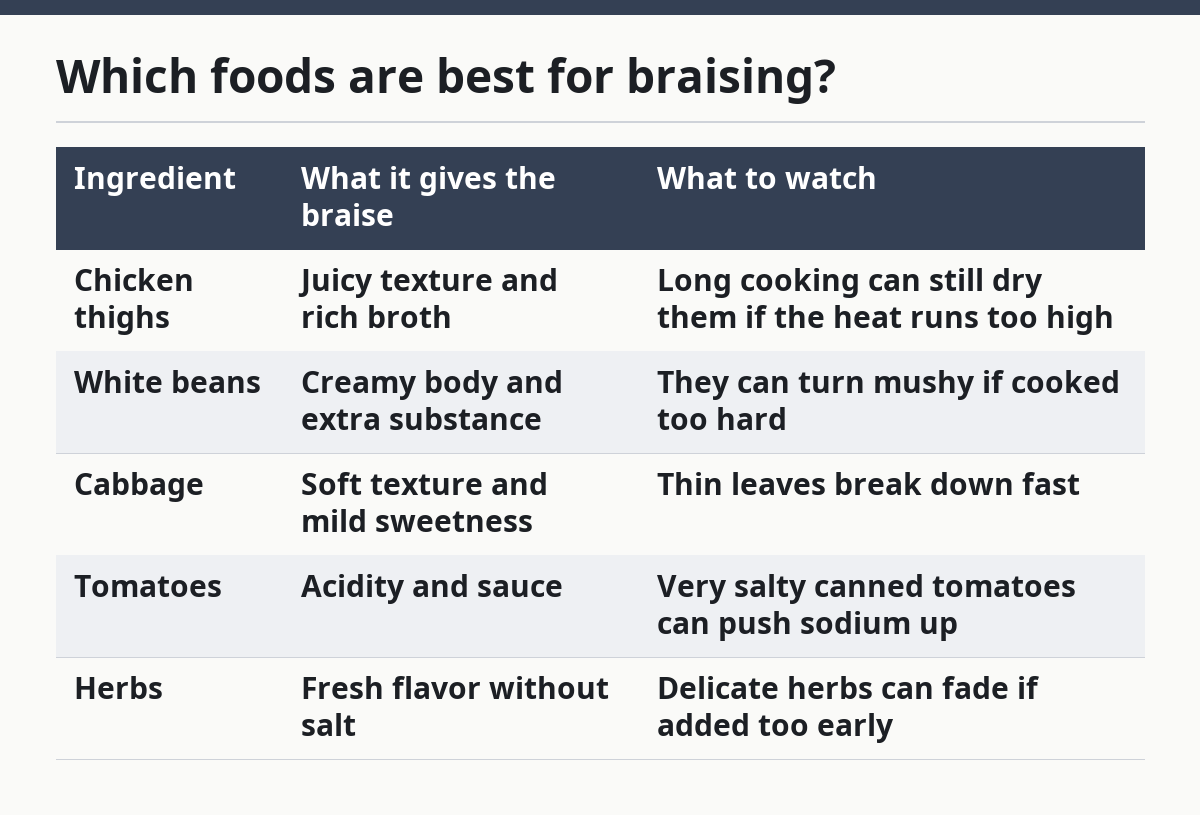
Braising often works well with chicken thighs, white beans, cabbage, tomatoes, and herbs because they hold up to long, gentle cooking. They soften without falling apart too early, and each one adds something different to the pot.
Chicken thighs are a strong choice because they stay moist better than many lean cuts. White beans bring body to the sauce and make the meal feel more complete. Cabbage turns sweet and soft, tomatoes give acidity and moisture, and herbs keep the dish from tasting flat. For more on choosing ingredients, see how to build flavor with herbs and how to cook beans.
A simple way to think about it is below:
| Ingredient | What it gives the braise | What to watch |
|---|---|---|
| Chicken thighs | Juicy texture and rich broth | Long cooking can still dry them if the heat runs too high |
| White beans | Creamy body and extra substance | They can turn mushy if cooked too hard |
| Cabbage | Soft texture and mild sweetness | Thin leaves break down fast |
| Tomatoes | Acidity and sauce | Very salty canned tomatoes can push sodium up |
| Herbs | Fresh flavor without salt | Delicate herbs can fade if added too early |
I would choose braising for sturdy ingredients that need time, not for delicate fish or thin vegetables that cook in minutes. That is where the method stops making sense.
How do you braise heart-healthy meals for tender texture?
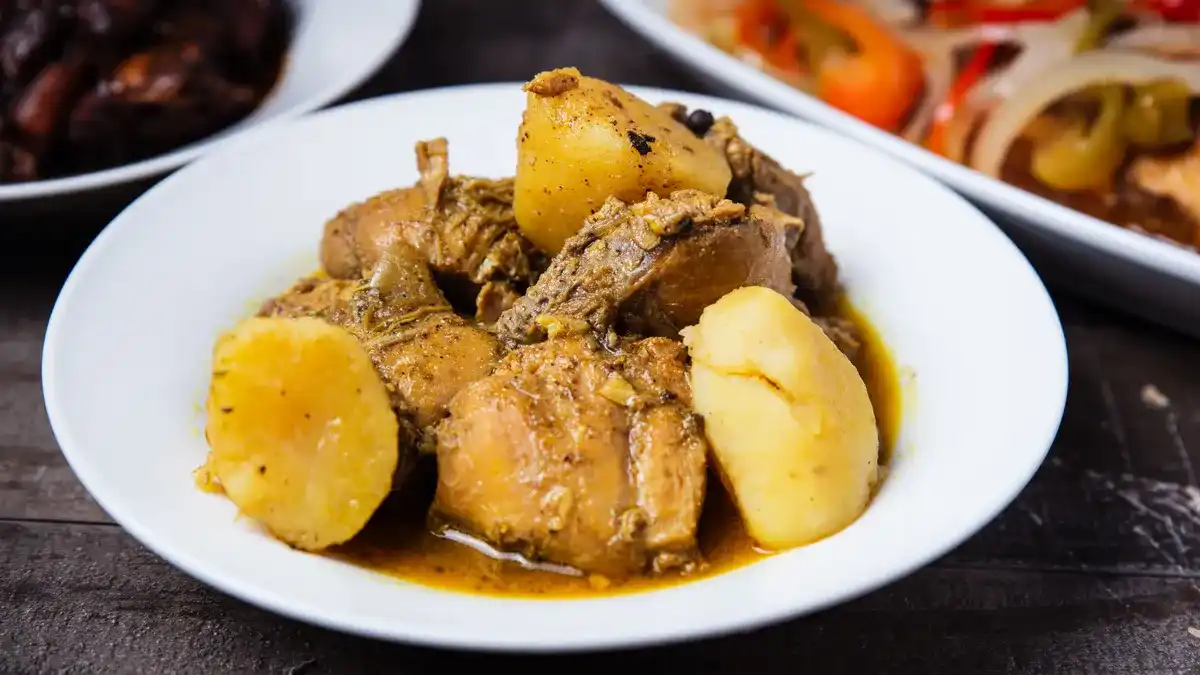
You braise heart-healthy meals for tender texture by using a covered pot, a low-sodium liquid, and slow simmering so the food cooks through without drying out. The process is simple, but the order matters because each step affects tenderness.
- Choose a heavy pot with a lid and ingredients such as chicken thighs, white beans, cabbage, tomatoes, and herbs. A Dutch oven or similar covered pot helps hold steady heat and moisture.
- Add a small amount of low-sodium liquid, such as water, unsalted stock, or tomatoes with their juices. The liquid should come partway up the food, not cover it.
- Set the pot over low heat and bring it to a gentle simmer, not a hard boil. Slow bubbles protect the texture and keep lean cuts from tightening.
- Cover the pot tightly and cook until the food yields when pierced with a fork. Chicken thighs soften first, while beans and cabbage need longer for a tender finish.
- Taste the sauce near the end and adjust with herbs, acid from tomatoes, or a small pinch of salt if needed. Finishing at the end gives you control instead of forcing the whole pot to taste salty from the start.
- Rest the pot off the heat for a few minutes before serving. That short pause helps the juices settle and keeps the texture from feeling rushed.
A covered simmer is the heart of the method. If the heat is too high, the outside tightens before the inside softens. If the liquid is too deep, the food turns more like boiling than braising, and the sauce loses the concentrated taste that makes the dish work.
What low-sodium braising liquid works best?
A low-sodium braising liquid works best when it has body, acid, and enough flavor to support the food without relying on salt. Water alone can work, but it usually needs help from tomatoes, onions, garlic, herbs, or a low-sodium stock so the finished dish tastes complete.
This is where many recipes miss the mark. They use a salty broth to do all the work, then the dish tastes flat unless more salt is added at the table. A better path is to build flavor with ingredients that naturally bring taste and moisture, then finish with herbs and a small amount of salt only if the pot truly needs it.
The American Heart Association has guidance on limiting sodium and saturated fat in patterns that support heart health, which is worth keeping in mind when you plan your liquid and finish. The USDA Food Safety and Inspection Service also gives basic safe-cooking guidance for poultry, which matters when chicken thighs are part of the braise. You can read more at the American Heart Association and USDA FSIS.
Here are useful liquid choices for a heart-healthy braise:
- Tomatoes and their juices for body and a bright, savory base.
- Unsalted stock for a mild background note.
- Water plus herbs when the main ingredients already carry flavor.
- White bean cooking liquid if you want extra thickness in a bean-based braise.
The trade-off is simple: the less sodium you pour in at the start, the more you need to rely on smart layering. That is a good trade for heart-healthy meals, but it does ask for a little more attention near the end.
How do you keep chicken thighs tender instead of dry?
You keep chicken thighs tender by cooking them gently, keeping the pot covered, and stopping when they are done rather than pushing them far past that point. Chicken thighs are forgiving, but they still dry out if the heat is too aggressive or the pot boils hard for too long.
The safest texture usually comes from a low simmer and a tight lid. That lets the meat soften in its own juices and the braising liquid without losing moisture to the air. If the sauce is reducing too quickly, lower the heat before the liquid disappears.
Lean cuts need even more care, because they can seize up faster than thighs. If you use a leaner piece in a braise, keep the liquid shallow and the heat low, then check often near the end. A fork should slide in with little resistance, but the meat should still hold together.
A common mistake is treating braising like a race to the finish. If you are cooking for a health condition or specific nutrition goal, consult a registered dietitian or clinician for individualized advice; for safe-cooking basics, the USDA FSIS guidance above is a good starting point. Slow heat is not a delay here; it is the whole point.
What mistakes make braised meals less heart-healthy?
The biggest mistakes are using too much salt, too much liquid, or too high a heat, because each one can ruin both flavor and texture. A salty braise stops being heart-healthy fast, while a boiling pot can make chicken tough and vegetables collapse before they taste good.
Another mistake is skipping herbs and tomatoes and hoping the liquid will taste rich on its own. It usually will not. Braising works best when the sauce gets flavor from the ingredients in the pot, then gets finished with herbs near the end.
Here are the most common problems and what they cost you:
| Mistake | What it costs | Better move |
|---|---|---|
| Using a lot of salted broth | Sodium rises fast | Start with low-sodium liquid and season near the end |
| Boiling instead of simmering | Tough meat and broken vegetables | Keep the heat low enough for gentle bubbles |
| Using too much liquid | Thin sauce and weak flavor | Add only enough to come partway up the food |
| Skipping a lid | Dry meat and evaporating sauce | Use a tight cover for steady moisture |
| Ending too early | Firm texture | Cook until fork-tender, not just warm |
Braising is not a fix for every dinner problem. If you need crisp vegetables or a quick stovetop meal, this method will feel slow and soft by design. That is not a flaw; it is the trade you accept when tender texture matters more than browning.
How do you finish the sauce without adding salt?
You finish the sauce without adding much salt by reducing it gently and using herbs, tomatoes, and the cooking juices already in the pot. A short simmer after the food is tender can thicken the liquid and concentrate flavor without turning the dish heavy.
This last step matters because the sauce is where braised meals often succeed or fail. If it stays thin, the dish tastes watery. If you chase flavor only with salt, the whole point of a heart-healthy braise gets lost.
A better finish is to let the sauce cling to the food rather than pool on the plate. Pull the cooked chicken, beans, or cabbage to one side, simmer the liquid briefly, then spoon it back over the top. Fresh herbs at the end help a lot because they add a bright note that salt often tries to cover.
If you want a practical rule, use salt as the last adjustment, not the starting point. That keeps the braise closer to the food’s natural flavor and makes it easier to keep the meal in a heart-healthy range.
What is braising?
Braising is a method that cooks food slowly in a small amount of liquid with a lid on the pot. The food softens from steady heat and trapped moisture, which is why it works so well for chicken thighs, white beans, cabbage, tomatoes, and herbs.
Which foods are best for braising?
Foods with enough structure and moisture often fit braising well. Chicken thighs, white beans, cabbage, tomatoes, and herbs all work well because they can handle slow cooking and still taste good at the end.
How do you braise without making the dish salty?
Use low-sodium liquid, add herbs and tomatoes for flavor, and season at the end instead of the start. That keeps the pot from tasting flat while still protecting the meal from excess salt.
Can braised meals still be tender if they are low in fat?
Yes, braised meals can still be tender with very little fat because moisture and covered heat do most of the work. The key is gentle simmering, a tight lid, and enough time for the food to soften without boiling hard.
Drafted with AI; not yet reviewed by a person.