Last updated: November 19, 2026
Quick Answer: The best foods to build heart-friendly recipes around are oats, beans, brown rice, salmon, spinach, walnuts, and other vegetables. In this article, Best Foods to Build Heart-Friendly Recipes Around means using a few reliable ingredients to make meals that are filling, varied, and easier to balance. For a practical starting point, aim for 1 high-fiber food, 1 protein, and 1 vegetable in each meal.
Key Takeaways
- Heart-friendly foods can combine fiber, healthy fats, lean protein, and steady energy in one dish.
- Start with one heart-friendly food you already have, then add two more from different groups for fiber, protein, and color.
- Oats are an easy heart-friendly breakfast base because they pair well with fruit, nuts, seeds, and plain dairy or fortified plant milk.
- Beans and brown rice are practical heart-friendly lunch and dinner bases because they turn a few vegetables into a filling meal.
Heart-healthy foods make it easier to cook meals that feel satisfying without piling on saturated fat, refined grains, or empty calories. A practical place to start with Best Foods to Build Heart-Friendly Recipes Around is oats, beans, salmon, spinach, walnuts, and brown rice.
The heart-healthy foods that do the heavy lifting
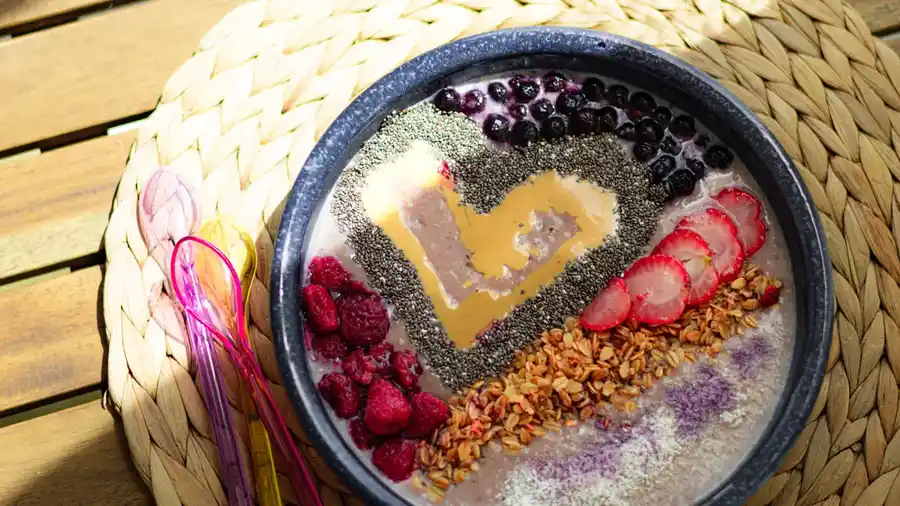
Heart-healthy foods are the ingredients that bring fiber, healthy fats, lean protein, and steady energy into the same dish. They are not magic on their own; they work because they change the structure of a meal. The American Heart Association and Harvard Health both emphasize building meals around minimally processed foods, vegetables, whole grains, and healthy fats. [1][2]
Think in groups:
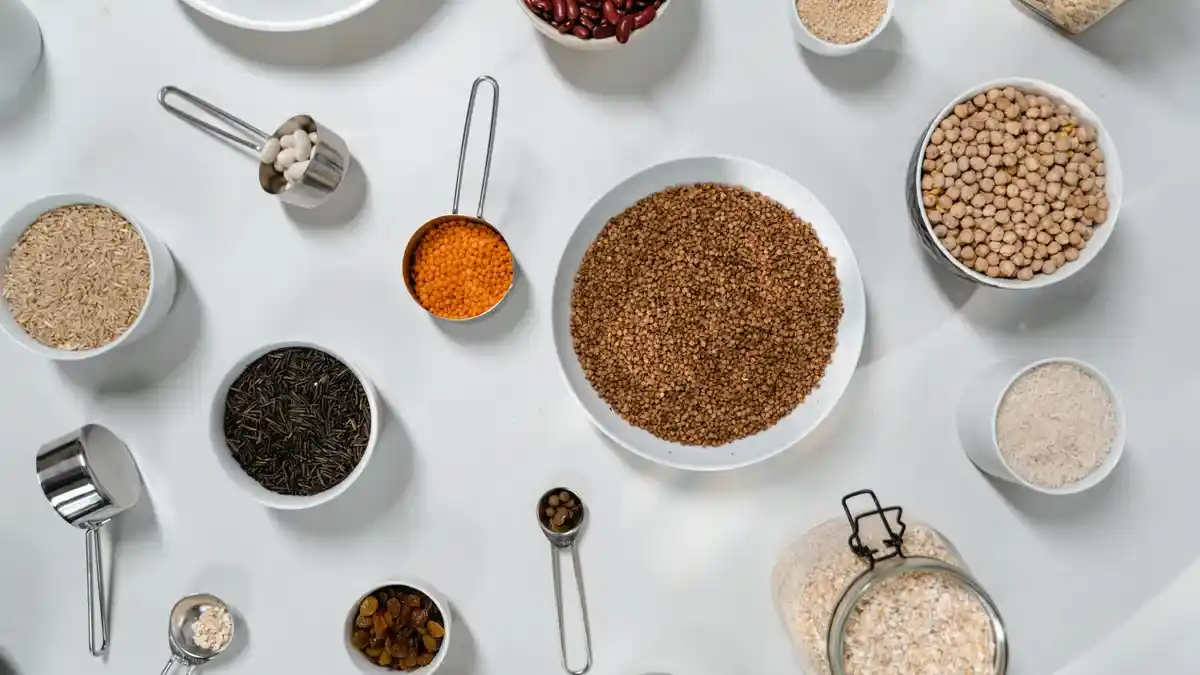
- Fiber-rich foods: oats, beans, lentils, barley, apples, pears
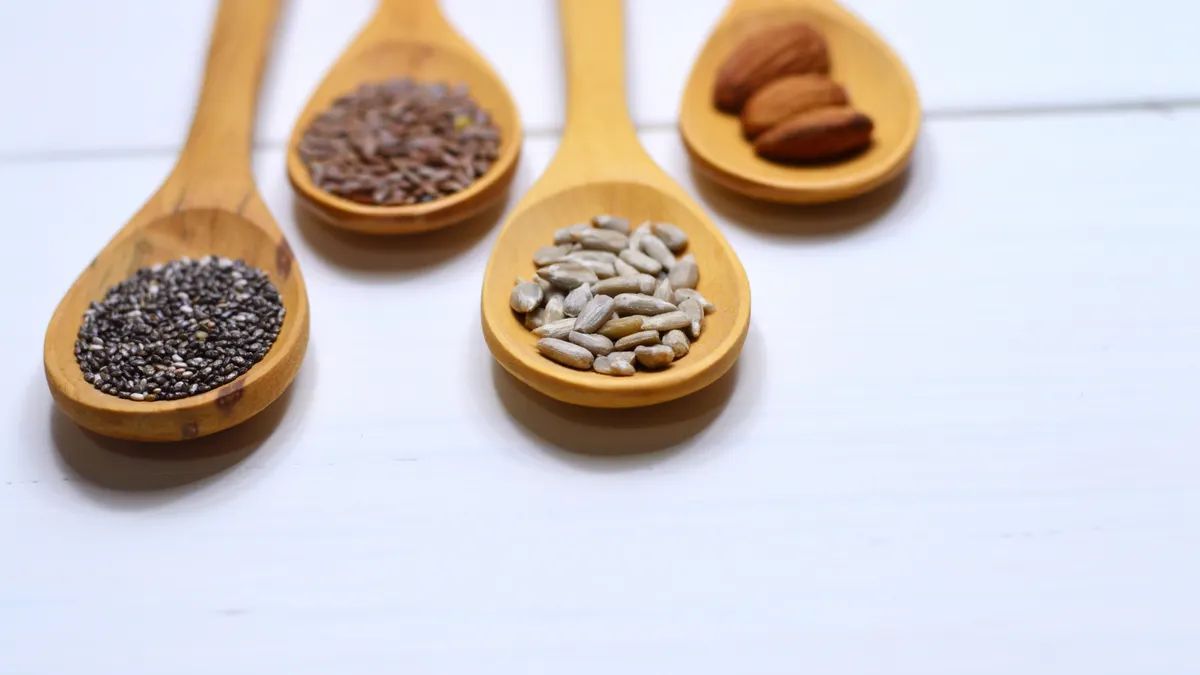
- Healthy fats: walnuts, chia seeds, flaxseed, avocado, olives
- Lean proteins: salmon, sardines, trout, skinless chicken, tofu
- Whole grains: brown rice, oats, quinoa, whole-wheat pasta, barley
- Vegetables: spinach, kale, broccoli, tomatoes, peppers, carrots
- Nuts and seeds: walnuts, almonds, pistachios, pumpkin seeds, sunflower seeds
A useful rule is simple: build each plate around 1 high-fiber food, 1 protein, and 1 vegetable, then add a small amount of fat for flavor. That pattern works for breakfast bowls, grain salads, soups, and sheet-pan dinners.
What matters most is what these foods replace. A bowl of oats with walnuts and fruit is useful because it pushes out a pastry breakfast. Salmon with brown rice and spinach helps more than salmon served beside butter-heavy sides. Beans in a soup change the whole meal’s profile because they add thickness and substance without needing a lot of meat.
The one group that deserves caution is nuts and seeds. They are heart-friendly, but they are calorie-dense and easy to overdo. A small handful is enough for most recipes; a cup is a different story. The same goes for avocado and olive-based dishes: useful, but not the only piece of the plate.
This page is not for someone looking for a strict low-sodium plan, dessert swaps, or cooking oil rankings. It is for the cook who wants a practical list of ingredients that can anchor breakfast, lunch, dinner, and snacks. For more detail on heart-healthy patterns, see the NHLBI’s DASH eating plan and the AHA’s guidance on healthy eating. [3][1]
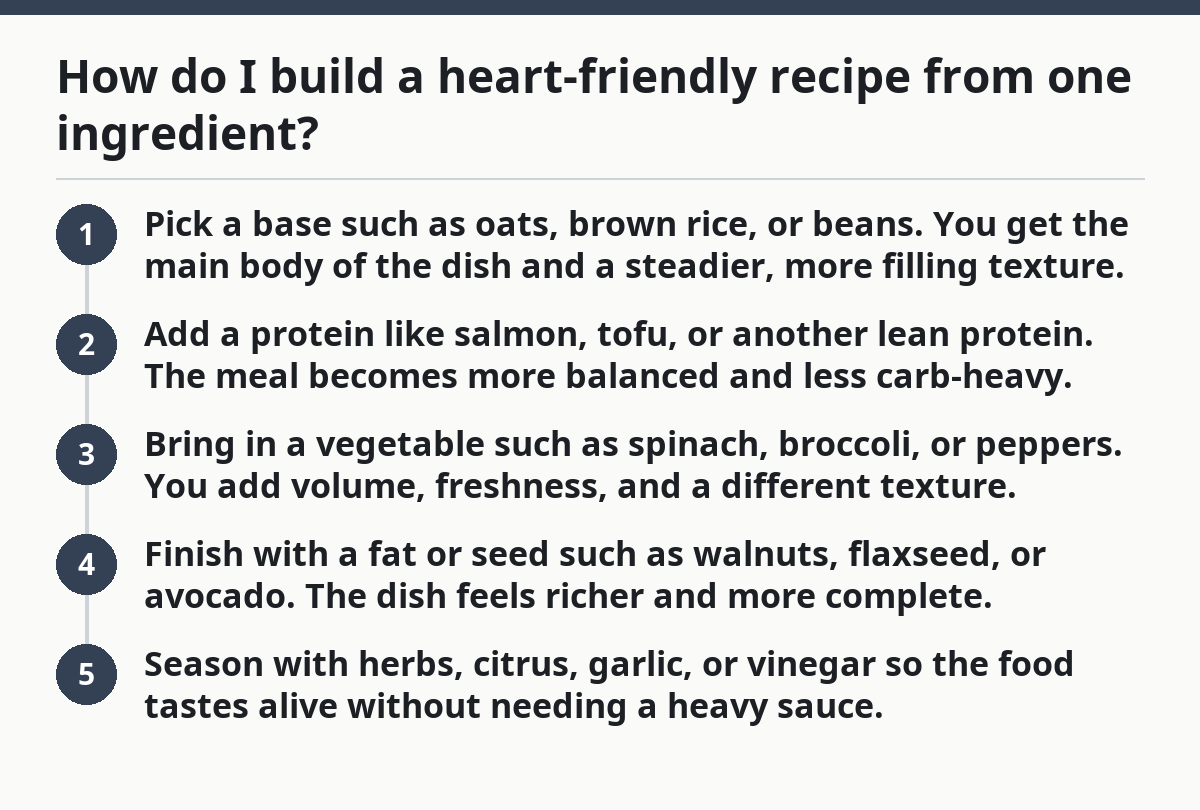
How do I build a heart-friendly recipe from one ingredient?
Start with one heart-friendly food you already have, then add two more from different groups so the finished dish has fiber, protein, and color. That is a practical way to turn a lone ingredient into an actual meal.
Use this simple structure:
- Pick a base such as oats, brown rice, or beans. You get the main body of the dish and a steadier, more filling texture.
- Add a protein like salmon, tofu, or another lean protein. The meal becomes more balanced and less carb-heavy.
- Bring in a vegetable such as spinach, broccoli, or peppers. You add volume, freshness, and a different texture.
- Finish with a fat or seed such as walnuts, flaxseed, or avocado. The dish feels richer and more complete.
- Season with herbs, citrus, garlic, or vinegar so the food tastes alive without needing a heavy sauce.
A few worked combinations show the pattern:
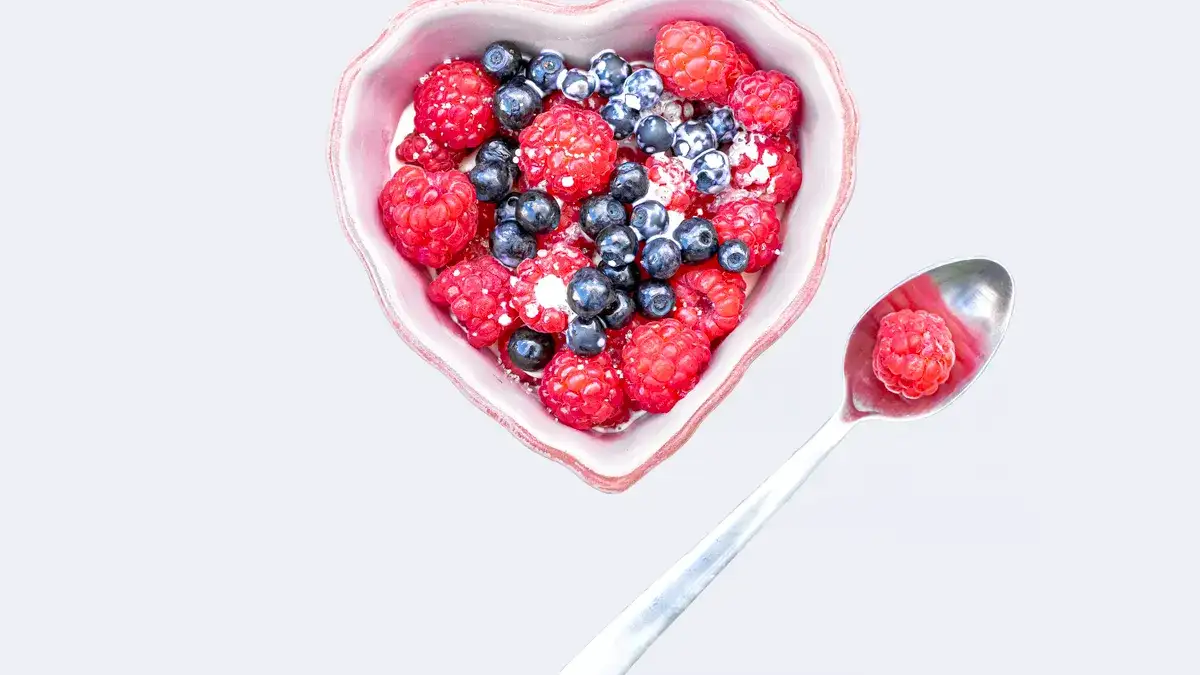
- Breakfast: oats + walnuts + berries + cinnamon
- Lunch: brown rice + beans + spinach + salsa
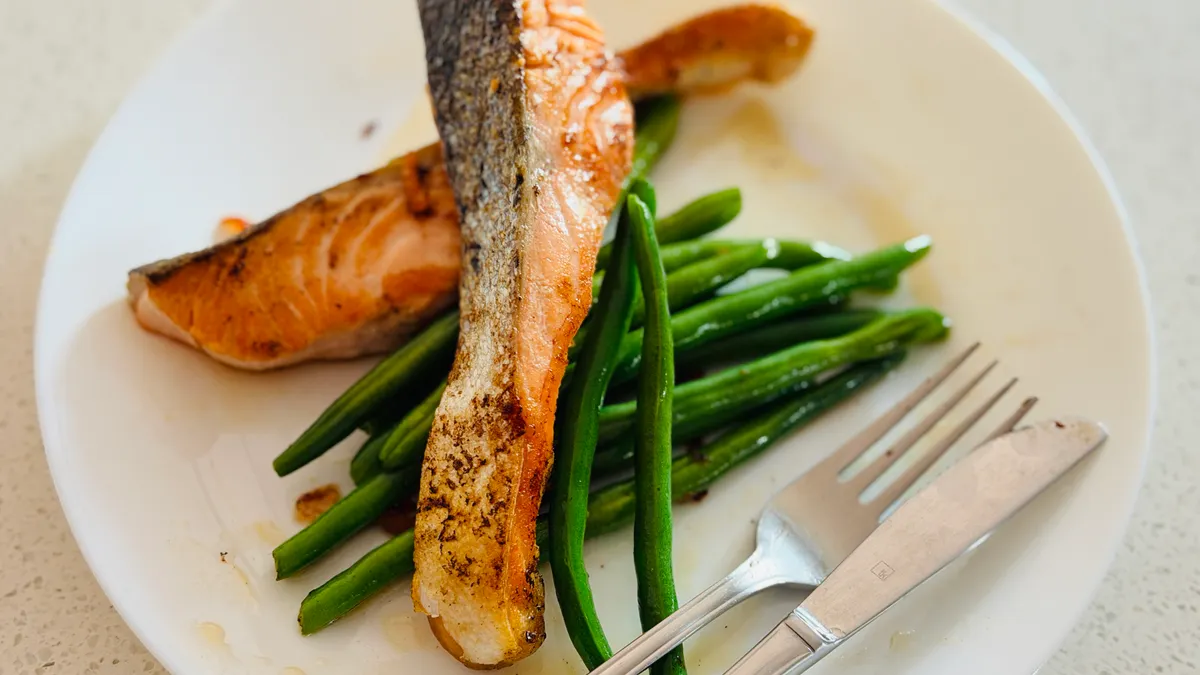
- Dinner: salmon + roasted broccoli + brown rice + lemon
- Snack: apple slices + walnut pieces
- Soup base: beans + tomatoes + spinach + herbs
The point is not to force every meal into the same template. It is to avoid one-note recipes. A spinach omelet, for example, is stronger with a side of oats or whole-grain toast than by itself. A bean bowl is better with a grain and vegetables than with beans alone. A salmon fillet gets more useful as a dinner when it shares the plate with brown rice and a green vegetable.
If you cook for children, older adults, or anyone with smaller appetites, keep portions modest and the flavors familiar. A big pile of raw kale may be too much; sautéed spinach or broccoli often goes over better. If you are managing a medical condition, ask a clinician or dietitian how to fit these foods into your plan. Cleveland Clinic and MedlinePlus both recommend individualized advice when food choices need to match a health condition. [4][5]
Breakfasts that start with oats, fruit, and nuts
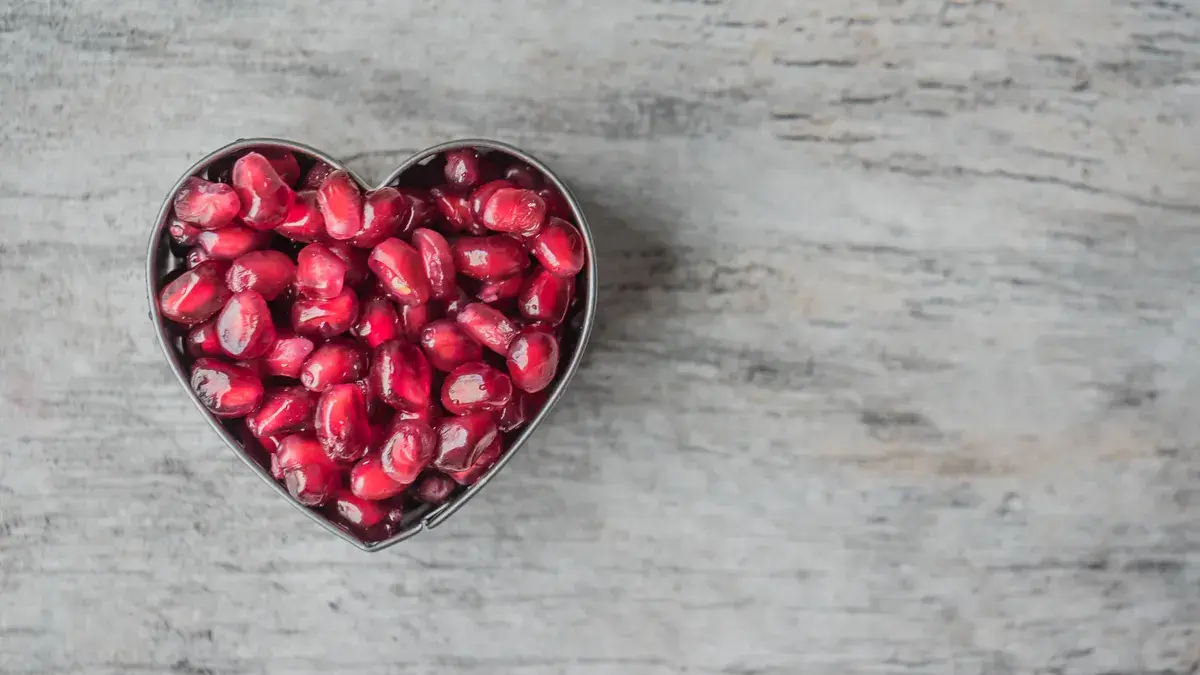
Oats are one of the easiest heart-friendly breakfast anchors because they pair well with fruit, nuts, seeds, and plain dairy or fortified plant milk. A 1-cup bowl can become sweet, savory, or blended into baked recipes without much effort.
Good breakfast builds include:
- Hot oats with walnuts and berries
- Overnight oats with chia seeds and sliced pear
- Savory oats with spinach and a soft egg
- Baked oats with cinnamon, apples, and chopped almonds
- Plain yogurt topped with oats, fruit, and pumpkin seeds
The draw of oats is texture as much as nutrition. They soften into a base that can carry fruit, spices, and a little fat without tasting dry. Rolled oats are the most flexible choice for most home kitchens. Steel-cut oats take longer, usually about 20 to 30 minutes on the stove, and they give a chewier result. Instant oats are faster but tend to turn mushy if you add too much liquid.
A good breakfast recipe usually needs only a few measurements to work:
- Rolled oats: about 1/2 cup dry per serving
- Liquid: about 1 cup water or milk per serving, adjusted for thickness
- Nuts or seeds: 1 to 2 tablespoons
- Fruit: 1/2 to 1 cup
That makes it easy to build breakfast around what is in the pantry. Apples, pears, berries, bananas, and dried fruit all work, though dried fruit is more concentrated and easier to overuse. If you want a more savory route, wilt spinach into oats near the end of cooking and top with an egg. That version is not for people who expect a sweet breakfast, but it works well for someone who wants a warm meal without pastry.
Allergens matter here. Oats are often cross-contact risk foods if the package is not labeled gluten-free, and nuts are a common allergy concern. If nuts are a problem, use seeds such as sunflower or pumpkin seeds instead.
Lunch and dinner recipes built around beans, brown rice, and vegetables
Beans and brown rice are the workhorses of heart-friendly lunches and dinners because they turn a few vegetables into a filling meal. Together, they bring fiber, texture, and staying power without needing a large amount of meat.
A basic bowl formula is easy to repeat:
- 1 cup cooked brown rice
- 1/2 to 1 cup beans
- 1 to 2 cups vegetables
- 1 small amount of healthy fat or seed
- 1 acid, such as lemon juice or vinegar
- Herbs and spices for flavor
That formula scales well into burrito bowls, grain salads, soup, stuffed peppers, and skillet dinners. Beans can be black beans, chickpeas, cannellini beans, kidney beans, or lentils. Brown rice gives a nuttier, firmer base than white rice, and it stands up well to salsa, roasted vegetables, and leafy greens.
Spinach is especially useful because it disappears into hot food fast. Stir a few handfuls into beans and rice at the end of cooking and it wilts in about 1 to 2 minutes. Broccoli, zucchini, peppers, and tomatoes all play well in the same bowl. If you want more richness, add avocado or a spoonful of tahini; if you want more crunch, add pumpkin seeds or chopped walnuts.
A salmon dinner follows the same logic, just with a different protein. Bake or pan-sear a fillet, then pair it with brown rice and a green vegetable. Salmon brings a stronger flavor than many lean proteins, so it benefits from lemon, dill, garlic, mustard, or black pepper. Skinless chicken breast and tofu can fill the same role when fish is not the right choice.
The trade-off is time. Beans cooked from dry need planning, and brown rice can take longer than white rice. That is the price of using sturdier whole foods. If a weeknight is too rushed for both, cook a larger batch of brown rice once and use it across 2 or 3 meals. If canned beans are easier, rinse them well and move on.
Which healthy fats and proteins actually improve the meal?
Healthy fats and lean proteins improve a recipe when they make the food more satisfying without turning it into a heavy plate. That usually means salmon, walnuts, seeds, tofu, beans, and smaller amounts of avocado or olive-based additions.
Salmon earns its place because it is flavorful, cooks quickly, and fits into many recipe styles. A fillet can be roasted in about 12 to 15 minutes at 400°F / 200°C, depending on thickness, and it works with grain bowls, salads, tacos, or roasted vegetables. It is not ideal for someone who hates fishy flavors or wants a budget meal every night, but it is a strong centerpiece when fish is on the menu.
Walnuts are one of the easiest add-ons for both sweet and savory dishes. Sprinkle them over oats, fold them into salads, or chop them into grain bowls. Their downside is texture for anyone who dislikes crunch, and they are easy to overdo if they are used as a garnish and a snack. Almonds, pistachios, chia seeds, flaxseed, and pumpkin seeds can fill similar roles.
For protein, beans and lentils are the most practical daily options because they bring both fiber and protein in one food. Tofu is also useful because it absorbs seasoning well and works in stir-fries, bowls, and soups. Skinless chicken breast can fit a heart-friendly recipe when the rest of the plate is built from vegetables and whole grains, but it should not be the whole story.
The biggest mistake is using protein as the main event and everything else as an afterthought. A salmon fillet beside a mound of creamy potatoes and little else does less for the meal than salmon with brown rice and spinach. A handful of walnuts scattered onto a refined cereal does not transform breakfast. The supporting ingredients matter.
If you need a simple test, ask whether the recipe has at least one ingredient from each of these three groups: a whole grain or bean, a vegetable, and a protein or healthy fat. If not, the dish probably needs one more building block.
Common recipe mistakes that make heart-friendly food less useful
The most common mistake is treating a heart-friendly ingredient like a garnish instead of the base of the meal. That wastes the point of the food and leaves the recipe unbalanced. If you are managing blood pressure, cholesterol, diabetes, kidney disease, or another condition, consult a clinician or dietitian before making major diet changes; Mayo Clinic’s nutrition guidance is one reliable place to start. [6]
The usual missteps are predictable:
- Using too little fiber-rich food. A salad with a few spinach leaves and a lot of cheese or creamy dressing looks healthy but does not eat like a real heart-friendly meal.
- Overloading nuts and seeds. A small handful helps; a large pile can overwhelm the dish and make it too rich.
- Skipping vegetables. Beans and brown rice can carry a meal, but they should still share space with something green or brightly colored.
- Choosing refined grains by default. White bread, white rice, and regular pasta can fit sometimes, but they make the meal less sturdy than whole grains do.
- Making salmon or chicken the only healthy move. A lean protein does not rescue a plate built around buttered sides and processed sauces.
Each mistake has a cost. Too little fiber means the recipe is less filling. Too many nuts or oily add-ins can make the meal feel heavy. Skipping vegetables removes volume and freshness. Using refined grains too often crowds out the foods that usually make heart-friendly recipes work best.
The fix is usually small. Add 1 cup of vegetables, swap in brown rice, stir beans into soup, or use walnuts as a topping instead of a main ingredient. In a sandwich, add spinach and bean spread. In a bowl, let the grains and vegetables take up most of the space. In breakfast, choose oats before reaching for pastry.
This is not a page about strict low-sodium cooking, but salt still matters in practice. A bowl of beans can become less heart-friendly if the seasoning leans heavily on processed sauces, salty cheese, or packaged add-ins. Use herbs, citrus, garlic, onion, and vinegar to carry more of the flavor.
What ingredients should I keep stocked for heart-healthy cooking?
Keep oats, beans, brown rice, spinach, salmon, walnuts, and a few versatile vegetables on hand, then build meals from there. That small set covers breakfast, lunch, dinner, and snacks without forcing you into complicated recipes.
A practical pantry and fridge list looks like this:
- Pantry: rolled oats, brown rice, canned beans, canned tomatoes, walnuts, chia seeds, flaxseed, pumpkin seeds
- Fridge: spinach, broccoli, peppers, carrots, lemons, plain yogurt, eggs, tofu
- Freezer: salmon portions, mixed vegetables, berries, edamame
That list works because it covers several functions at once. Oats and brown rice are the steady bases. Beans handle quick lunches and soups. Spinach and other vegetables add volume fast. Salmon gives a simple dinner protein. Walnuts and seeds add texture and fat without requiring a separate sauce. For meal-planning ideas, the USDA MyPlate and Harvard Nutrition Source are useful external references. [7][2]
A stocked kitchen also helps with decision fatigue. If the only dinner ingredients are pasta, cheese, and crackers, the easy choice is not the heart-friendliest one. If the kitchen has brown rice, canned beans, spinach, and frozen salmon, a good meal is only a few steps away. A lemon on the counter can matter more than a complicated recipe app.
There are limits, though. A stocked pantry does not mean every meal should be built around the same bowl. Repeating oats for breakfast and beans for lunch is fine. Eating the same texture at every meal gets old quickly. Rotate between hot cereal, grain bowls, soups, salads, and simple roasted plates so the food stays appealing.
If a food is listed here but you cannot eat it because of allergies, swap it with an equivalent from the same group. Use seeds instead of nuts, tofu instead of fish, or another whole grain instead of brown rice. The structure matters more than the exact ingredient.
Drafted with AI; not yet reviewed by a person.