Last updated: November 19, 2026
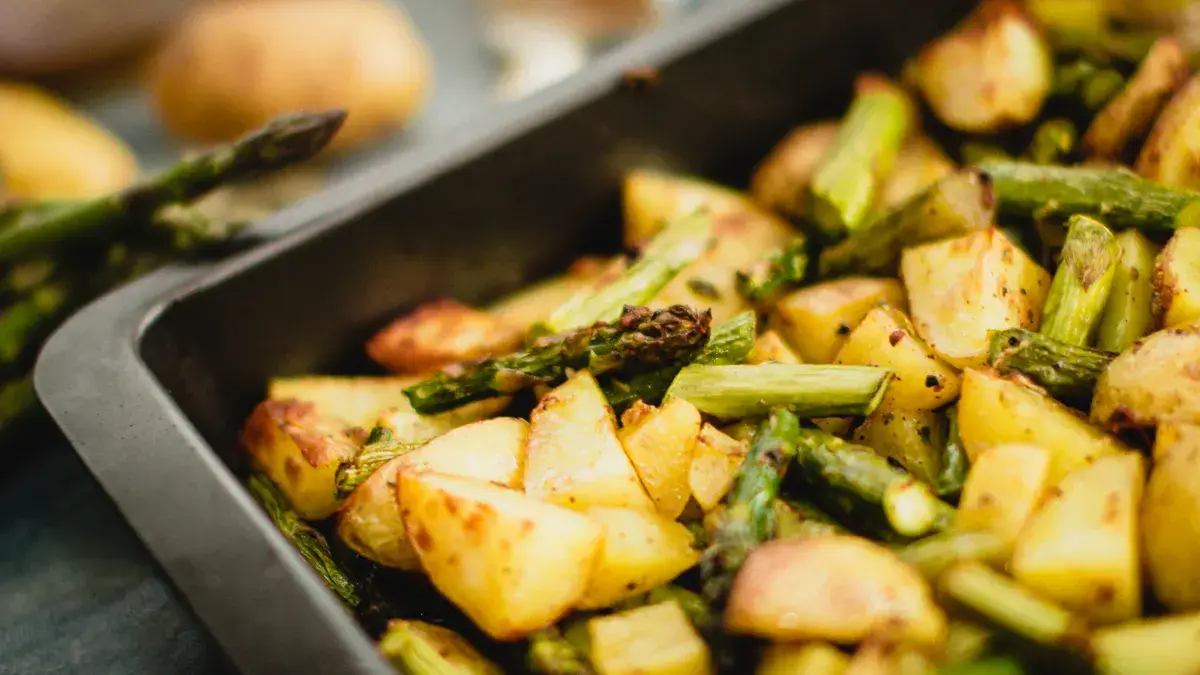
Quick answer: You can roast vegetables without extra oil in about 15 to 35 minutes at 425°F and still get browned edges, good texture, and easy pan release. The trick in How to Roast Vegetables Without Extra Oil is to use a hot sheet pan, dry vegetables well, and choose a lining that helps release without trapping steam.
Key takeaways
- Dry vegetables brown better than wet ones, especially on a hot pan.
- Parchment paper helps with sticking, but bare metal gives stronger browning.
- Cut dense vegetables smaller than soft ones so everything finishes at the same time.
- Salt, herbs, garlic powder, paprika, and pepper can carry flavor without oil.
- Zucchini, brussels sprouts, sweet potatoes, bell peppers, and red onions all roast well with the same basic method, but they do not need the same cut size.

What makes roasted vegetables brown without oil?
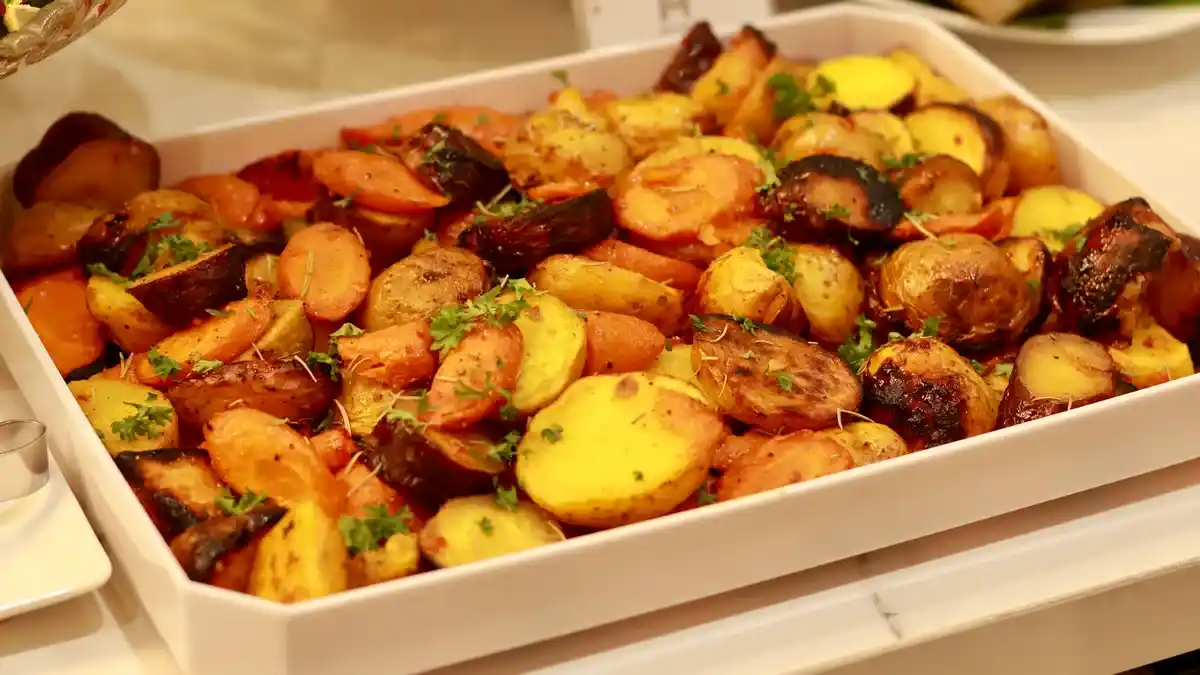
Roasted vegetables brown without oil because dry heat, not fat, does the work. A hot oven and enough surface contact let the natural sugars and starches caramelize, while a dry sheet pan keeps the vegetables from steaming.
The biggest mistake is crowding the pan. If zucchini, bell peppers, and red onions are piled up, they give off moisture faster than the oven can evaporate it. That turns the tray into a steamer, not a roaster.
The second mistake is starting with wet vegetables. After washing, even a little water on the surface slows browning. A clean kitchen towel or paper towel takes less than a minute and pays off on the pan.
This method is a good fit for weeknight sides, grain bowls, and meal prep. It is less suited to a glossy glaze or very soft, saucy vegetables because oil-free roasting gives a drier finish. If you want a broader overview of the topic, the related guide on heart-healthy cooking methods fits beside this one.
Which vegetables roast best with no oil?
Vegetables with either a firm shape or some natural sugars roast well with no oil. Brussels sprouts, sweet potatoes, bell peppers, red onions, and zucchini all work, but they need different cuts and timing.
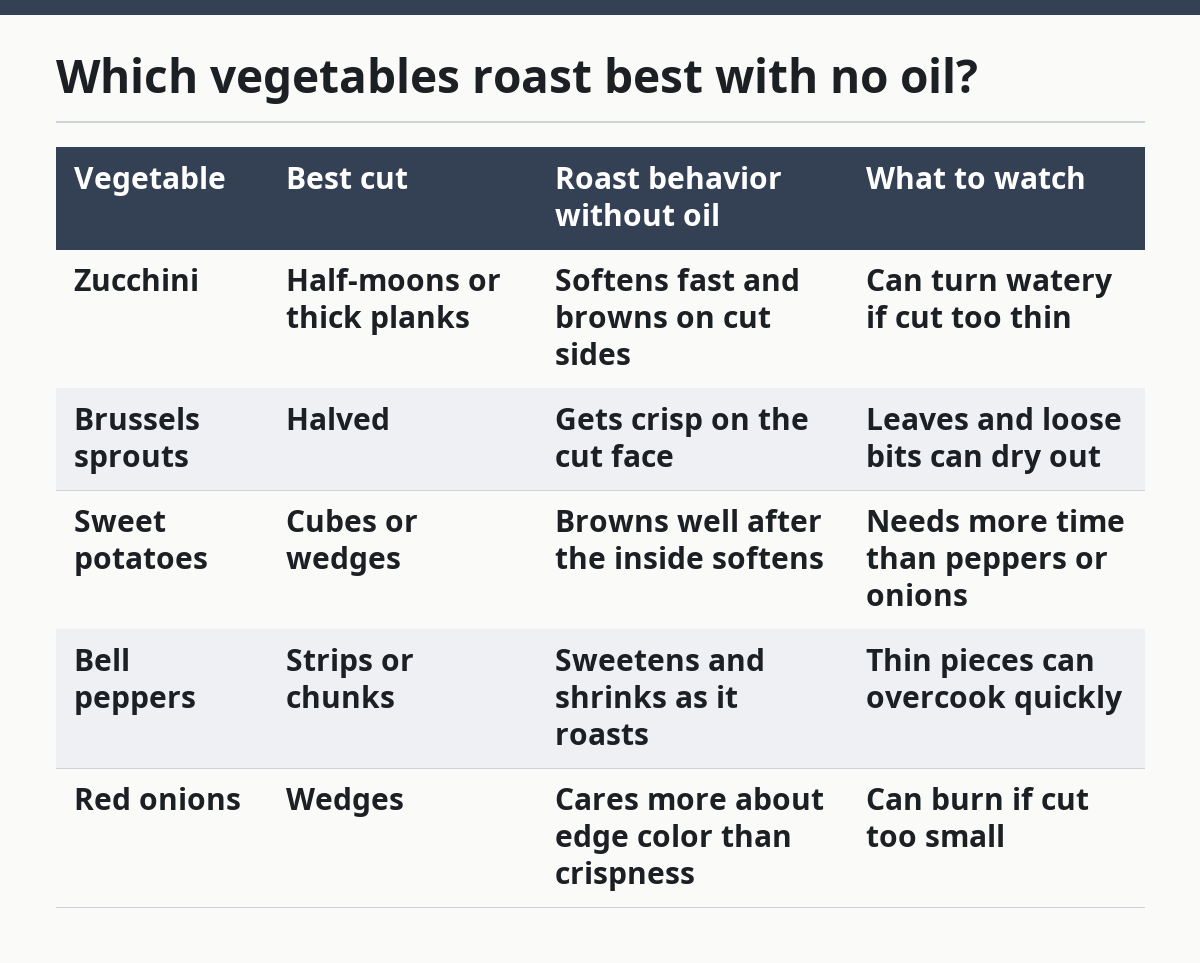
Here is a simple comparison for the vegetables named on this page:
| Vegetable | Best cut | Roast behavior without oil | What to watch |
|---|---|---|---|
| Zucchini | Half-moons or thick planks | Softens fast and browns on cut sides | Can turn watery if cut too thin |
| Brussels sprouts | Halved | Gets crisp on the cut face | Leaves and loose bits can dry out |
| Sweet potatoes | Cubes or wedges | Browns well after the inside softens | Needs more time than peppers or onions |
| Bell peppers | Strips or chunks | Sweetens and shrinks as it roasts | Thin pieces can overcook quickly |
| Red onions | Wedges | Cares more about edge color than crispness | Can burn if cut too small |
Sweet potatoes usually need the longest time of this group, often around 25 to 35 minutes depending on cut size. Bell peppers and red onions may finish sooner, often in about 15 to 25 minutes. Zucchini can go from tender to limp quickly, so it should be cut a little thicker than a coin.
If a pan has all five vegetables at once, a practical approach is to cut the sweet potatoes small and the zucchini large. That helps the tray finish more evenly.
How do you roast vegetables without extra oil?
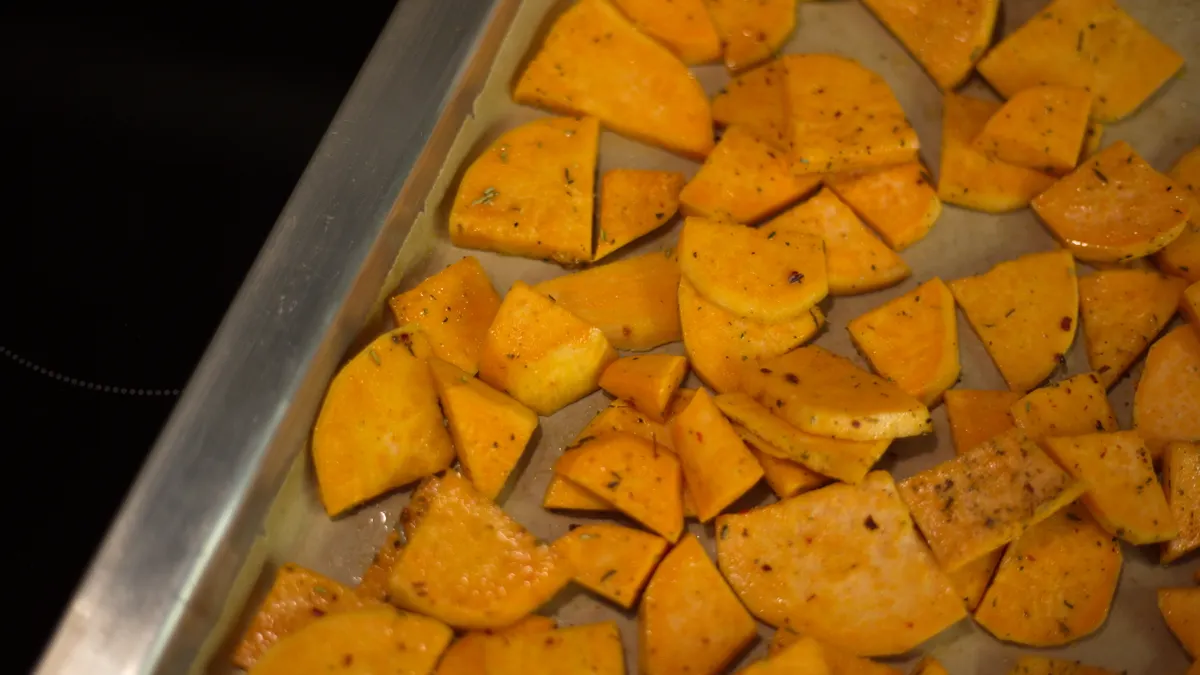
You roast vegetables without extra oil by using a hot oven, a dry pan, and enough space for air to move around the food. The steps below keep the method simple and repeatable.
-
Preheat the oven to a hot setting, about 425°F, and place a sheet pan inside if you want stronger browning. A hot pan starts searing the cut faces as soon as they touch metal.
-
Line the sheet pan with parchment paper if sticking is your main concern. Parchment helps with release, while bare metal usually gives the deepest browning.
-
Dry the vegetables with a towel after washing, then cut them into even pieces. Uniform size matters more than exact shape because it keeps sweet potatoes, brussels sprouts, and red onions on the same timeline.
-
Season the bowl with salt, pepper, garlic powder, paprika, or dried herbs before the vegetables hit the pan. A dry seasoning blend sticks well enough to the cut surface without oil.
-
Spread the vegetables in a single layer with space between pieces. If the pan looks crowded, use two pans instead of one so the vegetables roast instead of steam.
-
Roast the pan for 15 to 35 minutes, depending on the vegetable, and turn the pieces once if the pan browns unevenly. The goal is browned edges, not char on every side.
-
Finish the tray with another pinch of seasoning after roasting if the flavor needs a lift. Warm vegetables take on spice and herbs better than cold ones.
This method works best when the vegetables can touch the pan without sitting in a puddle. It is less reliable for very wet mixtures, because tomatoes or mushrooms can flood the tray and block browning. If you are comparing methods, sheet pan roasting and oven roasted vegetables use the same basic logic.
What pan setup works best?
A good pan setup for oil-free roasted vegetables is a rimmed sheet pan with parchment paper or bare metal, plus enough space for air to move around the food. A crowded baking dish slows browning and gives you soft edges instead of roasted ones.
The choice between parchment and bare pan depends on the result you want. Parchment is kinder to sticky vegetables and makes cleanup easier. Bare metal usually browns more aggressively because the food sits directly on the hot surface.
| Setup | Best use | Main benefit | Main drawback |
|---|---|---|---|
| Parchment-lined sheet pan | Easy release and cleanup | Less sticking | Slightly softer browning |
| Bare sheet pan | Deep browning | Better contact with metal | More sticking risk |
| Overcrowded pan | None, really | Fits more food | Steams vegetables and weakens color |
A rimmed sheet pan matters because vegetables can shift while roasting. A flat tray is less forgiving if juices run from red onions or zucchini. If the pan is small, split the batch.
Parchment paper is especially useful for brussels sprouts and sweet potatoes because both can stick when cut sides caramelize. Bare metal can still work well if the tray is preheated and the vegetables are dry. The trade-off is simple: easier release with parchment, better browning with metal.
How do you season them without oil?
You season oil-free roasted vegetables with a dry spice mix before roasting, then add a final sprinkle after they come out of the oven. A simple blend is salt, black pepper, garlic powder, paprika, and dried herbs such as thyme or oregano.
A dry seasoning blend sticks best when the vegetables are not wet. Toss the cut pieces in a bowl, not directly on the sheet pan, so the seasoning covers all sides instead of sitting in a pile. For sweet potatoes and brussels sprouts, paprika adds color and a roasted taste. For bell peppers and red onions, garlic powder and pepper are often enough.
If the vegetables seem bland after roasting, the problem is usually not the spice choice. It is usually too little browning. A tray that roasts for 12 minutes too short will taste flat even if the seasoning is good.
Here is a practical way to think about flavor without oil:
- Salt sharpens the vegetable’s own flavor.
- Pepper gives bite.
- Garlic powder adds a savory note without wet sauce.
- Paprika adds color and a little sweetness.
- Dried herbs work best on sturdier vegetables like brussels sprouts and sweet potatoes.
This page is about roasting, not about low-salt cooking, so it does not replace a separate salt-free method. A small amount of seasoning goes a long way because roasting concentrates flavor as water leaves the pan.
For a broader food-and-health reference, the Harvard T.H. Chan Nutrition Source and the American Heart Association both publish general guidance on healthy fats and cooking choices.
What mistakes stop browning?
The mistakes that stop browning are too much moisture, too little space, and too much time before the vegetables hit the oven. Each one costs you color, texture, or both.
Wet vegetables are the most common problem. Water on the surface has to cook off before browning starts, so the vegetables soften first and color later. Dry them well after washing, especially zucchini and bell peppers.
Crowding is the second problem. When brussels sprouts or sweet potatoes touch in a thick layer, steam gets trapped between them. The fix is plain: use a larger pan or two pans and keep the vegetables in a single layer.
Cutting everything the same size is the third trap. A sweet potato cube and a red onion wedge do not roast at the same speed if they are the same width on paper. Sweet potatoes need more time, while onions can scorch if left in long after they have softened.
A few other mistakes cost the meal less dramatically, but still matter:
- Skipping the preheat slows browning by several minutes.
- Using too much parchment overlap can block direct contact with the pan.
- Pulling the tray too early leaves pale edges and a starchy taste in sweet potatoes.
- Leaving the vegetables plain after roasting can make the dish taste flat even when the color is right.
The honest limitation here is that oil-free roasting will not mimic an oil-rich roast exactly. The vegetables will taste clean and concentrated, but the finish will be drier. That is useful for a heart-healthy weeknight side, less useful if the goal is a rich, glossy roast.
How do you know when they are done?
You know roasted vegetables are done when the edges are browned, the centers are tender, and the pan smells sweet rather than raw. That usually happens in the 15 to 35 minute range, depending on the vegetable and cut size.
Zucchini is often done first, because it softens quickly. Bell peppers and red onions usually land in the middle. Sweet potatoes and brussels sprouts often need the most time, especially if the pieces are large.
Look for these signs instead of relying on color alone:
- The cut sides show brown patches, not just light gold.
- A fork slides into sweet potatoes without resistance.
- Brussels sprouts have darker outer leaves and a tender center.
- Bell peppers have softened but still hold shape.
- Red onions have collapsed slightly at the edges.
If the pan looks dry but not browned, give it a few more minutes. If the vegetables are browned but still hard in the middle, the pieces were cut too large. In that case, one fix for next time is smaller, more even cuts.
This is also where sheet pan setup matters most. A lined pan may release better, but a bare pan often gives the strongest caramelized spots. The better choice depends on whether release or browning matters more for the meal in front of you.
Can you roast vegetables without oil?
Yes, you can roast vegetables without oil and still get good texture, color, and flavor. The key is dry vegetables, a hot oven around 425°F, and enough room on the sheet pan for air to move.
Common vegetables for this method are brussels sprouts, sweet potatoes, bell peppers, red onions, and zucchini. They all roast well, but they do not all roast at the same speed, so a mixed pan needs careful cutting.
How do you keep vegetables from sticking to the pan?
Use parchment paper, a preheated pan, or both if sticking is a problem. Dry vegetables stick less than wet ones, and a single layer gives each piece less chance to glue itself to the pan. Bare metal browns better, but parchment gives easier release.
What temperatures work best for roasting vegetables?
A hot oven around 425°F works best for most oil-free roasted vegetables. That temperature gives browning without drying out the food too fast. If the pieces are very small or thin, check early so they do not overcook.
What if I want more browning without oil?
Use a bare sheet pan, keep the vegetables dry, and avoid crowding. Browning happens when moisture leaves the surface quickly, so a hot pan and open space matter more than extra ingredients. If the tray still looks pale, give it more time instead of adding oil mid-roast.
Drafted with AI; not yet reviewed by a person.