Last updated: November 20, 2026
Quick answer: Use 1 baking dish to build a heart-healthy meal with lean protein, vegetables, beans, and a modest starch, then bake with enough moisture to cook everything through without relying on salty sauces or heavy fat. In How to Bake Heart-Healthy Meals in One Dish, the simplest version uses fish, tomatoes, brown rice, and vegetables in the same dish, with the oven doing most of the work. For a broader overview of heart-smart meal building, see heart-healthy cooking methods.
Key takeaways
- Build the dish around one main protein, such as fish or beans, then add vegetables and a whole grain to finish the meal.
- Start the densest ingredients first and give the pan a little liquid so the food cooks evenly instead of drying out.
- Use covered baking for the first part of cooking, then uncover near the end if you want light browning.
- Keep sodium down by relying on herbs, garlic, lemon, tomato, and onion instead of salty sauces.
- One-dish baking works best when you plan the timing before the pan goes in the oven.
What makes a one-dish meal heart-healthy?
A heart-healthy one-dish meal uses vegetables, beans, fish, and whole grains while keeping salt and saturated fat low. That means the pan holds the whole dinner, but the ingredients still do the work of a balanced plate.
A generic baked casserole often leans on cream, cheese, or packaged sauce. This method skips that pattern. Instead, it uses tomatoes for moisture, brown rice for a sturdy base, and fish or beans for protein. If a recipe needs more richness, a spoonful of olive oil or a handful of chopped nuts can add flavor without turning the dish heavy. The American Heart Association offers similar advice on limiting sodium and saturated fat in everyday meals.
This approach may not suit people who want a crisp, fried finish or a very saucy pasta bake. It also takes some planning, because one-dish meals work best when the fastest-cooking food and the slowest-cooking food can share the oven for the same 20 to 40 minutes. That timing is the difference between a tender dinner and a pan of mush.
For a broader framework, the guide to heart-healthy cooking methods can help you see where baking fits among other kitchen techniques.
How do you build the dish from the bottom up?
You build the dish from the bottom up by putting the slowest-cooking ingredients on the bottom, the quick-cooking ingredients on top, and a little liquid around the edges. That order helps the whole pan finish at the same time.
Use this as the core structure:
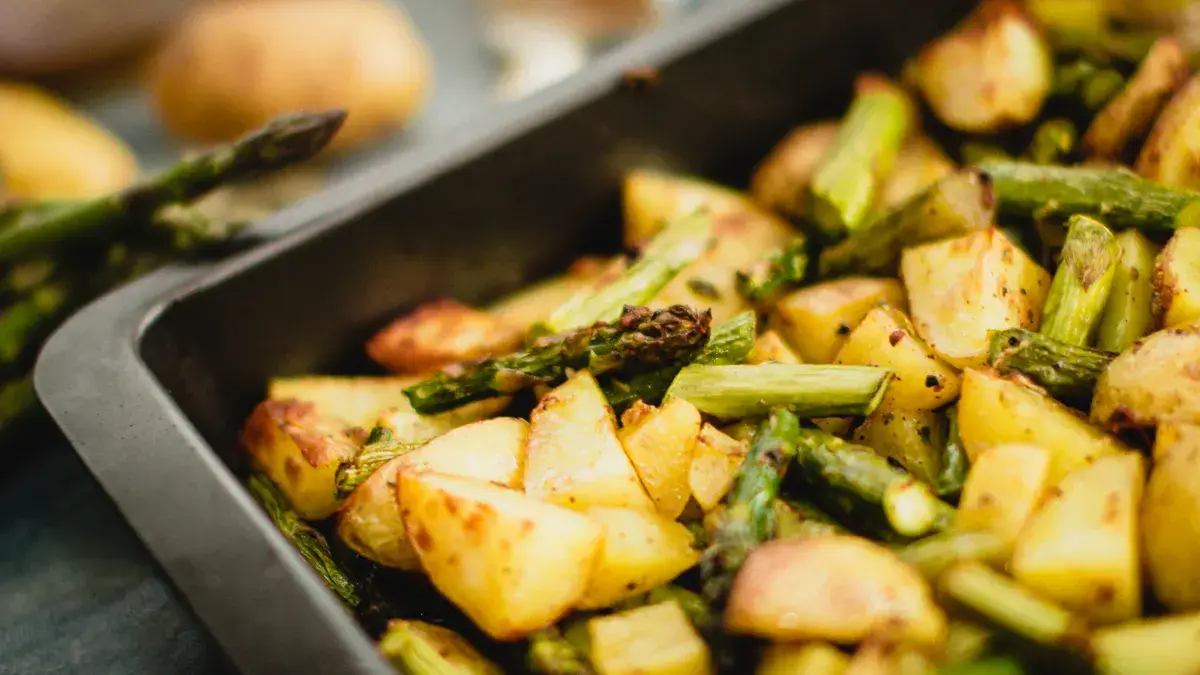
- Preheat the oven to 400°F / 200°C and set out a 9 x 13-inch / 23 x 33 cm baking dish or a sheet pan with a rim. The steady heat gives vegetables and fish a clear cooking window.
- Spread brown rice or another whole grain in the bottom if it is already cooked, then add a thin layer of chopped tomatoes or a few spoonfuls of tomato juice to keep the base moist. Uncooked brown rice usually needs a separate cooking plan, so this method works best with rice that is already tender.
- Scatter sturdy vegetables over the grain such as carrots, broccoli, cauliflower, onions, or peppers cut into bite-size pieces. Keep pieces close in size so they cook in the same 20 to 30 minutes.
- Add beans or fish on top. Use cooked beans, rinsed well if they come from a can, or add fish fillets in a single layer. Fish cooks fast, so it belongs near the top where heat reaches it directly.
- Season with herbs, garlic, pepper, lemon, and a small drizzle of oil instead of a salty sauce. A light coat is enough; the goal is flavor, not a glossy coating.
- Cover the dish with foil or a tight lid for part of the bake if the ingredients need steam, then uncover near the end for color. Covered baking protects moisture; uncovered baking helps the top dry and brown a little.
- Bake until the fish flakes easily or the vegetables are tender. If the pan looks dry before the food is done, add 2 to 4 tablespoons / 30 to 60 ml of water or unsalted broth around the edges.
This order matters because the oven is not gentle by default. Dense vegetables need longer than fish, and dry grains need more moisture than either one. A pan built in the wrong order can leave the fish overcooked before the carrots are done.
Should you use a covered pan or an uncovered one?
You should use covered baking when the pan needs moisture, then uncover it when you want the surface to firm up. Covered and uncovered baking do different jobs, and using both in one meal gives better control.
A covered dish traps steam. That helps fish stay tender and keeps vegetables from drying out during the first 10 to 20 minutes. It also helps tomato-based mixtures loosen into a light sauce without adding cream. The trade-off is that the top stays pale and soft.
An uncovered dish lets moisture escape. That is useful in the last stretch, especially if you want roasted edges on peppers, onions, or cauliflower. It can also be the better choice for sheet pan dinners where the vegetables are cut small and the fish is laid over them.
Here is a simple comparison, based on general food-safety and cooking guidance from FoodSafety.gov and USDA resources:
| Method | Best use | Main benefit | Main drawback |
|---|---|---|---|
| Covered baking | Fish, bean-and-rice dishes, moist tomato base | Holds steam and prevents drying | Less browning |
| Uncovered baking | Sheet pan dinners, firmer vegetables, light roast finish | Builds color and concentrated flavor | Easier to overcook or dry out |
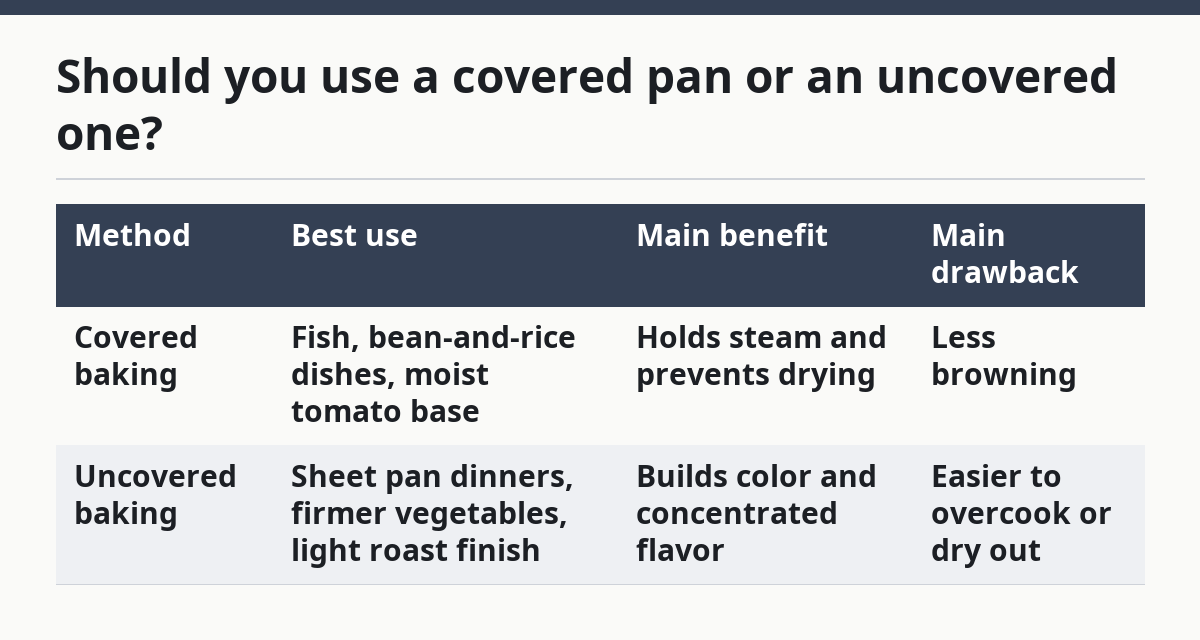
The mistake many cooks make is leaving the pan uncovered from the start and then trying to rescue dry food with extra sauce. That often adds sodium and still does not fix uneven cooking. A better move is to cover first, then uncover for the last 5 to 10 minutes if the dish needs color.
How do you keep the meal moist without adding heavy sauce?
You keep the meal moist by adding enough wet ingredients for steam, not by drowning the pan in sauce. Tomatoes, onions, lemon juice, and a small amount of water or unsalted broth usually do the job.
Tomatoes are especially useful because they bring both liquid and flavor. Chopped fresh tomatoes, crushed tomatoes with no added salt, or tomato sauce with a short ingredient list can all support the dish. Beans help too, because they release a little starch and thicken the juices around them.
The trick is to aim for a shallow layer of liquid, not a soup. For a 9 x 13-inch / 23 x 33 cm dish, a few spoonfuls of liquid around the edges is often enough at the start. If the pan looks dry halfway through baking, add 2 tablespoons / 30 ml at a time. That is better than pouring in a large amount and washing the flavor away.
Avoiding heavy sauce matters for people watching sodium and for readers who need a steadier meal pattern. A creamy sauce can turn a good ingredients list into a salt-heavy dinner very quickly. If you want more body without cream, mash a few beans into the tomato layer or tuck extra onion slices under the fish. The USDA Dietary Guidelines also emphasize keeping sodium in check as part of a healthy pattern.
What ingredients work best in one-dish baked meals?
The most useful ingredients are fish, beans, vegetables, brown rice, and tomatoes because they can handle oven heat and build a full meal without much extra fat. These ingredients also give you room to season with herbs instead of salt.
Fish works well because it cooks quickly and pairs naturally with tomato and lemon. Firm white fish and salmon are common choices for baked dinners, but the key is cut size and thickness, not a fancy label. If you use fish, place it near the top of the pan and check it early, because overbaking makes it dry fast.
Beans are useful when you want a meatless meal or a more filling base. Canned beans should be rinsed first to remove surface sodium. Lentils and chickpeas also hold their shape, but softer beans work better tucked into a moist tomato layer than spread on top.
Vegetables should be cut to match the bake time. Carrots, cauliflower, broccoli, zucchini, peppers, onions, and cherry tomatoes all fit well, but hard roots need smaller pieces than soft vegetables. Brown rice adds chew and makes the meal feel complete, yet it usually needs to be cooked ahead of time for this one-dish method to work well.
| Ingredient | Best role in the pan | Common issue | Easy swap |
|---|---|---|---|
| Fish | Fast-cooking protein | Drying out if baked too long | Beans |
| Beans | Filling protein and fiber | Extra sodium if not rinsed | Lentils or chickpeas |
| Brown rice | Sturdy base | Too slow if uncooked | Cooked barley or another cooked whole grain |
| Tomatoes | Moisture and flavor | Can become watery if overused | Tomato paste thinned with water |
| Vegetables | Bulk and texture | Uneven doneness | Choose similar-size pieces |
Common allergens show up here too. Fish is a major allergen, so it needs a different protein if that is a problem. Beans can also be an issue for some people with legume allergies, so check the specific bean before using it.
How should you time a sheet pan dinner?
You should time a sheet pan dinner by giving the longest-cooking vegetables a head start and adding fish or other quick-cooking ingredients later. That keeps the whole meal from finishing at the wrong pace.
A practical pattern is to roast dense vegetables for about 10 to 15 minutes at 400°F / 200°C before adding fish, beans, or softer vegetables. Then bake the full pan for another 10 to 15 minutes, depending on thickness. Fish usually needs less time than root vegetables, which is why a single flat layer matters so much.
This method works best when the pieces are cut with the oven in mind. A carrot sliced into thin coins cooks much faster than a whole carrot chunk. Broccoli florets finish faster than potato cubes. If you mix all those sizes without thinking, one part of the meal will be done while another part is still firm.
The usual mistake is crowding the pan. When vegetables sit on top of each other, they steam unevenly instead of roasting. Use a larger sheet pan if the food is piled up, or split the meal across two pans. A thin, even layer gives better color and better timing than a thick heap ever will.
What should you avoid?
You should avoid salty sauces, oversized portions of cheese, and piling every ingredient into the dish at the same time. Those habits make the meal heavy, watery, or unevenly cooked.
A common trap is using too much liquid because the pan looks dry at the start. That often leaves the vegetables soft and the flavors flat. Another trap is using ingredients with very different bake times without adjusting the cut size. Whole carrots, raw brown rice, and thin fish fillets do not belong in the same dish unless you plan each one separately.
Because of that, this method is not ideal if you want a crisp crust on every ingredient or if your recipe depends on a creamy finish. It is also not the right fit for foods that need long simmering before baking. If the only way to make the meal taste good is to add a lot of salt, the base recipe probably needs to be adjusted.
A better one-dish dinner stays simple: one protein, two or three vegetables, one starch, and enough moisture to bring the pan together. That keeps the oven doing the cooking while you keep control of the flavor.
How do you keep baked meals from drying out?
You keep baked meals from drying out by covering the dish for part of the bake, using ingredients with natural moisture like tomatoes, and checking the pan before the last few minutes are over. A few spoonfuls of water or unsalted broth can help if the edges look dry. Fish, in particular, needs close attention because it goes from tender to dry quickly.
Can you bake a whole dinner in one dish?
Yes, you can bake a whole dinner in one dish if you choose ingredients that can finish in the same oven window. Fish, beans, brown rice, tomatoes, and cut vegetables are the easiest fit. The dish works best when the pan is arranged by cooking time, not just by what tastes good together. For more examples, see sheet pan dinners and healthy baked fish recipes.
What ingredients work best in one-dish baked meals?
The ingredients that usually work best are ones that hold up in the oven and do not need a heavy sauce to taste complete. Fish, beans, brown rice, tomatoes, onions, broccoli, peppers, and carrots are strong choices. If an ingredient needs a lot of fat, sugar, or salt to taste right, it is probably not a good fit for this method.
Drafted with AI; not yet reviewed by a person.