Last updated: November 20, 2026
Quick Answer: Use a hot nonstick pan, a thin film of oil, and 1–2 tablespoon splashes of water or broth to make How to Sauté Heart-Healthy Meals with Less Oil work with less fat. That is the simplest way to sauté heart-healthy vegetables and proteins without drowning them in oil. In this guide to How to Sauté Heart-Healthy Meals with Less Oil, onions, garlic, mushrooms, spinach, and chicken breast cook fast, stay flavorful, and need far less fat when the pan is hot enough and the food is cut evenly.
Key takeaways
- A hot pan does more work than extra oil.
- Nonstick cookware and a small splash of water or broth help food release cleanly.
- Aromatics like onions and garlic build flavor first, so the dish still tastes rich.
- Mushrooms and spinach need different timing because one gives off liquid and the other collapses fast.
- Chicken breast cooks best when it is patted dry, cut evenly, and removed as soon as it is done.
What is the easiest way to sauté with less oil?
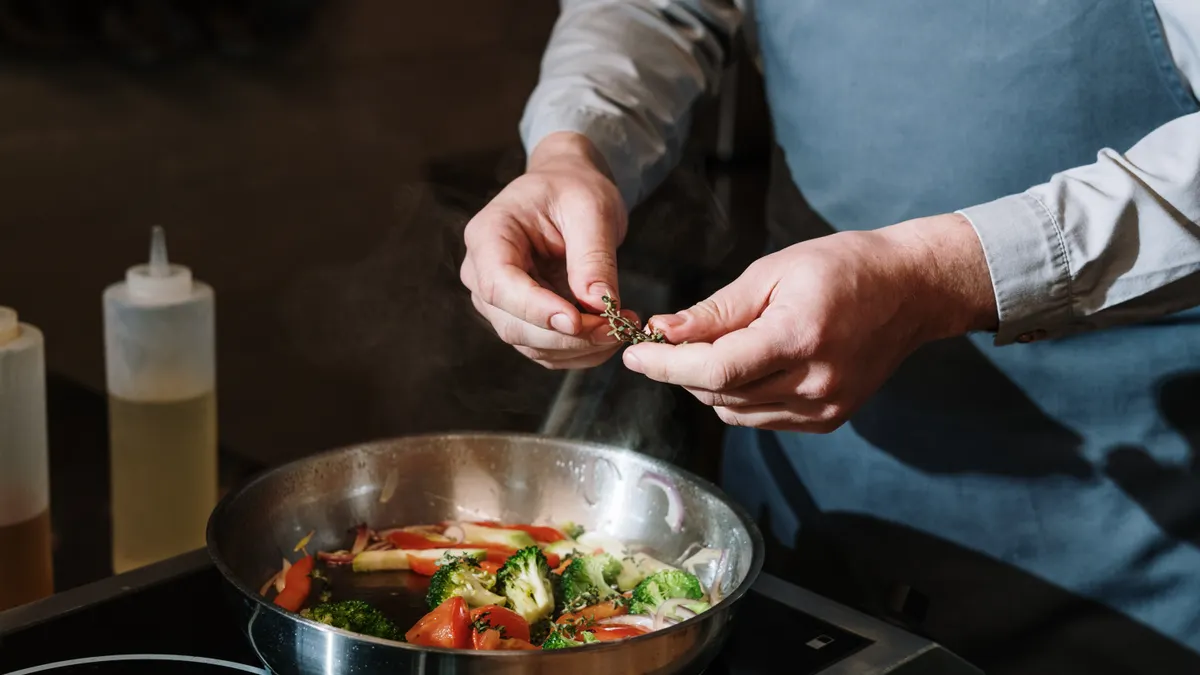
The easiest way is to preheat a nonstick pan, start with a small amount of oil, then use water or broth in 1–2 tablespoon splashes when food starts to stick. That gives you browning without a heavy slick of fat.
The key idea is control. Heat, pan surface, and moisture all affect sticking, so oil is only one part of the equation. A stainless steel pan can work, but a nonstick pan is usually more forgiving for a cook who wants less oil and less cleanup. For a broader overview, see the heart-healthy cooking methods guide.
For heart-healthy cooking, this matters because sautéing can keep vegetables crisp and proteins tender without turning the meal greasy. It also works well for the kind of dinner that appears on a heart-healthy diabetic menu, where steady portions and simple cooking methods help the whole plate stay balanced. The American Heart Association recommends cooking methods that limit added saturated fat and keep meals simple.
How do I set up the pan and ingredients?
Set up the pan and ingredients by heating the pan first, drying the food well, and keeping the pieces close in size so they cook in the same 5 to 10 minutes. That prep step matters more than people expect.
Here is the basic setup:
- Heat the pan over medium heat for about 1 to 2 minutes until a drop of water sizzles.
- Add oil in a thin film, not a pool.
- Add onions first and stir for 2 to 3 minutes until they soften.
- Add garlic near the end of the onion stage so it does not burn.
- Add mushrooms or chicken breast in a single layer so the pan does not crowd.
- Use water or broth in small splashes if the pan dries out before the food finishes.
- Finish with spinach in the last 1 minute, because it wilts fast.
That order keeps the strongest flavors moving from base to finish. Onions and garlic build the savory layer. Mushrooms and chicken need longer contact with the pan. Spinach needs only a quick toss at the end.
A crowded pan can make it harder to keep the sauté moving. Too much food lowers the heat, the vegetables steam, and the chicken releases liquid instead of browning. If the pan looks full, cook in 2 batches rather than forcing everything in at once.
Which pan and fat should I use?
A nonstick pan is often the easiest choice for low-oil sautéing, and a stainless steel pan can also work if you manage heat closely. The pan surface changes how much oil you need, how much food sticks, and how much fond you can build.
| Option | Oil needed | Stick risk | Best use | Trade-off |
|---|---|---|---|---|
| Nonstick pan | Low | Low | Eggs, spinach, onions, chicken breast | Less fond for pan sauce |
| Stainless steel pan | Moderate | Medium | Browning mushrooms, chicken, stronger fond | More skill needed to avoid sticking |
| Cast iron | Moderate | Medium to high | Even heat, deeper browning | Can grab food if the heat is off |
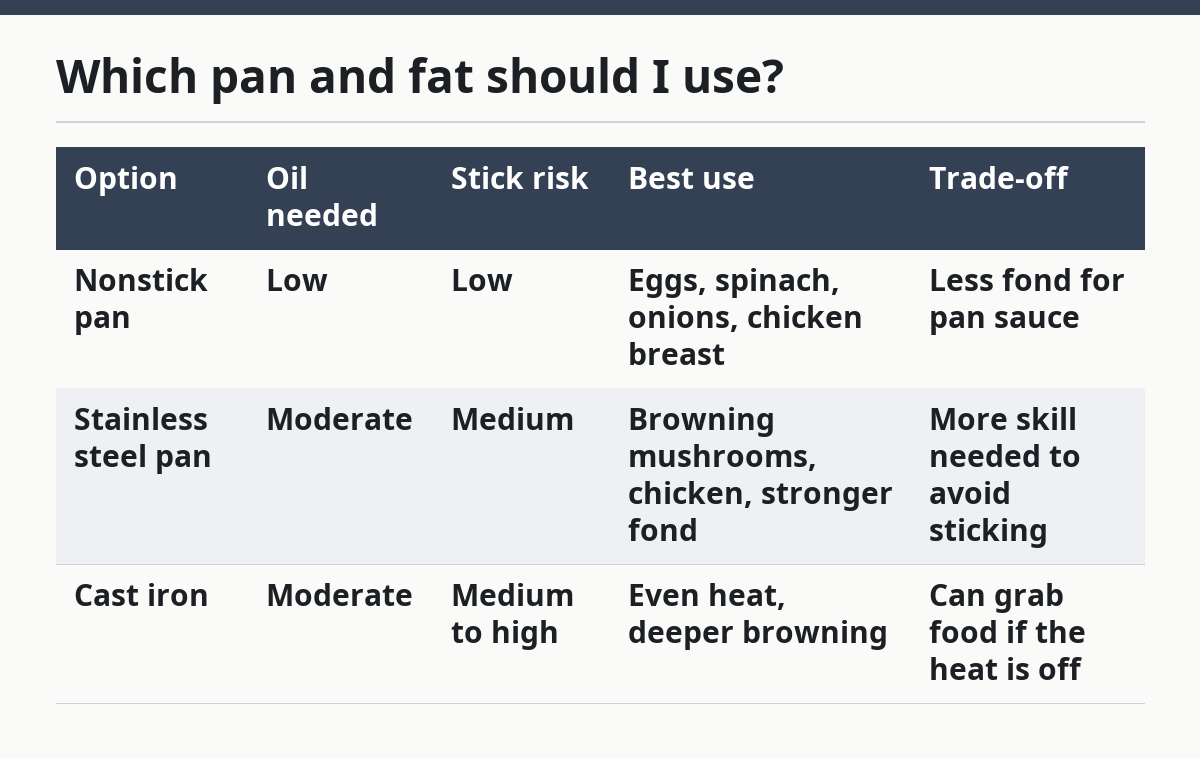
For heart-healthy meals, nonstick is the easiest fit. It reduces the need for extra oil and gives room for water or broth to do part of the job. Stainless steel can be fine if you want more browning, but it asks for tighter timing and a better feel for heat.
The fat matters too. You do not need much oil to start the pan; you need enough to coat the surface lightly. If you pour until the pan shines like a puddle, you have already gone too far for a heart-healthy goal.
How do I build flavor without adding more oil?
You build flavor by cooking onions, garlic, and mushrooms in sequence, then using broth or water to lift the browned bits from the pan. That is how you keep taste high while keeping fat low.
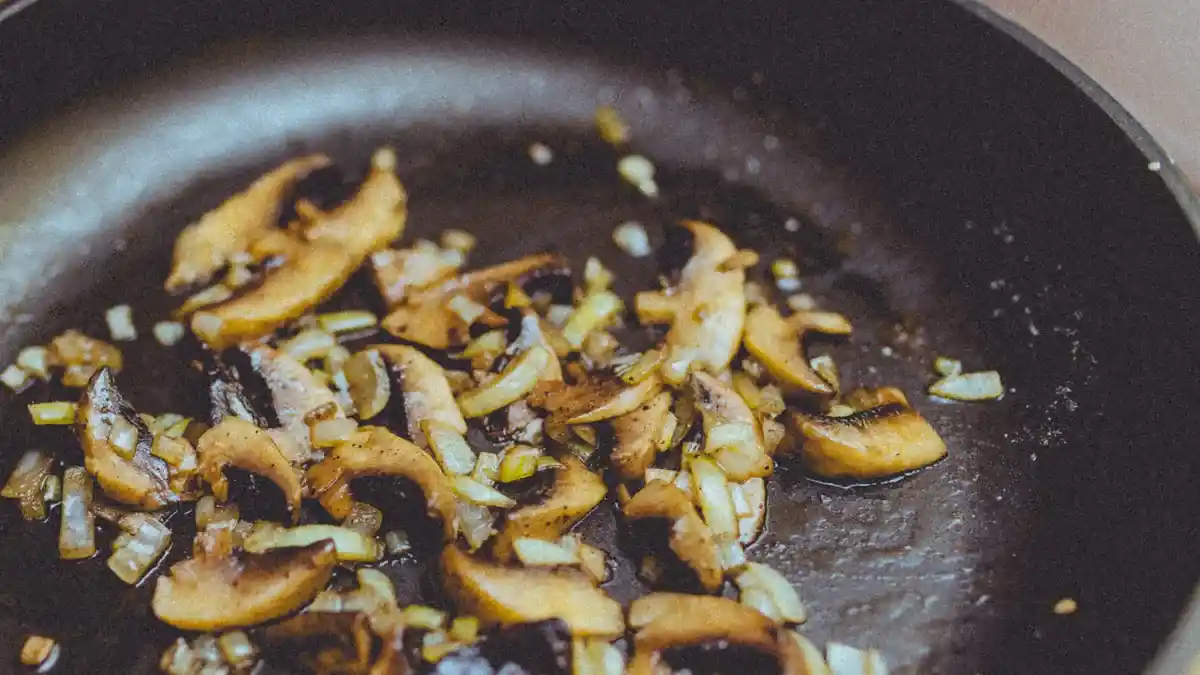
Start with onions because they soften and sweeten as they cook. Add garlic after the onions have begun to soften, since garlic burns fast and turns bitter in a hot pan. Mushrooms go in after that because they release liquid, then shrink, then brown. If the pan dries before the mushrooms finish, add a splash of water or broth instead of more oil.
That splash does two jobs. It loosens browned bits from the pan bottom, and it keeps the food moving so the surface does not scorch. This is the part many generic recipes miss: a sauté does not need fat every time the pan looks dry. Sometimes it just needs moisture and a wooden spoon.
Use broth when you want a fuller savory note. Use water when you want the cleanest finish. Either way, add only a small splash at a time. Too much liquid turns sautéing into steaming, and the texture gets soft instead of lightly browned.
When should I use water or broth instead of more oil?
Use water or broth when the pan starts to dry out, when browned bits begin to darken too fast, or when the food is nearly cooked and you only need a little lift from the pan bottom. That is the moment to save the dish without adding more fat.
This choice is especially useful with onions, mushrooms, and garlic. Onions often need repeated moisture to soften without burning. Mushrooms release their own liquid, then need a small amount of help to finish. Garlic needs only brief contact with heat, so a splash of broth can protect it from scorching.
A simple rule helps: if the food is browning too quickly, add a splash. If the food is pale and wet, stop adding liquid and let the pan recover heat. The wrong move is to keep pouring in broth every time the pan looks dry. That creates a soggy sauté and dull flavor.
This is also the point where fond matters. Fond is the browned layer on the pan bottom, and it is flavor, not waste. A few tablespoons of broth or water can bring it back into the dish. That gives you depth without adding a second round of oil. For more on technique, the USDA FoodKeeper and the Harvard T.H. Chan School of Public Health both stress simple, careful cooking habits that protect food quality.
How do I sauté chicken breast so it stays heart-healthy?
Sauté chicken breast by keeping the pieces even, cooking them over medium heat, and using just enough oil to keep the pan from grabbing. That method gives you a lean protein without a greasy crust.
Chicken breast works best when it is patted dry before it hits the pan. Moisture on the surface slows browning. Cutlets or evenly sized strips cook more predictably than thick, uneven pieces, which can brown on the outside while staying underdone in the center.
Cook the chicken in a single layer and leave it alone for a short stretch before turning it. If you move it too often, it may not brown well. If the pan starts to look dry before the chicken finishes, add a small splash of broth or water. That keeps the surface from burning while the center cooks through.
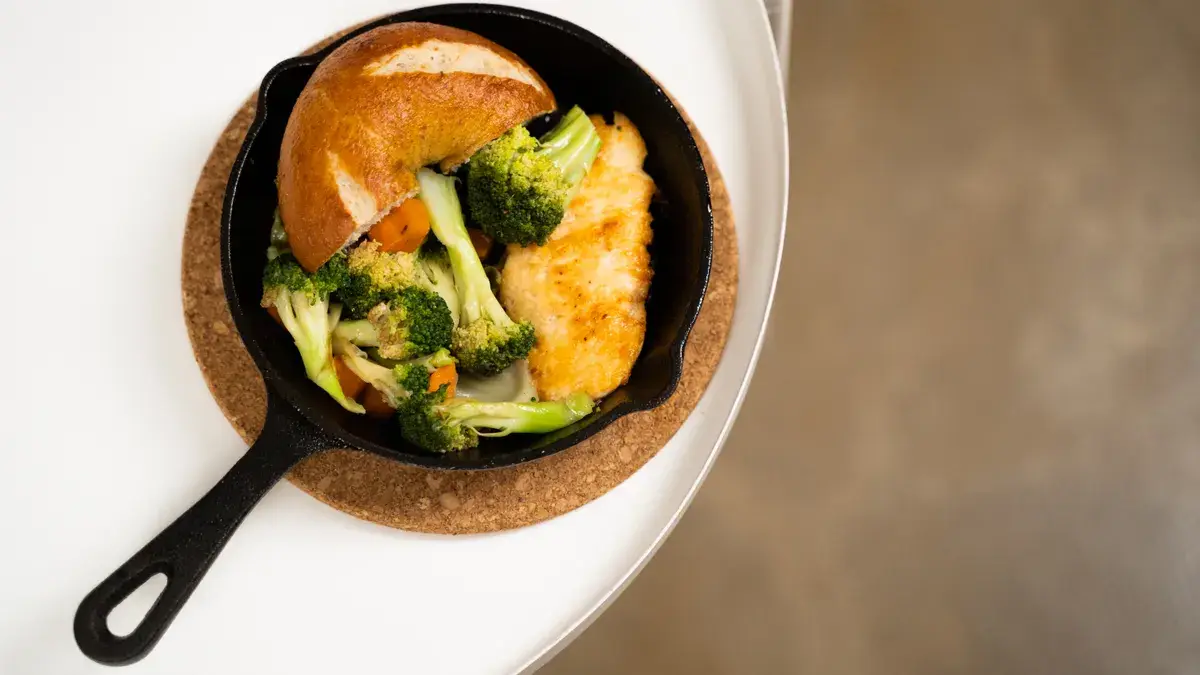
For a heart-healthy plate, chicken breast fits well with onions, garlic, mushrooms, and spinach. The main caution is not to overdo the oil because chicken already carries its own flavor. A heavy pour adds calories without improving the result.
What mistakes make a sauté less heart-healthy?
The biggest mistakes are using too much oil, crowding the pan, and cooking on heat that is either too low or too high. Each one changes texture and pushes the dish away from the goal.
Too much oil turns a quick sauté into a greasy pan fry. The food may taste rich, but the extra fat is not needed for onions, mushrooms, spinach, or chicken breast. Crowding the pan traps steam, so vegetables go limp and chicken loses the chance to brown. Heat that is too low makes food pale and wet; heat that is too high burns garlic and leaves mushrooms bitter.
Work in batches if needed, keep the pan at medium heat, and use small splashes of broth or water rather than extra oil when the surface dries out. That approach gives you control over texture and keeps the meal aligned with a heart-healthy goal.
This style may not suit every dish. If you want deep browning on a lot of vegetables at once, sautéing with very little oil may feel too restrained. It is better for quick weeknight cooking than for recipes that depend on a heavy crust.
What should I remember before I start?
Remember that a good sauté depends more on timing than on a big pour of oil. A hot pan, dry ingredients, a light film of oil, and a few splashes of water or broth can do the job well.
The best results usually come from simple habits: onions first, garlic later, mushrooms in the middle, spinach at the end, and chicken breast in an even layer. That order keeps the pan moving and the flavors clear. If you want a broader set of techniques like this, the heart-healthy cooking methods hub is the right place to connect the ideas.
This method is not for someone who wants the richest possible crust or the deepest fried flavor. It is for the cook who wants a fast dinner, less oil, and a cleaner skillet without giving up taste.
Can you sauté without a lot of oil?
Yes, you can sauté without a lot of oil by using a nonstick pan, medium heat, and small splashes of water or broth when food starts to stick. The pan still needs some fat, but it does not need much. That approach works especially well for onions, garlic, mushrooms, spinach, and chicken breast.
What is the difference between sautéing and frying?
Sautéing uses a small amount of fat and quick movement over medium to medium-high heat, while frying usually uses more fat and a heavier cooking effect. Sautéing aims for light browning and tender texture, not a thick crust. That makes it a better fit for heart-healthy cooking.
How do you prevent sticking in a sauté pan?
You prevent sticking by preheating the pan, drying the food, and not crowding the pan. A nonstick pan helps, but heat control matters just as much. If food begins to grab, a small splash of water or broth can loosen it without adding more oil.
Drafted with AI; not yet reviewed by a person.