Last updated: November 20, 2026
Quick Answer: Make heart-healthy mini meals from leftovers by using 3 parts — one protein, one high-fiber carb, and one vegetable — and keep the portion to a small bowl or plate. In How to Make Heart-Healthy Mini Meals from Leftovers, that usually means last night’s chicken, cooked grains, beans, roasted vegetables, and salsa turned into a lighter snack or small meal without building a full dinner again. The pattern aligns with American Heart Association guidance and USDA MyPlate, which favor vegetables, beans, whole grains, and lean protein.
Key takeaways
- Build around leftovers you already have: chicken, beans, roasted vegetables, cooked grains, and salsa fit together fast.
- Keep the portion small by using one bowl, one plate, or one wrap instead of a full dinner plate.
- Heat only what needs heat. Cold leftover meals can be practical when the food still tastes good chilled.
- Store each component in a separate container when possible so grains, vegetables, and chicken stay useful for more than one meal.
- The best mini meals are usually balanced, not fancy. A simple mix of texture, protein, and fiber often works better than a long ingredient list.
What makes a leftover mini meal heart-healthy?
A heart-healthy leftover mini meal is one that uses smaller portions, leaner ingredients, and less added salt than a standard dinner plate. The goal is not to make a second dinner; it is to make a lighter meal that still feels complete.
A good target is simple: include one protein, one fiber-rich starch, and one vegetable. That could be chicken with cooked grains and roasted vegetables, or beans with salsa and grains in a bowl. The American Heart Association and USDA MyPlate both support patterns that favor vegetables, fruits, beans, whole grains, and lean protein. This page does not replace medical advice, especially if you are managing diabetes or a heart condition, but the food pattern itself is straightforward.
The part that trips people up is thinking leftovers must be reheated into the same meal they once were. They do not. A 1-cup scoop of grains, a palm-sized portion of chicken, and a few spoonfuls of vegetables can be enough for a snack or small meal, especially when you are spacing food across the day.
This approach is not for leftovers that are already heavy in salt, fried coatings, or creamy sauces. Those foods can still be eaten, but they are a weaker fit for heart-healthy mini meals. If the leftover already feels rich enough for a full plate, cut the portion down and add plain vegetables or beans instead of more sauce.
How do you turn leftovers into a mini meal?
You turn leftovers into a mini meal by choosing one container, one protein, one plant food, and one flavor booster, then assembling them in 5 to 10 minutes. The process is quick because you are not cooking from scratch; you are matching pieces that already exist.
- Pick a bowl, plate, or wrap for the portion. A smaller dish helps the meal stay small without guessing.
- Add a protein first such as chicken or beans. Keep the amount modest so it does not crowd out the vegetables.
- Add a cooked grain or other starch such as brown rice, quinoa, or another cooked grain you already have. Use enough to give the meal body, not enough to turn it into a dinner plate.
- Add vegetables next such as roasted vegetables. Cold or warm both work, depending on the food.
- Finish with salsa or another light flavor if the leftovers need brightness. Salsa adds moisture and punch without turning the meal into a creamy dish.
- Stop before the dish looks full. A mini meal should leave some empty space in the bowl or on the plate.
- Taste before adding more salt. Leftover foods often need acid, herbs, or salsa more than salt.
The easiest combinations are the ones that do not require much assembly. Chicken plus roasted vegetables over cooked grains is a strong base. Beans with salsa over grains is another. A small wrap filled with chicken, vegetables, and a spoonful of salsa also works, especially when you need something you can hold in one hand.
The mistake to avoid here is turning leftovers into a mash of everything in the fridge. That often gives you too much sodium, too much starch, and not enough texture. The better move is to limit the meal to 3 or 4 items and let each one do a job.
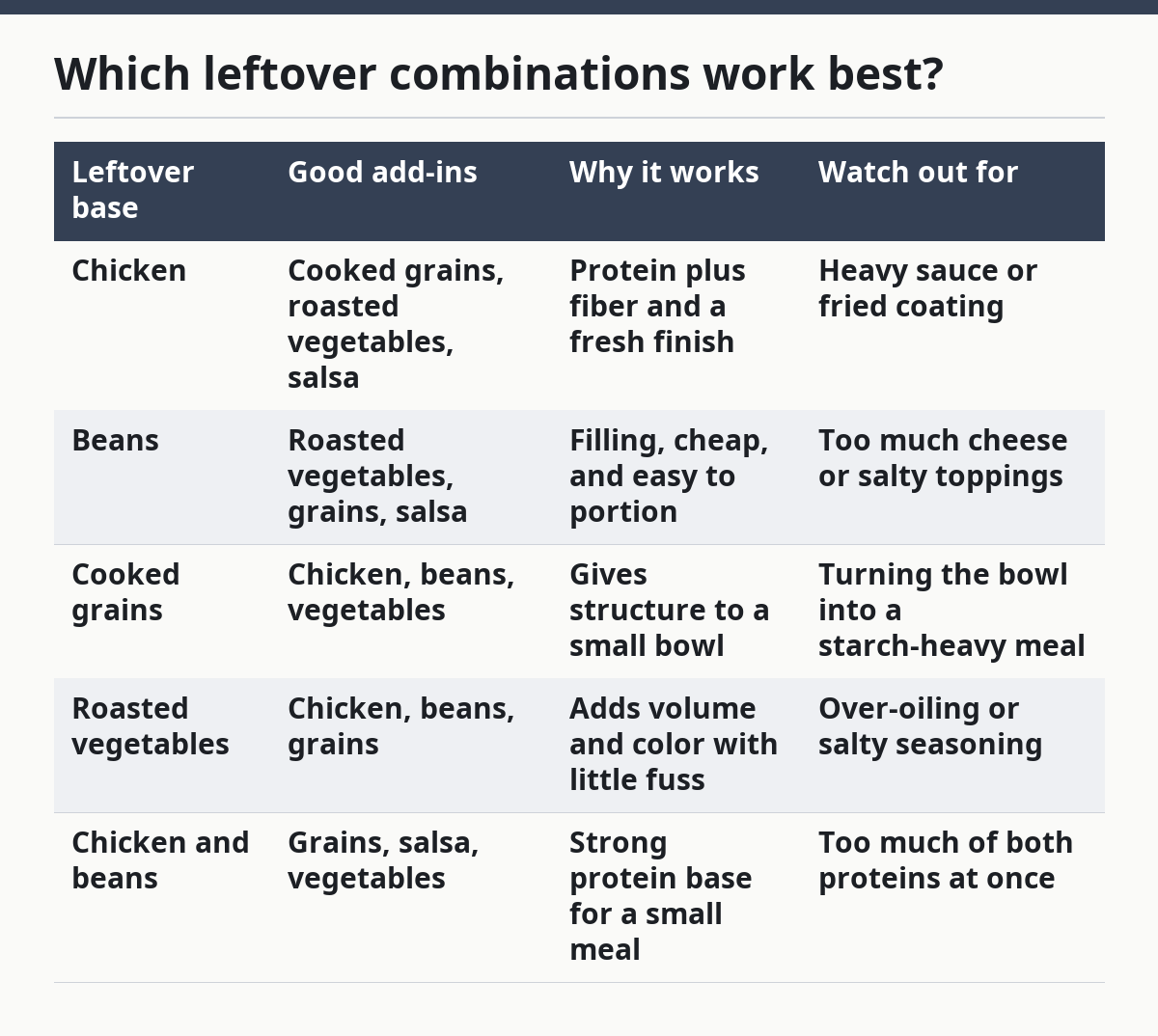
Which leftover combinations work best?
The best leftover combinations are usually the ones that keep protein, fiber, and flavor in balance without adding a lot of salt or saturated fat. Some mixes are better than others because they stay satisfying in a small portion.
| Leftover base | Good add-ins | Why it works | Watch out for |
|---|---|---|---|
| Chicken | Cooked grains, roasted vegetables, salsa | Protein plus fiber and a fresh finish | Heavy sauce or fried coating |
| Beans | Roasted vegetables, grains, salsa | Filling, cheap, and easy to portion | Too much cheese or salty toppings |
| Cooked grains | Chicken, beans, vegetables | Gives structure to a small bowl | Turning the bowl into a starch-heavy meal |
| Roasted vegetables | Chicken, beans, grains | Adds volume and color with little fuss | Over-oiling or salty seasoning |
| Chicken and beans | Grains, salsa, vegetables | Strong protein base for a small meal | Too much of both proteins at once |
The simplest rule is to pair a dense leftover with a lighter one. Chicken and beans can both fit, but they are often best treated as the protein side of the meal, not the whole meal. Roasted vegetables help because they take up space on the plate without making the meal heavy.
Salsa is useful because it changes the mood of the food fast. A spoonful can make beans and grains feel less plain, and it can refresh chicken that has gone a little dry. If the leftovers are already salty, keep the salsa amount modest so the whole dish does not tip too far.
This is also where a lot of people go wrong with “healthy” food. They add more grains because the bowl looks empty, then add sauce because it tastes dry, then add cheese because it still feels incomplete. That chain turns a mini meal into a full meal. Stop at the first version that feels balanced.
How much should a mini meal include?
A mini meal should include less food than a dinner plate, but enough to take the edge off hunger for the next few hours. The right size usually looks like a small bowl or a half-filled plate, not a heaping serving.
Use the leftovers you already have to keep the portion in check. A small amount of chicken, a scoop of cooked grains, and a few forkfuls of roasted vegetables often works well. If you are adding beans, they can stand in for some of the grain, which helps keep the meal more fiber-rich and less starch-heavy.
A useful habit is to build the meal in layers instead of piling everything together at once. Start with vegetables, then add grains or beans, then add chicken if you want it. That makes it easier to see when the dish is enough.
This is the point where snack and small-meal assembly matters. If you are aiming for a snack, you may want just one protein plus one vegetable or one grain plus one vegetable. If you are aiming for a small meal, use all three pieces: protein, grain or beans, and vegetables. A page or guide on heart-healthy snack and small-meal assembly fits this approach well because it treats food as a quick combination task, not a recipe.
The trade-off is that mini meals are less forgiving than full meals. If you make the portion too small, you will be hungry again too soon. If you make it too large, you are back at dinner size. The best move is to start with less and add only if the first serving clearly will not hold you.
How should you reheat leftovers?
You should reheat leftovers only as much as the food needs, because some mini meals work better warm and others taste fine cold. Heat the parts that improve with warmth, and leave the rest alone.
Use the microwave when you want speed. Put chicken, grains, or beans in a microwave-safe bowl and heat in short bursts, then stir once so the food warms evenly. Roasted vegetables can also go in the microwave, though they may soften. If you want better texture, a skillet works for grains and vegetables because it can bring back some surface dryness.
Cold leftover meals are useful when the food already tastes good chilled. Beans, cooked grains, and some roasted vegetables can work cold if they are well stored and not soggy. Chicken can also be eaten cold if it was stored properly and still tastes clean. Salsa is especially helpful in cold meals because it adds moisture without extra reheating.
The mistake here is overheating everything until the chicken dries out and the vegetables collapse. That makes the meal less satisfying, which often leads to adding more sauce or more salt. Heat only until the food is comfortable to eat, not steaming hard for the sake of it.
One practical rule helps: if the meal will be eaten within a few minutes of reheating, warm only the base and add cold items on top after. That keeps textures distinct. A bowl of warm grains and beans with cold salsa on top often tastes better than one fully heated, blended mixture.
What should you store separately?
You should store leftover components separately whenever possible so each part can be used in a mini meal later. Separate storage keeps the grains from soaking up all the moisture and keeps vegetables from turning limp.
Use shallow containers and label them if you have several leftovers at once. Chicken, cooked grains, beans, roasted vegetables, and salsa all hold up differently. Chicken usually needs the most careful handling, while beans and grains are often easier to portion out. Salsa should stay in its own small container so you can add just a spoonful at a time.
This matters because leftover mini meals rely on flexibility. A single container of mixed food can still work, but it limits your choices the next day. Separate pieces let you change the meal from warm to cold, from bowl to wrap, or from snack to small meal without cooking again.
There is a cost to this approach: it takes more fridge space and a few extra containers. If you have only one or two containers, store the parts that lose quality the fastest in their own containers first. That usually means the vegetables and chicken. Grains and beans are more forgiving and can share space if needed.
A good storage habit also keeps portions honest. If you divide leftovers into small containers as soon as the food cools, you are less likely to keep serving yourself a full dinner by habit. That is one of the easiest ways to make heart-healthy mini meals stick.
What is wrong with the usual leftover meal approach?
The usual leftover meal approach is wrong when it treats every leftover like it deserves a full plate. That makes portions too large and often pushes the meal toward extra salt, extra starch, and extra sauce.
The biggest error is mixing everything together without thinking about balance. A box of leftover chicken, grains, and vegetables can become a small, useful meal. The same box can also become a heavy bowl if you keep adding cheese, dressing, or another starch. The fix is simple: choose one base, one protein, and one bright topping, then stop.
Another common mistake is ignoring cold meals. People assume leftovers must be hot to count, but that is not true. Cold beans with grains and salsa can be a quick mini meal, and cold chicken with roasted vegetables can work if the flavors are already good.
This method is not for someone who wants a new recipe from scratch or a full dinner plan. It is for the person standing in front of the fridge at lunch time, trying to use what is already there. If the leftovers are plain, bland, or too salty to fit the pattern, a mini meal may not be the right use for them.
The heart of the method is restraint. Keep the portions modest, choose the leftovers that already support a heart-healthy pattern, and let the food stay simple. That is what makes leftovers useful instead of repetitive.
What leftovers make the best mini meals?
The best leftovers for mini meals are chicken, beans, roasted vegetables, cooked grains, and salsa because they combine easily and do not need much extra work. These foods can be mixed in small amounts without turning into a heavy plate. Foods that are already fried, creamy, or very salty are a weaker fit.
How do you turn leftovers into a snack or small meal?
You turn leftovers into a snack or small meal by pairing 2 or 3 items instead of rebuilding dinner. A snack might be beans and salsa, or chicken with roasted vegetables. A small meal usually adds a grain or another fiber-rich item so the bowl feels more complete.
How much should a mini meal include?
A mini meal should be smaller than a dinner plate and large enough to satisfy hunger for a while. A good rule is to build with one protein, one plant food, and one modest starch or bean portion. If the bowl looks crowded, it is probably too much for a mini meal.
Drafted with AI; not yet reviewed by a person.