Last updated: November 20, 2026
Quick answer: the best post-workout breakfast is usually a balanced meal with protein, fiber-rich carbs, and fluids, eaten within about 30 to 60 minutes if you can tolerate food. If you finish training and eat soon after, the meal can support recovery and keep breakfast heart-friendly. This guide settles what to eat, how much balance to aim for, and what to skip when your stomach is still waking up.
Key takeaways
- Build breakfast around protein + carbs + fluid; that combination fits post-workout needs better than a sugar-only meal.
- Choose foods that sit well after exercise: oats, Greek yogurt, eggs, fruit, whole grain toast, and nut butter all have a place.
- Keep the fat side light right after training if your stomach feels off; heavy, greasy breakfasts can backfire.
- Drink on purpose. A glass of water, milk, or unsweetened soy milk can help replace what you lost in sweat.
- If you want a short version, eggs with toast, yogurt with fruit and oats, or oatmeal with nut butter are all solid starts.
After a morning workout, the temptation is to treat breakfast like a reward meal, but How to Make Heart-Healthy Breakfasts That Work After a Morning Workout is really about balance, not indulgence. The answer is a balanced, easy-to-digest meal with protein, carbs, and fluids — not a giant plate of greasy food. Here’s what to put on the plate, how soon to eat, and how to keep it kind to your heart.
What a heart-healthy post-workout breakfast should do
A heart-healthy post-workout breakfast should replace energy, support muscle repair, and avoid the kind of fat and sugar load that makes breakfast worse for the heart. That means protein, a smart carb source, and a drink belong on the table together.
The American Heart Association’s guidance on heart-healthy eating points you toward fruits, vegetables, whole grains, lean proteins, and unsaturated fats, not heavy processed breakfast fare. For recovery, the American College of Sports Medicine’s position stand on exercise nutrition also supports eating carbs and protein after training to help refill fuel and repair tissue. Those two ideas fit together nicely at breakfast in How to Make Heart-Healthy Breakfasts That Work After a Morning Workout.
A workable plate often looks simple:
- Protein: eggs, Greek yogurt, milk, soy milk, or a little nut butter
- Carbs: oatmeal, whole grain toast, fruit, or another whole grain
- Fluid: water, milk, or an unsweetened drink
That mix does two jobs at once. It gives your body what it needs after exercise, and it keeps the meal aligned with heart-healthy eating patterns.
Here’s the catch: a breakfast can be “healthy” on paper and still feel wrong after a workout if it is too greasy, too large, or too sweet. A pastry with coffee is breakfast. It is not a recovery meal.
Good fits
- Oatmeal topped with fruit and a spoon of nut butter
- Greek yogurt with berries and a small handful of oats
- Eggs with whole grain toast and sliced fruit
Poor fits
- Bacon-heavy plates
- Sugary cereal with no protein
- Fried breakfast sandwiches with little fiber
So the goal is not perfection. It is choosing a breakfast that works for recovery and still supports a heart-healthy pattern you can repeat.
How soon should you eat after a morning workout?
You should eat breakfast within about 30 to 60 minutes after a morning workout if you can tolerate food, especially after a harder session. That window is practical, not magical, and the real goal is to eat soon enough that you’re not dragging through the rest of the morning.
Because timing matters, the first step is simple: drink water and then decide how much food feels manageable. If the workout was long or hot, milk or an unsweetened soy drink can also work with breakfast.
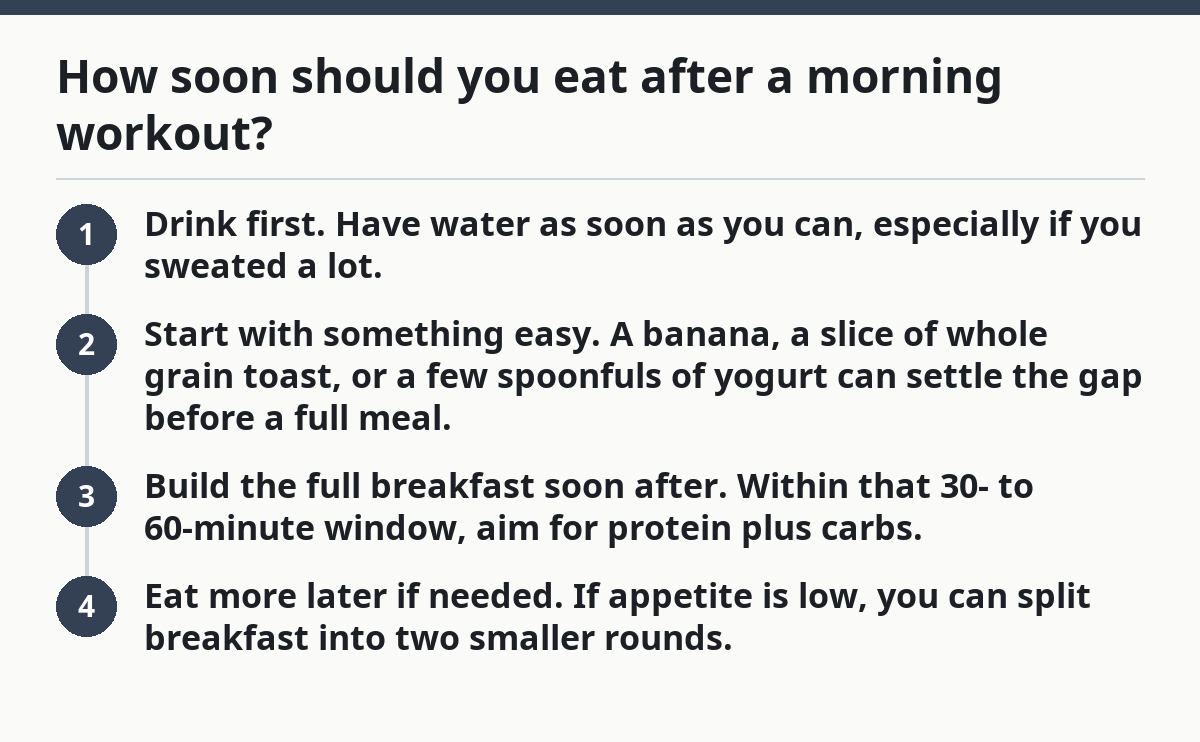
- Drink first. Have water as soon as you can, especially if you sweated a lot.
- Start with something easy. A banana, a slice of whole grain toast, or a few spoonfuls of yogurt can settle the gap before a full meal.
- Build the full breakfast soon after. Within that 30- to 60-minute window, aim for protein plus carbs.
- Eat more later if needed. If appetite is low, you can split breakfast into two smaller rounds.
A hard rule is the wrong way to think about this. Some people can eat immediately. Others need 10 to 15 minutes before food feels right. The better standard is: don’t wait so long that you end up depleted and overeating at lunch.
If you have reflux, nausea, or a medical condition that changes how you handle food after exercise, this is a place to ask a clinician or dietitian for personal advice. That matters more than any generic timing rule, and it is especially true when you are shaping How to Make Heart-Healthy Breakfasts That Work After a Morning Workout around your own needs.
The easiest heart-healthy breakfast formulas after exercise
The easiest heart-healthy breakfast formulas after exercise all follow the same pattern: one protein, one carb, one fruit or fiber source, and a drink. That sounds plain because it is plain, and plain is what works before a workday.
For instance, you can open the fridge and still make a meal without hunting for a perfect recipe at 7 a.m. The point is to use a few normal foods and keep the meal practical.
Use these combinations as a starting point:
- Eggs + whole grain toast + fruit + water
- Greek yogurt + oats + berries
- Oatmeal + nut butter + sliced banana
- Toast + nut butter + fruit + milk
- Eggs + oats + fruit if you want something warmer and more filling
A few notes make these work better:
- Eggs give quality protein and are easy to cook fast, but a plate loaded with butter, cheese, and sausage is not the same thing.
- Greek yogurt is a strong recovery base because it is high in protein and easy to mix with fruit or oats.
- Oatmeal brings fiber and slow-digesting carbs, which makes it a good heart-smart carb.
- Fruit adds potassium, fluid, and a sweet note without needing syrup.
- Whole grain toast is useful when you want food you can chew quickly.
- Nut butter helps make the meal more satisfying, but keep the portion modest so the breakfast does not turn greasy.
You do not need all six foods in one bowl. You need the right 2 to 4 pieces in the right balance.
Here’s the catch: if you stack too many rich ingredients — full-fat cheese, butter, sausage, creamy spreads — the meal can get heavy fast. That can slow digestion and make you feel sluggish right when you need to start the day.
Best quick combos
- Two eggs, one slice whole grain toast, orange slices
- Plain Greek yogurt, berries, oats
- Oatmeal, banana, one spoon nut butter
How to keep the meal easy on your stomach
A heart-healthy post-workout breakfast should be easy to digest, especially right after a sweaty or intense session. The trick is to keep the meal moderate in size, lower in grease, and not overloaded with spice or heavy cream.
Because your stomach may still be settling, start with smaller portions and build up only if you need more. A giant omelet and hash browns can feel appealing, but they are not always the best first move.
Use these adjustments when your stomach feels touchy:
- Pick smaller portions first, then eat more later if you need it.
- Choose cooked oats, toast, or yogurt over fried or very rich foods.
- Keep sauces, butter, and creamy toppings light.
- Skip huge servings of cheese, bacon, or sausage right after training.
- Try fruit with a softer texture, like banana or berries, instead of a big pile of raw roughage if your stomach is sensitive.
This is one place where generic breakfast advice goes wrong. A “super healthy” breakfast can still be too much after a workout if it is packed with fiber, fat, and volume all at once. Raw bran, piles of nuts, and a giant smoothie bowl may look virtuous, but they can sit like a brick.
The best move is to start with a meal that is moderate, not massive. If you’re still hungry in an hour or two, have a second snack. That usually works better than forcing a huge recovery breakfast in one sitting.
Also, do not forget fluid. A workout drains water, and a dry breakfast does not fix that. Water is fine. Milk works too, and it adds protein. Unsweetened soy milk is another practical option if you want something that goes with oats or toast.
What to avoid if you want the breakfast to help your heart
You should avoid breakfasts that are heavy in saturated fat, added sugar, or refined grains because they fight both recovery and heart health. That means the usual diner stack, sugar bomb cereal, and pastry breakfast are poor fits after a morning workout.
Because the post-workout window is about refueling, not celebrating, it helps to resist the urge to turn breakfast into a reward meal. That is understandable, but it is also how a recovery breakfast turns into a nap trigger.
Watch for these patterns:
- Sausage, bacon, and butter-heavy plates: they can make the meal feel heavy and push the fat load up fast.
- Pastries and sweet drinks: they add quick sugar with very little protein.
- White bread with jam alone: this gives carbs, but not enough staying power or repair support.
- Big fried breakfasts: they can be rough after exercise and are not the heart-smart default.
- “Healthy” granola loaded with sugar: it often acts more like dessert than breakfast.
This does not mean you can never have these foods. It means they should not be the core of your post-workout routine. If you love a breakfast sandwich, make the base better: whole grain bread, egg, tomato, and a lighter hand with cheese and meat.
A good test is simple: if the meal has almost no fiber, almost no protein, and plenty of grease or sugar, it is the wrong breakfast for this job.
The best substitute is plain and workable: swap bacon for eggs, swap white toast for whole grain toast, swap a pastry for oatmeal and fruit, and swap sweet coffee drinks for water or milk.
A simple way to build your plate every morning
You can build a heart-healthy post-workout breakfast by filling one-quarter of the plate with protein, one-quarter to one-half with carbs, and adding fruit plus a drink. That is not a rigid sports plan; it is a fast rule you can use at home in 5 minutes.
Because How to Make Heart-Healthy Breakfasts That Work After a Morning Workout is easier when the choice is routine, a plate method keeps the decision small and the food practical.
- Pick one protein. Eggs, Greek yogurt, milk, or soy milk all work.
- Pick one main carb. Oatmeal or whole grain toast are the easiest choices.
- Add one fruit. Banana, berries, orange slices, or apple slices all fit.
- Add fluid. Water first, then coffee if you want it.
- Add a little fat only if needed. A spoon of nut butter is enough for many people.
Examples:
- Two eggs + toast + berries + water
- Greek yogurt + oats + banana + water
- Oatmeal + nut butter + apple slices + milk
This method works because it stays close to the actual goal. Recovery food does not need to be flashy. It needs to be balanced, easy to eat, and heart-smart enough to repeat most mornings.
For a broader routine around this kind of breakfast timing, the hub on Heart-Healthy Breakfast Planning and Morning Routines can help you fit the meal into the rest of the morning without overcomplicating it.
Best plate rule
- Protein first
- Whole grain or fruit second
- Fluid with the meal
- Heavy fat only as a side note
What should I eat after a morning workout for breakfast?
You should eat a breakfast with protein, carbs, and fluids. A practical choice is eggs with whole grain toast and fruit, or Greek yogurt with oats and berries. Those meals help recovery and stay friendly to heart health because they lean on whole foods instead of grease and sugar.
How soon after exercise should I eat breakfast?
You should eat within about 30 to 60 minutes after your workout if you can. That timing helps you refuel without waiting so long that you crash later. If your stomach is unsettled, start with water and a small snack, then eat the full breakfast a bit later.
What is a heart-healthy post-workout breakfast?
A heart-healthy post-workout breakfast is one that supports recovery without piling on saturated fat, added sugar, or refined grains. It usually includes a lean protein, a whole-grain or fruit-based carb, and a drink. Think oatmeal with fruit, Greek yogurt with oats, or eggs with whole grain toast.
Drafted with AI; not yet reviewed by a person.