Last updated: November 20, 2026
In short: Heart-healthy lunch planning works best when you build around protein, fiber, and unsalted foods you can carry safely, then match the lunch to your day—desk, classroom, car, or walking errands.
Key Takeaways
- A heart-healthy lunch is one with vegetables, whole grains, lean protein, and little added salt.
- The fastest way is to use a repeatable formula, not a new recipe every day.
- Pack food in an insulated bag with a cold pack if lunch will sit unrefrigerated for more than 2 hours, or 1 hour in heat above 90°F.
- School lunches work best when they are familiar, easy to open, and built from foods the child will actually eat.
This guide settles what to pack, how to keep it safe, and how to make it fit real schedules without blowing up your sodium, sugar, or budget.
What makes a lunch heart-healthy?
A heart-healthy lunch is one with vegetables, whole grains, lean protein, and little added salt. That mix helps keep saturated fat and sodium lower while still giving you enough energy to get through work, school, or a long errand run.
The American Heart Association recommends a pattern built around fruits, vegetables, whole grains, beans, nuts, and lean proteins, while keeping sodium and saturated fat in check. The U.S. Dietary Guidelines for Americans use the same basic frame. Those are the guardrails. Not a fad.
Picture this: you open your lunch bag at noon and see a meal that still tastes good cold, doesn’t need a microwave, and won’t leave you hunting for chips an hour later. That is the target. It’s not about perfect eating; it’s about a lunch that holds together under real life.
- Build the plate around 3 parts: a protein, a fiber-rich carb, and a produce item.
- Keep sodium down by choosing no-salt-added or low-sodium foods when you can.
- Use liquids like soup, dressing, or sauce with care, since they can add a lot of salt fast.
- Keep sweets small, not absent. A piece of fruit is easier to carry than a pastry.
The catch: a lunch can look “healthy” and still be rough on the heart if it leans on deli meat, salty cheese, creamy sauces, or packaged snacks. Labels matter. So does portion size.
Authoritative sources:
- American Heart Association: Healthy Eating for a Healthy Heart
- U.S. Department of Agriculture and U.S. Department of Health and Human Services: Dietary Guidelines for Americans, 2020–2025
How do I build a heart-healthy lunch fast?
The fastest way is to use a repeatable formula, not a new recipe every day. Pick one protein, one fiber-rich base, one vegetable, and one simple fat source, then rotate the parts through the week.
That formula saves time because the choices are limited. You’re not staring at a fridge full of random ingredients at 7:10 a.m. trying to invent lunch from scratch. You’re choosing from a short list: beans, tuna, eggs, chicken, tofu, whole-grain bread, brown rice, fruit, carrots, cucumbers, nuts, and plain yogurt.
Picture this: it’s 6:40 a.m., you need lunch for work and school drop-off, and the fridge is half-full. A simple system beats a perfect plan here. Lunch planning works when the food is already portioned and the decision is small.
- Protein: tuna, salmon, beans, lentils, eggs, tofu, chicken, plain Greek yogurt.
- Fiber base: whole-wheat bread, whole-grain wrap, brown rice, quinoa, oats, corn tortillas.
- Produce: salad greens, bell peppers, carrots, cherry tomatoes, cucumber, apples, oranges.
- Healthy fat: avocado, nuts, seeds, olive-oil-based dressing.
A common mistake is building lunch from leftovers that are heavy on pasta, white bread, or creamy sauces and light on vegetables. That can still be lunch, but it usually won’t stay filling. Fiber does a lot of that work.
The best part? You can assemble a decent lunch in under 10 minutes if the components are already cooked and chopped. That is the real win, not a fancy recipe.
What should I pack for work so lunch stays safe?
Pack food in an insulated bag with a cold pack if lunch will sit unrefrigerated for more than 2 hours, or 1 hour in heat above 90°F. That food-safety rule matters just as much as the ingredients.
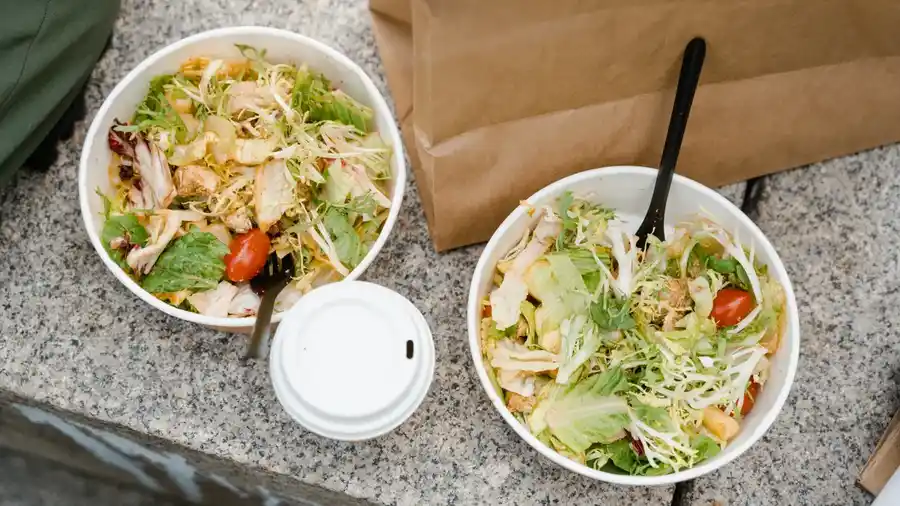
Work lunches fail in boring ways. The salad wilts. The yogurt warms up. The chicken salad sits in a backpack during a long commute, then smells off by noon. The fix is not complicated: keep cold foods cold, hot foods hot, and use containers that close well.
Picture this: you leave home at 8:00 a.m., sit at a desk all morning, then eat at 1:15 p.m. If your lunch has dairy, meat, eggs, or cut fruit, the clock matters. Safety beats convenience every time.
- Use a small insulated lunch bag.
- Add one frozen gel pack for a cold lunch.
- Keep dressing in a separate container.
- Put the coldest items near the ice pack.
- Eat perishable food within the safe time window.
If the office has a fridge, use it, but don’t depend on a shared shelf being empty. If it has a microwave, bring foods that reheat well: bean chili, grain bowls, soups with low sodium, or chicken and vegetables. If it doesn’t, use foods that are still good cold.
One more detail: high-sodium restaurant leftovers can turn a “healthy” lunch into a salt bomb. A sandwich with deli meat, cheese, and pickles can pack a lot of sodium before you add chips. That’s why home-packed lunches have an edge.
How do I make school lunches heart-healthy without a fight?
School lunches work best when they are familiar, easy to open, and built from foods the child will actually eat. A lunch that comes home untouched is not a heart-healthy win, because no one ate it.
School lunch planning has two jobs. First, it has to fit food rules and storage limits. Second, it has to survive picky eating. Tiny details matter here: the thermos lid, the banana peel, the sandwich cut into quarters instead of halves. The goal is a lunch that gets eaten, not a lunch that wins design points.
Picture this: you are packing lunch before the morning rush, and the child only wants one kind of sandwich this week. That is not failure. That is a starting point. Work with the foods that already have a chance.
- Pack a main food the child recognizes.
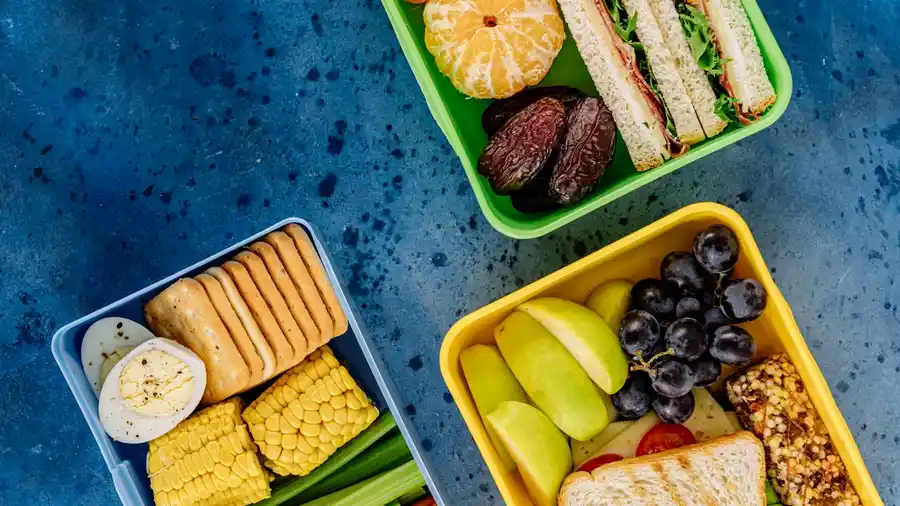
- Add one fruit that holds up well: grapes, berries, apple slices, orange sections.
- Add one crunchy vegetable: carrots, cucumbers, snap peas.
- Include a protein that travels well: turkey, hummus, bean spread, cheese, boiled egg, yogurt.
- Keep dips small so the lunch doesn’t get soggy.
A good school lunch also respects the setting. If there is no fridge, choose shelf-stable items or use a cold pack. If there is a lunch box that comes home warm and squashed, choose sturdier foods. Wraps, muffins made with whole grains and little sugar, bean salads, and pasta salads with vegetables can hold up better than fragile sandwiches.
The hard truth: “healthy” doesn’t matter if it’s too complicated for a tired parent or too unfamiliar for a child. Keep one part predictable and change one part at a time.
How do I plan lunch for errands, driving, and long gaps?
For errands, the best lunch is portable, sealed, and easy to eat in a car or on a bench. It should not need a knife, a fork that disappears into a bag, or a microwave that may never happen.
Errand lunches are different from desk lunches. You may eat between stores, while waiting in a parking lot, or after a school pickup. That means you need food that survives motion. Wraps, whole fruit, cut vegetables, nuts, bean cups, and yogurt pouches work better than messy sandwiches or soup in a flimsy cup.
Picture this: you have three stops, a half tank of gas, and no clear lunch break. A lunch for that day should open cleanly, stay in one piece, and not spill on the seat. Simple wins.
- Use a leakproof container for anything with dressing or sauce.
- Choose foods you can eat with one hand if needed.
- Avoid crumbly bread, greasy fried foods, and loose sauces.
- Keep napkins in the bag.
- Put fruit with a peel, like an orange or banana, on top for quick access.
This is also where portion control gets tricky. A bag of trail mix can help, but it can also become a calorie-dense snack if you eat the whole thing while driving. Same with nuts, crackers, and granola. Pack the amount you mean to eat, not the amount that fits in the box.
On the flip side, errand lunches are a good place to use leftovers that don’t need reheating: roasted vegetables, quinoa salad, or a bean and corn salad. Those foods travel better than most people expect.
Which foods belong in a heart-healthy lunch box?
The best lunch box foods are low-sodium, high-fiber, and easy to portion. A short shopping list beats a giant “healthy” cart that gets wasted by Thursday.
Start with items that have a clear job. Beans bring fiber and protein. Whole grains bring staying power. Produce brings volume and texture. Unsalted nuts and seeds add crunch. Plain yogurt can fill a gap if it’s kept cold. None of those foods is fancy, and that’s the point.
Picture this: you open the pantry Sunday night and want enough ingredients for five lunches, not one perfect meal. That is where a small core list helps most. Buy the same kinds of food, then mix them in different ways.
- Beans: black beans, chickpeas, lentils, no-salt-added canned beans.
- Protein: canned tuna, salmon, eggs, chicken breast, tofu, edamame.
- Whole grains: brown rice, quinoa, whole-wheat pita, oats, whole-grain crackers.
- Produce: spinach, tomatoes, peppers, carrots, apples, pears, berries.
- Extras: unsalted nuts, seeds, olive oil, vinegar, hummus, low-sodium salsa.
Watch the “healthy” pantry traps. Flavored rice packets, instant noodles, and seasoned crackers can bring a lot of sodium. So can cured meats and many bottled dressings. If a food comes with a long flavor packet, read the label before it becomes a daily habit.
The truth is, a heart-healthy lunch box doesn’t need rare ingredients. It needs a few dependable ones that you’ll actually use before they spoil.
What are the easiest heart-healthy lunch combinations?
The easiest combinations use foods that can be assembled in minutes and still taste fine cold. Think in templates, not recipes, so lunch planning stays realistic on busy weeks.
A template lets you swap one ingredient without changing the whole meal. That matters if you hate waste or if your schedule changes on short notice. A chicken wrap can become a bean wrap. A grain bowl can become a salad. A soup can become a thermos lunch.
Picture this: it’s Thursday, and you have leftovers plus one sad cucumber. A template saves that lunch from becoming a vending-machine day. The food can be plain, but it should still be complete.
- Turkey or hummus wrap: whole-grain wrap, greens, sliced tomato, cucumber, mustard.
- Bean bowl: brown rice, black beans, corn, salsa, avocado.
- Egg lunch: hard-boiled eggs, whole-grain toast, apple slices, baby carrots.
- Tuna box: tuna mixed with a small amount of plain yogurt or olive-oil dressing, whole-grain crackers, celery, grapes.
- Yogurt bowl: plain Greek yogurt, berries, oats, chopped nuts.
Each of those lunches has a problem you should know about. Tuna and turkey can raise sodium. Yogurt bowls need a cold pack. Egg lunches can smell strong in a crowded room. Bean bowls can spill if the lid is loose. These are not reasons to avoid them; they are reasons to pack them correctly.
A good rule: if the lunch is built from one main item plus two sides, it usually travels well. If it needs a long ingredient list, it usually won’t get made often.
What mistakes ruin heart-healthy lunch planning?
The biggest mistakes are relying on deli meat, oversized portions, and foods that fall apart before noon. Those habits turn a good idea into a lunch that is salty, messy, or skipped.
The first mistake is planning for the idea of lunch instead of the reality of lunch. A salad sounds healthy, but if you hate cold greens, you won’t eat it. A wrap sounds easy, but if it leaks, it ends up in the trash. A soup sounds filling, but not if you forgot the thermos lid. Real life wins.
Picture this: you packed a “healthy” lunch, then bought chips and a pastry because the lunch was too small. That happens often. A heart-healthy lunch has to satisfy hunger, not just pass a label test.
- Too little protein means hunger returns fast.
- Too much sodium adds up across the day.
- Too many soft or wet foods create a soggy mess.
- Too many separate containers make the lunch annoying to carry.
- Too much variety can make prep so slow that you quit by Wednesday.
Another mistake is treating lunch like an afterthought. People spend time planning dinner and then grab lunch at the last minute. That usually means packaged snacks, fast food, or whatever is near the checkout lane. A 10-minute plan on Sunday can save five bad choices during the week.
Who this is not for: if you need a highly specialized diet for kidney disease, diabetes, food allergies, or a doctor-ordered sodium limit, a generic lunch plan is not enough. That person needs personal guidance from a qualified clinician or dietitian.
How can I plan a full week without getting bored?
The easiest way to avoid boredom is to repeat a few base foods and change the flavor, texture, or shape. You don’t need five different menus; you need one system with 2 or 3 variations.
That keeps shopping simple and cuts waste. A bag of greens, a container of cooked grains, a protein, and a few fruits can become several lunches. The changes can be small: hummus instead of mustard, cucumber instead of peppers, quinoa instead of brown rice, wrap instead of bowl.
Picture this: Monday looks like a wrap, Tuesday looks like a bowl, Wednesday looks like leftovers in a thermos. The food is related, but the lunch doesn’t feel copied. That is what keeps a plan alive past the first week.
- Monday: whole-grain wrap, chicken, spinach, tomato, fruit.
- Tuesday: bean and rice bowl, salsa, avocado, carrots.
- Wednesday: salmon salad, crackers, cucumber, pear.
- Thursday: egg lunch, toast, berries, snap peas.
- Friday: hummus pita, roasted vegetables, apple slices, nuts.
If you want more variation, change the seasoning, not the structure. Lemon, vinegar, garlic, pepper, cumin, and herbs can give a lunch a different feel without changing the heart-healthy basics.
The best part? Once you find three lunches that actually get eaten, lunch planning stops being a daily puzzle.
A simple 5-day lunch plan you can copy
A 5-day plan works best when it uses the same shopping list and only small changes from day to day. That keeps prep time down and makes the food feel less repetitive.
Here is a practical week built for work, school, and errands. It uses foods that travel well, can be eaten cold if needed, and fit a heart-smart pattern. It is not fancy. It is repeatable.
Picture this: you’re writing one grocery list for the whole week and want lunches that cover three different days outside the house. This is where the plan gets real. It has to be carryable, safe, and easy to eat.
| Day | Lunch | Why it works | Carry tip |
|---|---|---|---|
| Monday | Turkey wrap, greens, tomato, apple | Quick to assemble, easy to eat cold | Pack mustard separately |
| Tuesday | Bean and brown rice bowl, salsa, carrots | High fiber, filling, low cost | Use a tight lid |
| Wednesday | Tuna crackers, cucumber, berries | Simple and fast | Keep tuna chilled |
| Thursday | Egg sandwich on whole grain, pear, snap peas | Familiar and sturdy | Use a cold pack |
| Friday | Hummus pita, roasted vegetables, orange | Good texture, little mess | Wrap pita in paper first |
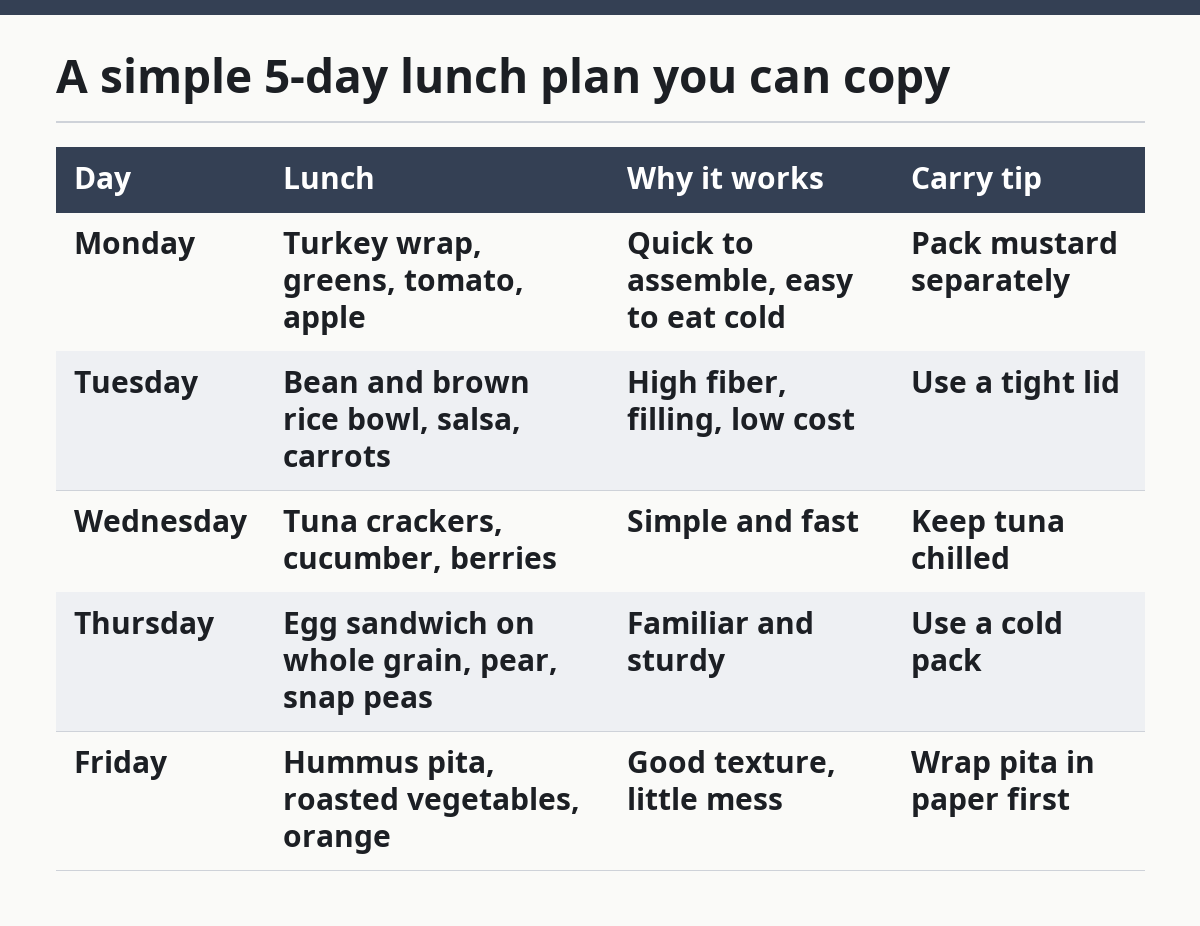
This plan uses only a few ingredients across the week, which helps with prep and waste. The drawback is obvious: if you dislike one of the base foods, you’ll need a swap. That’s normal. Replace turkey with chicken, tuna with chickpeas, or pita with whole-grain bread.
The point is not to force one perfect menu. The point is to make lunch easy enough that you actually bring it.
FAQs
What is the best heart-healthy lunch for work?
The best lunch for work is the one you can safely store, eat without a mess, and finish without feeling hungry an hour later. A whole-grain wrap with lean protein and vegetables is a strong default because it travels well and needs no reheating.
Can I eat sandwich lunches and still be heart-healthy?
Yes, if you choose the fillings carefully. Whole-grain bread, turkey or chicken, hummus, vegetables, and mustard are better choices than deli-heavy sandwiches loaded with cheese and salty spreads.
How do I keep a packed lunch safe without a fridge?
Use an insulated bag and a cold pack for anything perishable. The food-safety rule is simple: cold foods shouldn’t sit out longer than 2 hours, or 1 hour if it’s hot outside.
What should I pack if I don’t have time to cook?
Use foods that need almost no prep: fruit, yogurt, nuts, whole-grain crackers, hummus, canned beans, and prewashed vegetables. A store-bought rotisserie chicken can help too, but check the sodium and keep portions sensible.
Is a salad always the healthiest lunch?
No. A salad can be a good choice, but it can also be weak on protein or heavy on salty dressing and toppings. A heart-healthy lunch is about the whole meal, not just the greens.
Drafted with AI; not yet reviewed by a person.