Last updated: November 20, 2026
Quick Answer: 4 parts make a practical heart-healthy lunch for outdoor jobs: one protein, one high-fiber carb, one fruit or vegetable, and one cold source. Outdoor job lunches need to stay cool, travel well, and still support your heart. Pack lean protein, fiber-rich carbs, fruit, and unsalted fats in a cooler with an ice pack. The sections below show how to build that lunch without soggy bread, melted food, or a salt bomb.
In short, How to Build a Heart-Healthy Lunch for Outdoor Jobs starts with food that can handle heat, a cold pack, and simple packaging that won’t leak in a truck or tool bag.
Key Takeaways
- Build the lunch around one protein, one high-fiber carb, and one fruit or vegetable.
- Use a cooler and an ice pack for anything that should stay cold for the whole shift.
- Choose foods that still taste good after sitting in heat, not just foods that sound healthy.
- Keep jerky, nuts, and other shelf-stable items as backup, not the whole plan.
- Cut back on sodium-heavy deli meat, creamy spreads, and sweet drinks that leave you thirsty.
What should go in a heart-healthy lunch for outdoor work?
A heart-healthy lunch for outdoor work should combine protein, fiber, and hydration in one container. That mix keeps you full longer, helps energy stay steady, and avoids the heavy, salty lunch that can make a hot shift feel worse by 2 p.m.
Picture this: you’re loading tools, climbing ladders, or working on a roof in 90-degree heat, and your lunch has to survive the truck ride and still be safe at noon. That means the food has to do two jobs: stay cold and stay useful.
A solid lunch often has:
- 1 protein: grilled chicken, tuna, eggs, beans, tofu, or plain Greek yogurt in a chilled side cup
- 1 high-fiber base: whole-grain wrap, whole-wheat bread, brown rice, quinoa, or beans
- 1 produce item: apple, orange, grapes, carrot sticks, snap peas, or cherry tomatoes
- 1 healthy fat: avocado, hummus, nuts, or seeds in a small portion
The best part? You do not need a fancy meal prep plan. A turkey wrap, a piece of fruit, and a handful of unsalted nuts can work if the salt and temperature stay under control.
On the flip side, a big hoagie loaded with processed meat, cheese, and mayo is a poor fit for heat and heart health. It can be greasy, high in sodium, and hard to keep cold unless you use a proper cooler.
How do I keep lunch safe and fresh on a worksite?
You keep lunch safe and fresh by treating it like a cold chain problem, not a snack problem. If you are unsure about food safety on a long, hot shift, check current guidance from the U.S. Food and Drug Administration or a registered dietitian before relying on room-temperature food. Use a cooler, at least one ice pack, and separate food that needs refrigeration from shelf-stable backup food.
Picture this: your lunch sits in a truck cab, a trailer, or a jobsite break room for several hours before you get to it. The food does not care that you were busy. It only cares about time and temperature.
Here’s the catch: a paper bag is fine for dry snacks, but it is the wrong tool for egg salad, tuna, yogurt, or sliced chicken. If cold food warms up too long, it stops being a smart lunch fast.
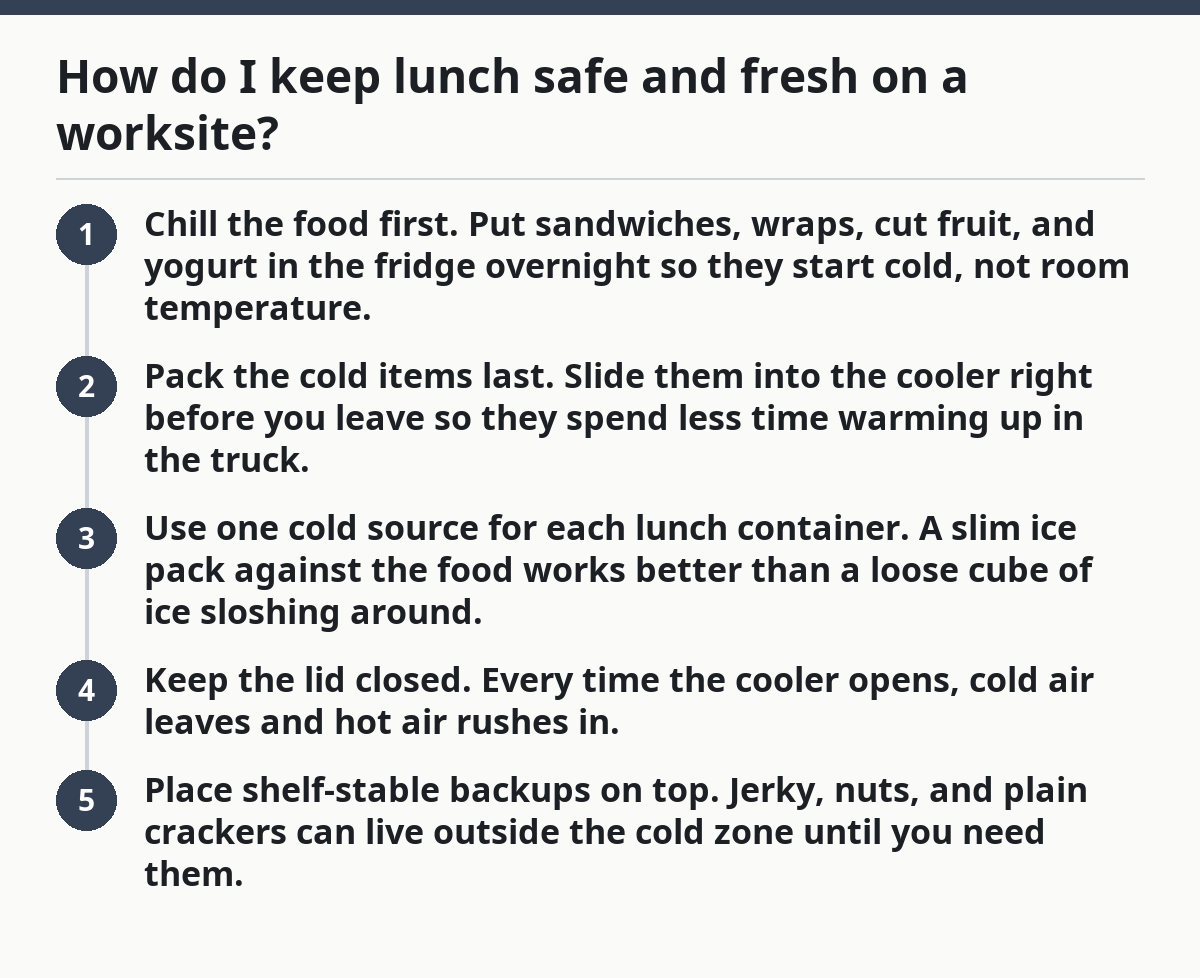
Use this simple routine:
- Chill the food first. Put sandwiches, wraps, cut fruit, and yogurt in the fridge overnight so they start cold, not room temperature.
- Pack the cold items last. Slide them into the cooler right before you leave so they spend less time warming up in the truck.
- Use one cold source for each lunch container. A slim ice pack against the food works better than a loose cube of ice sloshing around.
- Keep the lid closed. Every time the cooler opens, cold air leaves and hot air rushes in.
- Place shelf-stable backups on top. Jerky, nuts, and plain crackers can live outside the cold zone until you need them.
A hard-sided cooler is usually better than a soft lunch bag for long, hot shifts because it holds cold longer and handles rough rides better. A soft bag still works for short mornings or mild weather, but it gives you less margin.
If you want a simple rule to remember, use the 4-hour shift test: if lunch may sit in heat for hours, it needs real cold storage, not hope.
Which foods travel well in heat?
Foods that travel well in heat are dry, dense, and not mayo-heavy. Wraps, fruit, nuts, and jerky hold up better than wet salads or creamy sandwiches when the temperature climbs.
Picture this: the truck bed is hot, the cab is hotter, and your lunch is still fine at noon because you packed the kind of food that can take a little abuse. That is the goal.
Good heat-resistant choices include:
- Whole-grain wraps with hummus, chicken, tuna, or beans
- Apples, oranges, grapes, peaches, and bananas
- Unsalted or lightly salted nuts and seeds
- Jerky with lower sodium than most standard versions, if you can find it
- Roasted chickpeas or bean-based snack cups
- Peanut butter on whole-grain bread or rice cakes
These foods travel well because they do not depend on creamy sauces or delicate greens. They also give you protein and fiber without needing a microwave.
Avoid foods that turn miserable fast in the heat:
- Mayo-based chicken or tuna salad
- Leafy salads with dressing already mixed in
- Soft cheese left unrefrigerated
- Sushi or seafood that needs strict cold storage
- Pastries or sugar-heavy snacks that leave you hungry again soon
If you want a sandwich, build it with sturdier parts. Mustard, hummus, sliced turkey, and sturdy bread beat wet tomatoes and mayo every time. Put tomato slices in a separate bag if you want them at lunch instead of at breakfast.
The truth is, a simple outdoor lunch is often plain food packed well. A tortilla, beans, avocado, and a side of fruit can beat a “healthy” salad that arrives wilted and warm.
How do I build a lunch that keeps me full without too much salt?
You build a filling lunch by putting 25 to 30 grams of protein worth of food into the box in a way that does not depend on deli meat or salty sauces. For many people, that means choosing beans, eggs, chicken, tuna, tofu, or plain yogurt instead of a processed meat stack.
Picture this: you finish a hard shift and still have another few hours of work or driving ahead. If lunch was mostly white bread and chips, you’ll feel it. If it had protein, fiber, and a little fat, the gap feels smaller.
A good heart-healthy lunch usually follows this pattern:
- Protein base: chicken breast, hard-boiled eggs, tuna, beans, lentils, tofu, or plain Greek yogurt
- Fiber base: whole grain wrap, brown rice, quinoa, or beans
- Produce: fruit or crunchy vegetables
- Small fat source: nuts, seeds, avocado, or hummus
That pattern matters because a lot of “quick lunch” food for jobsites is overloaded with sodium. Deli meat, jerky, packaged soups, and snack chips can all push salt up fast. One salty item is fine; making every item salty is where the trouble starts.
A better move is to use low-sodium staples at home and save the salt for one small item. For example:
- Whole-grain wrap
- Chicken or chickpeas
- Cucumber and spinach
- Apple
- Small bag of unsalted almonds
If you like jerky, treat it like a backup protein, not the main protein every day. Many brands are sodium-heavy, and that adds up quickly in a workweek.
For general heart-health guidance, the American Heart Association’s nutrition pages are a good place to start, and the U.S. Department of Agriculture’s MyPlate guide can help with portion balance. Those are broad tools, not lunch rules, but they point in the right direction. For simple food safety rules, the FDA and USDA both publish current guidance.
What packaging works best on a dusty, hot jobsite?
The best packaging is leak-resistant, easy to open with dirty hands, and simple enough to repack fast. A lunch that needs a knife, a fork, and three separate lids is a lunch that will get skipped.
Picture this: you’re on a jobsite with dust, gloves, and not much time. You need a lunch you can open in 30 seconds and eat without chasing food around a paper napkin.
Use containers that do three things well:
- Seal tightly so dressings and juices stay inside
- Open easily so you can eat fast
- Stack neatly so they fit in a cooler without crushing bread
Good packaging choices include:
- Reusable plastic or glass containers with tight lids
- Wraps in parchment or foil
- Small condiment cups for hummus, mustard, or dressing
- A hard cooler with a reusable ice pack
- A separate dry bag for nuts, jerky, or crackers
One useful habit is to pack wet ingredients apart from dry ones. Keep tomato slices, pickles, dressing, and fruit juice away from bread until you eat. That protects texture and keeps your lunch from turning into mush.
Here’s where many people go wrong: they pack a beautiful sandwich, then throw it in a flimsy bag with no cold source. By lunch, the bread is soggy, the filling is warm, and the whole thing feels like a waste.
Mess-free packaging also helps with hand hygiene. If you work with grease, dirt, or chemicals, a lunch with fewer sticky surfaces is easier to handle safely. A wrap usually beats an overloaded sub for that reason alone.
What backup food should I keep for long shifts?
Shelf-stable backup food should be simple, heart-aware, and ready when the cooler gets forgotten or the shift runs long. Keep nuts, jerky, whole-grain crackers, and single-serve fruit as a second line, not as the main lunch every day.
Picture this: the day runs late, the cooler gets buried under gear, and lunch turns into a 15-minute stop instead of a full break. A backup pack saves you from the vending machine.
Good backup options include:
- Unsalted nuts in a small portion pack
- Jerky with lower sodium, if available
- Whole-grain crackers
- Single-serve applesauce cups with no added sugar
- Tuna or salmon pouches, if you can keep a fork handy
- Dry roasted chickpeas
These foods are useful because they do not need refrigeration right away. They also fit in a glove box, toolbox side pocket, or dry pouch. That said, they are not all equal. Jerky and tuna pouches can still be high in sodium, so read labels if you have time.
A backup plan should solve two problems: hunger and heat. A backup like this can work for a few hours in a hot truck, but it is not a guarantee for every climate or food type. The weak backup is a candy bar and a bag of chips, because that solves neither one.
If you want the simplest system, keep one “cold lunch” and one “dry backup” in the same cooler. Eat the cold lunch first. Save the shelf-stable item for the time your day slips.
That approach fits the broader planning advice on the hub page for Heart-Healthy Lunch Planning for Work, School, and Errands, but this page stays focused on the outdoor job version.
Common mistakes that make outdoor lunches worse
The worst mistake is packing a lunch that only works in an office fridge. That choice costs you safety, taste, and energy by lunch break.
Picture this: you meant well, packed a salad, and now it is limp, warm, and sitting in a bag with a soggy dressing cup. That lunch teaches the wrong lesson fast.
Common mistakes include:
- Using deli meat as the main protein. It often carries more sodium than people expect. Swap in chicken, eggs, beans, or tuna.
- Skipping the cooler. Without cold storage, yogurt, mayo, and sliced meat become poor choices. Use a cooler and ice pack instead.
- Packing only snacks. Nuts and fruit are good, but they do not replace a full meal on a hard labor day. Add protein and a real base.
- Choosing wet ingredients without separation. Tomatoes, dressing, and pickles turn bread soft fast. Pack them apart.
- Relying on sugary drinks. They can leave you thirsty. Water is the cleaner default, and unsweetened drinks are better than soda for most shifts.
A little planning beats a big lunch that fails in heat. If you only remember one thing, make it this: cooler first, protein second, salt last.
For broader heart-health eating guidance, the American Heart Association and USDA MyPlate are reliable reference points. For a worksite lunch, though, the best test is simpler: will it still be safe, filling, and easy to eat after a hot morning?
What should I pack for a heart-healthy lunch outdoors?
Pack a lean protein, a fiber-rich base, fruit, and a cold source. A whole-grain wrap with chicken or beans, an apple, and a small bag of unsalted nuts is a strong starting point. Put it in a cooler with an ice pack if it needs to stay cold for more than a short ride.
How do I keep lunch fresh on a worksite?
Keep lunch fresh by starting with cold food, using a hard cooler or insulated bag, and closing it as much as possible. Pack wet items apart from dry ones so bread and wraps do not get soggy. If the shift is long, add a second ice pack and keep shelf-stable backups separate.
What lunch foods travel well in heat?
Wraps, fruit, nuts, jerky, and bean-based foods travel well in heat because they hold their shape and do not depend on mayonnaise or soft greens. Avoid creamy salads and delicate sandwiches if they will sit in a warm cab or truck for hours. Choose sturdy foods first, then pack them cold when needed.
Drafted with AI; not yet reviewed by a person.