Last updated: November 20, 2026
In short: Build fruit, whole grains, and protein into a breakfast you can eat in 5 minutes or less, and make it the night before if sunrise is not on your side.
Key Takeaways
- A quick, heart-smart breakfast can give steady fuel without a heavy, salty start.
- Before sunrise, make breakfast portable, closed, and portioned.
- Assemble it at night so the morning costs almost nothing.
- If you only have 5 minutes, eat something already cooked, cut, or ready to go.
The early morning breakfast routine is mostly a timing problem, not a cooking problem. In this guide on How to Make Heart-Healthy Breakfasts for Very Early Mornings, the sections below show what to make, what to skip, and how to keep it heart-smart when you’re half awake.
What makes a heart-healthy breakfast work before sunrise
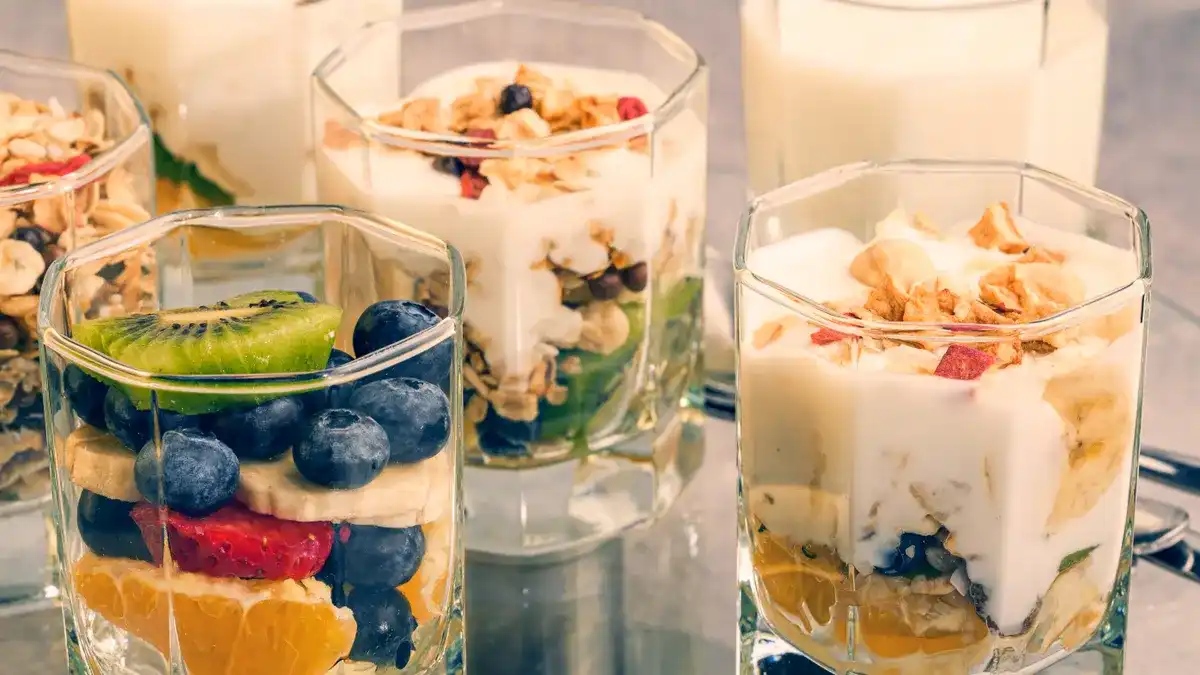
A heart-healthy breakfast for very early mornings gives you steady fuel without a heavy, salty start. The best choices usually pair fiber + protein + unsaturated fat in a form you can grab in 1 to 10 minutes, not in a recipe that needs 20 minutes and a sink full of dishes.
Picture this: you’re up at 4:45 a.m., the kitchen light is harsh, and you need something that won’t feel like a chore. You do not need a special “breakfast plan.” You need a repeatable one.
- Fruit gives quick energy and color.
- Oats, toast, and other whole grains bring fiber.
- Yogurt, eggs, nut butter, or tofu add staying power.
The American Heart Association’s advice on heart-healthy eating lines up with this pattern: focus on foods with fiber and unsaturated fats, and go easy on sodium, added sugar, and saturated fat. That matters at breakfast because many fast options—pastries, bacon sandwiches, sugary cereals—hit hard and fade fast. A plain bagel can do the same. Not even close to ideal.
For a very early morning routine, the winning move is simple: choose one starch, one protein, one produce item. If you want a practical filter, use this:
- Starch: oats, whole-grain toast, whole-grain wrap
- Protein: Greek yogurt, boiled eggs, nut butter, soy yogurt
- Produce: banana, berries, orange, apple slices
The catch is that “healthy” does not help if the food is too messy to eat at 5 a.m. The form matters as much as the ingredients. Smoothies, overnight oats, toast, and yogurt cups all work because they travel well in the hand or cup.
How to eat breakfast when you leave before sunrise
You eat breakfast before sunrise by making it portable, closed, and already portioned. If you can carry it in one hand or one container, you’re far more likely to eat it than if it needs a fork, a skillet, and a full cleanup.
Picture this: you’re looking at the clock, and the door opens in 7 minutes. That is the wrong moment to start cooking. The answer is a breakfast you can finish cold, sip on, or assemble in under 2 minutes.
- Pick one base the night before: oats, toast, yogurt, or a smoothie bag in the freezer.
- Add one protein you can grab fast: boiled eggs, Greek yogurt, or nut butter.
- Add fruit in a no-cut form if possible: banana, apple, berries, or orange segments.
- Put everything at eye level in the fridge or near the kettle, blender, or toaster.
- Pack a backup item in case the morning goes sideways: trail mix with unsalted nuts, a second piece of fruit, or a yogurt drink with low added sugar.
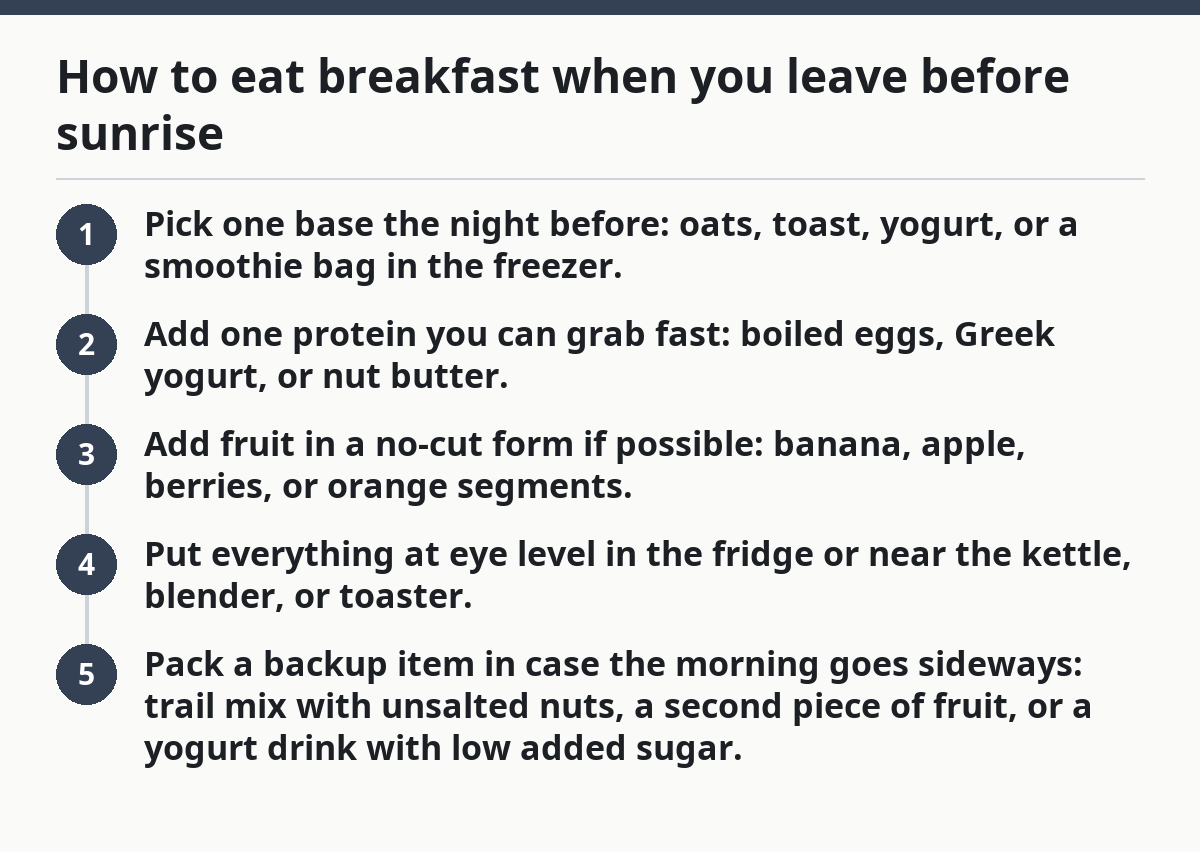
That approach can reduce decisions at the worst time of day. A lot of people skip breakfast not because they are “not hungry,” but because the first 10 minutes are too packed. A ready-to-eat box solves that.
Here’s the catch: if your breakfast needs a knife, a pan, or a lot of chewing on the way out the door, it will be dropped first. A banana plus yogurt beats a beautiful scramble you never have time to plate. The same goes for an overstuffed smoothie that takes 15 minutes to drink. Keep it practical.
The fastest heart-healthy breakfasts to make the night before
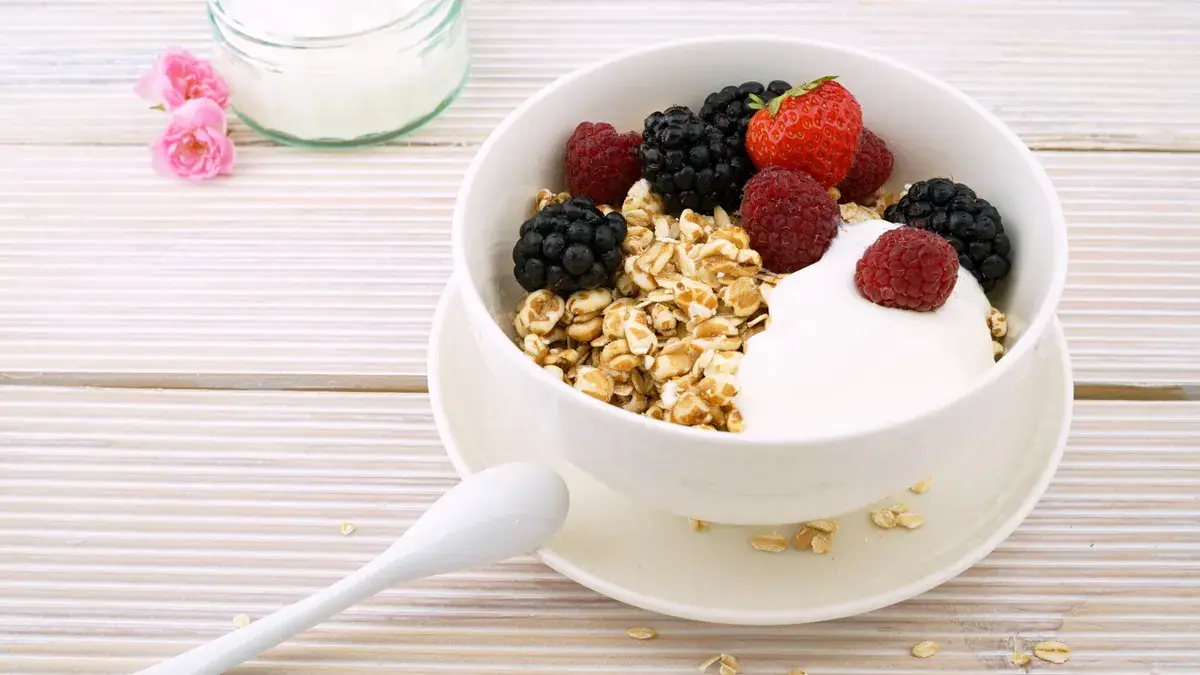
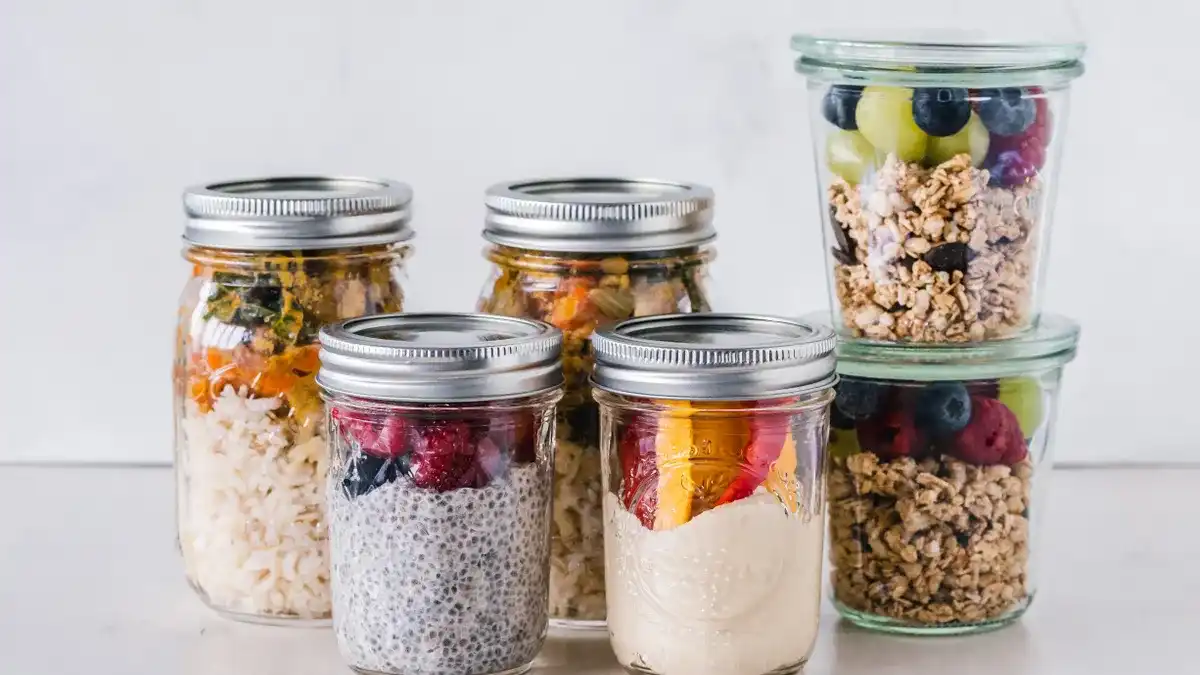
The fastest heart-healthy breakfasts to make the night before are the ones you assemble in 5 minutes so the morning costs almost nothing. Overnight oats, yogurt bowls, and ready-to-blend smoothies are three easy wins for very early mornings.
Picture this: you’re tired at 9:30 p.m., and the next morning starts before most people’s alarm even rings. Night-before food helps here because your future self is not in the mood to measure chia seeds or wash berries.
- Overnight oats: oats + milk or fortified soy milk + fruit + nuts or seeds.
- Yogurt cup: plain yogurt + berries + walnuts + a sprinkle of oats.
- Smoothie pack: fruit + greens + yogurt or soy milk in the blender cup or freezer bag.
Overnight oats are a strong fit because oats are naturally filling and easy to flavor without much sugar. Use a jar, bowl, or container with a lid. A 12-ounce jar is usually enough for a basic serving, though any lidded container works. If you add chia or flax, keep the portion modest; too much can make the mix thick and hard to eat fast.
Yogurt cups work well when you want cold food with no morning mess. Plain yogurt is better than dessert-style yogurt, since sweetened versions can turn breakfast into a sugar bomb. Add fruit for taste, then use nuts or seeds for texture. If you need a dairy-free option, unsweetened soy yogurt gives a similar structure with plant protein.
Smoothies can be heart-smart if they are built with purpose. A fruit-only smoothie is just a quick sugar hit. Better choices use frozen fruit, plain yogurt or soy milk, and a handful of greens. You can freeze the fruit in bags on Sunday, then dump and blend on a weekday. That keeps the morning to about 1 minute of setup.
What should I eat if I only have 5 minutes?
If you only have 5 minutes, eat a breakfast that is already cooked, already cut, or does not need cooking at all. That means toast with nut butter, boiled eggs with fruit, yogurt with oats, or a smoothie you blended the night before.
Picture this: you’ve got one eye open, the toaster is all you can manage, and you still want something that helps your heart instead of hammering it. The trick is to keep the meal short, not fancy.
- Whole-grain toast + nut butter + banana slices
- 2 boiled eggs + whole-grain toast + an orange
- Plain yogurt + berries + a spoon of oats
- Smoothie with fruit, yogurt, and unsweetened milk
Whole-grain toast is useful because it is warm, fast, and easy to pair. Look for bread with whole grain as the first ingredient and a slice size you can actually finish. Nut butter brings protein and fat, but the portion should stay sensible. A thick, dripping layer is where things get heavy fast.
Boiled eggs are a clean option if you make them ahead. Keep them peeled or unpeeled in the fridge and use them within a few days, following your local food-safety guidance. Pair eggs with fruit or toast so breakfast does not become all protein and no fiber.
Now, you might be wondering if a smoothie counts as a “real” breakfast. It does if it has protein and fiber. A tall glass of fruit juice does not. A blender drink with frozen berries, oats, and yogurt is different. It can be filling, portable, and fast enough for the morning you actually live in.
How do I keep breakfast sleep-friendly and not too heavy?
You keep breakfast sleep-friendly by avoiding a huge, greasy meal before you rush out the door and by choosing foods that sit well with a short night. For very early mornings, a lighter breakfast is usually easier on the stomach and the schedule.
Picture this: you were asleep by 10 p.m., and now you’re trying to eat something that won’t make you feel stuffed or sluggish by 6 a.m. The goal is steady energy, not a second dinner.
- Keep the portion moderate.
- Favor plain or lightly sweet foods.
- Use salt sparingly, especially in breakfast meats and packaged items.
- Choose one rich ingredient, not three.
A heavy breakfast often comes from stacking too many calorie-dense foods at once: sausage, cheese, buttered pastry, sweet coffee, and a large juice. That pile can feel comforting, then leave you foggy. A lighter start—oats, fruit, yogurt, toast, eggs—usually lands better.
Sleep also changes appetite. Some people cannot face food right after waking. If that’s you, start small: half a banana, a few spoonfuls of yogurt, or half a smoothie. Then eat the rest 30 to 60 minutes later if needed. That is still breakfast.
The best part is that you do not need to force a huge plate to “count.” A small, balanced meal is better than a big one you avoid. The American Heart Association’s general pattern fits here too: limit sodium, saturated fat, and added sugar, and let whole foods do the work. If you want a broader planning frame, this page sits under the Heart-Healthy Breakfast Planning and Morning Routines hub, which handles the bigger routine around it.
The common mistakes that wreck a heart-healthy early breakfast
The most common mistakes are sugar-heavy foods, too little protein, and breakfast choices that only work in theory. They cost you energy, satisfaction, and time, and they usually show up by 9 a.m. as hunger, brain fog, or a coffee refill you did not need.
Picture this: you grabbed the first thing in reach, and now you’re hungry again before your first meeting. That is the early-morning trap.
-
Mistake: pastry or sweet cereal alone.
Cost: quick hunger and a sugar crash.
Do this instead: pair fruit with yogurt, eggs, or nut butter. -
Mistake: skipping protein because you are in a rush.
Cost: the meal fades fast.
Do this instead: keep boiled eggs or plain Greek yogurt ready. -
Mistake: breakfast so salty it tastes “savory” but feels heavy.
Cost: it can push sodium too high before lunch.
Do this instead: use herbs, fruit, cinnamon, or unsalted nuts for flavor.
There is also a form mistake. A bowl can be healthy and still fail if you have to sit down with it for 20 minutes. That is why jars, wraps, travel mugs, and peel-and-eat fruit matter. The container is part of the recipe.
One more miss: trying to turn breakfast into a weekend project every weekday. If the routine takes 15 ingredients, it will break. Keep a short list and repeat it. Repetition is not boring when it gets you fed.
Make-ahead shortcuts that save the weekday morning
Make-ahead shortcuts save the morning by moving the work to a calmer time, usually the night before or one batch session each week. If you spend 20 minutes on Sunday, you can remove a lot of weekday friction.
Picture this: you open the fridge and breakfast is already waiting in plain sight. That is the point. The goal is not meal prep perfection; it is having three or four parts that can be combined fast.
- Cook a small batch of boiled eggs.
- Portion oats into jars for overnight oats.
- Wash fruit and store it at the front of the fridge.
- Pre-freeze smoothie ingredients in single servings.
- Keep whole-grain bread or wraps within easy reach.
A few shortcuts do the heavy lifting. Boiled eggs cover several mornings. Overnight oats solve the “I have no time” problem. Frozen fruit keeps smoothies cold without ice, which can water them down. A toaster and a jar do not sound glamorous, but they are reliable.
Portion control matters too. If you buy a large tub of yogurt, divide it into smaller containers so breakfast takes seconds, not a guess-and-scoop moment. If you use nuts or seeds, pre-portion them into small bags or cups. For a heart-healthy breakfast routine, that can help keep portions reasonable and reduce the “just a little more” temptation; if you need personal guidance, check with a dietitian or other qualified professional. The container is part of the recipe.
The truth is, the best early breakfast routine is the one that survives a bad morning. If one option fails—say you ran out of bananas—you still have toast, oats, or eggs. Variety helps, but too much variety slows you down. Choose 3 to 4 repeatable breakfasts, not 12 possibilities that sound nice and vanish in the cold light of dawn.
What is the best heart-healthy breakfast for very early mornings?
The best heart-healthy breakfast for very early mornings is one you can eat in 5 minutes that combines fruit, fiber, and protein. Overnight oats, plain yogurt with berries, or whole-grain toast with nut butter are strong choices because they are filling without being heavy.
The best option is the one you will actually eat before you leave. If a food needs too much prep, save it for a slower morning. For heart health, keep sodium and added sugar modest and let whole foods do the work.
How do i eat breakfast when i leave before sunrise?
You eat breakfast before sunrise by making it portable the night before. Put it in a container, set it near the door or coffee maker, and choose foods that do not need a stove or much cleanup.
Good choices include overnight oats, yogurt cups, boiled eggs, fruit, toast, and smoothies. If you only have a few minutes, start with one of those and keep a backup item ready in case the morning runs late.
What breakfasts are quick but still filling in the morning?
Quick, filling breakfasts usually combine protein plus fiber. That is why yogurt with oats, eggs with whole-grain toast, and fruit with nut butter work so well.
A breakfast made of only coffee and a pastry will not last. A breakfast with oats, fruit, and protein is more likely to hold you until your next meal without making you feel weighed down.
Drafted with AI; not yet reviewed by a person.