Last updated: November 20, 2026
A heart-healthy snack plate at home should pair a protein anchor, a produce portion, and a small carb or crunch item so the plate feels filling without turning into a full meal. The easiest way to do it is to build around one palm-sized protein portion, one fist-sized carb portion, and plenty of produce, then keep dips and extras modest so the plate stays balanced.
Key takeaways
- Start with one protein food first, then add produce, then add a small carb or crunch item.
- A palm-sized protein portion and a fist-sized carb portion are useful guides for a balanced plate.
- Apples, carrot sticks, cottage cheese, almonds, and whole-grain toast all fit well on this kind of plate.
- The goal is satisfaction, not a huge spread; too much food can push the plate out of snack territory.
- A snack plate can work as a small meal if it has enough food to hold you over, but it should not leave you overly full.
What belongs on a heart-healthy snack plate?
A heart-healthy snack plate includes one protein food, one produce item, and one carb or crunch food in portions that stay modest. That mix gives the plate structure instead of turning it into random leftovers on a dish.
A simple plate can start with cottage cheese as the protein anchor, apple slices for produce, and whole-grain toast for the carb side. Carrot sticks add crunch without much fuss, and almonds can fill the gap when you want a little more staying power.
The basic shape matters more than fancy ingredients. According to Flavorfulife, a protein portion should be about the size of your palm, or 25% of the plate, and a carbohydrate food should take up about 25% of the plate, or be about the size of your fist. That leaves room for the rest of the plate to be mostly produce.
A common mistake is building a plate from only “healthy” snack foods like nuts or toast and calling it balanced. That usually makes the plate too heavy on one type of food and too light on the others. A better move is to choose one item from each job: protein, produce, and carb or crunch.
If the plate is for a person who wants heart-healthy diabetic recipes, keep the carb side steady and visible instead of letting it take over. A snack plate works best when you can point to each part and know why it is there.
How do you build the plate step by step?
You build the plate by choosing one anchor food, adding produce, then filling the remaining space with a controlled carb or dip. The order matters because it keeps the snack from drifting into a pile of extras.
- Choose a plate with three open zones so each food has a clear place and the snack stays easy to read.
- Set the protein anchor first, using a palm-sized portion such as cottage cheese so the plate has staying power.
- Add the produce portion, such as apple slices or carrot sticks, so half the plate does not disappear into starch or fat.
- Place the carb or crunch item, such as whole-grain toast or almonds, in the remaining space so the plate feels complete.
- Serve one small dip or spread on the side if needed, keeping it to a modest amount so the snack does not become calorie heavy.
That order gives the plate a clear balance. According to MedlinePlus, a snack should balance enough calories to satisfy you without too many calories that may promote unwanted weight gain. The point is not to make the plate tiny; the point is to make it enough.
One useful guide from Flavorfulife is that one snack-plate serving can look like 1 tablespoon peanut butter, 3 dates, 1 tablespoon butter, 1 oz cheese, 4 large crackers, and 2 eggs. That list is not a shopping list for every plate; it is a reminder that snack portions stay controlled even when the food is dense.
The mistake to avoid here is stacking every food in the same corner of the plate. That makes it easy to overserve the parts that are more calorie dense and easy to undercount the rest. Put each item in its own space, and the plate is easier to read before you eat it.
How much should each part take up?
Each part should be small enough that the plate looks like a snack plate, not a dinner plate in disguise. The simplest guide is the 25% rule for protein and carbs, with produce taking up the rest.
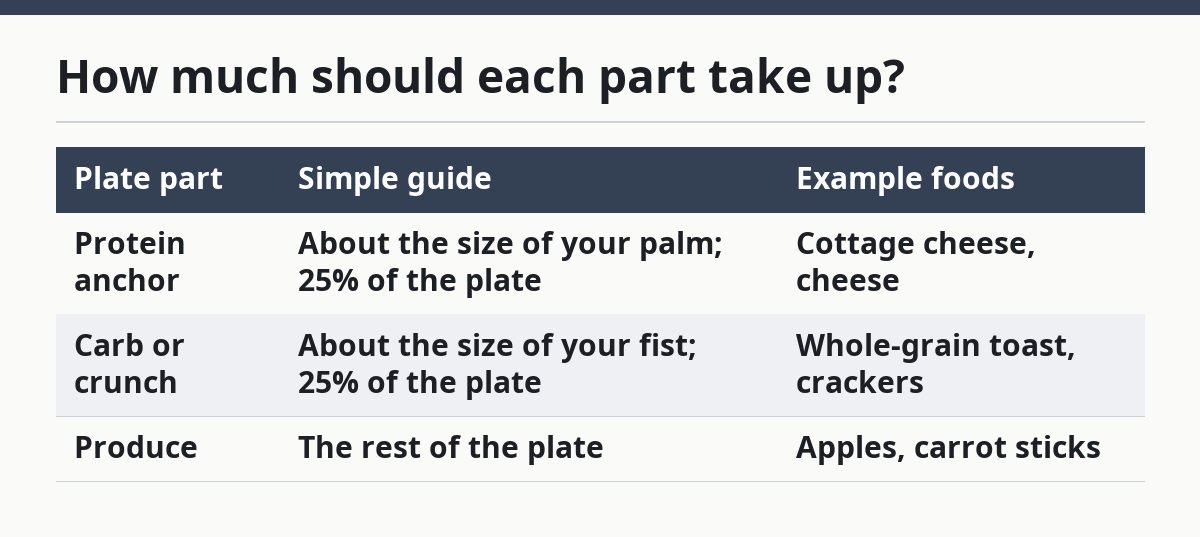
According to Flavorfulife, a protein portion should be about the size of your palm, or 25% of the plate. The same source says a carbohydrate food should take up about 25% of the plate, or be about the size of your fist. That leaves the remaining space for produce and, if you want it, a small dip.
Here is a quick way to think about the parts:
| Plate part | Simple guide | Example foods |
|---|---|---|
| Protein anchor | About the size of your palm; 25% of the plate | Cottage cheese, cheese |
| Carb or crunch | About the size of your fist; 25% of the plate | Whole-grain toast, crackers |
| Produce | The rest of the plate | Apples, carrot sticks |
This balance helps the snack feel like a complete mini-meal without becoming too large. It also keeps the plate from leaning too hard on one food group. A plate with only fruit may look bright but may not keep you satisfied long enough. A plate with only cheese or nuts can crowd out produce fast.
One honest trade-off: this style of snack plate asks for a little more planning than grabbing one item from the kitchen. That extra step is the price of a plate that actually works as a heart-healthy snack instead of a random snack pile. If you want something you can eat with one hand while moving, this format is the wrong fit.
Which foods work best for the protein anchor?
The best protein anchor is a food that is easy to portion and easy to pair with fruit, vegetables, or toast. Cottage cheese is a strong choice because it fits cleanly into a snack plate and gives the plate a steady base.
Other useful protein foods on this kind of plate include cheese and eggs. According to Flavorfulife, 1 oz cheese and 2 eggs are both examples of one snack-plate serving, which shows how quickly protein foods can fill a plate when portioned with care. That matters because protein can make a snack feel substantial without needing a huge amount of food.
The best choice depends on what else is on the plate. Cottage cheese works well with apples or carrot sticks. Cheese can sit beside whole-grain toast. Eggs can take the role of the main protein if the rest of the plate is mostly produce and a light carb.
A common error is to treat nuts as the protein anchor every time. Almonds are useful, but they can be easy to overpour, and they do not add the same volume as cottage cheese or eggs. If you use almonds, keep them in the role of a side crunch, not the whole base of the snack.
The other mistake is choosing a protein food that is so rich that it crowds out everything else. If the protein portion eats most of the plate, the snack stops looking like a balanced plate. The goal is one anchor, not the whole meal.
How do you add crunch without overdoing it?
You add crunch by using one crisp food in a small, defined portion instead of turning the plate into a pile of snack chips or crackers. Crunch works best when it supports the plate, not when it takes over.
Carrot sticks are the easiest crunch factor because they add texture and volume without much effort. Apples do the same job if you want a sweeter crunch. Whole-grain toast gives the plate a firmer bite, and almonds can add a different kind of crunch when you want something more compact.
The crunch item should sit next to the protein, not replace it. A plate of toast alone is a snack. A plate of toast with cottage cheese and apples is a snack plate. That difference matters because the plate format gives you more control over the total food you eat.
The trade-off with crunchy foods is that they can disappear fast. Four large crackers, for example, is one snack-plate serving according to Flavorfulife, which shows how quickly a crisp item can be overdone if the container is opened and poured without thinking. Keep the portion visible on the plate so you can see what you have before you start eating.
If you want the plate to feel heart-healthy and useful for a person who also watches blood sugar, crunch should not be the loudest part of the plate. A little is enough. The plate works best when crunch supports the produce and protein rather than competing with them.
Which dips and add-ons should you use?
Choose dips and add-ons that stay small, because the dip can change the whole plate faster than the main foods do. A little spread can make apples, carrot sticks, or toast easier to eat, but a large scoop can crowd out balance.
According to Flavorfulife, one snack-plate serving can include 1 tablespoon peanut butter or 1 tablespoon butter. That tells you the scale to keep in mind: the dip is a side note, not the main event. A spoonful can be enough to tie the plate together.
This is where many snack plates go off track. Peanut butter on apples is a good match, but a heavy layer of it can make the snack far richer than it needs to be. Butter on toast can also work, but the toast should still have a clear place beside the produce and protein.
The safest rule is to use the dip to connect foods, not to disguise them. A small amount of peanut butter can make apple slices more satisfying. A light spread can make whole-grain toast feel more complete. The plate still needs visible produce and a clear protein portion.
This is also the part of the plate that is least forgiving if you are distracted. A dip looks harmless until it becomes the largest calorie source on the plate. Keep it measured, keep it visible, and keep the rest of the plate simple.
Can a snack plate replace a small meal?
Yes, a snack plate can replace a small meal if it is built to satisfy you without becoming too large. That is the line MedlinePlus draws: enough calories to satisfy you, but not so many that the snack starts to promote unwanted weight gain.
A snack plate feels more like a small meal when it has all three jobs covered: protein, produce, and a carb or crunch item. Cottage cheese with apples and whole-grain toast is one clear example. Cheese with carrot sticks and crackers can also work if the portions stay controlled.
The limit is important. If you keep adding food because the plate looks “too light,” you can quickly move past snack territory. That is why the palm-sized protein guide and the fist-sized carb guide matter. They give the plate a boundary.
This format is not for every situation. If you need a very large meal, a snack plate will not be enough. If you want something to eat while driving or standing, a plate format may be awkward. And if you tend to keep adding “just one more” item, the plate may not help unless you preportion everything first.
For readers who want more structure around snacks and small meals, the hub on heart-healthy snack and small-meal assembly can help connect this idea to other plate-building patterns. This page stays focused on the at-home snack plate so the method stays clear.
What should go on a snack plate?
A snack plate should have one protein food, one produce item, and one carb or crunch food. That mix gives the plate shape and keeps it from turning into a pile of one food group.
Good examples include cottage cheese, apples, carrot sticks, almonds, and whole-grain toast. According to Flavorfulife, a protein portion should be about the size of your palm, or 25% of the plate, and a carbohydrate food should be about the size of your fist, or 25% of the plate.
How do you make a snack plate filling?
You make a snack plate filling by starting with protein and keeping the produce portion visible. Protein does more than a lone cracker or fruit cup can do, so it should come first on the plate.
According to MedlinePlus, a snack should balance enough calories to satisfy you without too many calories that may promote unwanted weight gain. That balance usually comes from pairing cottage cheese or cheese with apples, carrot sticks, or toast instead of eating one food by itself.
Can a snack plate replace a small meal?
Yes, a snack plate can replace a small meal if the portions are enough to hold you over. It should still follow the snack-plate balance, not turn into a full dinner spread.
According to Flavorfulife, the palm-sized protein guide and fist-sized carb guide are useful boundaries. If the plate gets much bigger than that, it stops being a snack plate and starts becoming a meal plate, which changes the purpose of the food.
Drafted with AI; not yet reviewed by a person.