Last updated: November 20, 2026
Key Takeaways
- A shared-kitchen list cuts duplicate buys and keeps salty foods from taking over storage.
- Start with staples everyone uses so the list stays practical for the whole household.
- Buy the same core items each week, then add only foods with a clear owner or use.
- Labels and bins help people return food to the right place before it gets buried.
A shared kitchen gets messy fast, and a heart-healthy shopping list can fix that before the first carton is opened. For How to Build a Heart-Healthy Shopping List for a Shared Kitchen, the quick answer is one list, a few low-sodium staples, and clear storage spots for shared and personal food.
The steps below show how to keep the fridge, pantry, and freezer from turning into a guessing game.
What a heart-healthy shared kitchen shopping list has to do
A heart-healthy shared kitchen shopping list keeps people from buying the same food twice and keeps the salt-heavy stuff from taking over the shelf. It turns a crowded fridge into a simple system with named items, shared staples, and clear storage spots.
Picture this: you’re standing in front of a shared fridge with three half-used tubs of yogurt, two bags of spinach, and a condiment shelf that looks like a traffic jam. A good list solves that by sorting purchases into a few lanes before anyone shops. It also keeps the heart-health part practical, not fussy.
Start with the foods that show up most often in a week: fruit, vegetables, beans, plain grains, low-sodium canned goods, nuts, seeds, and unsalted cooking fats. Then add the shared items that cause the most confusion, like broth, mustard, vinegar, oats, and meal prep containers.
A useful list is not a recipe list. It is a household map.
Use these 4 buckets, and if your household has special dietary needs, check with a registered dietitian or other health professional before you rely on any one list:
- Fresh foods for the fridge, like greens, berries, carrots, and low-sodium deli alternatives if your household uses them
- Pantry staples like oats, brown rice, canned beans, lentils, and no-salt-added tomatoes
- Shared condiments like olive oil, vinegar, mustard, salsa, and plain yogurt
- Personal items like specialty snacks, treats, or allergy-specific foods
Keep the list short enough that two people can shop from it without arguing in aisle 7. A list with 20 clear items beats a vague list with 40. The goal is not perfection; it is repeatable order.
Build the list around shared staples, not random recipes
A heart-healthy shared kitchen list works best when it starts with staples that every person uses in some form. Choose the 10 to 15 items that anchor breakfasts, lunches, and quick dinners, then let everything else hang off that base.
Picture this: you’re trying to shop for four people, but one person wants oatmeal, one wants toast, one wants salads, and one wants rice bowls. If you shop by cravings, you overbuy. If you shop by staples, you cover the week with less waste.
The truth is, shared kitchens fall apart when every shopper builds a separate list from scratch. One person buys a second carton of milk because they did not see the first. Another buys salty crackers because nothing else was labeled. A shared list can help reduce that kind of overlap, especially when the household agrees on one place to check before shopping.
A strong staple set usually includes:
- Oats or another whole grain cereal
- Brown rice, quinoa, or whole-wheat pasta
- Dry or canned beans and lentils
- Low-sodium broth or stock
- Canned tomatoes with no salt added
- Plain frozen vegetables
- Fresh produce that keeps for several days
- Eggs, yogurt, or tofu if your group uses them
- Nuts or seeds without added salt
- Olive oil and a neutral oil for cooking
If the household shares meals only part of the time, divide the list into shared and personal sections. That keeps a roommate from claiming the last apple as “communal” while someone else planned on it for lunch. A 2-column note in a phone app or a paper list on the fridge door works fine.
This is also the place to decide what the kitchen will not carry. If a salty snack, sugary cereal, or specialty item causes repeat conflict, keep it off the shared list and mark it as personal storage. Clear boundaries help more than reminders do.
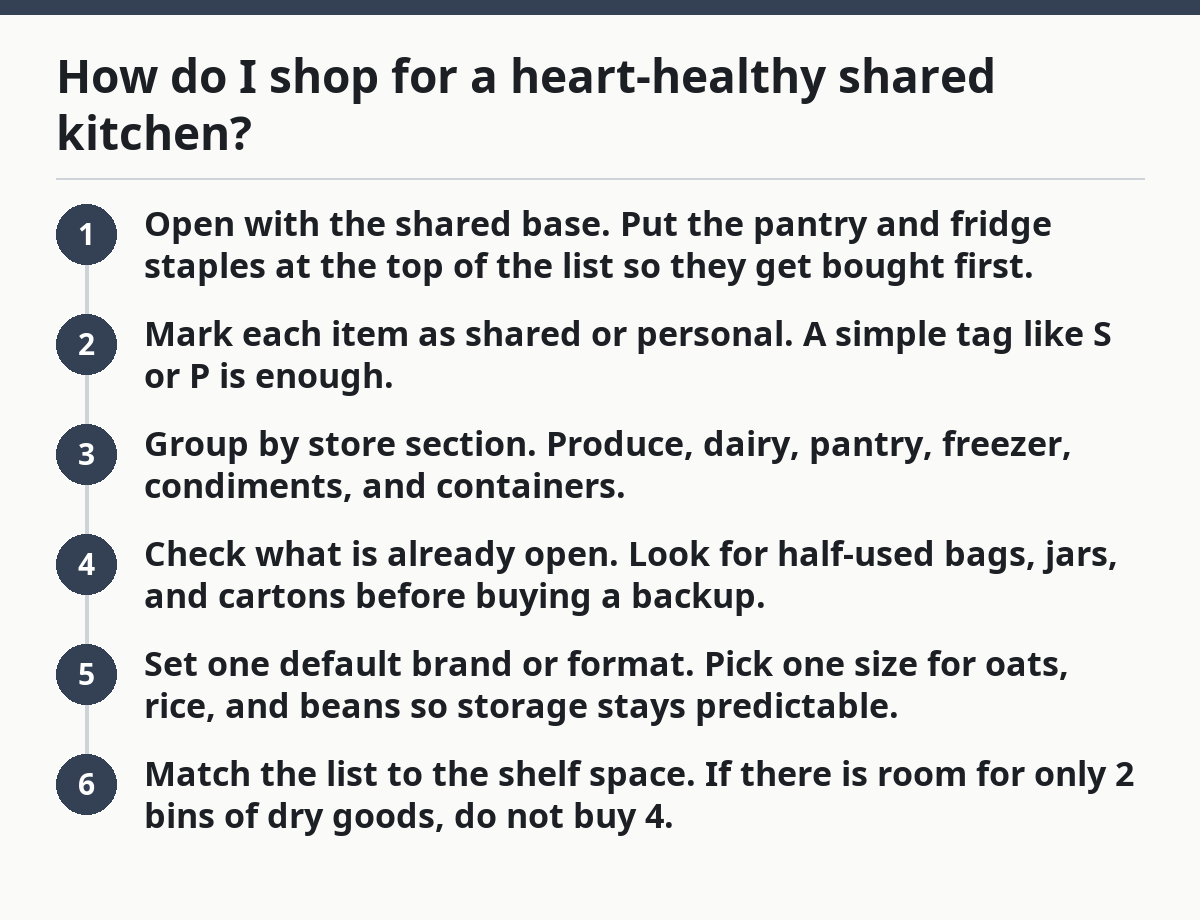
How do I shop for a heart-healthy shared kitchen?
Shop the heart-healthy shared kitchen by buying the same core items every week, then adding only the foods that have a clear owner or a clear use. One shared list, one storage plan, and one check before checkout keep the kitchen from doubling up.
Picture this: you’re in the store with a phone list open, and every aisle tempts you to add one more “just in case” item. That is how shared kitchens pile up duplicate sauces, extra bread, and three open bags of rice. A simple routine cuts that down fast.
Use this 6-step procedure:
- Open with the shared base. Put the pantry and fridge staples at the top of the list so they get bought first.
- Mark each item as shared or personal. A simple tag like S or P is enough.
- Group by store section. Produce, dairy, pantry, freezer, condiments, and containers.
- Check what is already open. Look for half-used bags, jars, and cartons before buying a backup.
- Set one default brand or format. Pick one size for oats, rice, and beans so storage stays predictable.
- Match the list to the shelf space. If there is room for only 2 bins of dry goods, do not buy 4.
This works even when the household has different food habits. One person can eat plain yogurt while another uses it in sauces. One person can want fruit daily while another only wants it for snacks. Shared shopping is about inventory control, not identical plates.
Keep a running note of the items that disappear fastest. If olive oil is gone by Thursday in your house, buy one bottle at the start of the week and a backup only if the cabinet has room. If the shared fridge is crowded, move to smaller packages. A 16-ounce container often stores better than a giant tub that becomes a spill risk.
Avoid the habit of “buying for the mood.” That is how a heart-healthy list turns into chips, frozen pizza, and five condiments no one finishes.
Labels and storage bins make the list work
Labels and storage bins make the list work because they tell every person where a food belongs before it gets buried under someone else’s lunch. Label the food, label the owner if needed, and give the shared fridge a fixed home for each category.
Picture this: you open a shared fridge and see three meal prep containers, two jars of mustard, and a mystery tub with no date. Without labels, people guess. Guessing leads to waste, food fights, and repeat purchases that should never have happened.
Use labels on:
- Meal prep containers
- Opened bags of nuts, seeds, and grains
- Leftovers in the fridge
- Shared condiments
- Specialty foods that belong to one person
A label does not need to look pretty. It needs to answer three questions: what it is, who it belongs to, and when it was opened if that matters. A roll of tape and a marker does the job. If the household likes a cleaner look, use waterproof label stickers.
Storage bins help just as much. Keep one bin for breakfast items, one for lunch components, and one for unopened dry goods if the pantry is crowded. In the fridge, group greens together, sauces together, and prepared foods together. That reduces the “Where did it go?” problem.
A shared fridge works best with obvious zones:
- Top shelf for ready-to-eat foods
- Middle shelf for dairy or plant-based alternatives
- Lower shelf for meal prep containers
- Door for condiments
- Crisper for produce
This is where many generic guides go wrong. They tell people to label everything and leave it at that. Labels without zones still fail if the shelf turns into a free-for-all. A shared kitchen needs both names and places.
If the household uses meal prep containers, choose a shape that stacks well. Round containers waste shelf space. Rectangular ones fit better in a crowded fridge. That one choice can save a whole shelf.
How to divide condiments and shelf staples without confusion
Divide condiments and shelf staples by function, not by who bought them last. Keep heart-healthy basics shared, keep specialty items personal, and store both in separate rows or bins so no one has to hunt.
Picture this: you’re reaching for mustard and find three jars behind a bottle of salad dressing. Someone bought one, someone inherited one, and no one knows which one is open. Shared kitchens need a system that makes the answer obvious in 2 seconds.
A good rule is simple:
- Shared condiments: olive oil, vinegar, mustard, salsa, plain yogurt, spices that everyone uses
- Personal condiments: hot sauce with a specific heat level, specialty spreads, niche dressings, or anything one person uses alone
- Shared staples: oats, rice, beans, lentils, low-sodium canned tomatoes, frozen vegetables
- Personal staples: allergy-specific products or foods one person needs for a separate routine
Set one shelf or one bin for each group. If the pantry is small, use a basket for shared breakfast items and another for shared cooking items. The point is not to make the kitchen fancy. The point is to keep shared foods from disappearing behind personal ones.
Pay attention to the bottlenecks. Condiments with short bottles vanish behind taller jars. Small packets get shoved to the back. A labeled tray or bin keeps them visible. That matters in a shared kitchen because visibility reduces duplicate buying more than reminders do.
Also, do not let “shared” become a dumping ground. If nobody eats the third jar of pickle relish, it should not stay on the same shelf as the olive oil. Cut it from the next list. A heart-healthy shared kitchen list gets stronger every time you remove a dead item.
If your group likes meal prep, store sauces in small containers instead of leaving whole jars on the shelf. That cuts the chance of cross-use confusion and helps portions stay cleaner. A single, labeled container often works better than a crowded bottle lineup.
The mistakes that cost money and food
The biggest mistake is buying for the household as if it were one person. Split shared foods from personal foods, or you’ll pay for overlap, waste, and missing ingredients every week.
Picture this: you’ve done the shopping, but two days later the fridge is full and nobody can find the hummus. The list was not the problem. The structure was. Shared kitchens fail when they skip one clear owner for each item.
Three mistakes show up again and again:
- No ownership tags. Cost: people assume someone else bought it. Fix: mark shared or personal on the list and on the package.
- No shelf plan. Cost: groceries get hidden and expire. Fix: assign a shelf, bin, or drawer to each food group.
- Too many backup buys. Cost: duplicate milk, extra bread, and extra beans that crowd the pantry. Fix: check what is open before shopping.
The other common problem is shopping without a cutoff. A household says “heart-healthy” and then fills the cart with every low-sodium version of the same item. It sounds careful. It is not. It bloats the budget and clogs storage.
Use one simple rule for the next trip: if the shared fridge or pantry can’t show where the item will live, do not buy a backup of it. This is especially useful for containers, condiments, and bulk grains. A kitchen that runs on visible storage usually needs fewer emergency runs.
For practical guidance on heart-healthy ingredient choices and pantry structure, this page works best as the logistics companion to the hub on Heart-Healthy Ingredient Shopping and Pantry Systems. That hub handles the broader shopping framework. This page handles the shared-space part.
A weekly shared-kitchen list that actually holds up
A weekly shared-kitchen list holds up when it repeats the same structure and only swaps out the foods that run out. Start with a fixed core, add the week’s produce, and leave room for personal items without mixing the two.
Picture this: you’re staring at a blank note app on Sunday night and trying to remember everything from breakfast to condiments. A weekly template keeps the list from turning into a memory test. That matters in a shared home, where every missed item becomes someone else’s problem by Wednesday.
Try this structure:
- Produce: 5 to 8 fruits and vegetables that fit the week
- Fridge staples: yogurt, eggs, hummus, tofu, or similar shared proteins
- Pantry staples: oats, rice, beans, lentils, canned tomatoes
- Condiments: olive oil, vinegar, mustard, salsa
- Containers and supplies: meal prep containers, labels, marker, storage bins
Then add one line for “needs replacing” and one line for “personal.” That final line keeps the shared list from absorbing someone’s specialty items. It also makes the shopping trip faster because the list is sorted before anyone steps into the store.
A shared kitchen works best when the list gets reviewed in the same place every week. Put it on the fridge, in a note app, or on a clipboard in the pantry. Pick one and stick with it. A moving target creates missed buys.
Once the system is set, the list gets shorter, not longer. You stop re-buying staples you already have. You stop stuffing the fridge with random extras. And you know where the heart-healthy foods live before the first meal of the week gets made.
For readers who want the bigger framework behind ingredient choice, pantry setup, and shopping flow, the hub on Heart-Healthy Ingredient Shopping and Pantry Systems should sit next to this process.
What should be labeled in a shared fridge or pantry?
Label anything that can be confused with someone else’s food. That includes meal prep containers, open bags of grains, leftovers, condiments, and specialty items that only one person uses. A label should name the food and, when needed, the owner or open date so nothing gets lost in the back of the shelf.
How do I avoid grocery overlap in a shared household?
Use one list, one storage plan, and one check before checkout. Put shared staples at the top, mark personal items clearly, and look at open packages before buying. A simple review with the household can help keep duplicate purchases down.
Drafted with AI; not yet reviewed by a person.