Last updated: November 20, 2026
In short: plan your farmers market trip around produce first, then ask growers how they grow it and what’s in season. For How to Build a Heart-Healthy Shopping Routine for the Farmers Market, that is the quickest way to fill your bag with heart-friendly food without wandering the stalls. A simple routine can start with 3 to 5 meals and a set budget. The steps below settle what to buy first, what to ask, and how to keep the trip on budget.
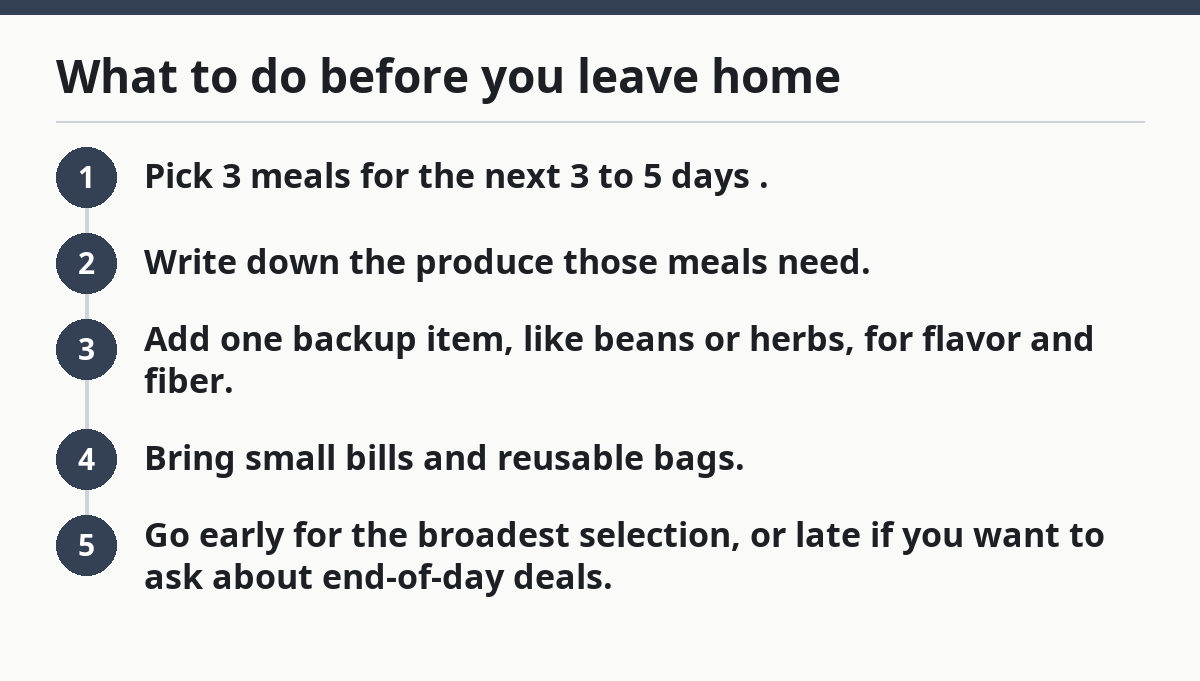
What to do before you leave home
Picture this: you’re walking into the market with a short list, a reusable bag, and a dollar amount in mind. You’re not hunting for everything at once; you’re picking the foods that fit heart-healthy meals for the next few days. That simple shift keeps you focused on produce, beans, herbs, and leafy greens instead of impulse buys.
Start with meals, not ingredients. If you know you want salads, soups, roasted vegetables, or bean bowls, your market list gets tighter right away. A heart-healthy routine often works best around foods that need little work: greens, berries, tomatoes, onions, peppers, fresh herbs, and dry or cooked beans if a vendor offers them.
A short list helps you spend less time and less money. It also keeps you from buying five bunches of the same thing just because it looks good.
- Pick 3 meals for the next 3 to 5 days.
- Write down the produce those meals need.
- Add one backup item, like beans or herbs, for flavor and fiber.
- Bring small bills and reusable bags.
- Go early for the broadest selection, or late if you want to ask about end-of-day deals.
Here’s the catch: a farmers market is not the place to shop by aisle logic. You buy what looks good now, in season now, from the stall in front of you. That means the routine works best when it starts at home, not at the market gate.
The truth is, a good routine also respects your budget. If you know you can spend only a set amount, decide that before you see a pile of berries or a crate of peaches. A market trip gets expensive when every table looks like a must-buy.
How to build a farmers market basket for heart-healthy meals
A heart-healthy farmers market basket should lead with vegetables and fruit, then add beans and herbs for meals that actually taste good. This keeps the cart full of foods that are naturally low in sodium and easy to use in plain cooking.
Picture this: you stop at a table with spinach, beets, carrots, and strawberries. You do not need a long shopping list to know what belongs in the bag. The question is not “What is prettiest?” It is “What will help me cook dinner twice this week?” That change in thinking matters.
Use this order when you shop:
- Leafy greens first. Look for spinach, kale, Swiss chard, arugula, or lettuce with crisp leaves and no slime.
- Color next. Add berries, tomatoes, peppers, carrots, beets, squash, or cucumbers for variety and antioxidants.
- Beans and legumes. Ask whether the market has fresh shell beans, dried beans, or cooked beans from a vendor.
- Herbs for flavor. Basil, parsley, cilantro, dill, mint, and chives can make simple food taste lively without much salt.
- One flexible backup. Choose one extra item you can roast, toss into soup, or eat raw.
A basket built this way is easier to use during the week. Salad greens can anchor lunch. Roasted carrots or beets can cover dinner. Berries can cover breakfast. Herbs change a plain tomato plate into something you actually want to eat.
What generic guides often miss is this: fresh market food still needs a plan once you get home. A bundle of dill does nothing if it sits untouched in the fridge. Buy herbs only when you know where they will go.
Best use case: a shopper who wants simple cooking with low-sodium flavor and does not want packaged meal kits.
Worst use case: someone who wants one-stop shopping for every pantry item in one trip.
Which farmers market foods are worth buying first?
The first foods to buy are leafy greens, berries, fresh herbs, and vegetables that look firm, colorful, and in season. Those items give you the most heart-healthy meals for the least effort, because they fit salads, side dishes, soups, and grain bowls fast.
Picture this: you have ten minutes before the first stall gets crowded. You need a rule, not a debate. Buy the foods that spoil slowly enough for the week, taste good with little seasoning, and show clear signs of freshness. That means no limp greens, no mushy fruit, no bruised squash.
Focus on these categories:
- Leafy greens: spinach, kale, chard, romaine, arugula
- Berries: strawberries, blueberries, raspberries, blackberries
- Fresh herbs: basil, parsley, cilantro, mint, dill
- High-use vegetables: tomatoes, cucumbers, peppers, onions, carrots, beets, zucchini
- Beans: dry beans, shelled beans, or cooked beans if the vendor sells them
These foods make low-sodium cooking easier. Herbs and ripe vegetables add enough flavor that you do not need to lean on salty sauces. That matters if you are trying to keep meals lighter without making them bland.
A lot of people overbuy delicate fruit and underbuy sturdy vegetables. That costs money and creates waste. A better routine is to put greens and berries in the basket first, then fill the rest with vegetables you can roast, sauté, or eat raw within a few days.
If the market has only a few stalls, still start with produce. A tight market is not a reason to abandon the routine; it is a reason to buy the strongest-looking basics and skip the rest.
What questions should I ask growers at the market?
The right questions help you find produce that fits your heart-healthy plan, your budget, and your cooking style. You do not need a speech. You need a few direct questions that tell you how the food was grown, how fresh it is, and how to use it well.
Picture this: you’re standing at a table with two kinds of greens and you want the one that will last through Wednesday. Ask about harvest day, storage, and what the grower recommends for eating first. Farmers and growers usually know which bunch is tender, which one holds up, and which one is at peak flavor.
Ask these:
- What’s in season today?
- When was this harvested?
- How should I store it at home?
- What do you suggest I eat first?
- Do you grow this yourself?
Those questions work because they point to freshness and use, not just appearance. If a grower says basil should go in water on the counter and lettuce should be washed and dried before refrigeration, that tells you how to protect the food after the sale.
You do not need to grill every vendor like a food inspector. A respectful question and a direct answer are enough. You are shopping for food that fits your routine, not writing a report.
A few answers should make you pause. If the seller cannot say when the greens were picked, or the produce looks tired in hot sun, move on. The market is full of options on most days. You are allowed to skip a stall that does not feel fresh.
For a broader pantry system that supports this routine, the hub on Heart-Healthy Ingredient Shopping and Pantry Systems can help you connect the market trip to the rest of your week.
How do I shop the farmers market on a budget?
You shop the farmers market on a budget by buying seasonal produce, setting a hard spend limit, and choosing items that cover more than one meal. That means a bunch of greens, a basket of tomatoes, or a bag of carrots can be smarter than a pile of specialty items.
Picture this: you have a small cash envelope and two bags in your hand. You want food that does real work at home, not a pretty haul that vanishes in one dinner. The budget-friendly move is to compare stalls, buy only what you’ll use in the next few days, and skip anything that is clearly decorative.
Use this routine:
- Set a total before you leave home.
- Decide the 2 or 3 foods that matter most this week.
- Buy seasonal produce first; it is often a strong value.
- Choose foods that stretch across meals, like greens, onions, carrots, or beans.
- Save room for one flavor item, such as herbs, if the rest of the basket is covered.
This is where many shoppers go wrong. They buy a little of everything and end up with a bag of odds and ends. That costs more than a focused basket. It also makes meal prep harder, because you now have ingredients without a plan.
Seasonal shopping matters here. In many markets, the produce that is plentiful that day is the produce most likely to be priced well. You do not need exact price math to use that rule. You just need to notice what is stacked high and moving fast.
Do not assume the cheapest item is always the best fit. A large amount of one vegetable is only a bargain if you can cook it in time. Budget shopping still needs a fridge that can keep up.
How to handle seasonal produce choices without wasting food
Seasonal produce choices work best when you match the fruit or vegetable to how quickly you will cook it. Tender items go first, sturdy items last, and herbs should be used before they wilt.
Picture this: you come home with spinach, berries, zucchini, and a bunch of parsley. If you know what spoils first, the week gets easier. If you do not, the bag becomes a guessing game and some of the food goes soft before you use it.
Use this rough order:
- Eat within 1 to 2 days: berries, tender greens, soft herbs
- Eat within 3 to 5 days: tomatoes, cucumbers, zucchini, peppers
- Hold longer: carrots, beets, onions, squash, cabbage
That simple order helps you keep waste down. It also helps you keep meals varied. You can start with berries and salad one day, then move to roasted vegetables and bean bowls later in the week.
A lot of people buy seasonal food and then store it badly. Wet greens rot fast. Herbs dry out. Berries get crushed in a full bag. Put delicate items on top, and wash produce only when you are ready to use it unless the vendor says otherwise.
The truth is, seasonal shopping is less about perfection and more about timing. If you know what needs eating first, you can buy with confidence instead of fear. For storage guidance, the USDA FoodKeeper app is a practical reference, and the CDC also recommends washing hands and produce carefully before food prep.
How do I turn a market trip into a weekly heart-healthy routine?
You turn one market trip into a weekly heart-healthy routine by repeating the same small pattern: check the season, buy produce first, ask two or three questions, and prep the food the same day. Repetition makes the trip faster and cheaper.
Picture this: it’s Saturday morning, and you already know your move. You check what’s in season, bring the same bag, and buy the same core foods with one change based on weather or price. That habit is the whole point. It saves time and keeps heart-friendly food in reach.
A useful weekly loop looks like this:
- Look at your meal plan on Friday night.
- Write down what needs replacing.
- Bring bags, cash, and a short list.
- Buy greens, berries, vegetables, herbs, and beans in that order.
- Wash, dry, and store produce as soon as you get home.
- Use the most delicate items first.
If you want the routine to stick, keep it simple. Same day. Same bag. Same questions. Same storage habits. A heart-healthy routine should feel repeatable, not dramatic. The American Heart Association recommends a produce-forward pattern, and the USDA’s MyPlate guidance supports building meals around fruits and vegetables.
The routine gets easier once it feels ordinary. After a few weeks, the market stops feeling like a special outing and starts feeling like part of normal meal prep. That is what makes the habit last.
Key Takeaways
- Start with a meal plan, not a pile of random produce.
- Put leafy greens, berries, herbs, and vegetables at the center of the basket.
- Ask growers about harvest day, season, storage, and what to eat first.
- Buy foods that can be used in more than one meal.
- Use seasonal produce to keep waste and spending down.
- Store delicate items first so they do not spoil before you cook them.
What should I buy first at a farmers market for heart-healthy meals?
Start with leafy greens, berries, fresh herbs, and a few sturdy vegetables like carrots, cucumbers, or peppers. These foods are easy to turn into low-sodium meals and usually give you the most flexibility during the week. If a vendor has beans, add those too. For overall pattern guidance, see the American Heart Association and USDA MyPlate.
How do I shop the farmers market on a budget?
Set a spending limit before you go, then buy seasonal produce that can cover several meals. Focus on items you can cook quickly or use in more than one dish, like greens, onions, carrots, tomatoes, and herbs. Skipping extra specialty items keeps the basket useful.
Which farmers market foods are best for low-sodium cooking?
Fresh herbs, leafy greens, tomatoes, cucumbers, peppers, beans, and other plain produce are strong choices for low-sodium cooking. They add flavor, color, and texture without depending on salty sauces or packaged seasonings. Herbs are especially useful when you want more taste with less salt.
Drafted with AI; not yet reviewed by a person.