
Last updated: November 19, 2026
Quick answer: choose plain frozen vegetables and unsweetened fruit with one ingredient, no sauce, no added sugar, and no added sodium. Plain frozen produce is the heart-healthy pick. The steps below show you how to spot it fast in the freezer aisle.
Key Takeaways
- Use this table for a quick scan.
- Plain frozen vegetables and unsweetened fruit are the simplest default.
- The ingredient list can confirm plain food in about 5 seconds.
- Avoid fruit in syrup, added sugar, and mixes with sweeteners near the top.
Our Top 3 Picks at a Glance
- #1 Best Overall: Plain frozen vegetables and unsweetened fruit with short ingredient lists
- #2 Best Budget Pick: Store-brand frozen broccoli, green beans, or mixed berries with no sauce or syrup
- #3 Best Heavy-Duty / Upgrade Pick: Single-ingredient frozen spinach, cauliflower, or berry blends in resealable bags
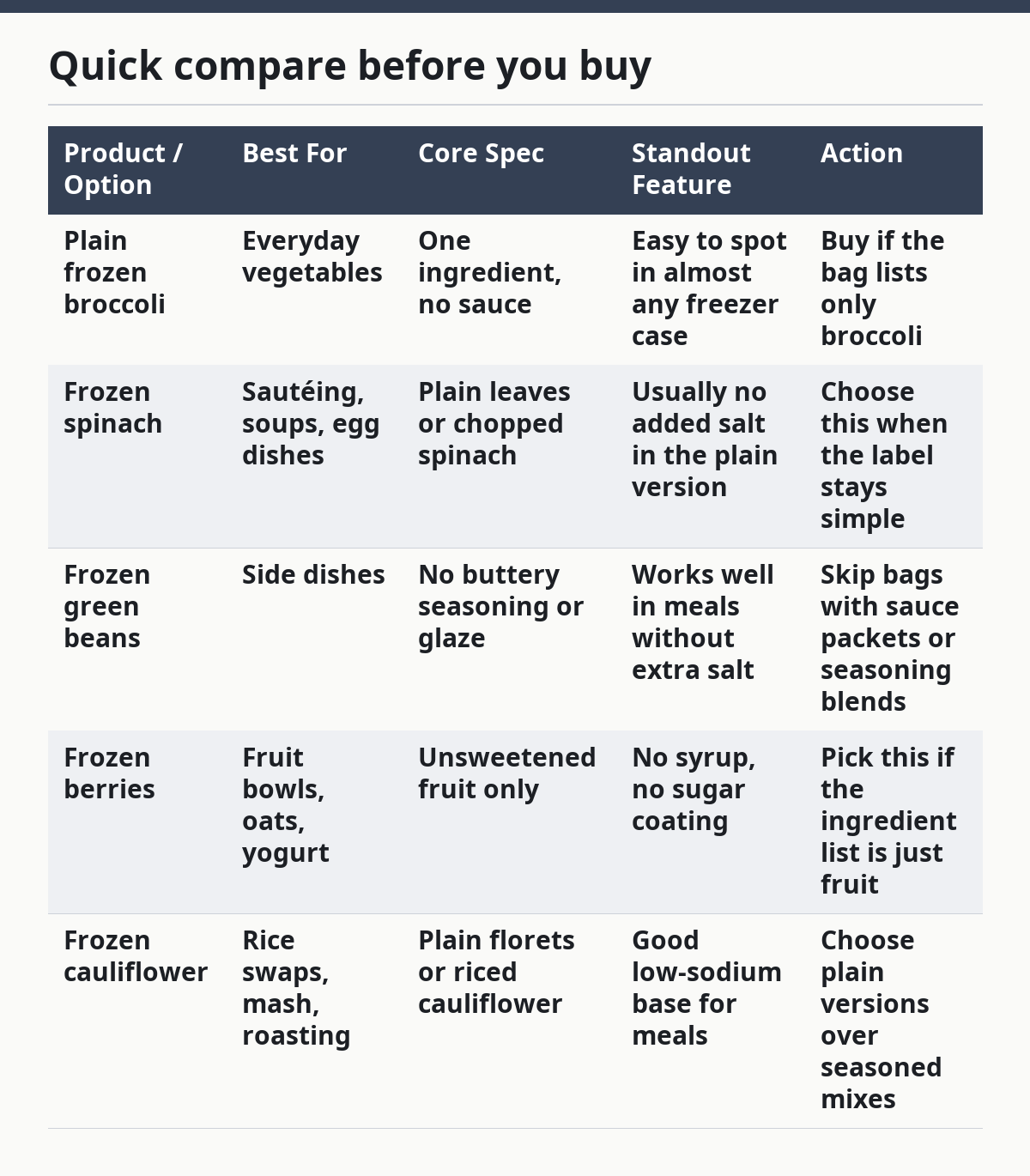
Quick compare before you buy
Use this table for a fast scan. The winner is bolded.
| Product / Option | Best For | Core Spec | Standout Feature | Action |
|---|---|---|---|---|
| Plain frozen broccoli | Everyday vegetables | One ingredient, no sauce | Easy to spot in almost any freezer case | Buy if the bag lists only broccoli |
| Frozen spinach | Sautéing, soups, egg dishes | Plain leaves or chopped spinach | Usually no added salt in the plain version | Choose this when the label stays simple |
| Frozen green beans | Side dishes | No buttery seasoning or glaze | Works well in meals without extra salt | Skip bags with sauce packets or seasoning blends |
| Frozen berries | Fruit bowls, oats, yogurt | Unsweetened fruit only | No syrup, no sugar coating | Pick this if the ingredient list is just fruit |
| Frozen cauliflower | Rice swaps, mash, roasting | Plain florets or riced cauliflower | Good low-sodium base for meals | Choose plain versions over seasoned mixes |
The fastest way to choose heart-healthy frozen produce
Picture this: you’re standing in front of a frosty wall of bags, and half of them look healthy until you turn them over. The fastest answer is to choose plain frozen vegetables and unsweetened fruit with no sauce, no syrup, and no added salt or sugar.
That rule does most of the work. It filters out the bags that dress up produce with cheese sauce, butter sauce, seasoned crumbs, glaze, or fruit packed in sweet syrup.
Here’s the catch: the front of the bag can be polished and still hide a less helpful ingredient list. “Lightly seasoned” still means seasoning. “Fruit blend” can still mean sugar or syrup.
Look for these exact words on the front and back:
- No sauce
- Unsweetened
- No sugar added
- Plain
- Single ingredient
If the bag says “steamable,” that only tells you about the pouch or microwave method. It does not tell you whether the contents are heart-healthy.
Read the ingredient list first, not the front label
Picture this: you’ve found a bag that says “garden vegetables,” and the front shows bright carrots and broccoli. The real answer is on the ingredient list, where you can tell in 5 seconds whether the food stays plain.
The list should be short. For vegetables, the best sign is one ingredient, like broccoli, spinach, green beans, or cauliflower. For fruit, the best sign is one ingredient, like blueberries, strawberries, or mixed berries with no syrup.
Use this rule:
- Scan the first line for the product name.
- Check the ingredient count for one ingredient or very few.
- Look for add-ons such as salt, sauce, sugar, syrup, honey, or seasoning.
- Put back anything that reads like a side dish instead of produce.
A longer list usually means more processing. Not always a deal-breaker, but it raises the chance that the bag brings extra sodium or sugar you did not want.
One useful standard is simple: if the ingredient list looks like a recipe, it probably isn’t the best pick for heart health. Plain frozen broccoli, frozen spinach, frozen green beans, frozen cauliflower, and frozen berries are the easier wins.
What should I avoid in frozen fruit?
Picture this: you want berries for yogurt or oatmeal, but the bag in your hand says “fruit mix” and feels heavy with sugar. Avoid frozen fruit packed in syrup, fruit with added sugar, and mixes that list sweeteners near the top.
That rule matters because fruit already tastes sweet on its own. Added sugar turns a simple fruit bowl into dessert territory fast.
Watch for these labels and ingredients:
- Syrup
- Sugar
- Cane sugar
- Honey
- Fruit juice concentrate
- Glaze
A bag of frozen berries can still be a strong choice if the ingredient list is just berries. Frozen strawberries, blueberries, and mixed berries are common picks because they work in smoothies, oats, and plain yogurt without needing extra sweetener.
The best part? Unsweetened fruit is easy to spot once you know the trigger words. If the label needs a second read, that’s a clue. Fruit should not need a lot of dressing up to fit a heart-healthy cart.
A simple check helps:
- Good sign: “blueberries”
- Better sign: “blueberries, strawberries, raspberries”
- Bad sign: “blueberries, sugar, natural flavors”
How to spot frozen vegetables with no sauce?
Picture this: you’re comparing two bags of green beans, and one is plain while the other glistens through the bag. Choose the bag with no sauce, no seasoning packet, and no butter blend if you want the heart-healthier pick.
Sauced vegetables are the common trap in the freezer aisle. Cheese sauce, garlic butter, teriyaki glaze, and seasoned crumbs can push sodium up fast and make a vegetable side behave more like a packaged entrée.
Use this quick scan:
- Look for plain cuts such as florets, sliced beans, or chopped spinach
- Avoid bags with words like “in sauce,” “seasoned,” “butter,” “cheese,” or “glazed”
- Check whether the bag includes a sauce pouch
- Favor vegetables that list only the vegetable itself
Plain frozen broccoli and frozen cauliflower are especially useful because they fit a lot of meals. Frozen spinach is another strong pick, but check whether it is chopped or leaf spinach and whether salt was added.
One honest limitation: plain frozen vegetables can taste bland if you cook them straight from the bag with no plan. That is not a flaw in the product. It just means you decide the flavor with lemon, herbs, pepper, garlic, or a small amount of oil at home.
Watch sodium on vegetables, not just fruit sugar
Picture this: you’ve found a vegetable bag with no sauce, but the nutrition panel still shows salt in the ingredient list. That is the place to slow down, because added sodium can sneak into frozen vegetables even when the front looks clean.
Frozen vegetables do not always need salt. The plain versions often need none at all, but some brands add sodium for taste or texture.
Check the panel and the ingredient list together:
- Ingredient list: see whether salt is named
- Nutrition panel: see whether sodium shows up at all
- Front label: ignore claims that only talk about “fresh taste” or “steamable”
A plain bag of frozen broccoli, green beans, cauliflower, or spinach usually gives you more control than a seasoned mix. You can add flavor at the table without locking in the salt during processing.
This is where generic advice goes wrong: people focus only on calories and miss sodium. For heart health, a plain vegetable with modest calories but high sodium is a poorer fit than the same vegetable in its plain form.
If a bag is a mixed vegetable blend, read the ingredients in order. A mix can still be fine, but the moment salt, sauce, or seasoning appears, you’ve moved away from the cleanest option.
What frozen produce bags fit a heart-healthy cart?
Picture this: you want a few reliable freezer picks that do not turn into guesswork every week. The best fit is a bag of plain vegetables or unsweetened fruit that you can use in meals without extra sodium or sugar.
Start with these common staples:
- Frozen broccoli for roasting, steaming, and stir-fries
- Frozen spinach for omelets, soups, pasta, and bean dishes
- Frozen green beans for simple sides
- Frozen cauliflower for mashing, rice-style dishes, and sheet-pan meals
- Frozen berries for breakfast bowls and snacks
These are easy to use because they stay close to the original food. They also work with a lot of heart-healthy meal patterns without forcing you into one flavor profile.
The strongest version of each pick is the plain one. If you see a cauliflower rice blend with sauce, skip it. If you see berries in syrup, skip it. If you see broccoli with cheese sauce, skip it. That pattern holds even when the front of the bag sounds healthy.
Two good sources back up the general label-reading approach: the USDA’s MyPlate guidance on fruits and vegetables and the American Heart Association’s advice on limiting sodium and choosing more produce-rich foods. Those are broad guides, but they match the freezer-aisle rule here: plain is the safer default.
The mistakes that cost you the best bag
Picture this: you’re trying to be careful, but the freezer aisle still hands you a package that looks healthy and acts like a snack food. The biggest mistakes are buying for the picture, buying for the word “natural,” and skipping the ingredient list.
Here’s what each mistake costs you:
- Picture-first shopping can lead to sauce, sugar, or salt hidden behind a bright front label
- “Natural” thinking can pull you toward fruit in syrup or vegetables with seasoning
- Skipping the back panel means you miss sodium and added sugar
Do this instead:
- Flip the bag over every time
- Look for one ingredient
- Treat sauce as a red flag
- Treat syrup as a red flag
- Treat seasoning blends as a red flag
A second mistake is buying a huge mixed bag because it feels efficient. A 2-pound blend can still be the wrong choice if half the bag is a sauce-driven mix you did not want. Efficiency is only a win when the food fits the goal.
The truth is, the cleanest heart-healthy choice in frozen produce is often the least exciting-looking one. Plain broccoli does not sell itself with cheese. Unsweetened berries do not need syrup to count.
How do I choose frozen produce for a heart-healthy week?
Picture this: you only want a few bags that make dinner easier from Monday through Friday. Choose plain frozen vegetables and unsweetened fruit you can use in at least 2 or 3 meals without needing a sauce packet.
A simple week-friendly set looks like this:
- One green vegetable: broccoli or green beans
- One soft vegetable: spinach
- One flexible base: cauliflower
- One fruit bag: berries
That mix covers side dishes, breakfast, and quick meals. It also keeps the freezer full of items that work with beans, eggs, oats, yogurt, whole grains, and simple proteins.
If you want a quick rule for the cart, use this:
- Vegetables: plain, no sauce, low or no added sodium
- Fruit: unsweetened, no syrup, no added sugar
- Mixes: only if every ingredient still fits the same rule
For a broader shopping system, the hub on Heart-Healthy Grocery Shopping and Label Reading goes deeper into how to read packages beyond the freezer aisle. This page stays focused on frozen produce, because that is the decision most people need first.
Are frozen vegetables as healthy as fresh?
Yes, frozen vegetables can be a very healthy choice, especially when they are plain and unsauced. The main advantage is convenience with less waste, and the main check is the label. If the bag contains only the vegetable and no added salt or sauce, it fits well in a heart-healthy pattern.
What should I avoid in frozen fruit?
Avoid frozen fruit in syrup, with added sugar, or with sweeteners like cane sugar, honey, or juice concentrate high on the list. Those bags turn fruit into a sweeter product than you likely need. Plain berries and other unsweetened fruit are the cleaner choice.
How do I choose frozen vegetables with no sauce?
Turn the bag over and read the ingredient list. The best choice names only the vegetable, with no cheese sauce, butter sauce, seasoning blend, or glaze. If the front says “seasoned” or “in sauce,” put it back and keep looking.
Drafted with AI; not yet reviewed by a person.