Last updated: November 20, 2026
Quick Answer: How to Make Your Own No-Salt Seasoning Blend starts with 5 ingredients, a 1:1:1 base, and a small batch you can mix in under 1 minute. A no-salt seasoning blend is easy to make with garlic powder, onion powder, smoked paprika, thyme, and mustard powder, and the fastest version is a simple 1:1:1 base with a few herbs added. Mix it in a small bowl, then store it in a labeled jar so it stays ready for everyday cooking.
Because this is a simple pantry mix, the topic of How to Make Your Own No-Salt Seasoning Blend works best when the ingredients stay familiar and the measurements stay exact. Small batches are easier to use up, and the recipe below keeps the flavor balanced without needing salt.
Key takeaways
- A homemade no-salt seasoning blend works best when the spices are measured by spoon, not guessed by eye.
- Garlic powder and onion powder give the blend its base; smoked paprika, thyme, and mustard powder add depth.
- A dry jar with a tight lid matters as much as the recipe, because moisture turns a loose spice mix into clumps.
- Sweet and smoky versions can be useful, but the plain version is a practical place to start.
- Labeling the jar with the date helps older blends stand out before they get lost in the back of the pantry.
What goes in a no-salt seasoning blend?
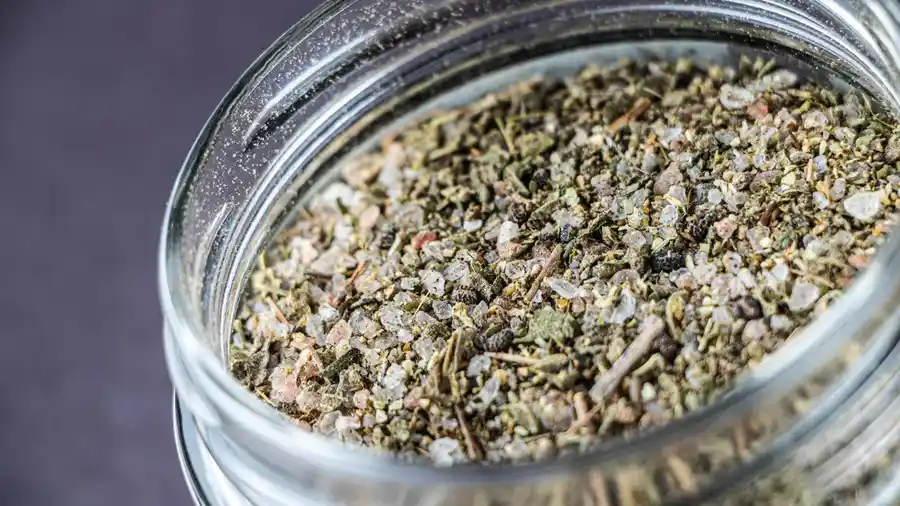
How to Make Your Own No-Salt Seasoning Blend starts with garlic powder, onion powder, smoked paprika, thyme, and mustard powder. Those five ingredients give a savory base without sodium, and they fit the heart-healthy pantry flavor systems idea this site supports.
Because the ratio matters, a good beginner blend keeps the spice list simple. Use equal parts garlic powder and onion powder, then smaller amounts of smoked paprika, thyme, and mustard powder so the flavor stays balanced. If one spice takes over, the blend can taste bitter, dusty, or flat instead of savory.
Here is a practical starting point for a small batch:
- 2 teaspoons garlic powder
- 2 teaspoons onion powder
- 1 teaspoon smoked paprika
- 1 teaspoon dried thyme
- 1/2 teaspoon mustard powder
This makes a mild blend that works on chicken, beans, roasted vegetables, eggs, and soup. The 2:2:1:1:1/2 pattern keeps the garlic and onion up front while the paprika and thyme round out the flavor.
That said, this blend is not for anyone who wants a sharp, chili-heavy rub. It also is not a salt swap that makes every food taste finished on its own. Foods that usually depend on salt for a briny or pickled taste will still need another flavor plan. For readers building a larger pantry system, the site’s heart-healthy pantry flavor systems hub is the better next stop than a random spice aisle search.
For a warmer profile, smoked paprika does most of the work. If the goal is a more herbal profile, thyme carries more of the lift. Mustard powder adds a gentle bite, not hot mustard heat, so it helps the blend feel less one-note.
How do you mix it step by step?
Because the mix is so small, you make it by measuring the spices into a bowl, stirring them well, and moving the finished blend into a dry jar. Each step is simple, but the order matters because clumps and uneven flavor usually start with sloppy measuring.
- Measure the spices into a small bowl with 2 teaspoons garlic powder, 2 teaspoons onion powder, 1 teaspoon smoked paprika, 1 teaspoon dried thyme, and 1/2 teaspoon mustard powder. This creates a balanced starter batch with enough volume to season several meals.
- Stir the mixture with a spoon for about 30 seconds until the color looks even throughout. The goal is a consistent blend, not a stripe of paprika at the bottom and thyme at the top.
- Crush any thyme pieces between your fingers if they look too large. Smaller flakes spread more evenly, which helps the seasoning coat food without clumping in one spot.
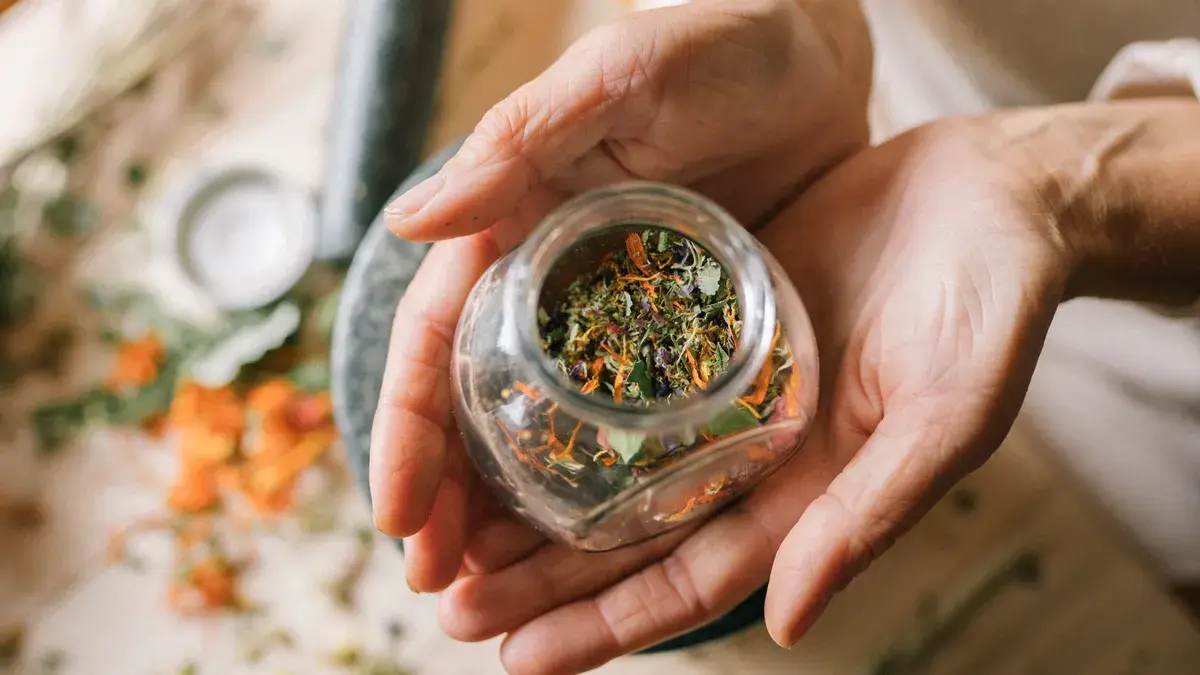
- Transfer the mix into a clean, dry jar with a tight lid. A small jar, spice tin, or other sealed container works well because the blend stays loose when air and steam stay out.
- Label the lid or side of the jar with the name and the date. A simple label such as “No-Salt Seasoning Blend” keeps the jar from being mistaken for a different spice mix later.
- Taste a small pinch on a plain food, such as an egg or roasted vegetable, before deciding whether to adjust the next batch. That quick test tells you whether the garlic, paprika, or thyme needs to move up or down.
This method is plain on purpose. A blender, grinder, or food processor is not needed for a small batch, and extra tools can make the spices too fine. A spoon and a bowl are enough for most home kitchens.
If a batch seems weak, the fix is usually not more salt. It is usually more garlic powder, a little more smoked paprika, or a slightly smaller cut of thyme. If the blend tastes harsh, the next batch should reduce mustard powder before reducing everything else.
How do you adjust the flavor?
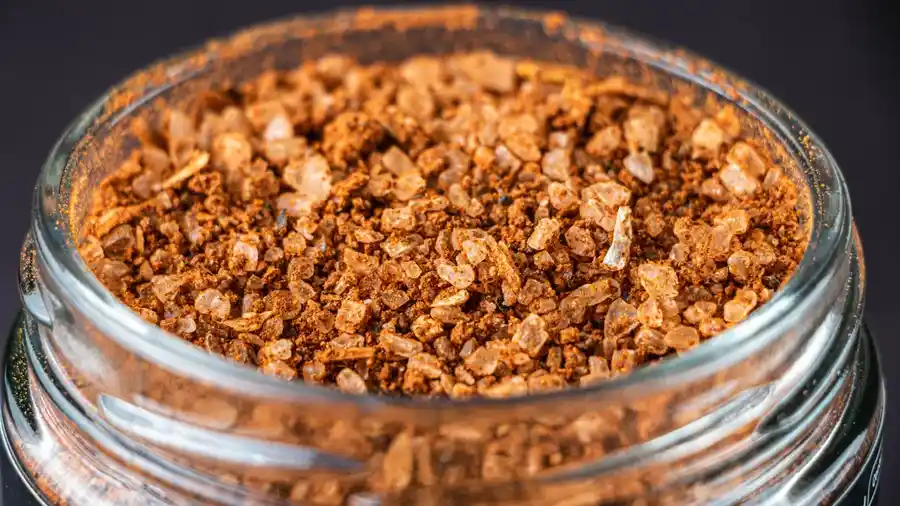
You adjust the flavor by changing one ingredient at a time, not by adding several extras at once. That keeps the blend readable, which matters when the jar sits in the pantry for a few weeks and the memory of the first batch gets fuzzy.
For a smokier blend, raise the smoked paprika to 2 teaspoons and keep the thyme at 1 teaspoon. That gives roasted vegetables, chicken, and beans a deeper color and a warmer finish.
For a sweeter, rounder blend, add a small pinch of cinnamon or reduce the mustard powder slightly if the spice cabinet already leans warm. The result should still taste savory, not dessert-like. Sweet versions can work best with carrots, squash, and baked sweet potatoes.
For a more herbal blend, increase thyme to 2 teaspoons and leave the paprika at 1 teaspoon. This version stays lighter and works well on tomatoes, zucchini, mushrooms, and simple soups. It is a practical option when the goal is to keep the spice mix from overpowering delicate food.
A comparison helps when choosing a direction:
| Version | Best for | Main change | Flavor result |
|---|---|---|---|
| Plain starter blend | Everyday use | Equal garlic and onion, modest herbs | Balanced, mild, flexible |
| Smoky blend | Roasted foods, beans, chicken | More smoked paprika | Deeper, warmer, richer |
| Herbal blend | Vegetables, soups, eggs | More thyme | Lighter, greener, more plant-forward |
| Sweet-leaning blend | Squash, carrots, sweet potatoes | Tiny pinch of sweet spice, less mustard bite | Softer, rounder, less sharp |
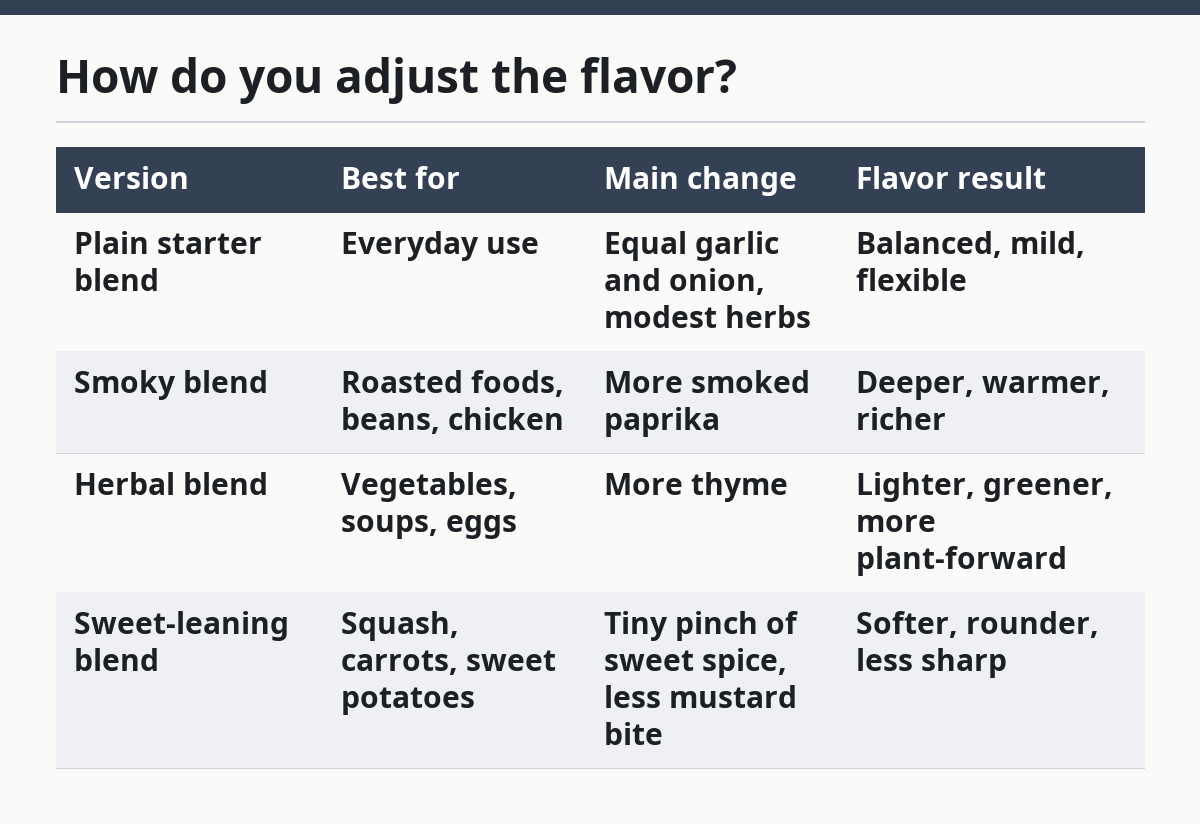
Overall, the trade-off is simple: the more specialized the blend gets, the fewer foods it suits. A plain jar may be less exciting, but it is more useful across a week of cooking.
How should you store and label it?
You should store it in a dry, tightly closed jar and label it clearly with the name and date. According to FDA guidance on keeping dry foods safe from moisture, that helps reduce clumping and mix-ups; if you need advice for a medical diet, consult a registered dietitian or clinician.
A glass jar with a tight lid is the cleanest option, but any dry container that seals well can work. Keep the jar away from the stove, steam, and the sink, since heat and moisture are two fast ways to ruin a dry spice blend. A cupboard shelf is better than a shelf above a kettle or dishwasher.
Because the label matters more than it sounds, “No-Salt Seasoning Blend” is more useful than a vague name like “spice mix,” since it tells the cook exactly what is inside. Add the date so the jar does not drift into the back of the pantry for months without being noticed.
The best storage habit is often to make small batches. A smaller batch is easier to use before the flavor dulls, and it keeps the jar fresh without forcing a big commitment. A homemade blend does not need to be complicated to be useful.
For readers who want a general health note, the American Heart Association has plain language guidance on sodium and food choices, and the FDA also explains why sodium matters on food labels. Those are useful references when the goal is a pantry that supports lower-sodium cooking.
Where do you use no-salt seasoning?
You use no-salt seasoning on foods that need savory lift without extra sodium, especially eggs, vegetables, beans, chicken, fish, soups, and grain bowls. A small pinch goes a long way because the garlic, onion, and paprika are already doing the heavy lifting.
Start with one light shake per serving, then add more after tasting. That matters with no-salt blends because the spices can build fast, and too much at once can make food taste dusty or bitter. A teaspoon-level measure is usually enough for a single serving of roasted vegetables or a small pan of eggs.
Meanwhile, the blend also works well in meals that need a fast finish at the table. Roasted broccoli, sautéed mushrooms, baked potatoes, plain rice, and canned beans all benefit from a little extra savory depth. If the food is already strongly seasoned, the blend may not be needed at all.
This blend is not the right tool for dishes that depend on salt for structure, such as brines, cured meats, or pickles. It also will not replace the taste of salt in every recipe, especially where salt does more than season. That is the main limitation, and it is worth saying plainly.
Ultimately, the best use case is simple weeknight food. A jar of homemade no-salt seasoning can make plain ingredients easier to cook with, which is the point of a pantry system in the first place. It gives the cook a repeatable starting point instead of forcing a new decision every night.
What mistakes should you avoid?
You should avoid guessing measurements, using damp spices, and making the jar too complex. Those three mistakes cause most of the bad results people blame on the idea of a no-salt blend itself.
The first mistake is pouring spices straight into a jar without measuring. That usually makes one flavor dominate, and fixing it later is harder than starting over with a spoon and bowl. A 1:1:1 base or another clear ratio gives the blend structure.
The second mistake is using old, damp, or clumpy spices. Moisture turns a loose blend into a lumpy one, and flat spices make the whole jar taste tired. A dry spoon and a dry jar solve most of that problem before it starts.
The third mistake is adding too many ingredients at once. A long ingredient list can sound impressive, but it often hides the main flavors and makes the blend harder to use. Five ingredients are enough for a strong starter jar.
The fourth mistake is forgetting to label the container. Without a label, a pantry jar can become mystery dust, which means it gets ignored or misused. A simple label with the name and date solves that in seconds.
A final mistake is expecting this blend to act like a full meal solution. It is a seasoning, not a complete flavor system. It helps food taste better, but it does not change the cooking method, the texture, or the need to taste as you go.
What goes into a no-salt seasoning blend?
Because the ingredients stay the same, a no-salt seasoning blend usually starts with garlic powder, onion powder, smoked paprika, thyme, and mustard powder. Those spices give a mix of savory, smoky, and herbal notes without added sodium. A plain version can stay very short and still do real work in the kitchen.
The best starter ratio is simple enough to repeat. Equal parts garlic powder and onion powder, then smaller amounts of smoked paprika, thyme, and mustard powder, make a balanced base for most home cooking.
How long does homemade seasoning last?
Homemade seasoning lasts best when it stays dry, sealed, and labeled with the date. A tight jar keeps the blend usable longer because air and moisture are what make spices fade or clump. If the color dulls or the aroma drops, it is time to make a fresh batch.
Where can you use no-salt seasoning?
You can use no-salt seasoning on eggs, vegetables, beans, chicken, fish, soups, and grain bowls. It works best on foods that need savory depth but do not need the structure that salt provides in brines or cures. Start with a small pinch and add more after tasting.
For related pantry ideas, see heart-healthy pantry flavor systems, how to build a salt-free spice rack, and low-sodium cooking basics.
Authoritative sources: American Heart Association on sodium and FDA food labeling guidance.
Drafted with AI; not yet reviewed by a person.