Last updated: November 20, 2026
Quick answer: use 1 small adjustment at a time, then taste again. Heart-healthy cooking gets easier when you treat How to Balance Sweet, Sour, Salty, and Bitter in Heart-Healthy Recipes as the goal, not salt alone. The answer is to build sweet, sour, salty, and bitter in small, deliberate layers so food tastes full without leaning on heavy sodium or sugar. If you are managing a medical condition, consult a registered dietitian or other health professional for personal guidance. In short: the steps below show how to taste, adjust, and keep a dish lively without losing the heart-friendly lane.
Start with the flavor balance rule that works
Flavor balance means each taste has a job, and none of them has to do all the work. If a dish is flat, you do not usually need more of everything; you need the right one or two adjustments. A squeeze of lemon, a teaspoon of vinegar, a few sliced olives, or a handful of bitter greens can change the whole bowl.
Picture this: you’ve made a tomato-and-bean soup that tastes safe but dull, and you don’t want to fix it with a salt dump. The better move is to taste, then add one direction at a time—acid, sweetness, salt awareness, or bitterness—until the food wakes up. That keeps the recipe heart-smart and still worth eating.
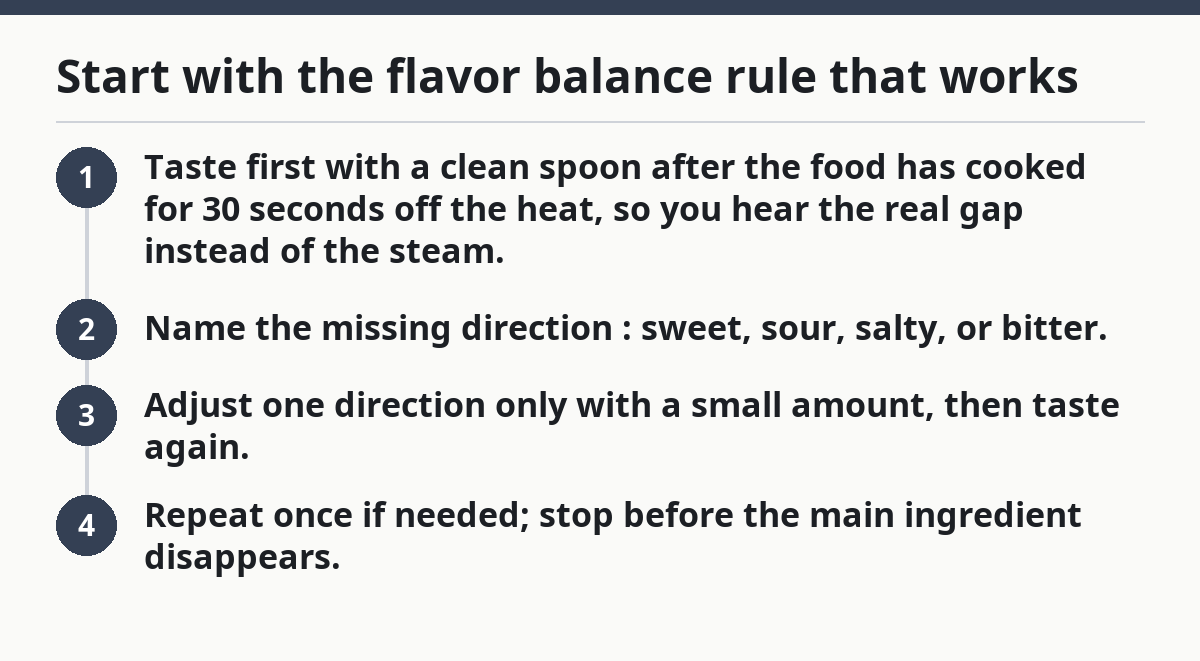
- Taste first with a clean spoon after the food has cooked for 30 seconds off the heat, so you hear the real gap instead of the steam.
- Name the missing direction: sweet, sour, salty, or bitter.
- Adjust one direction only with a small amount, then taste again.
- Repeat once if needed; stop before the main ingredient disappears.
If the dish tastes tired but not bad, the fix is usually acid, not more salt. If it tastes sharp, a little sweetness or a soft fat can smooth the edges. If it tastes heavy, bitterness or sourness can pull it back into shape. For a broader step-by-step on this approach, see [Heart-Healthy Cooking Methods — The Complete Guide].
How do you taste a dish before you fix it?
You taste a dish in layers: first the base, then the edges, then the finish. That order keeps you from overcorrecting, and it works on soups, salads, grain bowls, roasted vegetables, and sauces.
Picture this: you’ve got a skillet of greens with tomatoes and mustard, and you’re not sure what it needs. A quick taste tells you whether the problem is dullness, bitterness, too much sour, or just a lack of contrast. The trick is to notice what lingers after the swallow.
- Use a spoon to sample the broth, sauce, or dressing at the end of cooking.
- Check the first hit: is it flat, sharp, bitter, or one-note?
- Check the aftertaste: does it fade too fast, cling too hard, or feel heavy?
- Decide the fix with a single ingredient, not a new recipe.
A salad with berries and vinaigrette may need salt more than sweetness. A lentil bowl with mustard may need a softer sweet note, like a few chopped grapes or roasted onion, not syrup. A bitter green like arugula often needs acid and a little salt together. For related background on selecting seasonings, see [Heart-Healthy Pantry Staples] and [Low-Sodium Flavor Boosters].
The best tasting tools for the job
Use a small spoon, a wedge of citrus, and a teaspoon measure. That sounds basic, but it keeps you honest. A freehand pour of vinegar can turn a clean dish into a sour one in a few seconds.
- Spoon: for broth, sauce, and stew.
- Teaspoon: for vinegar, mustard, or honey.
- Citrus wedge: for final brightness.
- Clean plate: for tasting greens, berries, or roasted vegetables without the heat fogging the flavor.
How do you use sour to make food taste brighter?
Sour brightens a dish by cutting through fat, starch, and flatness, and in heart-healthy recipes it often does more work than extra salt. Citrus and vinegar are often the fastest tools here, and both can stay light in a recipe.
Picture this: you’ve cooked salmon, beans, or roasted vegetables, and the plate tastes dense. A little lemon juice or a splash of vinegar can make the same food feel lighter and cleaner without changing the whole recipe. That matters when you want food that feels satisfying, not punished.
Use citrus on finished food when you want a fresh top note. Use vinegar in dressings, pickled toppings, or braises when you want the sour note mixed into the dish. Lemon, lime, rice vinegar, apple cider vinegar, and red wine vinegar all work, but each one brings a different edge.
- Lemon or lime: best on fish, greens, beans, and tomato dishes.
- Vinegar: best in slaws, bean salads, and pan sauces.
- Mustard: adds both sour and sharpness in one spoonful.
- Tomatoes: bring their own acid, so taste before adding more.
The trap is overdoing sour to cover blandness. If the dish starts tasting puckery, stop and add a rounder note instead. A little sweetness or a bitter green can bring the flavor back into balance. For a source on keeping sodium in check while seasoning food well, see the American Heart Association’s guidance on sodium and heart health.
Where does sweetness belong in a heart-healthy recipe?
Sweetness belongs in the background, where it softens acid, rounds bitterness, and helps food taste complete. In heart-healthy cooking, you want sweetness from whole foods first—berries, tomatoes, carrots, onions, or roasted squash—before you reach for added sugar.
Picture this: you’ve made a tomato sauce, a mustard dressing, or sautéed greens, and the edges feel too hard. A small sweet note can smooth that edge and make the dish more readable. The goal is not dessert flavor; it’s balance.
Use sweetness to calm strong sour notes or bitter greens. A few berries in a salad, caramelized onions in a grain bowl, or roasted tomatoes in a soup can change the tone without turning the dish sweet. Even a small amount of fruit can matter.
- Start with fruit or vegetables such as berries, tomatoes, onions, or roasted carrots.
- Add a small amount to the dish and taste again.
- Use it to soften a sharp dressing or a bitter green, not to hide a badly cooked base.
- Stop once the flavor feels round, not sugary.
The mistake here is chasing balance with sugar when the real issue is salt or acid. A spoonful of honey may smooth a dressing, but it won’t fix a flat stew by itself. If sweetness is doing all the work, the recipe usually needs another direction too. The Dietary Guidelines for Americans still recommend keeping added sugars under 10% of calories, so whole-food sweetness is the safer default.
What bitter foods do for balance
Bitter foods give a dish structure, and that matters because heart-healthy food can turn soft or sweet too fast. Greens, unsweetened cocoa, strong herbs, espresso, and some olives all bring bitterness that keeps a plate from feeling mushy.
Picture this: you’ve built a salad with berries, citrus, and a light dressing, and it tastes pleasant but one-note. A handful of arugula or chopped kale changes the center of gravity. The plate suddenly has a backbone.
Use bitter foods in small doses. Greens like arugula, radicchio, escarole, and kale work well in salads, soups, and sautés. Unsweetened cocoa can deepen chili, chili-spiced beans, or a mole-style sauce without making it sweet. Bitter notes are strongest when you first add them, then they fade as the food rests for 2 to 3 minutes.
- Arugula or radicchio: sharp, fast bitterness for salads.
- Kale or escarole: sturdier bitterness for soups and braises.
- Unsweetened cocoa: deepens savory sauces and bean dishes.
- Black coffee or espresso: can deepen some sauces in tiny amounts.
The catch is that bitterness can feel harsh if the dish has no sour or sweet counterweight. If a green tastes too aggressive, add citrus or a sweeter vegetable. If cocoa reads dusty, it needs salt awareness and acid, not more cocoa. The USDA’s Dietary Guidelines for Americans also emphasize building patterns around vegetables and other nutrient-dense foods.
How much salt awareness do you really need?
Salt awareness means using salt as a tool, not a crutch, and tasting for impact instead of volume. In heart-healthy recipes, salt usually works best when it supports other flavors rather than trying to stand alone.
Picture this: you taste a bean soup and think it needs “something.” Before adding more salt, ask whether it needs acid, sweetness, or a bitter edge. Salt can sharpen tomatoes, lift mustard, and make citrus seem brighter, but it can’t create depth on its own.
Use salt in small stages: at the start for the base, near the end for the final lift, and only after tasting the whole dish. Mustard, olives, capers, and some canned foods already bring salt, so adjust with care. A recipe with tomatoes and greens may need less salt than you expect because both ingredients carry strong flavor.
- Season early with a light hand so the base doesn’t taste raw.
- Taste midway after the main ingredients soften.
- Finish with a pinch only if the other flavors are present.
- Pause before adding more if the food already tastes lively.
If a dish seems flat and salty at the same time, it often needs acid more than more salt. Lemon juice, vinegar, or a spoon of tomato can make salt seem better used. That’s the part many generic recipes miss. For a practical benchmark, the American Heart Association says many adults should aim for no more than 2,300 mg of sodium a day, with an ideal limit of 1,500 mg for many people.
Build a heart-healthy plate that tastes finished
A finished plate uses contrast: one bright note, one soft note, one bitter or savory note, and enough salt awareness to hold them together. That pattern works on a weeknight bowl just as well as on a more polished dinner.
Picture this: you’ve got roasted salmon, brown rice, and sautéed greens, and the plate tastes healthy but not exciting. Add lemon to the fish, a little vinegar to the greens, and a few berries on the side or in a salad. Now the meal has lift, edge, and relief.
A simple way to think about it is this:
- Sweet softens.
- Sour wakes up.
- Salty sharpens.
- Bitter steadies.
If the dish feels heavy, add sour or bitter. If it feels sharp, add sweet. If it feels dull, check salt awareness last, not first. And if it tastes loud in one direction, use the opposite one in a small amount.
For a heart-healthy recipe, that balance often shows up in the same bowl: tomatoes for acid, greens for bitterness, berries for sweetness, mustard for bite, and a careful amount of salt. The food should taste complete, not masked. That’s the difference between a meal you tolerate and one you want again.
The wider methods behind this approach fit into the larger guide on [Heart-Healthy Cooking Methods — The Complete Guide]. This page stays on flavor balance, because that’s the part most cooks need when the food is already in front of them. For more ingredient ideas, see [Heart-Healthy Pantry Staples].
Key Takeaways
- Taste the dish before you touch the seasoning, then fix the missing direction.
- Sour ingredients like citrus, vinegar, and mustard often brighten food faster than more salt.
- Sweetness should come mostly from foods such as berries, tomatoes, and roasted vegetables.
- Bitter greens and unsweetened cocoa add structure, especially in bowls, soups, and sauces.
- Salt works best in small stages, after the other flavors are already doing their jobs.
What are the four main taste directions in cooking?
The four main taste directions are sweet, sour, salty, and bitter. Each one plays a different role: sweet softens, sour brightens, salty sharpens, and bitter adds structure. In heart-healthy cooking, the goal is not to max out any one taste, but to keep them in tension so the dish feels complete.
How do you fix a bland healthy meal?
A bland healthy meal usually needs one clear adjustment, not a dozen. Start with acid from citrus or vinegar, then check whether a little sweetness, bitterness, or salt awareness would help. If the food still tastes flat after that, the issue may be texture or cooking time, not seasoning. For grain bowls, soups, and salads, the same logic applies.
What makes a recipe taste balanced?
A balanced recipe has contrast that the tongue can notice in the first bite and the last bite. It usually has a bright note, a round note, and a steady note, with none of them shouting over the others. In practice, that often means pairing tomatoes, greens, berries, mustard, or citrus in small, thoughtful amounts.
Drafted with AI; not yet reviewed by a person.