Last updated: November 19, 2026
Steam vegetables for heart-healthy meals by keeping the process simple: use a steamer basket or microwave, cut pieces to serving-size chunks no more than 2 inches, and finish with low-fat dairy or non-dairy extras instead of butter-heavy sauces. That keeps broccoli, green beans, carrots, cauliflower, and collard greens tender without adding sodium or much fat.
Key takeaways
- Steaming works best when the vegetable pieces are similar in size, so they cook at the same pace.
- A steamer basket gives the most control on the stovetop, while the microwave is faster for a quick dinner.
- Frozen vegetables are still useful; if you are in a hurry, warm water can help them thaw in about 30 minutes according to wikihow.com.
- For heart-healthy meals, the finish matters as much as the cooking method, so skip cream sauces and choose lighter toppings.
- If a vegetable tastes bland after steaming, the fix is usually the finish, not a longer cook time.
What should steamed vegetables look like?
Steamed vegetables should be tender, bright, and still hold their shape. For heart-healthy meals, the goal is not to boil vegetables into mush; it is to soften them enough to eat easily while keeping their texture, color, and plain vegetable flavor.
Broccoli should still have some bite in the stem and florets. Green beans should bend without falling apart. Carrots, cauliflower, and collard greens need a little more time than delicate vegetables, but they should still look like vegetables, not sauce. If the color goes dull and the texture turns limp, the vegetable stayed in the steam too long.
The shape of the pieces matters. Cut vegetables into serving-size chunks no more than 2 inches, or 5 cm, long according to wikihow.com. Smaller, even pieces cook more evenly, which matters when you want one pan to handle a mix of broccoli, carrots, and cauliflower at the same dinner.
Heart-healthy cooking also means keeping the finish clean. A plate of steamed vegetables can turn into a heavy side dish fast if it is buried under cream-based sauce. Cleveland Clinic advises choosing skim or 1% milk and Greek yogurt, plain, or low-sugar yogurt, and replacing whole-milk dairy, cream, and cream-based sauces and dressings with non-dairy options or fat-free or 1% dairy. That matters here because the steaming step only solves half the problem; the topping decides whether the dish stays light.
How do you steam vegetables on the stovetop?
You steam vegetables on the stovetop by using a steamer basket over a small amount of water, covering the pan, and cooking only until the vegetables are tender. This is the most useful method when you want control over texture and you are making more than one vegetable at once.
-
Set a steamer basket over a pot with a little water.
Keep the water below the basket so the vegetables sit above the waterline, not in it. -
Cut vegetables into serving-size chunks no more than 2 inches, or 5 cm, long.
Use similar sizes for broccoli, carrots, cauliflower, green beans, or collard greens so the pieces finish at the same time. -
Arrange vegetables in a single layer in the basket.
Crowding slows the steam and leaves some pieces soft while others stay firm. -
Cover the pot with a tight lid.
Trapped steam is what cooks the vegetables evenly. -
Heat the pot until the vegetables are tender.
The exact time depends on the vegetable and the size of the pieces, so check early and often rather than waiting for a fixed clock. -
Lift the lid carefully and test one piece with a fork.
The vegetable should feel tender, not raw in the center and not collapsed at the edges. -
Move the vegetables to a bowl right away.
Leaving them in the hot basket after they are done keeps cooking them.
The stovetop method is a good fit for heart-healthy dinners because it does not need butter, cream, or heavy oil to work. It also gives you more control than a sauce pan full of simmering water, which can wash out flavor and turn vegetables watery.
The main drawback is attention. A covered pot on the stove can overcook vegetables quickly if you walk away. This method is not for anyone who wants to set a timer once and forget the pan until dinner is over.
How do you steam vegetables in the microwave?
You steam vegetables in the microwave by placing cut vegetables in a microwave-safe dish with a little moisture, covering the dish, and cooking until the pieces are just tender. This is the fastest choice for a weeknight meal, especially when you want one vegetable side in minutes rather than on the stove.
Start with the same prep you would use for the stovetop: cut the vegetables into pieces no more than 2 inches, or 5 cm, long according to wikihow.com. That size keeps broccoli florets, carrot slices, and cauliflower pieces close enough in size to cook evenly. If you are using frozen vegetables and are in a hurry, warm water can soak them for about 30 minutes according to wikihow.com, which can help them move into the microwave more evenly.
The microwave method has two strengths. First, it uses very little equipment. Second, it is practical when dinner is already underway and you need a vegetable side without adding another burner. The trade-off is that the texture can turn uneven if the pieces are cut badly or the dish is too crowded.
Use a covered microwave-safe dish so the steam stays inside. Stop the microwave as soon as the vegetables are tender enough for your meal. If the broccoli is soft at the tips but tough at the stem, the pieces were not cut evenly. If the cauliflower turns watery, it likely stayed in too long. A short cook and a quick check are better than a long cook that you cannot take back.
Which method should I use for dinner?
The method you choose depends on your schedule, your vegetables, and how much texture you want left on the plate. The stovetop gives more control; the microwave gives speed; frozen vegetables save prep time; and fresh vegetables usually give the best texture when you have a few extra minutes.
| Method | Best for | Main strength | Main drawback |
|---|---|---|---|
| Steamer basket on the stovetop | Mixed vegetables for dinner | More control over texture | Needs more attention |
| Microwave steaming | Fast weeknight sides | Quick and simple | Can cook unevenly |
| Frozen vegetables | Short prep nights | Less chopping | Texture can soften faster |
| Fresh vegetables | Broccoli, green beans, carrots, cauliflower, collard greens | Best texture and color | More prep before cooking |
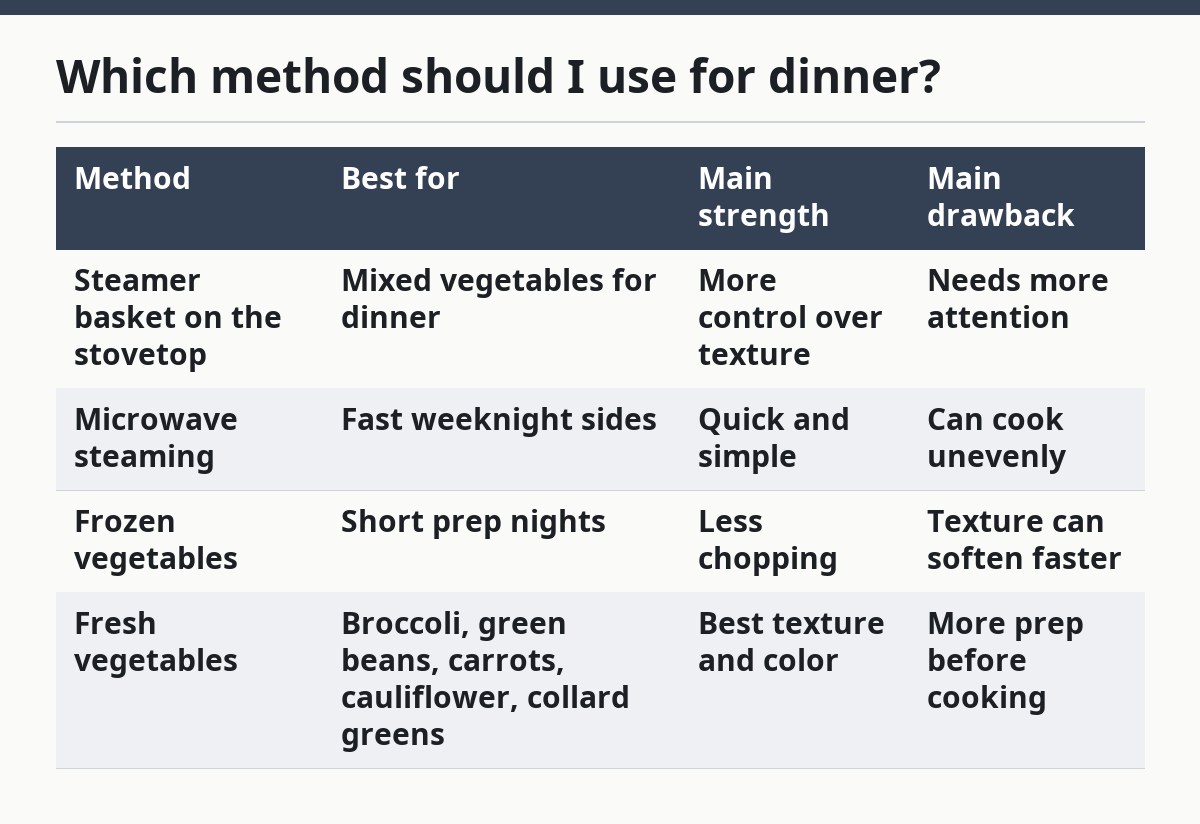
For heart-healthy meals, I would choose the stovetop when the vegetable is part of the main plate and the microwave when the side dish needs to happen fast. That is the cleanest judgment here. The microwave is not wrong; it just gives less margin for error, which makes it weaker for a dinner where you want each vegetable to stay distinct.
Frozen vegetables deserve a place in this conversation because they make steam vegetables accessible on busy nights. If time is tight, a warm-water soak for about 30 minutes can help, according to wikihow.com. That does not replace good cutting or careful steaming, but it can make the difference between skipping vegetables and serving them.
How do you keep steamed vegetables heart-healthy after cooking?
You keep steamed vegetables heart-healthy after cooking by finishing them with lighter dairy choices, non-dairy options, and simple seasonings instead of cream sauces or buttery toppings. The steaming step removes the need for added fat, but the topping can add it right back.
Cleveland Clinic advises choosing skim or 1% milk and Greek yogurt, plain, or low-sugar yogurt. It also advises replacing whole-milk dairy, cream, and cream-based sauces and dressings with non-dairy options or fat-free or 1% dairy. That gives you a useful rule for steamed broccoli, green beans, carrots, cauliflower, and collard greens: keep the finish light enough that the vegetables still feel like the main event.
A plain yogurt-based spoonful can work where a cream sauce would usually go, as long as it stays low in sugar. A splash of fat-free or 1% dairy can add body without turning the plate heavy. If you prefer non-dairy, use a version that keeps the vegetables from drying out without adding cream. The point is not to strip the dish of flavor; it is to avoid replacing one healthy method with a heavy finish.
This is also where many home cooks go wrong. They steam the vegetables correctly, then add a rich sauce that wipes out the benefit. That is the trade-off to remember: the cooking method is heart-friendly, but the whole plate still needs a heart-friendly finish.
What mistakes make steamed vegetables taste worse?
The biggest mistakes are cutting uneven pieces, overcooking the vegetables, and drowning them in rich sauces after steaming. Each one changes both texture and the way the vegetables fit into a heart-healthy meal.
Uneven pieces are the easiest mistake to fix. A large carrot chunk and a tiny cauliflower floret will not finish at the same time, so one will stay hard while the other gets too soft. Keep pieces around the same size, with chunks no more than 2 inches, or 5 cm, long according to wikihow.com.
Overcooking is the next problem. Steamed vegetables should stay bright and tender, not collapse into a soft mass. When that happens, the flavor seems flatter and the meal loses the fresh texture that makes steaming useful in the first place.
Heavy finishing is the third mistake. Cream-based sauces and whole-milk dairy can erase the point of a low-fat cooking method. Cleveland Clinic’s guidance on using skim or 1% milk, Greek yogurt, plain or low-sugar yogurt, and non-dairy or fat-free or 1% dairy is useful because it keeps the side dish in heart-healthy territory without making it bland.
The fix is simple: cut evenly, steam only until tender, and finish lightly. That does not create restaurant drama, but it does create a vegetable side that belongs on an everyday heart-healthy plate.
How should I use steamed vegetables in a heart-healthy meal?
You should use steamed vegetables as the steady, low-fat part of the plate and build the rest of the meal around them. That is the cleanest way to turn broccoli, green beans, carrots, cauliflower, or collard greens into a dinner habit instead of a side note.
Steamed vegetables pair well with simple mains because they do not bring extra grease or sodium of their own. That makes them useful when the rest of the meal already has flavor and the vegetable just needs to add color, fiber, and texture. A mix of broccoli and cauliflower works well when you want a mild vegetable base. Green beans and carrots give more contrast. Collard greens bring a stronger vegetable flavor that stands up well on a plate.
The main thing to avoid is treating steamed vegetables like an afterthought. If they are left plain and cold, they can seem dull. If they are paired with a heavy sauce, they stop fitting the heart-healthy goal. The middle path is the one this technique is built for: light finish, simple method, and enough texture to make the vegetables worth eating.
This page fits into the larger heart-healthy cooking methods hub because steaming is one of the easiest everyday techniques to repeat. It is not flashy, and that is the point. A method that works on a Tuesday night is more useful than one that sounds better than it cooks.
How long should different vegetables steam?
The exact time depends on the vegetable, the size of the pieces, and whether you use a steamer basket or the microwave. Broccoli, green beans, carrots, cauliflower, and collard greens all need different attention, so the best cue is tenderness rather than a fixed clock. Check early and stop when a fork goes in without resistance.
Do you steam vegetables covered or uncovered?
You steam vegetables covered. A tight lid traps steam and cooks the vegetables evenly, which is why both stovetop steaming and microwave steaming depend on covering the food. Uncovered vegetables lose steam quickly and cook unevenly, so they are less likely to finish tender at the same time.
How do you keep steamed vegetables from tasting bland?
You keep steamed vegetables from tasting bland by finishing them well, not by overcooking them. Use a light topping such as skim or 1% dairy, Greek yogurt, plain or low-sugar yogurt, or a non-dairy option instead of cream-based sauce. Good timing, even cutting, and a clean finish usually do more for flavor than extra cooking time ever will.
Drafted with AI; not yet reviewed by a person.