Last updated: November 19, 2026
Quick answer: you can make heart-healthy sauces without cream in 5 to 10 minutes by using vegetables, beans, broth, tomato paste, or a little yogurt to build body instead of relying on cream. In this guide to How to Make Heart-Healthy Sauces Without Cream, the goal is not to copy alfredo with a lighter label; it is to create a sauce that tastes full, coats food well, and skips the heavy cream and butter that can make a sauce feel flat and heavy.
Key takeaways
- Start with a base that already has body, such as cauliflower, white beans, or tomato paste.
- Use broth to loosen the sauce a little at a time so it stays thick instead of watery.
- Greek yogurt works best off the heat; high heat can make it split.
- A quick puree can make a thin sauce feel rich without adding cream.
- Herbs at the end give brightness, which matters when the sauce is built from mild ingredients.
What makes a sauce feel rich without cream?

A sauce feels rich without cream when it has thickness, enough saltiness from the base ingredients, and a finish that coats the tongue for a few seconds. That can come from a puree of cauliflower, white beans, or tomato paste stirred into broth, not just from fat.
The mistake many home cooks make is chasing richness with more liquid. A sauce made with 1 cup broth and no body will taste thin, even if the flavor is good. A sauce made with 1 cup broth plus 1/2 cup blended vegetables or beans usually holds together better.
I place this approach in the heart-healthy pantry flavor systems hub because it is really about building flavor from pantry parts, not buying a special product. That matters for readers who want a repeatable method, not a one-off recipe.
How do you build the sauce step by step?
You build the sauce by making a base, warming it gently, thickening it, and finishing it with herbs or yogurt. Use one pan, one blender, and a spoon, then keep the heat low enough that the sauce stays smooth instead of breaking.
-
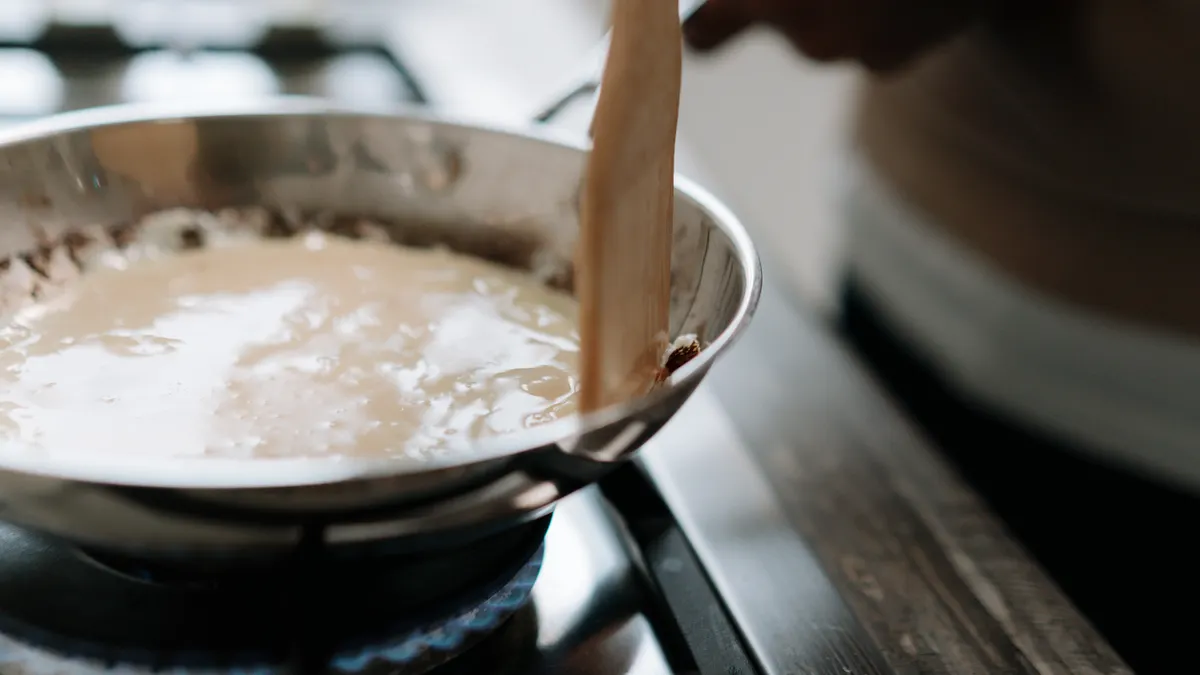
Heat a skillet or saucepan over medium heat and stir in 1 to 2 tablespoons of tomato paste if you want a deeper, redder sauce. Let it cook for about 1 minute so the raw edge softens.
-
Pour in 1 cup broth and scrape the pan with a spoon to dissolve the paste. This gives the sauce a savory base instead of a flat, thin liquid.
-
Add 1/2 to 1 cup of a blended base, such as cauliflower, white beans, or both. Cook for 3 to 5 minutes until the sauce looks thicker and lighter in texture.
-
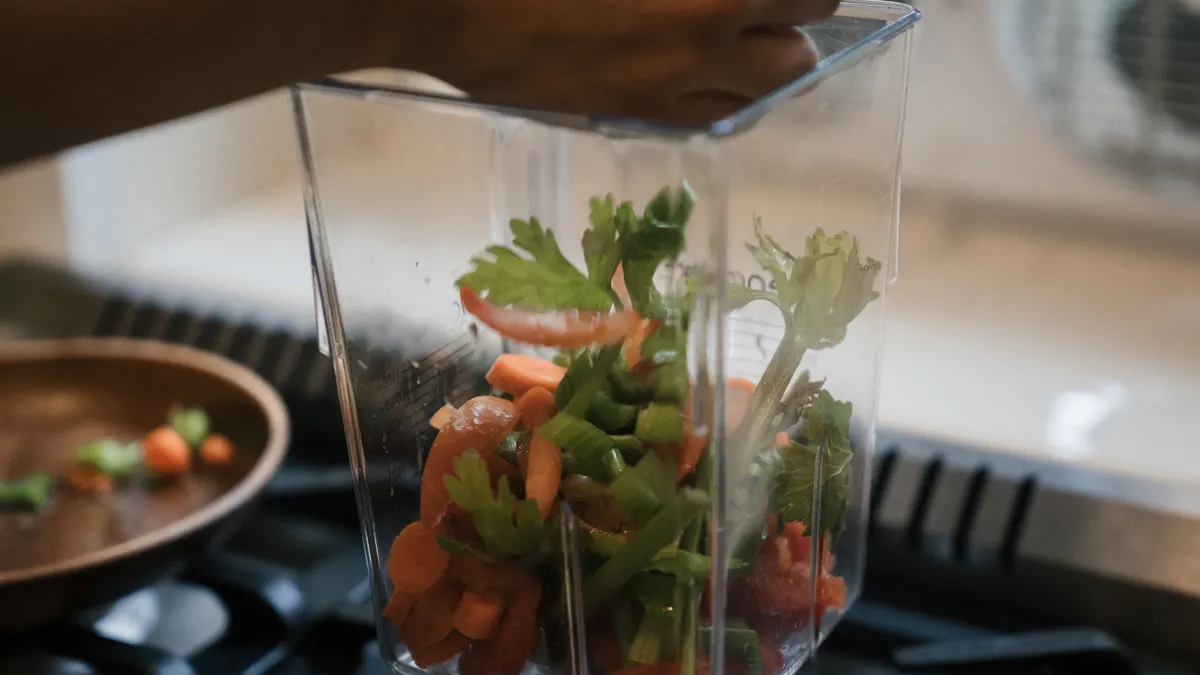
Blend the sauce in a blender or with an immersion blender if you want it extra smooth. A short blend makes the sauce velvety; a longer blend makes it more uniform and less rustic.
-
Stir in Greek yogurt off the heat if you want a tangy, creamy finish. Add it after the pan cools for a minute or two so the sauce stays smooth.
-
Finish with chopped herbs just before serving. Parsley, dill, or basil adds a fresh note that keeps the sauce from tasting heavy.
This method works best when you taste after each step. A sauce that starts bland can become full enough with a little more tomato paste or an extra splash of broth reduced for 2 or 3 minutes.
What can replace cream in a sauce?
Cream can be replaced by Greek yogurt, white beans, cauliflower, or a blended mix of those ingredients. Each option changes the texture and the taste, so the choice depends on the dish and on how much tang or body you want.
| Replacement | What it does | Best use | Main drawback |
|---|---|---|---|
| Greek yogurt | Adds tang and a creamy finish | Sauces that can be finished off the heat | Can split if boiled |
| White beans | Adds body and a smooth, neutral base | Thick, savory sauces | Can taste dull without herbs or tomato paste |
| Cauliflower | Adds bulk and a light, mild texture | Pale sauces or blended vegetable sauces | Needs seasoning to avoid tasting watery |
| Tomato paste | Adds depth and color | Red sauces and pan sauces | Can taste sharp if not cooked for 1 minute |
| Broth | Loosens the sauce and carries flavor | Any sauce that starts too thick | Too much makes the sauce thin |
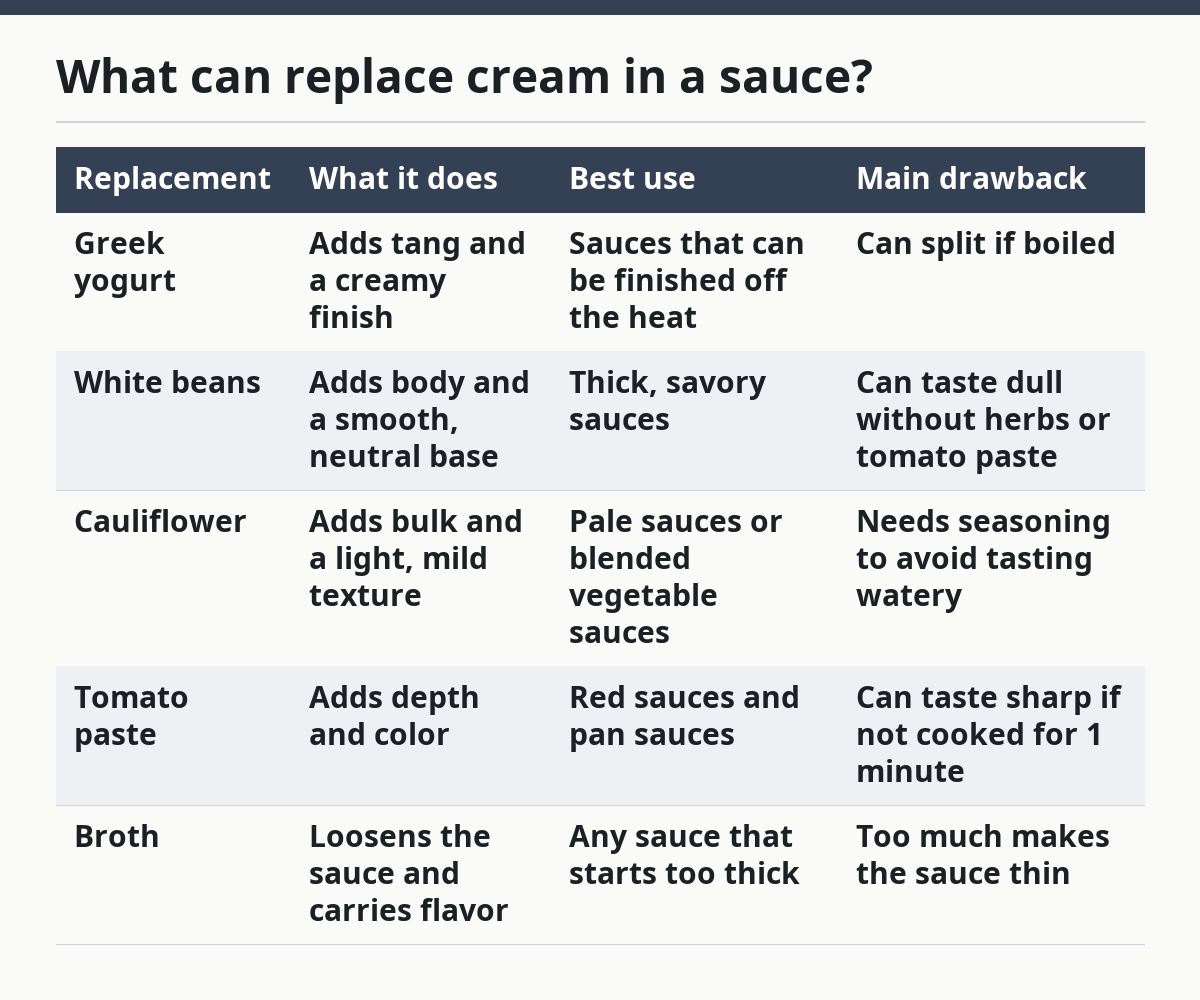
A lot of generic advice stops at “use yogurt.” That is too narrow. Greek yogurt is useful, but it is not the answer for every dish. If the sauce needs a neutral base, white beans or cauliflower often do the job better than dairy.
Which thickening methods work best?
The most useful thickening methods are blending, reducing, and using starchy or fiber-rich ingredients instead of flour-heavy or cream-heavy shortcuts. A sauce that thickens in 5 minutes will usually taste fresher than one that sits on the stove for 20.
Blending is the easiest route. A blender turns cauliflower florets or cooked white beans into a smooth base that gives the sauce weight without visible chunks. If the sauce is already in the pan, an immersion blender saves time and keeps cleanup simple.
Reduction is the next tool. Simmer broth and tomato paste together for 4 to 8 minutes, and some of the water cooks off. The sauce becomes thicker without needing extra ingredients. This works well in a saucepan with a wide bottom, since more surface area speeds the reduction.
Here is the trade-off: reduction deepens flavor, but it can also concentrate salt. That matters in a heart-healthy kitchen, where the goal is flavor without overdoing sodium. The American Heart Association recommends limiting sodium to 2,300 mg a day, and a lower target of 1,500 mg is often advised for many adults. If the sauce starts to taste too strong, add a splash of broth and simmer for 1 minute more. (Source: American Heart Association)
A starch-based slurry can thicken too, but that is not the focus here. For this topic, blended vegetables and beans give better body and a more useful nutrient profile than a quick white-flour fix. They also fit a pantry pattern that you can repeat on a weeknight.
Which base should you choose?
You should choose the base that matches the dish: yogurt for cool finishing, white beans for neutral body, cauliflower for light body, and tomato paste for depth. The wrong base can make the sauce taste fine on paper and off on the plate.
Greek yogurt suits a sauce that needs a tangy edge, like one spooned over roasted vegetables or grain bowls. It is best stirred in after the heat is off, because a boil can make it grainy. That is the main drawback, and it matters.
White beans work when the sauce needs to disappear into the background. Cannellini-style beans are mild, so they thicken a sauce without making it taste like beans. They are useful when the rest of the meal already has a strong main flavor.
Cauliflower is the lightest choice. It gives volume and a smooth texture, but it does not carry flavor by itself, so it needs broth, herbs, or tomato paste. That makes it a good fit for a reader who wants a softer, less assertive sauce.
Tomato paste is the most intense option in the group. It adds color and depth fast, especially when cooked for 1 minute before broth goes in. It is not the right base for every sauce, but it is one of the quickest ways to make a thin pan sauce taste finished.
According to USDA FoodData Central, plain nonfat Greek yogurt, white beans, cauliflower, and tomato paste all bring different amounts of protein, fiber, and texture to a sauce base, which is why the choice changes the final result. USDA FoodData Central
How do you fix common mistakes?
You fix common mistakes by correcting the texture first, then the flavor, then the finish. Most cream-free sauces are either too thin, too thick, or too bland, and each problem has a simple fix that takes less than 5 minutes.
If the sauce is too thin, simmer it uncovered for 3 to 5 more minutes or blend in more white beans or cauliflower. Do not keep pouring in broth. That just delays the problem and leaves the sauce watery.
If the sauce is too thick, add broth 1 tablespoon at a time. A little liquid goes a long way after blending, especially if the sauce already contains tomato paste or beans. A full 1/4 cup can turn a good sauce into soup.
If the sauce tastes flat, add herbs at the end, not more cream. Parsley, dill, or basil can lift a mild sauce fast. Tomato paste can help too, but it should be cooked for 1 minute first so it tastes rounder and less sharp.
If the sauce splits, especially with Greek yogurt, take it off the heat right away. Stir gently and do not boil it again. That is the drawback of yogurt sauces, and it is why they are not the best choice for hard boiling or long simmering. For safer food handling and cooling guidance, see the USDA. USDA FSIS
Which sauce style works for dinner?
The sauce style for dinner should match the main food and the amount of time you have. A 10-minute pan sauce with broth and tomato paste is one path; a blended bean sauce or cauliflower sauce takes a little more time but gives more body.
| Style | Time frame | Texture | Best for |
|---|---|---|---|
| Broth-based sauce | About 5 to 10 minutes | Light to medium | Quick weeknight meals |
| Blended vegetable sauce | About 10 minutes | Smooth and soft | Mild mains and vegetables |
| Bean puree sauce | About 10 minutes | Thick and creamy-looking | Heavier dishes that need body |
| Yogurt-finished sauce | A few minutes after heat is off | Bright and creamy | Dishes that need tang |
A broth-based sauce is the fastest, but it only works well if the pan already has flavor from tomato paste or browned bits. A bean or cauliflower sauce takes a little more work, yet it gives the kind of body people expect from cream-based sauces.
This is also where a lot of bad advice misses the mark. A sauce does not have to be rich in the same way every time. Some dishes need a light gloss; others need a thick spoonable finish. Picking the wrong style is why a sauce can taste fine but still feel wrong on the plate.
If you are building a larger pantry system, this method fits with the same logic used across heart-healthy pantry flavor systems: start with a strong base, add body, then finish with herbs instead of fat. For more on the ingredient choices that support that approach, see the pantry flavor systems guide and the heart-healthy dinner ideas page.
FAQ
What can replace cream in a sauce?
Greek yogurt, white beans, cauliflower, and tomato paste can all replace cream in a sauce. The choice depends on whether you want tang, body, or depth. Greek yogurt gives a creamy finish, while beans and cauliflower build thickness without dairy.
How do you thicken a sauce without cream?
You thicken a sauce without cream by blending vegetables or beans, reducing broth, or cooking tomato paste into the pan first. A 1/2 cup of puree can change the texture fast. If the sauce is still too loose, simmer it uncovered for 3 to 5 minutes.
Can heart-healthy sauces still taste rich?
Yes, heart-healthy sauces can still taste rich when they have body, depth, and a strong finish. Tomato paste, white beans, cauliflower, and herbs can make a sauce feel full without cream. The trick is to build flavor in layers instead of relying on heavy dairy.
Drafted with AI; not yet reviewed by a person.