Last updated: November 20, 2026
The best heart-healthy snack or small meal is built from protein, fiber, and unsalted or lightly processed foods, with sodium and added sugar kept low. For people who also manage diabetes, that usually means one protein food, one high-fiber food, and one fruit or vegetable, then a drink with no added sugar.
Key takeaways
- A good snack is not random grazing; it is a small, balanced plate.
- Protein slows hunger, while fiber helps keep blood sugar steadier.
- Packaged foods can fit, but the label matters more than the front of the box.
- Sodium, saturated fat, and added sugar are the main things to watch.
- Some “healthy” foods become poor choices when portions drift upward.
What counts as a heart-healthy snack?
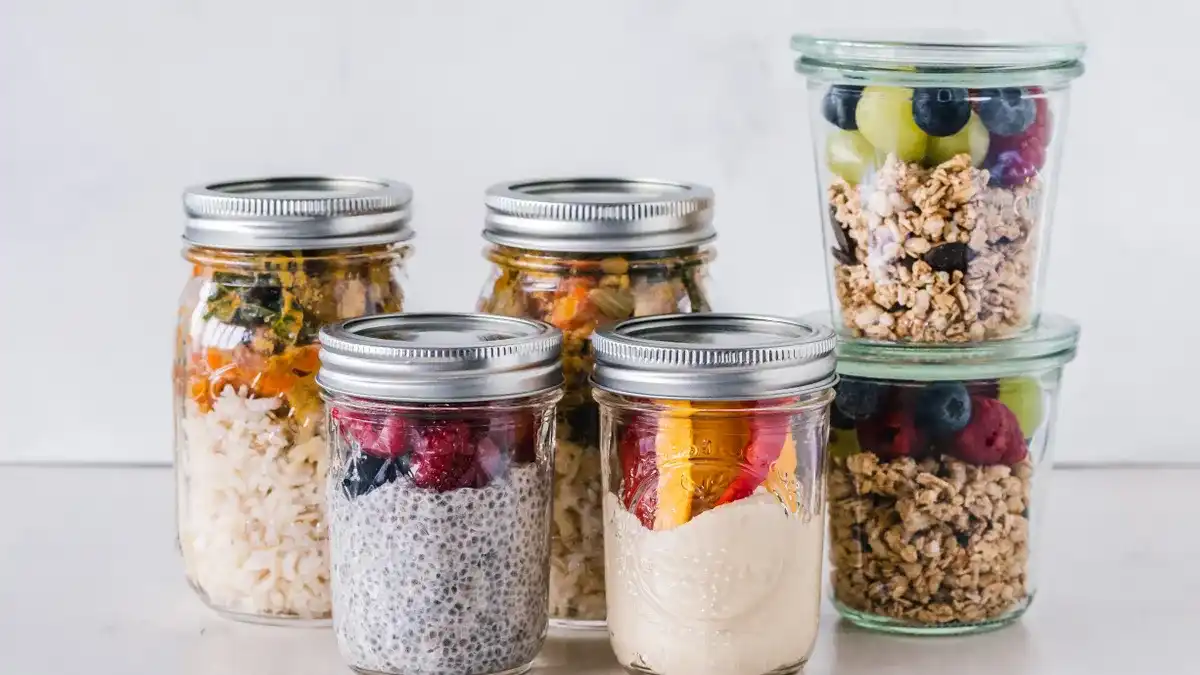
A heart-healthy snack is one that gives you enough staying power without piling on sodium, saturated fat, or added sugar. In practice, that means a small portion with at least two of these three pieces: protein, fiber, and unsaturated fat.
That sounds simple, but the details matter. A plain apple helps, yet it may not hold hunger for long by itself. A handful of unsalted nuts adds protein and fat, while a piece of fruit adds fiber and sweetness. Put them together and the snack works harder for both the heart and blood sugar.
For people with diabetes, the goal is not to “snack less” at any cost. The goal is to avoid the blood-sugar spike that comes from a lone refined carb, then the crash that drives more eating later. A snack that includes protein or fat usually lasts longer than crackers alone.
The American Heart Association and the National Heart, Lung, and Blood Institute both emphasize eating patterns rich in fruits, vegetables, beans, nuts, and whole grains. Those foods are useful here because they do double duty: they support heart health and they give a better glucose response than sweets or refined starches.
A snack is usually wrong for someone if it is mostly chips, pastries, candy, sweet drinks, or “low-fat” foods that are still high in sugar. It can also be wrong if it is too large to stay a snack. A big trail mix bowl can quietly turn into a meal, and that is not the same thing as a planned between-meal bite.
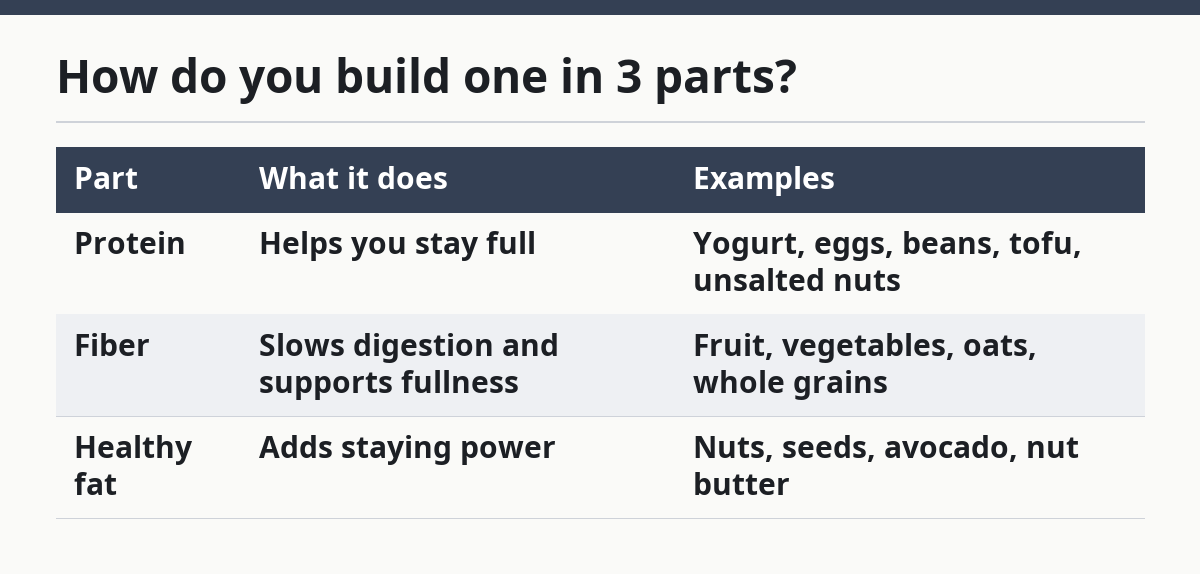
How do you build one in 3 parts?
You build it by choosing one item from each of three food groups: protein, fiber-rich produce or whole grain, and a small amount of healthy fat if needed. That gives you structure without needing a recipe every time.
Start with a protein anchor. Good options include plain Greek yogurt, low-sodium cottage cheese, beans, edamame, unsalted nuts, seeds, tofu, or a boiled egg. Protein is the part most people skip when they rush, and it is the part that often makes the snack feel finished.
Add a fiber source next. Fruit, raw vegetables, oats, whole-grain crackers, or a small portion of beans can fill this job. Fiber matters because it slows digestion and helps the snack feel less like a sugar hit and more like actual food.
Then decide whether the snack needs fat. If the protein is very lean, a small amount of nuts, seeds, avocado, or nut butter can help. If the protein already brings enough fat, you may not need more.
Here is the simplest way to think about it:
| Part | What it does | Examples |
|---|---|---|
| Protein | Helps you stay full | Yogurt, eggs, beans, tofu, unsalted nuts |
| Fiber | Slows digestion and supports fullness | Fruit, vegetables, oats, whole grains |
| Healthy fat | Adds staying power | Nuts, seeds, avocado, nut butter |
The common mistake is stacking too many starches and calling it balanced. Crackers, pretzels, granola bars, and rice cakes can all fit in a snack, but on their own they are often too light on protein and too easy to overeat. One carb base is enough. Two or three usually turns the snack into a refined-carb pile.
Which foods work best?
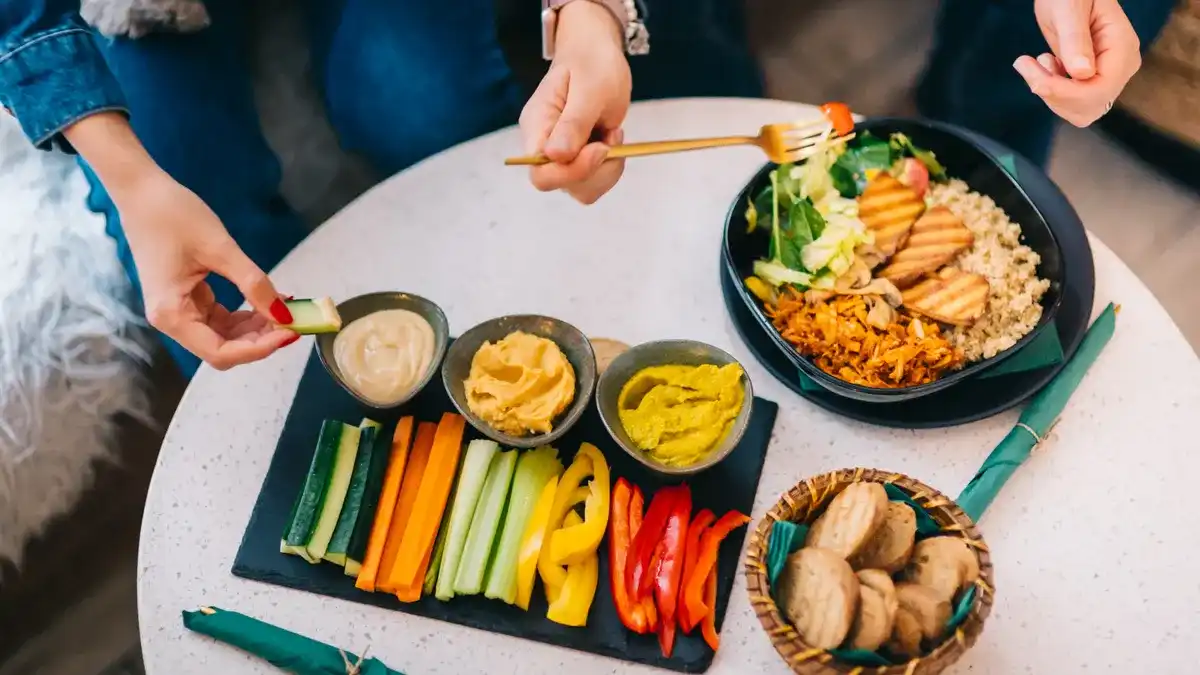
The best foods are the ones that show up with short ingredient lists and low sodium, not the ones with the loudest health claims. For heart health, the strongest everyday choices are vegetables, fruit, beans, lentils, nuts, seeds, plain yogurt, eggs, fish, tofu, and intact whole grains.
A few food types deserve special attention. Nuts and seeds are useful because they bring fat, fiber, and protein in a small package. Beans and lentils are especially strong because they combine carbohydrate with fiber and protein, which makes them useful in both snacks and small meals. Plain yogurt and cottage cheese can work well if the sodium and sugar are not too high.
Packaged foods are not off-limits, but the label decides. A bar that says “heart healthy” can still be high in added sugar. A cracker labeled “whole grain” can still be sodium-heavy. A hummus cup can be a smart choice or a salty one, depending on the brand and the serving size.
Here is a practical comparison:
| Food | Why it helps | Main drawback |
|---|---|---|
| Unsalted nuts | Protein and fat in a small serving | Easy to overeat |
| Beans or lentils | Fiber plus protein | Need prep or a can with lower sodium |
| Plain yogurt | Quick protein | Some versions have added sugar |
| Fruit | Easy fiber and volume | Not enough staying power alone |
| Vegetables with dip | Low calorie, high volume | Dip can add sodium or fat |
| Whole-grain crackers | Portable carb base | Often too light on protein |
One food group is not automatically better than another. Fruit is not “too sugary” by default, and nuts are not “free” because they are healthy. The question is what the food does in the whole snack. If it helps you stay satisfied without pushing sodium or sugar up, it earns its place.
What should you watch on the label?
You should watch sodium, added sugar, saturated fat, and portion size, because those are the numbers that usually make a snack heart-unfriendly. The front of the package can say almost anything; the nutrition facts panel is where the trade-off shows up.
The Dietary Guidelines for Americans advise keeping sodium under 2,300 milligrams per day for most people, and keeping added sugars under 10% of calories. For saturated fat, the American Heart Association advises a low intake as part of a heart-healthy pattern. Those numbers do not tell you what one snack must contain, but they set the guardrails.
The serving size is the trap most people miss. A bag may list a sensible number on the label, then contain two or three servings. If you eat the whole bag, you are not eating the snack on the label anymore. You are eating the full package, and the sodium or sugar total may be far higher than expected.
A simple label check takes seconds:
- Look at serving size.
- Check sodium.
- Check added sugar.
- Check saturated fat.
- Check fiber and protein.
A snack is usually stronger when fiber and protein are both present and sugar is low. It is weaker when the label shows a short ingredient list made mostly of starch, oil, and sweetener. It is also weaker when one serving is tiny enough that the real-world portion doubles or triples without the person noticing.
If a label is confusing, choose the plain version instead. Plain yogurt is easier to judge than a flavored cup. Unsalted nuts are easier to trust than a coated snack mix. Plain oats are easier to shape into a meal than a bakery-style granola bar.
How do you turn a snack into a small meal?
You turn a snack into a small meal by adding a second protein or vegetable piece so the plate can stand in for lunch or dinner. A snack is meant to bridge time. A small meal is meant to replace a full eating occasion.
The cleanest way to do that is to keep the same structure and scale it up slightly. A small meal still needs protein, fiber, and some healthy fat, but it should feel more complete. That often means a protein plus vegetables plus a whole grain or starchy vegetable, instead of just a fruit-and-nut combo.
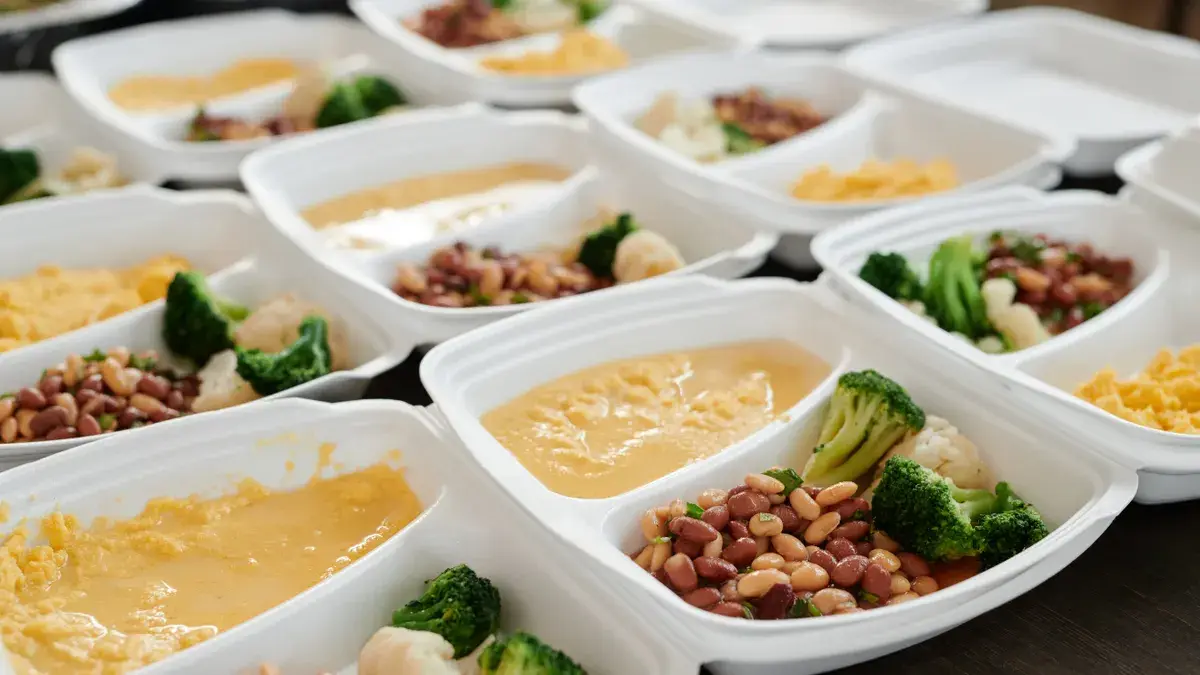
A bowl works well here. Think beans or tofu with vegetables and brown rice. Think eggs with whole-grain toast and tomatoes. Think salmon with a salad and a small portion of whole grain. The point is balance, not a giant serving.
The main difference is satiety. A snack may carry you for a few hours. A small meal should carry you farther. If the meal is built from only produce, it may be too light. If it is built from only starch, it may send blood sugar up too fast and leave you hungry again.
A helpful rule is this: if you would still need another meal soon after eating it, it is a snack. If it can honestly replace one meal without leaving you shaky or unsatisfied, it is a small meal.
A small meal can also solve the problem of “healthy” snacking gone wrong. People often eat several snack items over a few hours and end up with more calories, more sodium, and less satisfaction than if they had eaten one planned plate. Assembly beats grazing because the food has a job.
What are good assembly formulas?
Good assembly formulas give you a repeatable pattern, which matters more than memorizing recipes. A formula works on busy days, in lunch boxes, and when hunger hits early.
These formulas are the most practical ones:
- Fruit + unsalted nuts
- Vegetables + hummus
- Plain yogurt + berries + seeds
- Whole-grain crackers + tuna or beans
- Apple + peanut butter
- Hard-boiled egg + fruit
- Oats + nuts + cinnamon
- Edamame + vegetables
- Cottage cheese + tomatoes or cucumber
- Beans + salsa + a whole-grain side
The formula should match the setting. At work, portability matters more than elegance. At home, you can use a bowl and cut vegetables. On the road, the better choice may be a sealed yogurt, a piece of fruit, and a handful of unsalted nuts.
Temperature can matter too. Cold snacks are easier to pack, but warm small meals often feel more filling. A bowl of beans and vegetables is very different from a dry snack bag, even if the calorie count is similar. Texture and temperature influence how satisfying the food feels.
One honest drawback: the best formula still fails if the portions are careless. A huge handful of nuts, a large serving of hummus, or a giant bowl of oats can move the food from snack to full meal very quickly. That is not a problem if that is the plan. It is a problem if the goal was to keep things light.
What does a full day of assembly look like?
A full day of assembly looks like planned food pieces placed around real hunger, not constant grazing. The aim is to keep blood sugar steadier while still making food feel satisfying and normal.
A morning snack might be plain yogurt with berries. That gives protein, fiber, and a small amount of natural sweetness. If the yogurt is unsweetened, the added sugar stays lower, which helps the snack fit a heart-healthy pattern.
A midday small meal might be beans with vegetables and a whole-grain side. That gives more staying power than a snack and keeps the carbohydrate anchored to fiber and protein. If sodium is a concern, the beans and any seasoning should be chosen carefully.
An afternoon snack might be an apple with unsalted nuts. It is simple, portable, and less likely to trigger a sugar swing than a pastry or sweet drink. The apple gives fiber and volume. The nuts supply fat and protein.
An evening small meal might be eggs or tofu with vegetables and whole grain. That pattern works because it does not ask one food to do everything. It also avoids the common dinner habit of turning a snacky afternoon into a giant nighttime meal.
This is where many people slip: they treat every eating moment as separate and improvise each one. The easier path is to plan one or two snack formulas for the day, then repeat them until they become automatic. Repetition is not boring when the goal is to reduce decision fatigue.
Who is this not for?
This approach is not for someone who wants snack food to behave like candy and still count as heart healthy. If the main goal is sweetness, crunch, or a large portion for very few calories, the assembly method will feel limiting.
It is also not ideal for anyone who needs a strict medical nutrition plan that sets precise carbohydrate, sodium, fluid, or potassium targets. In that case, the food choices may need to be adjusted with a registered dietitian or other qualified clinician.
The same caution applies if certain foods are off-limits for medical, allergy, or kidney-related reasons. Nuts, dairy, beans, and some packaged products are common building blocks, but they are not universal building blocks. A good assembly method respects the person first.
The trade-off is clear. More structure usually means better control over hunger, sodium, and blood sugar. Less structure usually means more freedom, but also more drift toward crackers, sweets, and oversized portions. The best choice depends on the problem being solved.
A final limitation: no snack formula can fix an eating pattern that is already far too large or too frequent. If snacks are replacing meals, if portions keep expanding, or if blood sugar is still hard to manage, the answer may be in the full day’s pattern, not in one snack box.
How do you choose between snack options?
You choose by asking which option gives the most protein and fiber for the least sodium and added sugar. That is the fastest way to separate a useful snack from a polished but weak one.
| Option | Better when… | Less useful when… |
|---|---|---|
| Fruit alone | You need something light and quick | Hunger lasts more than a short time |
| Fruit + nuts | You want a steadier snack | Portion gets large enough to act like a meal |
| Yogurt + berries | You want protein with a soft texture | Yogurt is sweetened heavily |
| Crackers + cheese | You need convenience | Sodium is high or the crackers are refined |
| Hummus + vegetables | You want volume and fiber | The dip portion is too large |
| Beans + grain | You need a small meal | You only wanted a snack |
The best choice is not always the “lowest calorie” one. A tiny snack that does not satisfy often backfires later. A better snack can be slightly larger if it is built from the right pieces. The goal is control, not punishment.
When in doubt, pick the option that looks least processed in the ingredient list and most balanced on the plate. That simple rule is often enough to avoid the worst trap foods: salty, sweet, refined, and easy to overeat.
What is the bottom line?
The bottom line is that a heart-healthy snack or small meal should be built, not guessed. Protein, fiber, and careful portions are the core, while sodium, added sugar, and saturated fat are the numbers to watch.
For readers managing diabetes as well as heart health, the safest everyday pattern is usually plain and repetitive: a protein food, a fiber-rich food, and a modest portion of starch or fruit. That is not fancy, but it is reliable. The food does not need to be extreme to work.
The best assembly method is the one you can repeat on a weekday afternoon without reading a new recipe. If the snack can survive a label check, fit a real appetite, and avoid turning into a sugar burst, it is doing its job.
Can a snack be heart-healthy and still taste good?
Yes. A snack can be heart-healthy and still taste good if it uses real food with texture, salt balance, and natural sweetness. Berries with plain yogurt, apple with nut butter, or vegetables with hummus all have enough flavor without needing dessert-level sugar.
The mistake is assuming “healthy” means bland. Many of the strongest choices rely on contrast: creamy and crisp, sweet and salty, soft and crunchy. That is part of why simple combinations work so well.
Do I have to count calories for every snack?
No. Counting calories for every snack is not required for most people, and it can make food feel more stressful than useful. A better first step is to build the snack from protein, fiber, and a small amount of healthy fat.
If weight management, diabetes control, or a medical plan requires tighter tracking, a clinician may give specific targets. Otherwise, the handiest guide is the plate itself and the label on the package.
Is fruit allowed if I’m trying to protect my heart?
Yes. Fruit is allowed, and it is often helpful, because it brings fiber, water, and natural sweetness. The key is to pair it when needed, especially if fruit alone leaves you hungry fast.
Whole fruit is a different food from juice or dried fruit with added sugar. The whole version usually gives a better balance for both heart health and blood sugar.
What if I only have packaged foods?
Packaged foods can still work if you choose them carefully. The label matters more than the marketing on the front, and plain or lightly processed options are usually the better bet.
Look for lower sodium, low added sugar, and some fiber or protein. Then keep the portion honest. A packaged snack is fine when it behaves like a snack, not when it turns into a salty, sugary meal in disguise.
Drafted with AI; not yet reviewed by a person.