Last updated: November 19, 2026
Quick Answer: A practical heart-healthy pantry usually works best with about 5 categories and 12 to 15 staple items, because that is enough to cover most breakfasts, lunches, and dinners without defaulting to salty convenience foods. Heart-healthy cooking starts with a few reliable swaps and a pantry that makes the better choice the easy choice. In the guide below, Heart-Healthy Ingredient Swaps and Pantry Building — The Complete Guide keeps the focus on lower-sodium, higher-fiber meals that are easier to repeat. If the fridge is full of random sauces, refined grains, and salty shortcuts, dinner will keep drifting back toward the same tired pattern. If the pantry is built around unsalted, minimally processed staples, a week of lower-sodium, higher-fiber meals becomes much easier to repeat.
Key takeaways
- The fastest wins usually come from replacing the ingredients you use every week, not from buying exotic “health” foods.
- A heart-health pantry works best when it covers four jobs: flavor, fiber, protein, and fast meals.
- Salt, saturated fat, and refined grains are the main levers to adjust, but the replacement has to taste good enough to stick.
- The most useful pantry items are flexible: oats, beans, canned tomatoes, olive oil, nuts, whole grains, and no-salt seasonings.
- A smart swap is not always a total swap; sometimes the better move is a smaller portion or a mixed version.
- People who rely on heavily processed convenience foods, or who need a strict medical diet, should treat this as a starting point and check with a clinician or dietitian. The American Heart Association’s guidance is a useful starting reference: https://www.heart.org/en/healthy-living/healthy-eating
What is the simplest way to build a heart-healthy pantry?
The simplest way to build a heart-healthy pantry is to stock five categories: unsalted fats, fiber-rich staples, low-sodium flavor builders, protein anchors, and quick meal bases. That structure keeps shopping focused and makes it easier to cook without reaching for packaged foods that are high in sodium or saturated fat.
A generic pantry list usually gives the same flat advice: “buy whole grains” and “avoid processed foods.” That is too vague to help on a Tuesday night. A useful pantry has a job for every shelf. The oil shelf should support sautéing and dressings. The grain shelf should produce breakfast and dinner. The canned-goods shelf should cover soup, chili, pasta sauce, and emergency meals.
The American Heart Association’s dietary guidance is a useful standard to keep in mind, especially its emphasis on limiting saturated fat, sodium, and added sugars while prioritizing vegetables, fruits, whole grains, beans, nuts, and fish. The organization’s heart-healthy eating page is a good reference point: https://www.heart.org/en/healthy-living/healthy-eating
A pantry built around those principles should not be expensive in concept, but it does require a reset. The first pass is not about buying everything at once. It is about removing the pressure to improvise with the wrong ingredients. If white rice, packaged ramen, and salty sauces are the default, the whole kitchen tilts the wrong way.
The better baseline is modest and practical:
- one unsaturated cooking oil, usually olive or canola
- one or two whole grains, such as oats and brown rice
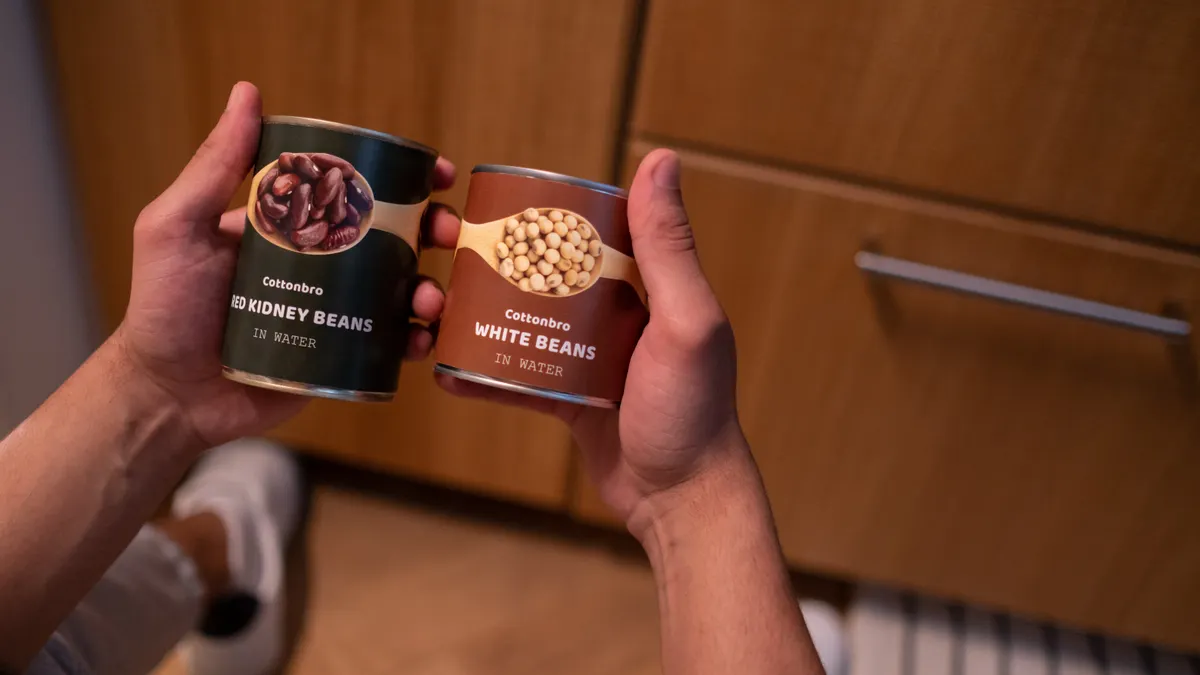
- beans or lentils, dried or canned with no-salt-added versions when possible
- canned tomatoes with no added salt
- nuts or seeds without added salt
- herbs, spices, vinegar, garlic, and citrus for flavor
- a few protein staples, such as canned salmon, tuna, tofu, or plain yogurt
That list does not sound glamorous because it is not meant to. It is meant to make better dinners happen with fewer decisions. For a reader who wants restaurant-style novelty every night, this pantry will feel too restrained. For someone trying to lower sodium and improve overall diet quality, it is the right foundation.
Which ingredient swaps give the biggest heart-healthy payoff?
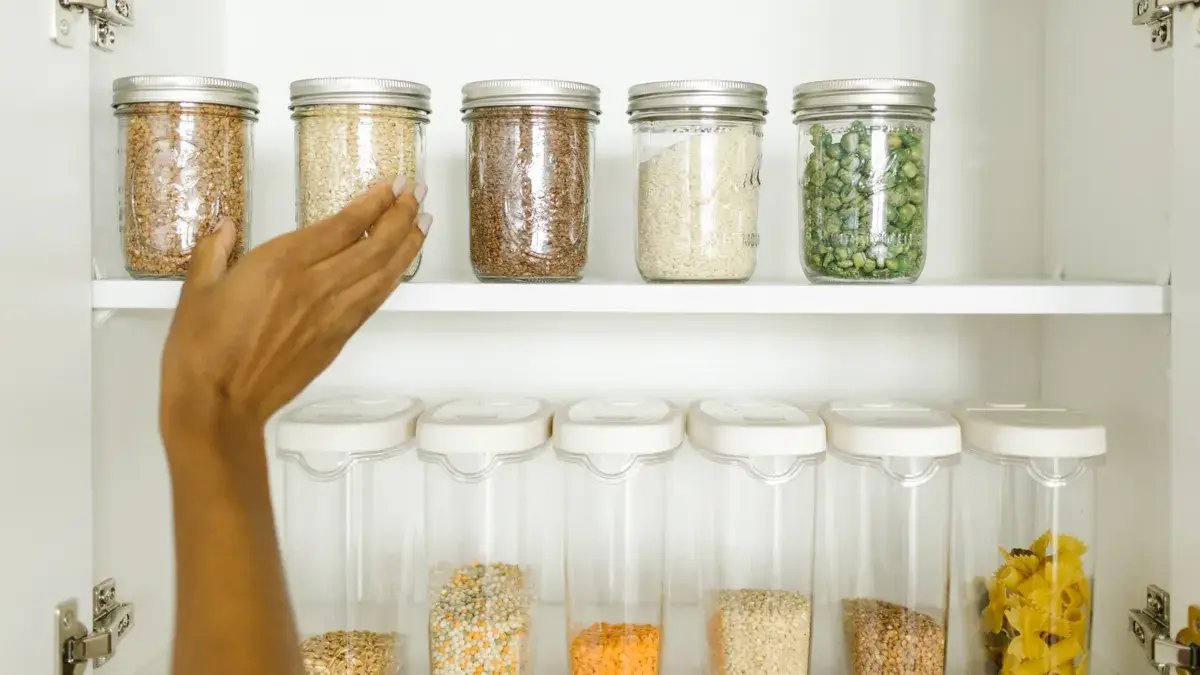
The biggest heart-healthy payoff comes from swapping sodium-heavy, saturated-fat-heavy, and refined-grain ingredients for foods that still cook well and taste familiar. The wins are not dramatic one-for-one “miracles”; they are repeatable changes that lower risk factors over time.
The mistake most people make is focusing on one dramatic swap and ignoring the rest of the recipe. A breakfast of white toast and butter changed to multigrain toast and margarine is not automatically heart-healthy if the rest of the day is built on salty takeout. The useful approach is to swap the ingredient that appears most often in your cooking.
A practical set of swaps looks like this:
-
Butter or stick margarine → olive oil or canola oil.
Use this for sautéing vegetables, roasting, and simple dressings. The trade-off is flavor: butter is richer and browns differently. Olive oil works best when the dish benefits from fruitier, grassier notes; canola is more neutral. -
Cream-heavy sauces → tomato-based, bean-based, or yogurt-based sauces.
Tomato sauces with garlic, onion, herbs, and olive oil can carry pasta or chicken without the saturated-fat load of cream. Plain Greek yogurt can replace sour cream in some cold applications, though it may split if overheated. -
White bread, white rice, regular pasta → whole-grain versions.
These bring more fiber and generally more satiety. The drawback is texture; whole-wheat pasta can overcook quickly, and some whole-grain breads are dense enough to disappoint anyone expecting soft sandwich bread. -
Processed meats → beans, lentils, fish, tofu, or skinless poultry.
Processed meats tend to bring sodium and saturated fat with them. Beans and lentils are the easiest pantry replacement because they are cheap, shelf-stable, and compatible with soups, tacos, salads, and grain bowls. -
Salt-heavy seasoning blends → garlic, onion, paprika, cumin, pepper, citrus, vinegar, and salt-free herb mixes.
This swap matters more than it looks. A bland low-sodium meal fails fast. A dish with acid, heat, herbs, and aromatics can taste complete without leaning on the salt shaker. -
Sugary cereal or pastries → oats, fruit, nuts, and plain yogurt.
This is not only about blood lipids; it is also about keeping breakfast from creating a midmorning crash. Oats, fruit, nuts, and plain yogurt also give you a breakfast that can be built in about 5 minutes.
The Cleveland Clinic’s overview of heart-healthy eating is a solid reference for the broad pattern: more unsaturated fats, more fiber-rich foods, and less saturated fat and sodium. A helpful page is here: https://my.clevelandclinic.org/health/articles/17010-heart-healthy-diet
The most important judgment call is that not every swap needs to be perfect. A bowl of pasta made with whole-wheat noodles, olive oil, canned tomatoes, garlic, and a handful of beans is heart-friendlier even if it is not a strict diet-food recipe. That kind of halfway improvement can be the version that survives real life.
How do I stock a heart-healthy pantry on a normal budget?
A heart-healthy pantry on a normal budget comes from buying the least processed version of a few versatile foods and using them across multiple meals. The cheapest pantry is not the one with the most labels that say “heart healthy”; it is the one that stretches across breakfast, lunch, and dinner without waste.
The first budget rule is to buy for utility, not trend. Olive oil is useful. Fancy infused oils are optional. Old-fashioned oats are useful. Specialty granolas are not. Dry beans, dried lentils, brown rice, barley, and whole-wheat pasta usually beat many packaged “health” products on cost per meal, even when the exact shelf price varies by store and region.
The second rule is to prioritize dry and canned staples that reduce food waste. A bag of oats sits for months. A can of no-salt-added tomatoes turns into soup, braise, or sauce. Canned beans are more expensive than dried beans in many stores, but they are still practical because they cut the time cost that causes takeout to win.
A budget-friendly heart-healthy pantry usually includes:
- old-fashioned oats
- brown rice, barley, or quinoa if the budget allows
- whole-wheat pasta
- dried lentils
- canned beans, ideally no-salt-added or low-sodium
- canned tomatoes, no-salt-added
- natural peanut butter or other unsalted nut butter
- unsalted nuts and seeds
- olive oil or canola oil
- vinegar
- garlic, onions, pepper, cumin, paprika, oregano, chili powder, cinnamon
- tuna, salmon, or sardines in water or olive oil
- frozen vegetables for backup meals
That list does not require a wholesale lifestyle change. It requires a store habit: if the pantry is empty of one of these items, replace it before buying another snack or convenience food. A pantry that stays stocked is what prevents the “nothing to eat” problem, which is when salt-heavy frozen meals and restaurant food usually reappear. For readers managing a medical diet, it is still wise to check with a clinician or dietitian before making major changes.
Cost also changes with preparation. Dried beans are cheap but need soaking and cooking time. Canned beans are more expensive but faster. Whole chickens can be cost-effective, but only if the cook uses the leftovers. If not, skinless chicken thighs or breasts may be the more realistic buy because they waste less.
This is the part many generic articles miss: budget is not just price per pound. It is also the cost of failure. A slightly pricier ingredient that actually gets used can beat a cheaper one that sits untouched until it expires.
What should go in a heart-healthy pantry shelf by shelf?
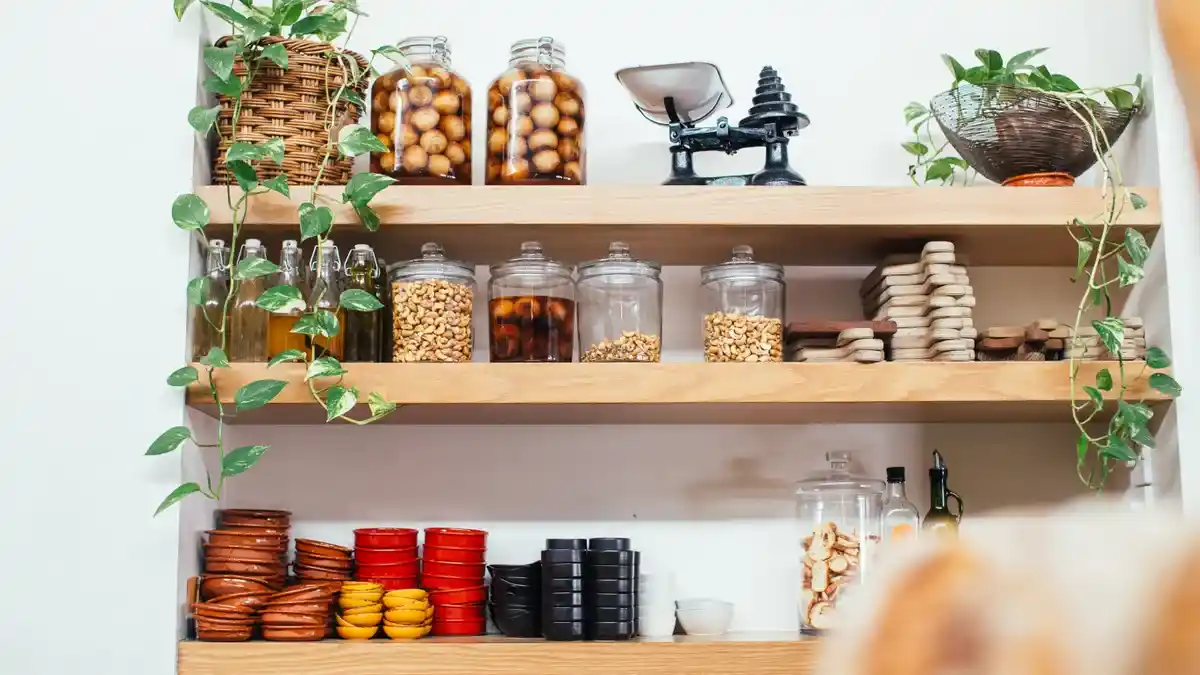
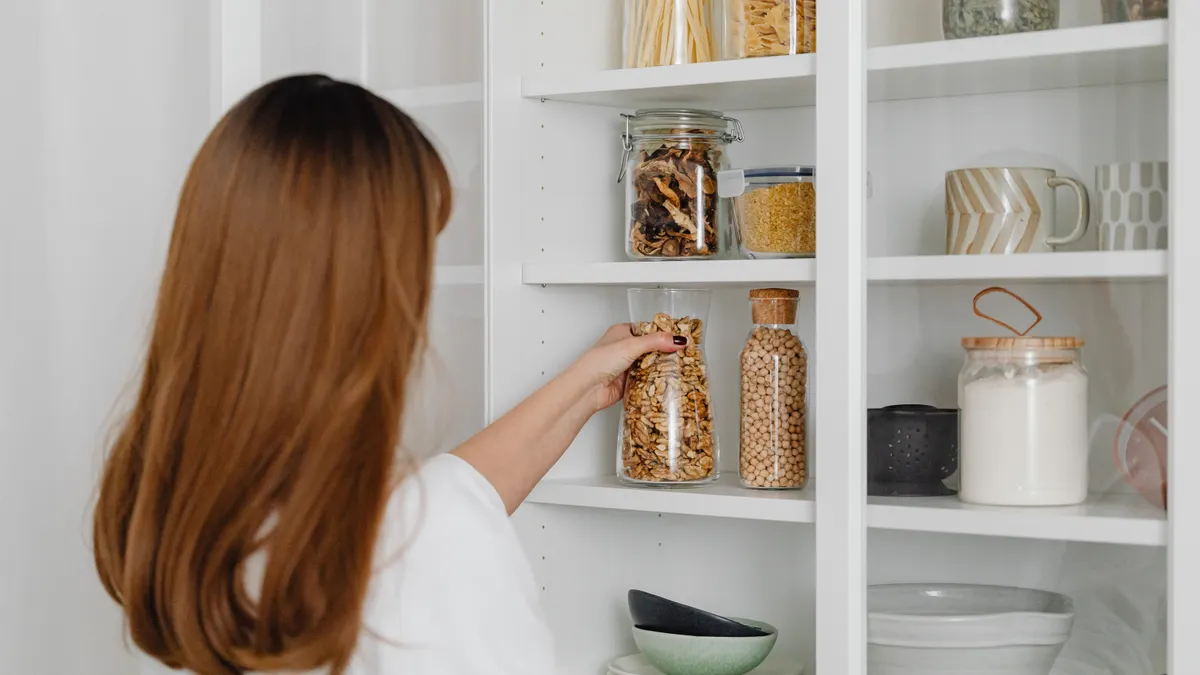
A heart-healthy pantry should be organized by function so the healthy choice is obvious when cooking starts. That means grouping ingredients by what they do in a meal, not by where a store happens to place them.
1. Breakfast shelf
This shelf should make it easy to start the day with fiber and protein.
- Oats
- Whole-grain cereal with low added sugar
- Chia seeds or ground flaxseed
- Nut butter without added sugar or salt
- Unsweetened milk or a fortified plant milk
- Cinnamon, vanilla, and fruit from the freezer
Why this matters: breakfast often becomes a sugar-and-refined-carb meal by default. If oats are visible and ready, the meal can shift toward slower digestion and better satiety.
2. Grain shelf
This shelf should cover side dishes and main bowls.
- Brown rice
- Barley
- Whole-wheat pasta
- Whole-grain couscous or bulgur
- Corn tortillas with simple ingredients
The goal is not to eliminate all refined grains forever. It is to make the higher-fiber option the default when the cook is not thinking.
3. Protein shelf
This shelf should make meals happen without relying on processed meat.
- Lentils
- Black beans, chickpeas, kidney beans
- Canned tuna, salmon, or sardines
- Tofu
- Unsalted nuts and seeds
- Shelf-stable edamame if available
Fish deserves a special mention because it gives a different kind of option than beans alone. Canned salmon and sardines are useful when the goal is a quick meal that still feels substantial.
4. Flavor shelf
This shelf is what keeps the pantry from tasting like a prescription.
- Olive oil and canola oil
- Vinegar
- Mustard
- Low-sodium broth or bouillon, if truly needed
- Garlic powder, onion powder, paprika, cumin, black pepper, oregano, rosemary, thyme, chili flakes
- No-salt seasoning blends
- Lemon juice or bottled citrus juice
This shelf is where many people cut corners in the wrong direction. They buy “healthy” staples and then rely on salty seasoning packets to make them edible. The result is a pantry that looks clean but still pushes sodium upward.
5. Emergency shelf
This shelf is for tired days.
- Whole-grain crackers with modest sodium
- Canned soup with lower sodium, if a good option exists
- Shelf-stable milk or fortified plant milk
- Jarred pasta sauce with lower sodium and no added sugar if possible
- Frozen vegetables
- Whole-grain wraps
The emergency shelf is not a cheat shelf. It is what keeps the pantry from collapsing when time is tight.
If the pantry has a weakness, it is often in the flavor shelf. That is where people either give up and return to salty packaged foods or learn how to make simple food taste complete. A pantry without acid, herbs, and aromatic spices is not really a heart-healthy pantry; it is just a collection of bland ingredients.
What are the best heart-healthy ingredient swaps for cooking and baking?
The best heart-healthy ingredient swaps for cooking and baking are the ones that preserve texture while lowering saturated fat, sodium, or refined grains. That means some substitutions work better in savory dishes than in desserts, and some require portion changes instead of direct replacements.
Here is a practical before-and-after table:
| Metric | Before | After | Change | Timeline |
|---|---|---|---|---|
| Cooking fat | Butter or stick margarine | Olive oil or canola oil | Less saturated fat in everyday cooking | Immediate swap |
| Pasta base | Regular refined pasta | Whole-wheat pasta or a half-and-half blend | More fiber, more fullness | Immediate swap |
| Bread | White sandwich bread | Whole-grain bread with a short ingredient list | Higher fiber, slower digestion | Immediate swap |
| Protein in chili | Ground processed meat | Beans, lentils, or a mix with lean meat | Less sodium and saturated fat, more fiber | Immediate swap |
| Sauce base | Cream or cheese-heavy sauce | Tomato, bean, or yogurt-based sauce | Lower saturated fat | Immediate swap |
| Snack | Salted chips | Unsalted nuts, fruit, or air-popped popcorn | Less sodium, better satiety | Immediate swap |
| Seasoning | Salt-heavy blends | Garlic, pepper, citrus, vinegar, herbs | More flavor with less sodium | Immediate swap |
| Baking fat | Butter in quick breads | Unsweetened applesauce or a partial oil swap | Less saturated fat, softer crumb | Recipe-dependent |
| Breakfast grain | Sugary cereal | Oats with seeds and fruit | More fiber, less added sugar | Immediate swap |
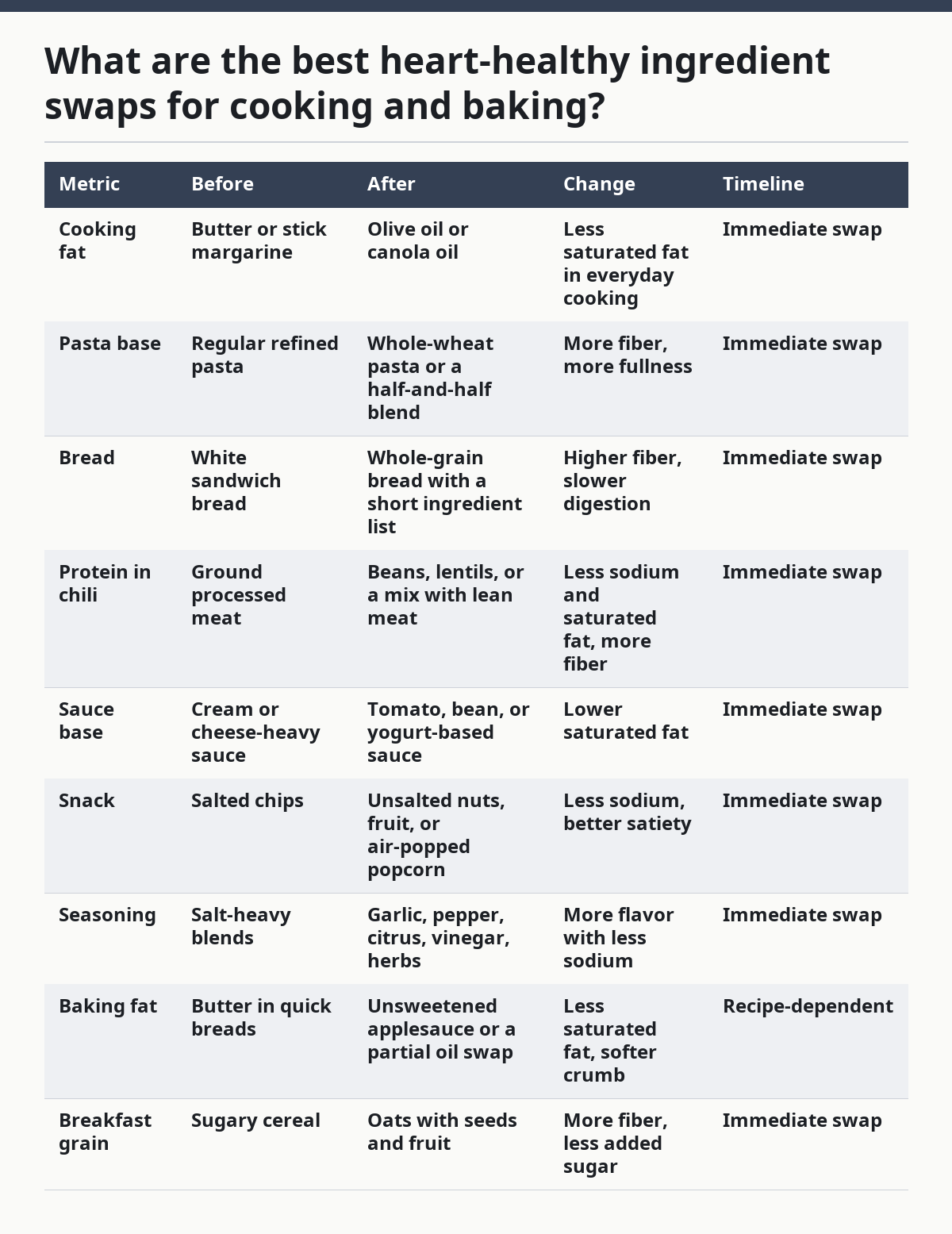
A few cautions matter here.
First, baking is less forgiving than stovetop cooking. Applesauce can replace part of the fat in muffins or quick breads, but it can make the texture gummy if used too aggressively. That makes it a partial swap, not a universal rule.
Second, cheese is not always the enemy. A small amount of sharp cheese can deliver enough flavor that the dish needs less salt overall. In other words, some heart-health improvements come from using less of a strong ingredient, not eliminating it.
Third, low-sodium products are useful, but not all of them taste good. A can of low-sodium beans is worth using if the cook rinses them and seasons them well. A low-sodium soup that tastes flat will probably not become a repeat buy.
The best swaps are the ones that can survive repeat use. A perfect “healthy” recipe that nobody eats twice is not a real pantry strategy. A decent bowl of beans, grain, vegetables, oil, acid, and herbs is.
What goes wrong when people try to eat heart-healthy from a pantry?
What goes wrong most often is that the pantry still behaves like a convenience-food pantry, even after the labels change. People buy one or two “good” items, then keep the same salty sauces, refined snacks, and sugary breakfast foods that caused the problem in the first place.
The first failure is taste fatigue. If the pantry loses butter, salt, and convenience but gains no seasoning strategy, meals start to feel like punishment. That is where many plans collapse by week two. The solution is not more discipline; it is better flavor architecture: acid, herbs, garlic, onion, and enough texture to make the food feel finished.
The second failure is over-reliance on packaged health foods. A protein bar with a heart on the box is still a processed snack. A frozen dinner marked “light” can still be high in sodium. The label might reduce guilt, but it does not automatically improve the pantry.
The third failure is trying to swap everything at once. A kitchen that changes bread, pasta, snack foods, sauces, and proteins in a single shopping trip can feel unfamiliar enough that the cook stops using it. A slower reset works better: oats first, then beans, then whole grains, then sauces and snacks.
The fourth failure is forgetting the hidden sodium. Bread, canned soup, tortillas, sauces, pickles, cheese, and deli-style proteins can add up quickly. A pantry that only checks the obvious salt shaker can still drive sodium intake high.
The fifth failure is ignoring the family or household reality. A pantry built around ingredients no one else will eat becomes the responsibility of one person alone. If the household hates spicy food, the pantry should not depend on chili flakes to make every meal work. If someone refuses beans, then fish, tofu, eggs, and plain yogurt need a larger role.
The honest drawback of a heart-healthy pantry is that it requires more planning than a kitchen full of ready-made foods. It also asks for more cooking, at least at the start. For a person with a packed schedule, mobility limits, or very little kitchen confidence, that can be a real barrier. In those cases, the right move may be a partial pantry shift plus guidance from a registered dietitian, especially if there is diagnosed high blood pressure, high cholesterol, diabetes, kidney disease, or a history of heart disease. The National Heart, Lung, and Blood Institute is a useful starting point for heart-healthy eating guidance: https://www.nhlbi.nih.gov/health/heart-healthy-living
How do I turn pantry staples into actual meals?
Turn pantry staples into actual meals by using a repeatable formula: grain, protein, vegetable, fat, acid, and seasoning. That formula is more reliable than hunting for perfect recipes, and it works with a 20-minute timeline.
A heart-healthy pantry becomes useful when it can produce more than “healthy ingredients.” Here is the simplest structure:
- Base: oats, rice, barley, whole-wheat pasta, tortillas
- Protein: beans, lentils, tofu, tuna, salmon, skinless poultry
- Vegetable: frozen broccoli, spinach, peppers, onions, carrots, canned tomatoes
- Fat: olive oil, canola oil, nuts, seeds
- Acid: lemon juice, vinegar, tomatoes
- Flavor: garlic, herbs, cumin, paprika, pepper, chili flakes
From there, a few combinations cover a lot of ground:
- oats + peanut butter + cinnamon + berries
- brown rice + black beans + salsa-style tomatoes + cumin
- whole-wheat pasta + canned tomatoes + garlic + olive oil + chickpeas
- barley + lentils + onions + carrots + herbs
- tuna + whole-grain crackers + mustard + fruit
- tofu + frozen vegetables + ginger or garlic + rice
This is where readers often want a “meal plan,” but the bigger issue is decision fatigue. A pantry should reduce the need to think. If the cook knows that every shelf has a role, a dinner can be assembled with almost no mental load. For example, one can of beans plus 1 cup of rice can become a full dinner base.
The real value of the formula is that it prevents the all-or-nothing trap. A meal does not need to be restaurant-level polished to count as heart-healthy. It needs the right structure most of the time. One salty meal will not undo the pantry. A pantry that keeps producing balanced meals will do more than a single perfect shopping trip ever could.
The heart-healthy pantry is not about purity. It is about repeatability, decent flavor, and enough flexibility to survive real schedules, real budgets, and real appetite. That is what makes the swaps stick.
Drafted with AI; not yet reviewed by a person.