Last updated: November 20, 2026
Quick answer: build a 5-spice core for a low-sodium herb and spice cabinet, then add a few cuisine-specific extras. A good low-sodium herb and spice cabinet starts with paprika, cumin, oregano, black pepper, and cinnamon, plus a few dried herbs and whole spices stored in tight containers away from heat and light. For a broader plan, the heart-healthy pantry flavor systems hub can sit above this page, and the How do you choose the first jars? section below shows the 2-week buying order.
Key takeaways
- Start with a few spices that fit many meals, not a giant rack.
- Choose dried herbs and whole spices that match the foods you cook most.
- Storage matters as much as the jar: heat, light, and moisture shorten flavor.
- Keep the cabinet focused on flavor, not salt-based blends or packet mixes.
- Build by cuisine, so each jar has a job and does not sit unused.
What belongs in a low-sodium herb and spice cabinet?
A low-sodium herb and spice cabinet holds the seasonings that bring flavor without leaning on salt-based blends, bouillon, or packaged packets. The goal is not to own every spice aisle item; it is to keep a tight set of jars that cover most meals with less waste.
Start with the basics: paprika, cumin, oregano, black pepper, and cinnamon. Paprika works in eggs, roasted vegetables, beans, and chicken. Cumin gives depth to beans, lentils, soups, and grain bowls. Oregano fits tomato sauce, roasted vegetables, and many Mediterranean dishes. Black pepper works almost everywhere. Cinnamon matters because it shows up in both sweet dishes and some savory meals.
A generic cabinet goes wrong when it is built from one-off recipes. That leaves half-used jars and no clear system for dinners on a Tuesday. A better cabinet has a few all-purpose spices, a few dried herbs, and a few whole spices, each with a purpose. It also leaves room for the foods you cook most, not the foods you only make once a year.
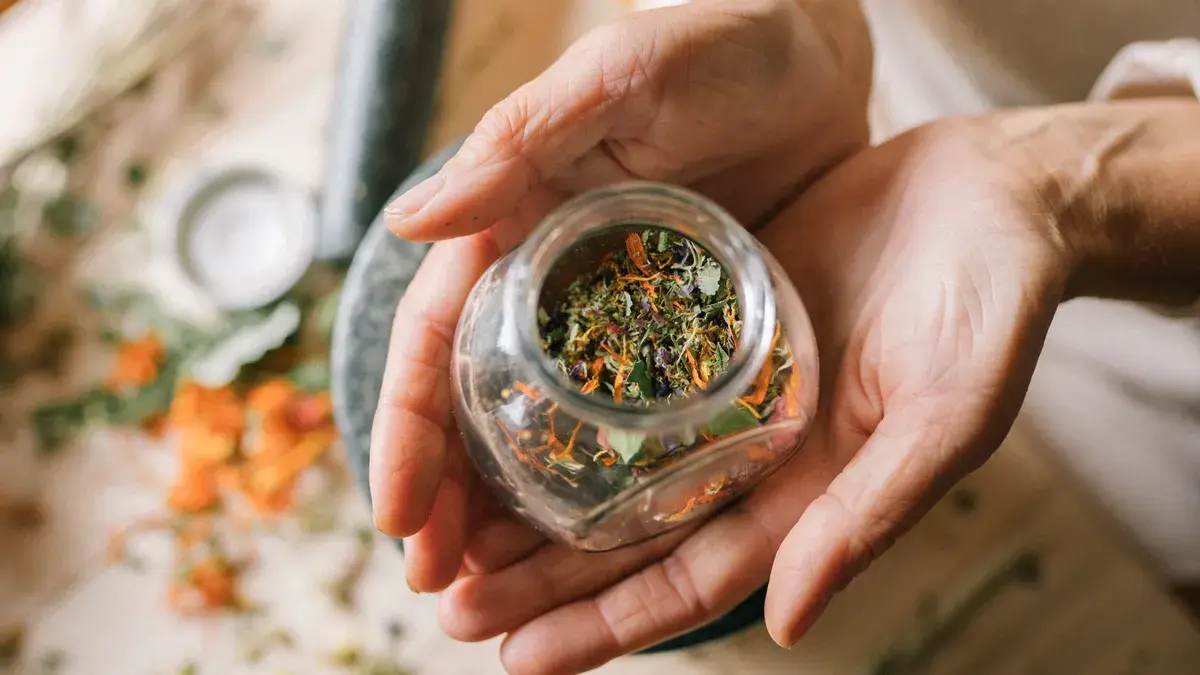
This is the right place to think in categories, not just names. Dried herbs add leafy aroma. Spices bring seed, bark, root, or pod flavor. Whole spices last longer than ground ones and can be ground fresh when needed. The heart-healthy pantry flavor systems hub can sit above this page as the broader planning map, but this cabinet is the working drawer.
How do you choose the first jars?
You choose the first jars by picking seasonings that show up in more than one kind of meal. That keeps the cabinet useful from day one and stops you from buying five jars that only fit one recipe.
Use this order:
- Start with black pepper and paprika for daily use in eggs, vegetables, chicken, and soups. These are the quickest win because they fit many foods.
- Add cumin and oregano for bean dishes, tomato dishes, roasted vegetables, and grain bowls. These two cover a lot of savory cooking with little overlap.
- Add cinnamon for oatmeal, yogurt, fruit, and some stewed dishes. One jar can do both breakfast and dinner.
- Add one garlic option if needed in your own kitchen plan, then stop. A small cabinet works better than a crowded one.
- Add one onion-forward or warm spice if your cooking uses it often, such as dishes built around cumin and paprika.
- Buy small amounts first so jars do not age out before you use them.
The point is not to collect favorites from every aisle. It is to cover the most common cooking patterns with the fewest jars. If a spice is only useful in one recipe you make once every few months, it does not belong in the first round.
A helpful rule is to build the cabinet for a 2-week cooking cycle. If a jar cannot help in a breakfast, lunch, or dinner within that span, it is probably a later buy. That keeps spending and clutter down without making the cabinet feel bare.
Which herbs and spices should sit in the core set?
The core set should include a few dried herbs, a few ground spices, and a few whole spices that each pull real weight. A balanced cabinet usually looks more useful when it is small.
| Type | Good examples | Best use | Trade-off |
|---|---|---|---|
| Ground spices | paprika, cumin, black pepper | Fast weeknight cooking | Lose flavor faster than whole spices |
| Dried herbs | oregano and other dried leaves | Tomato dishes, beans, roasts | Can taste dusty if old |
| Whole spices | seeds or pods you grind or toast | Deeper flavor in small batches | Need a grinder or mortar |
| Warm spice | cinnamon | Sweet and some savory dishes | Easy to overuse |
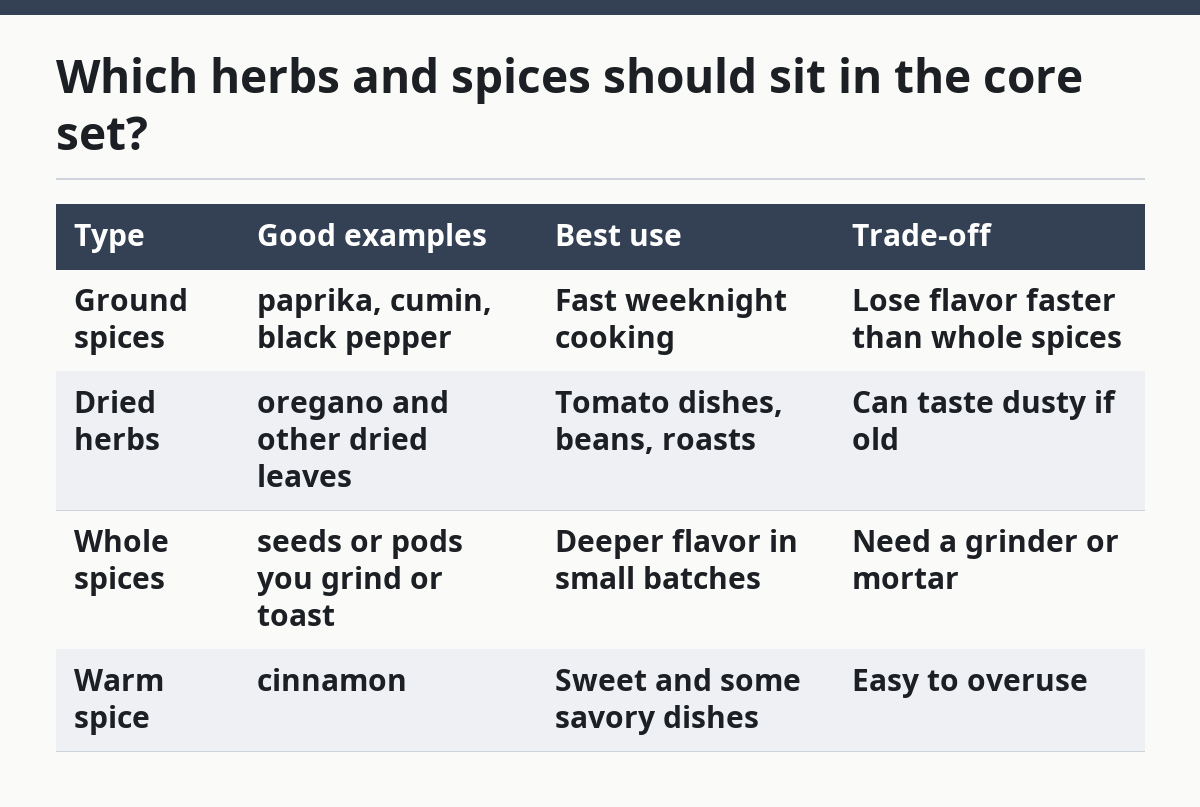
Ground spices are convenient because they go straight into the pan. Whole spices take more work, but they often keep their flavor longer. Dried herbs sit in the middle: easy to use, but they need enough freshness to taste like something.
The honest limitation is shelf life. A cabinet that looks full can still cook flat if the jars are old. That is why the core set should be small enough to use regularly. It is better to finish a jar of oregano than to keep seven herbs that all taste muted.
For a low-sodium kitchen, this core set does a second job too: it gives food a clear flavor direction. Paprika pushes dishes toward smoky or sweet warmth. Cumin points food toward earthy, savory notes. Oregano brings a sharp green edge. Black pepper gives bite. Cinnamon adds warmth without salt.
According to the FDA, the Daily Value for sodium is 2,300 milligrams, so using herbs and spices to add flavor can help you avoid leaning on salty shortcuts.[^1] That makes the cabinet practical, not decorative.
How should you store herbs and spices?
You should store herbs and spices in tight containers, away from heat, light, and steam. Storage is the difference between a cabinet that stays lively and one that turns dull before you finish the jar.
Use small glass jars, tins, or other containers with lids that close well. Keep them out of the cabinet above the stove if that spot gets hot. A drawer, a cool shelf, or a closed cupboard works better. Moisture is a problem too, so do not shake jars over a steaming pot if you can avoid it.
Whole spices usually hold up longer than ground spices, which is one reason they belong in a cabinet like this. Ground paprika or cumin can work well, but they age faster. Dried herbs also lose their edge with time, especially if the jar is opened often. Penn State Extension notes that ground spices typically keep quality for about 2 to 3 years, while whole spices often last about 3 to 4 years.[^2]
A useful habit is to label the container and keep the newest jars in back. That is simple, but it stops older jars from sitting untouched for years. If a spice smells weak when you open it, it will probably taste weak too.
Do not use giant containers for everything. Large jars look efficient, but they expose more spice to air each time you open them. A smaller jar is often the better buy because it protects flavor and fits a kitchen that cooks in normal batches rather than bulk.
The practical result is a cabinet that acts like a tool kit. You reach for what you need, the jar still smells like itself, and the next meal starts with flavor instead of a rescue mission.
How do you season by cuisine without salt?
You season by cuisine by grouping spices into patterns, not by adding random jars to the pan. That keeps the cabinet focused and makes each spice easier to remember.
For Mediterranean-style cooking, oregano and black pepper are strong anchors, with paprika for color and warmth. For Latin-leaning dishes, cumin and paprika do much of the work, with black pepper for balance. For breakfast and fruit-based dishes, cinnamon does more than most people expect. For bean and lentil meals, cumin and oregano are the most useful pair in the cabinet.
This approach works because it gives each jar a repeatable role. You are not trying to make every dish taste the same. You are trying to make each meal taste complete without relying on salt-heavy shortcuts.
A common mistake is buying a spice because a recipe used it once. That usually leads to a drawer full of jars that never get opened again. A better move is to pick one or two cuisine patterns you cook often, then choose spices that serve those patterns across several meals.
Another mistake is treating dried herbs and spices as equal. If you are unsure which ones to use together, consult a registered dietitian, dietitian, or other qualified food professional, because oregano behaves differently from cumin and cinnamon is not a stand-in for black pepper. The cabinet works best when each jar has a job. That is also why a spice rack built for this purpose does not need to be large.
If you cook more than one cuisine, keep the overlap in the center of the cabinet. Black pepper, paprika, cumin, and oregano can do a lot of shared work. Then add only a few specialty jars on the edges.
What should you buy first if your cabinet is empty?
You should buy black pepper, paprika, cumin, oregano, cinnamon, and one or two storage containers first. That gives you a functional cabinet without turning the shopping list into a project.
A simple starter set can look like this:
- Buy black pepper for nearly every savory meal.
- Buy paprika for color, warmth, and mild depth.
- Buy cumin for beans, lentils, and grain bowls.
- Buy oregano for tomato dishes and roasted vegetables.
- Buy cinnamon for breakfast foods and some savory dishes.
- Buy storage containers that seal well and fit your shelf or drawer.
- Add one whole spice only after the basics are in place.
This order matters because it keeps the cabinet useful before it becomes complete. You do not need twelve jars to cook well without salt. You need a few jars you know how to use.
Because of that, the trade-off is less about variety and more about focus. A larger cabinet can look exciting, but it often slows people down because every meal starts with too many choices. A smaller cabinet builds confidence faster. It also makes shopping simpler, since each new jar has to earn its place.
The cabinet works best when it gets used every week and still leaves room for the next purchase to make sense.
Which spices are best for low-sodium cooking?
The best spices for low-sodium cooking are the ones that add clear flavor without needing salt to carry them. Paprika, cumin, oregano, black pepper, and cinnamon are strong starting points because they fit common meals and do not require special equipment.
Their strength is flexibility. Paprika works in savory dishes and adds color. Cumin builds earthy depth. Oregano brings a sharp herbal note. Black pepper adds bite. Cinnamon reaches beyond dessert and can support breakfast or warm dishes.
The weak choice is a cabinet full of single-use blends. Many packaged mixes lean on salt, and that defeats the point of a low-sodium setup. A few plain spices do more useful work than one oversized shaker mix.
How should herbs and spices be stored?
Herbs and spices should be stored in tight containers away from heat, light, and steam. A cool cabinet or drawer is better than a spot right above the stove.
Whole spices tend to last longer than ground ones, so they are a good choice if you want better keeping quality. Dried herbs should be kept dry and capped tightly after each use. A small container is often better than a large one because it limits air exposure.
What is the difference between herbs and spices?
Herbs usually come from the leafy part of a plant, while spices come from seeds, bark, roots, or pods. Oregano is a dried herb, while cumin and black pepper are spices.
That difference matters because the two groups behave differently in cooking. Herbs often give a greener, lighter note. Spices often give deeper, warmer, or sharper flavor. A low-sodium cabinet works best when it includes both.
[^1]: U.S. Food and Drug Administration, “Sodium in Your Diet,” https://www.fda.gov/food/nutrition-education-resources-materials/sodium-your-diet
[^2]: Penn State Extension, “The Spice of Life: Herbs and Spices,” https://extension.psu.edu/the-spice-of-life-herbs-and-spices
Drafted with AI; not yet reviewed by a person.