Last updated: November 19, 2026
Key Takeaways
- The best grain for a heart-healthy diet is usually the one you will eat often without making meals harder.
- A heart-healthy grain usually means a whole grain, not a refined one.
- Oats and barley are among the strongest grain choices for heart health because they are rich in soluble fiber and fit different meals.
- Farro is a strong choice when a dish needs chew, not just nutrition.
Quick Answer
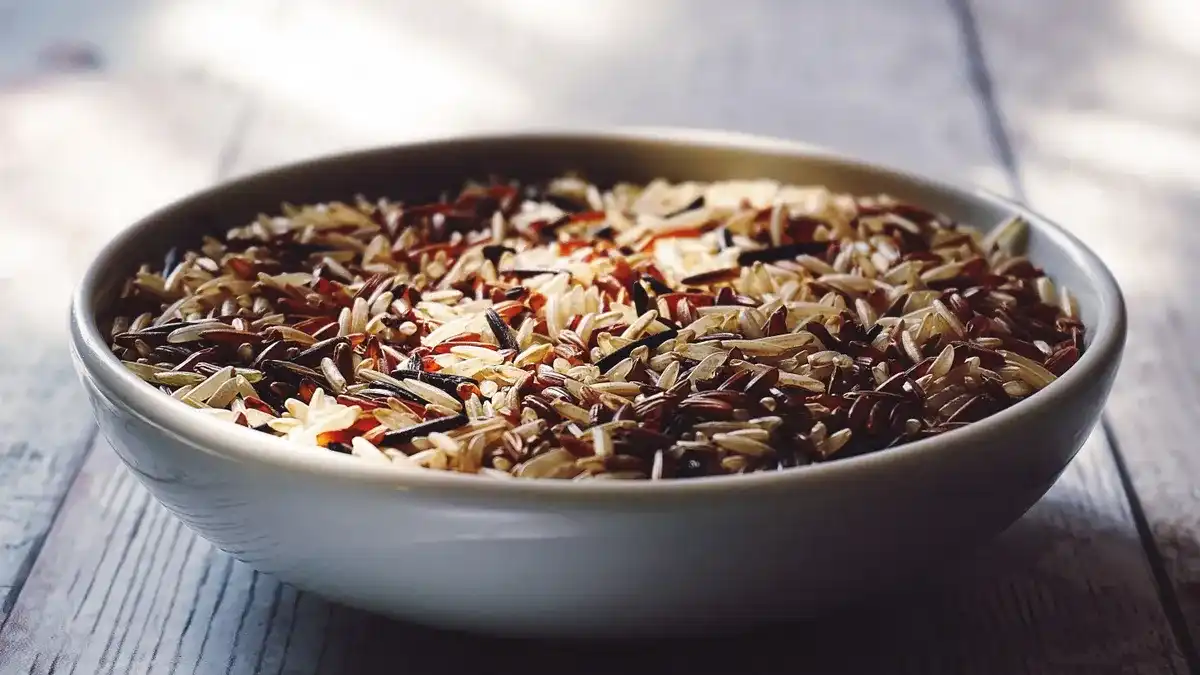
The quick answer is this: for most people, 5 grains fit a heart-healthy diet especially well—oats, barley, brown rice, quinoa, and farro. Whole grains are usually the best starting point for a heart-healthy diet, and the strongest options are the ones that fit the meal you already make. If you have heart disease, diabetes, kidney disease, celiac disease, or another medical issue, speak with a qualified clinician or registered dietitian about your own needs before changing how you eat.
If you want one simple rule, choose grains that stay close to their original form and keep the bran and germ. That is where most of the fiber and many of the nutrients live. Refined grains are stripped down and usually behave like faster-digesting starch in the meal. The American Heart Association’s advice on whole grains lines up with that basic idea, and the FDA’s whole grain guidance explains why the label matters.
The short answer: pick the grain that changes the meal the least
The best grain for a heart-healthy diet is the one you will actually eat often without turning the meal into a project. Oats win for breakfast, barley wins for a filling soup or grain bowl, brown rice wins for a simple side, quinoa wins when you want a quick protein-friendly base, farro wins when you want chew, and whole wheat pasta wins when you are replacing refined pasta rather than inventing a new dish.
That sounds obvious, but it is the real choice. A heart-healthy grain is not just “high fiber” in the abstract. It has to fit the recipe, cook in a reasonable time, and leave the rest of the plate balanced. A grain that tastes fine but gets skipped will do less good than a less glamorous one that shows up three nights a week.
The biggest mistake is treating all “brown” grains as equal, so it helps to compare them with care and, if needed, with a clinician or registered dietitian. Brown rice, oats, quinoa, barley, farro, and whole wheat pasta do not behave the same in a pan. Some stay fluffy, some turn creamy, some keep a toothsome bite, and some make a bowl feel more like a meal. That difference matters because the grain is often carrying the side dish, the lunch bowl, or the pasta sauce.
For a general heart-healthy pattern, I would rank them this way:
- Oats and barley for the strongest fiber-first choice.
- Brown rice for the easiest swap from refined rice.
- Quinoa for speed and versatility.
- Farro for texture and staying power.
- Whole wheat pasta for comfort-food meals that need a better default.
What makes a grain heart-healthy in the first place?
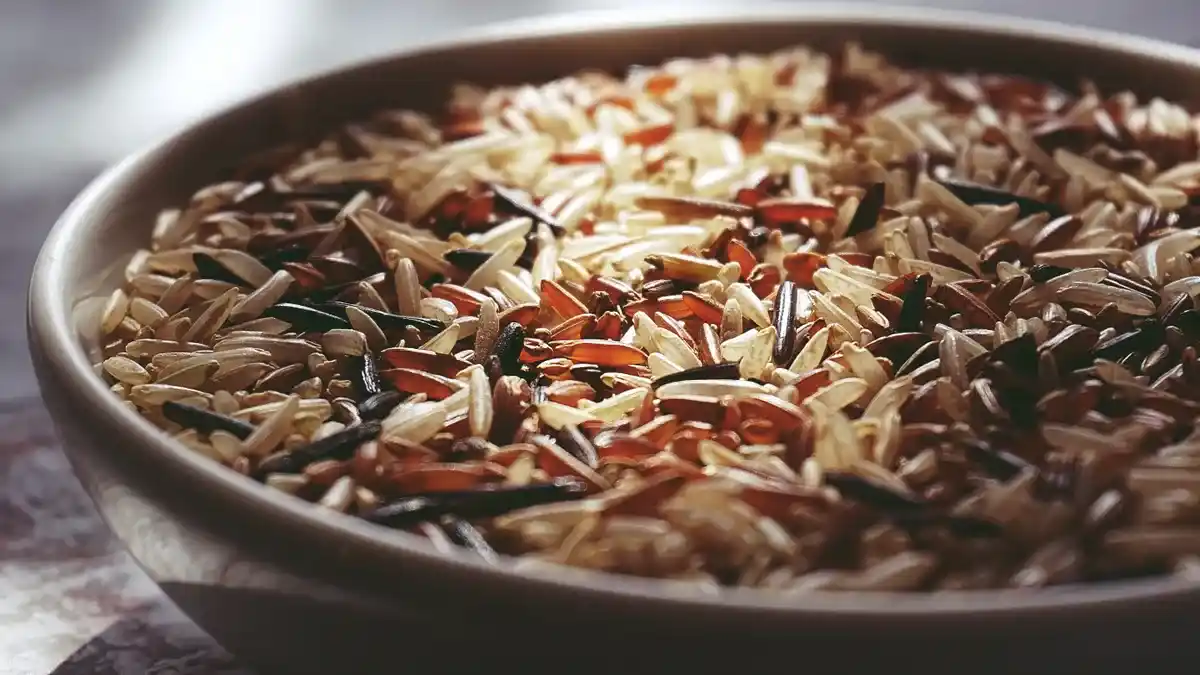
A heart-healthy grain usually means a whole grain, not a refined one. Whole grains keep the bran, germ, and endosperm; refined grains lose the bran and germ during milling. That difference changes fiber, texture, shelf life, and how the grain behaves in cooking.
Fiber is the big reason whole grains show up in heart-health advice. Research summaries from groups such as the American Heart Association and Harvard’s Nutrition Source generally link higher whole-grain intake with better cardiovascular patterns, though results vary by overall diet and individual health. The FDA’s whole grain guidance also helps explain why the label matters. Fiber is not magic, but it does make a grain more useful in a diet built around vegetables, beans, fish, nuts, and unsweetened dairy or fortified alternatives.
A second reason is what whole grains replace. Swapping oats or barley for a sugar-heavy breakfast or brown rice for a refined side dish can improve the quality of the plate without forcing a dramatic recipe change. That is why this is a comparison article, not a one-grain sermon.
Here is the trap: “whole grain” on a package does not automatically mean “best.” Some products add a lot of sodium, sugar, or saturated fat in the surrounding recipe. A grain bowl with heavy cheese sauce is not the same thing as plain cooked barley with vegetables. For the grain itself, the better choices usually have short ingredient lists and make room for other heart-supportive foods.
Oats and barley: the strongest everyday picks
Oats and barley win for the most heart-leaning grain choices because they are dense in soluble fiber and work in very different meals. Oats are the easiest breakfast grain to keep consistent. Barley is the better dinner grain when you want a spoonable, savory base that makes a soup or bowl feel substantial.
Oats are the better choice if you need speed and familiarity. Rolled oats usually cook in minutes, not an hour, and they adapt to both sweet and savory directions. They make sense in oatmeal, baked oatmeal, overnight oats, and even savory preparations. Their weakness is texture fatigue: some people tire of them, and quick oats can become soft fast. That softness is useful in porridge but less satisfying if you want a grain with clear chew.
Barley is the better choice if you want the grain to carry a meal. Pearl barley and hulled barley both bring chew, but hulled barley keeps more of the outer layer and usually takes longer. That means barley is not ideal when you want a 15-minute side. It shines in soups, stews, and grain bowls where a longer simmer is not a problem. The drawback is exactly that cooking time. If you are rushing dinner, barley can feel impractical.
For a heart-healthy pattern, I would choose oats when breakfast needs a stable default and barley when dinner needs more body. If the meal needs no-cook convenience, neither is the right answer.
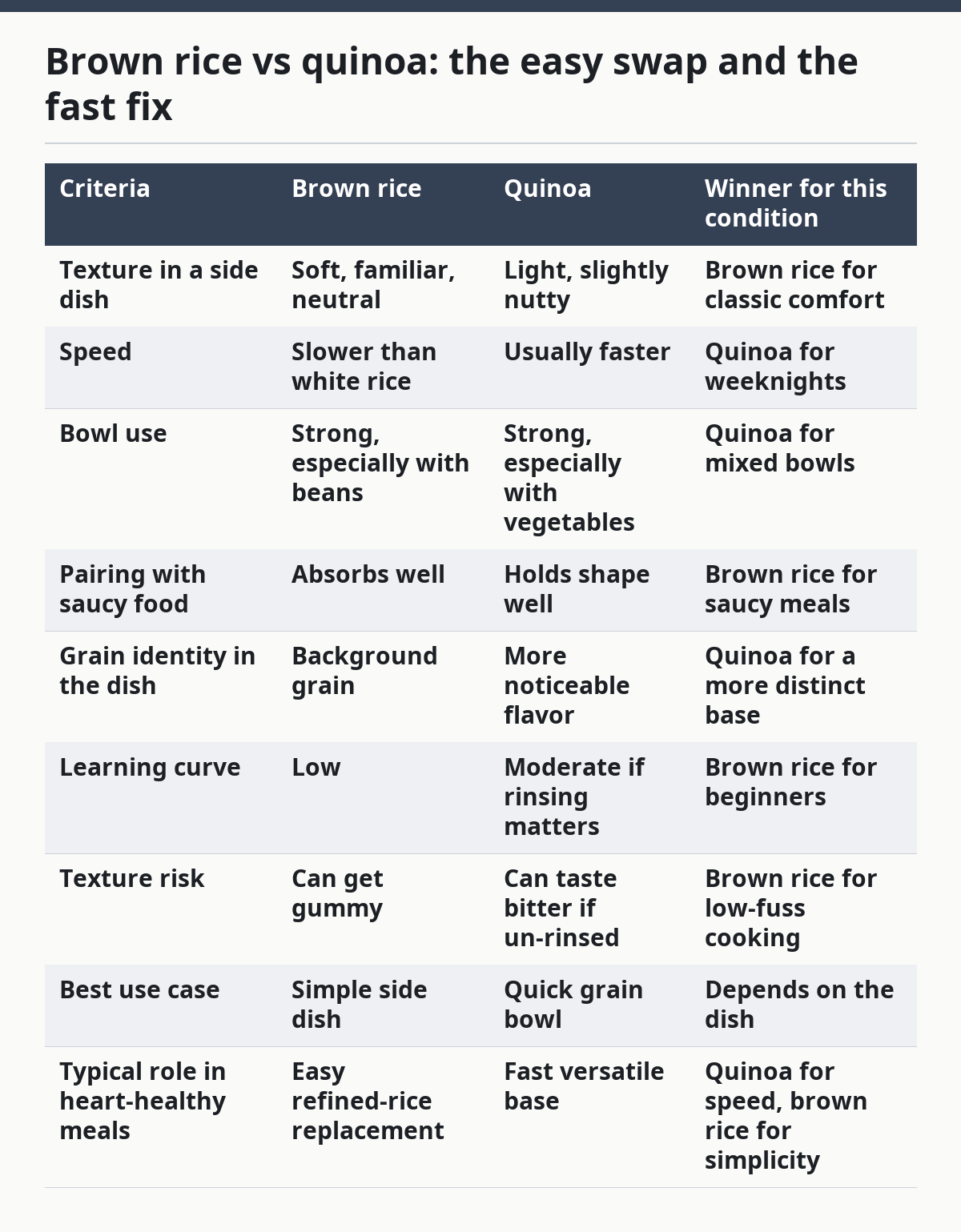
Brown rice vs quinoa: the easy swap and the fast fix
Brown rice wins when the job is “replace white rice without making a fuss.” Quinoa wins when the job is “make a grain that cooks quickly and does more than one thing.”
Brown rice is familiar, neutral, and easy to pair with almost anything. It works as a side dish, in bowls, under saucy vegetables, and with beans. The trade-off is cook time. Brown rice generally takes longer than white rice, which is the main reason people drift back to refined grains. When overcooked or when the ratio is off, it can turn gummy. When the grain is the background, brown rice is excellent. When the grain needs to stand out, it is less interesting than barley or farro.
Quinoa behaves differently. It is technically a seed, but it is used like a grain, and it cooks relatively fast. It is useful when you want a base that can support vegetables, herbs, citrus, and beans without getting lost. It also brings a different texture: light, slightly nutty, and less chewy than farro or barley. That can be a strength in a bowl and a weakness in a dish that needs heft. Some people also notice a faint bitter note if quinoa is not rinsed well.
Use brown rice when the recipe wants familiarity and a neutral canvas. Use quinoa when the meal needs speed and a little more structure. If you already dislike the texture of one, do not force it into your rotation just because it sounds healthy.
| Criteria | Brown rice | Quinoa | Winner for this condition |
|---|---|---|---|
| Texture in a side dish | Soft, familiar, neutral | Light, slightly nutty | Brown rice for classic comfort |
| Speed | Slower than white rice | Usually faster | Quinoa for weeknights |
| Bowl use | Strong, especially with beans | Strong, especially with vegetables | Quinoa for mixed bowls |
| Pairing with saucy food | Absorbs well | Holds shape well | Brown rice for saucy meals |
| Grain identity in the dish | Background grain | More noticeable flavor | Quinoa for a more distinct base |
| Learning curve | Low | Moderate if rinsing matters | Brown rice for beginners |
| Texture risk | Can get gummy | Can taste bitter if un-rinsed | Brown rice for low-fuss cooking |
| Best use case | Simple side dish | Quick grain bowl | Depends on the dish |
| Typical role in heart-healthy meals | Easy refined-rice replacement | Fast versatile base | Quinoa for speed, brown rice for simplicity |
Farro and whole wheat pasta: better for chew and comfort
Farro wins when the dish needs chew, not just nutrition. Whole wheat pasta wins when the meal is already a pasta meal and you want a more grain-forward version of it.
Farro has a firm bite and a nutty flavor that holds up in salads, bowls, and side dishes. It is one of the better grains for people who dislike mushy textures. That chew is also its limit: farro is not the right grain for every person or every pantry. It takes longer than quinoa and usually longer than rolled oats, and it can feel too assertive if the rest of the dish is delicate. Farro fits best in recipes that can support its personality: roasted vegetables, beans, herbs, and sturdy greens.
Whole wheat pasta is not a grain bowl staple, but it belongs in this comparison because it is a common heart-health swap. It keeps the comfort of pasta while shifting the nutrition profile closer to whole grains. The drawback is obvious to anyone who has tried it in a bad sauce: it tastes nuttier and can feel denser than refined pasta, so it does not disappear into a dish the way white pasta does. That is good in a tomato-heavy or vegetable-heavy sauce, and less ideal in a very light cream sauce where the pasta flavor dominates.
Choose farro if you want the grain to add structure. Choose whole wheat pasta if the meal is already centered on pasta and the real question is whether the noodle can be more whole-grain-friendly without changing the whole dinner.
Which grain works best in grain bowls and side dishes?
Barley is the best all-around grain for grain bowls and warm side dishes because it gives the bowl real body. If you want one grain to do the most work in a mixed meal, barley usually edges out the rest.
A grain bowl needs three things: a base that absorbs dressing, enough chew to avoid turning soggy, and enough flavor to support vegetables, beans, eggs, fish, or tofu. Barley handles that well. Farro is a close second because it also keeps its shape and brings chew. Quinoa is lighter and faster, so it works better when the bowl needs a quick lunch base rather than a deeply satisfying dinner. Brown rice is the most neutral option and often the easiest to live with, but it can feel flatter than barley or farro.
For side dishes, brown rice wins when the meal is already busy. It stays out of the way. Oats are not really a side-dish grain in the usual sense, and whole wheat pasta belongs in a different category altogether unless the meal is pasta-based. If the question is “What grain will quietly support the plate?” brown rice is the safe answer. If the question is “What grain will make the plate feel like a meal?” barley is usually the better answer.
A simple way to decide: use brown rice for plain, predictable sides; use barley or farro for bowls that need more texture; use quinoa when time is tight and you want something lighter.
Which grains fit a heart-healthy diet best?
Oats and barley are the best overall choices, brown rice is the easiest everyday fallback, and quinoa is the best speed option. That is the cleanest answer if the goal is to build a heart-healthy pattern rather than chase a perfect food.
Choose oats if breakfast is your weakest meal and you need a dependable whole grain with a short prep time. Choose barley if you want the most satisfying grain for soups, bowls, and warm sides. Choose brown rice if you need the least disruptive swap from refined rice. Choose quinoa if you want something quick that still feels complete in a bowl. Choose farro if texture matters more than convenience. Choose whole wheat pasta when you want to keep pasta on the menu but make the grain choice better.
One caution: “heart-healthy” is not only about the grain. A plain bowl of barley is a different food from barley cooked in a salty, creamy sauce. A serving of brown rice with vegetables is not the same as a fried rice dish loaded with sodium. The grain helps most when the rest of the plate is built well.
If you want a wider food pattern beyond grains, the hub on heart healthy foods is the right next stop; this page is only meant to help you choose the grain itself.
When should you choose something else?
You should choose something else when the grain clashes with a real health or cooking constraint. The best grain on paper is the wrong grain in some kitchens.
Skip barley if you need a very fast dinner or if gluten is a concern. Barley contains gluten, so it does not fit a gluten-free diet. Skip farro for the same reason. Skip whole wheat pasta if the dish needs a very light texture or if you are already eating a refined pasta only occasionally and would rather focus on vegetables and portion balance. Skip quinoa if its texture or taste makes you avoid it, because a “healthy” grain that gets left in the cupboard is not helping.
There are also medical situations where the grain question changes. People with kidney disease, diabetes, or digestive issues may need a more specific plan, and that is where professional guidance matters. The broad heart-health answer is useful, but it is not a substitute for individualized advice.
A practical note: do not let “whole grain” become a way to excuse poor meal structure. A grain can support heart health, but it does not cancel out excess sodium, a heavy saturated-fat sauce, or a plate with no vegetables. The grain should improve the meal, not carry the whole burden.
Are whole grains good for heart health?
Yes, whole grains are generally considered a heart-supportive choice, especially when they replace refined grains. Research summaries from organizations such as the American Heart Association and Harvard’s Nutrition Source suggest that whole-grain-rich eating patterns fit well with cardiovascular health. The benefit depends on the full diet, not the grain alone, and individual needs can vary.
Is quinoa a heart-healthy grain?
Yes, quinoa can fit a heart-healthy diet well because it is a whole-food-style base that cooks quickly and works in bowls, sides, and salads. It is not automatically better than oats or barley, though. Texture, taste, and what it replaces in the meal matter more than any single label.
What grain is best for lowering saturated fat meals?
Oats or barley are usually the best choices when the goal is to build a meal that stays lighter in saturated fat. They pair well with beans, vegetables, and olive-oil-based dressings, and they can replace richer starches in soups, bowls, and sides. The rest of the meal matters, too, so the grain is only one part of the decision.
Drafted with AI; not yet reviewed by a person.