Last updated: November 20, 2026
The best way to make heart-healthy recipes for diabetes-friendly eating is to build each plate around non-starchy vegetables, lean protein, high-fiber carbs, and unsaturated fat, then keep added sugar, sodium, and saturated fat low. Because diabetes and heart risk vary by person, speak with a qualified health professional about your own needs before making big food changes.
Key takeaways
- Start with a simple plate pattern: vegetables first, then protein, then a measured carb.
- Use cooking methods that need little added fat, like baking, roasting, grilling, steaming, and simmering.
- Choose fats from plants and fish more often than butter, cream, or fatty cuts of meat.
- Read labels for sodium, added sugar, and serving size, because one “healthy” package can still miss the mark.
- The hardest part is not taste; it is keeping portions steady and avoiding hidden salt and sugar.
How do I make a recipe both heart-healthy and diabetes-friendly?
You make it both by changing the ingredients and the portions at the same time. A recipe can look healthy on paper and still push blood sugar or sodium too high if it leans on refined starch, sweet sauces, or processed meat.
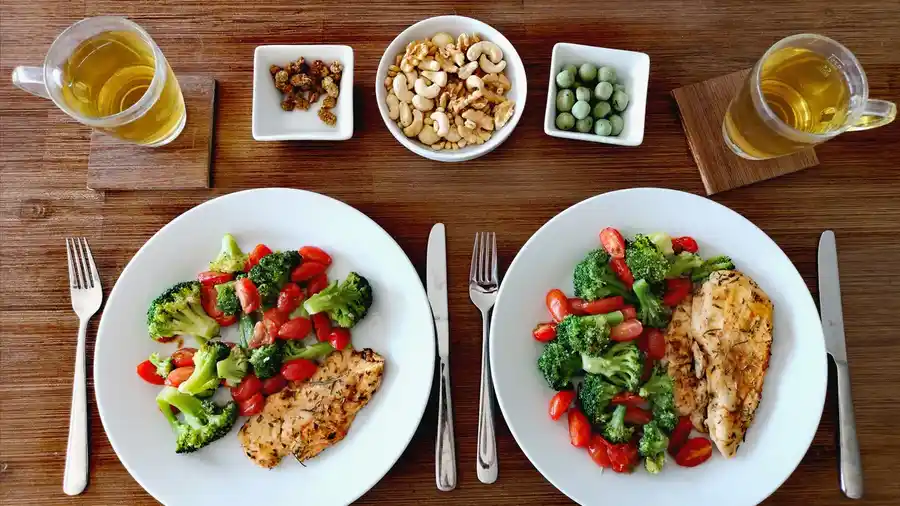
Start with the structure that most diabetes and heart-health guidance points toward: half the plate non-starchy vegetables, a modest portion of protein, and a carb that brings fiber instead of a quick sugar spike. That pattern is consistent with guidance from groups such as the American Diabetes Association and the American Heart Association, both of which place emphasis on vegetables, whole grains, lean proteins, and unsaturated fats.
Here is the fastest way to check a recipe before you cook it:
- Look at the carb base. If it uses white rice, white pasta, or white bread, ask whether a higher-fiber swap will still work.
- Check the fat source. If the recipe depends on butter, cream, coconut oil, or lots of cheese, look for a smaller amount or a different fat.
- Check the sodium source. If the flavor comes from packaged seasoning, broth, cured meat, or canned sauce, look for a low-sodium version.
- Check the sugar source. If the recipe uses sweet sauces, glazes, or dessert-style add-ins, trim or replace them.
- Check the portion. A “healthy” meal that doubles the starch can still miss the mark.
When this works, the dish still tastes like dinner, not like a diet plate. It also holds up better in real life, because the flavors come from herbs, acid, spice, and browned vegetables instead of sugar or salt.
What ingredients should I use first?
You should start with vegetables, lean protein, and high-fiber carbs. Those three parts do most of the work, and they are easier to balance than trying to fix a rich recipe after it is already built.
A good heart-healthy, diabetes-friendly ingredient list often includes:
- Non-starchy vegetables: broccoli, spinach, peppers, zucchini, tomatoes, mushrooms, cauliflower, cabbage
- Lean protein: fish, skinless poultry, beans, lentils, tofu, plain Greek yogurt
- High-fiber carbs: oats, barley, brown rice, quinoa, whole-wheat pasta, beans, lentils, berries
- Unsaturated fats: olive oil, canola oil, avocado, nuts, seeds
The biggest trade-off is flavor versus heaviness. Cheese, sausage, cream, and butter can make a dish taste rich fast, but they can also load it with saturated fat and sodium. A better move is to keep a small amount for flavor and let herbs, garlic, onion, lemon, vinegar, paprika, cumin, dill, or black pepper do the rest.
This approach is not ideal for every recipe. If a dish depends on a thick cream sauce, a flaky pastry, or a sugary glaze, it may be easier to choose a different recipe than to force the old one into a healthier shape.
Which cooking methods work best?
Baking, roasting, grilling, steaming, sautéing with little oil, and simmering are usually the easiest methods for this style of eating. They build flavor without needing a large amount of added fat or sugar.
The method matters because texture can replace excess salt or fat. Roasted vegetables get sweeter on their own. Grilled fish needs only a light hand with seasoning. Simmered beans and lentils pick up flavor from onion, garlic, tomato, and spices instead of cream.
| Cooking method | Good for | Main benefit | Main drawback |
|---|---|---|---|
| Baking | fish, chicken, casseroles | controlled fat and simple cleanup | can dry out food if overcooked |
| Roasting | vegetables, chicken, tofu | deep flavor without much oil | easy to overdo if the pan is crowded |
| Grilling | fish, poultry, vegetables | strong flavor with little added fat | can char quickly if watched poorly |
| Steaming | vegetables, dumplings, fish | keeps the ingredient list short | mild taste unless seasoned well |
| Simmering | soups, beans, stews | works well for fiber-rich meals | sodium can rise if broth is salty |
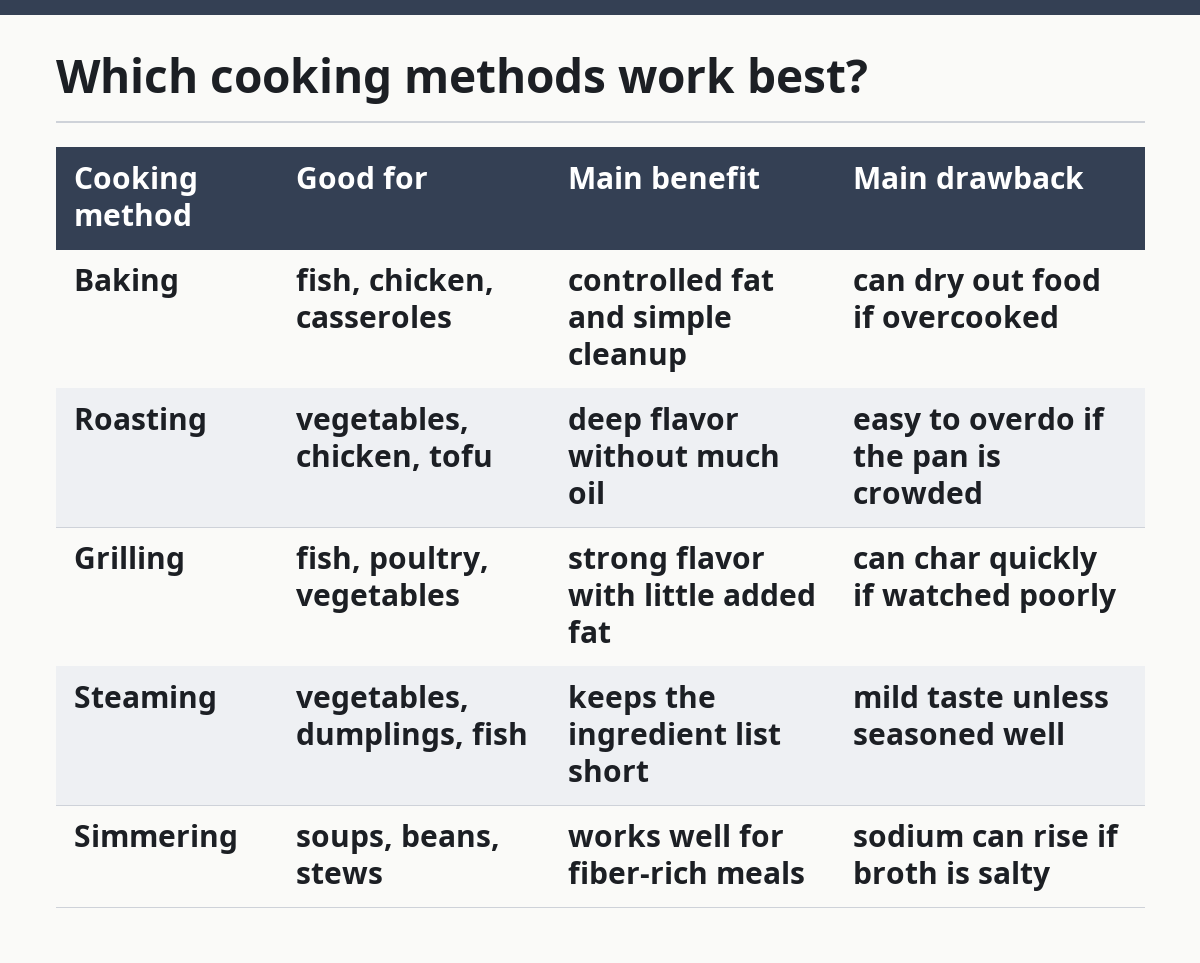
The drawback of these methods is that they reward attention. If the heat is too high or the pan is too full, the food can dry out or burn. That is why acid, herbs, and a small amount of healthy fat matter: they add what the method does not.
How do I keep blood sugar steadier without making food bland?
You keep blood sugar steadier by pairing carbs with fiber, protein, and fat, then avoiding large servings of refined starch or added sugar. Studies and clinical guidance commonly suggest that this kind of mixed meal pattern is gentler than a meal built mostly from white flour or sugar.
A practical rule is to avoid letting one ingredient do all the work. A bowl of pasta with sauce alone is not the same as pasta with vegetables, beans, and grilled chicken. The second version slows digestion and usually feels more filling.
These swaps help without making the meal flat:
- Use oats instead of refined cereal in baked dishes or breakfast bowls.
- Choose whole grains where the texture still fits, such as barley in soup or brown rice in a grain bowl.
- Add beans or lentils to stretch a carb-heavy recipe.
- Use fruit for sweetness in small amounts, especially berries in oatmeal or yogurt.
- Use acid, such as lemon juice or vinegar, to brighten flavor instead of reaching for sugar.
A common mistake is to replace sugar with a large amount of starch and call it balanced. Another is to make a recipe so low in carbs that it turns into a protein-heavy meal with no fiber. The goal is balance, not extremes.
What should I watch on the label?
You should watch serving size, added sugar, sodium, and saturated fat. Those four details often decide whether a packaged ingredient fits a heart-healthy, diabetes-friendly recipe.
Serving size comes first because the rest of the label depends on it. A sauce, broth, or snack can look acceptable until the serving is doubled in the pan. Added sugar matters because it can hide in ketchup, salad dressing, yogurt, marinades, and canned tomato products. Sodium matters because it climbs fast in broth, canned beans, frozen entrées, cheese, and cured meat. Saturated fat matters because it is common in butter, cream, coconut-based products, and fatty meats.
A quick label check can look like this:
- Compare the serving size to what the recipe actually uses.
- Scan for added sugar, not just total sugar.
- Check sodium on broth, canned goods, and sauces.
- Look at saturated fat if the recipe uses cheese, cream, or processed meat.
- Pick the version with fewer surprises, not the one with the loudest health claim on the front.
The trade-off is time. Reading labels slows shopping down. Still, it is usually faster than trying to fix a dish after it is already too salty or too sweet.
For label guidance and diabetes eating patterns, the American Diabetes Association and the U.S. Centers for Disease Control and Prevention are useful starting points. For heart-health patterns, the American Heart Association and the British Heart Foundation both publish practical food guidance.
Which ingredient swaps are worth it?
The best swaps are the ones that keep the recipe familiar while trimming the parts that usually cause trouble. Not every substitution works in every dish, and some swaps change texture enough that the recipe needs more than a one-for-one change.
| If the recipe calls for | Try instead | Why it helps | When it may not work |
|---|---|---|---|
| Butter | olive oil or canola oil | lowers saturated fat | pastries and some baked goods need butter structure |
| Cream | plain Greek yogurt or a smaller amount of milk-based sauce | cuts saturated fat | yogurt can curdle if overheated |
| White rice | brown rice, barley, quinoa, or a smaller portion of rice with vegetables | adds fiber | texture changes in some cuisines |
| White pasta | whole-wheat pasta or a smaller pasta portion with extra vegetables | adds fiber | some sauces cling differently |
| Sugary glaze | herbs, spices, citrus, vinegar | lowers added sugar | sweet-glazed dishes may lose their style |
| Sausage or bacon | beans, lentils, fish, chicken, tofu | lowers sodium and saturated fat | the smoky flavor will be weaker |
These swaps are worth it when the recipe still tastes like food someone would eat again. They are not worth it when they wreck the dish so badly that the person gives up on cooking. In that case, a different recipe is better than a forced substitution.
What mistakes make these recipes fail?
The most common mistakes are using too much “healthy” food, hiding sugar in sauces, and forgetting that salt can come from the pan, not just the shaker. A dish can fail even when every ingredient sounds fine on its own.
Three failures show up again and again:
- Oversized starch portions. A bowl built around rice, pasta, or bread can still be carb-heavy even if it includes vegetables.
- Too much sodium from packaged ingredients. Broth, canned beans, marinades, and seasoning packets often bring more salt than expected.
- Too much sweetness from “natural” sources. Honey, maple syrup, juice, and sweetened yogurt still count as sugar in the recipe.
The setback is usually taste at first. When someone cuts salt and sugar all at once, the food can seem flat for a week or two. That is not a sign that the approach failed; it usually means the flavor needs more acid, spice, garlic, onion, herbs, or browning.
This style is not right for someone who wants a dessert-style recipe and expects it to behave like a main course. It is also not the best fit for anyone trying to solve blood sugar or heart-health concerns with food alone. Diet is one part of the picture, and a qualified professional can help match food choices to medicine, lab results, and other conditions.
What should I cook first?
You should cook a simple bowl, sheet-pan meal, or soup first because those formats are easiest to balance. They give you clear control over vegetable amount, protein, carb portion, and seasoning.
A useful first dish often follows this order:
- Put vegetables on the pan or in the pot first.
- Add a lean protein.
- Add one measured high-fiber carb.
- Season with herbs, acid, garlic, onion, or spice.
- Finish with a small amount of unsaturated fat if the dish needs it.
When this works, the plate looks colorful, the flavor is layered, and no single ingredient dominates the meal. That is the real target for heart-healthy, diabetes-friendly cooking: not perfection, but a repeatable pattern that fits everyday food.
What heart-healthy diabetic recipes should I avoid?
I would avoid recipes that rely on heavy cream, large amounts of butter, processed meat, sweet sauces, or refined starch as the main event. Those recipes can be occasional foods for some people, but they are a poor starting point for a heart-healthy diabetes-friendly pattern.
This is especially true when the dish is marketed as “healthy” because it has one good ingredient. A salad with lots of bacon, cheese, croutons, and sweet dressing is still not a strong choice. A grain bowl with a huge rice base and little else has the same problem.
The cleaner rule is simple: if the recipe cannot be balanced without adding a lot of salt, sugar, or saturated fat back into it, choose a different recipe. That saves time and usually tastes better.
FAQ
Can I still eat carbs in diabetes-friendly recipes?
Yes, carbs can still fit in a diabetes-friendly meal pattern, but the portion and the type matter. Whole grains, beans, lentils, and vegetables usually work better than white bread, white rice, or sugary foods. A qualified health professional can help match carb choices to your personal needs.
Is olive oil always the best fat to use?
No, olive oil is a strong choice, but it is not the answer for every recipe. It works well in roasting, sautéing, and dressings, while other fats may fit specific textures or flavor styles. The general aim is to lean toward unsaturated fats and away from heavy use of butter or cream.
Are sugar substitutes a good fix?
Sometimes, but they are not a cure-all for recipe balance. A sugar substitute may reduce added sugar, yet the dish can still be too high in refined starch, sodium, or saturated fat. The better question is whether the whole recipe is built around a healthier pattern.
What is the easiest dinner to start with?
A sheet-pan meal or simple soup is usually the easiest place to start. Both formats make it easier to keep track of vegetables, protein, and carbs without a long ingredient list. They also let you season with herbs, garlic, citrus, and spice instead of relying on salty sauces.
Drafted with AI; not yet reviewed by a person.