Last updated: November 20, 2026
Quick answer: a heart-healthy emergency pantry can be built with 10 to 15 staple items—enough for 3 to 5 days of no-cook meals—centered on low-sodium proteins, whole grains, shelf-stable milk, fruit, beans, and water-safe packaging so you can eat without power.
This guide shows what to stock, how to store it, and how to use it when the lights go out. If you’re planning How to Build a Heart-Healthy Backup Pantry for Power Outages and Emergencies, the goal is simple: keep food usable when the kitchen is not.
What a heart-healthy emergency pantry actually needs
A heart-healthy emergency pantry needs foods you can eat cold, open by hand, and rotate before they go stale. That means a mix of canned fish, beans, whole grain crackers, nut butter, shelf-stable milk, fruit cups, and a manual can opener—not a random pile of shelf-stable snacks.
Picture this: you’re in the middle of a storm outage, the fridge is warm, and the stove is dead. You still need breakfast, lunch, and a few calm meals that don’t spike sodium. The backup pantry should fit that exact scene, not rely on cooking from scratch.
The truth is, most pantry advice focuses on shelf life and ignores blood pressure. That misses the point. A backup pantry for heart health has to do three jobs at once: stay safe without power, keep sodium in check, and give you enough protein and fiber to feel fed.
A good starting rule is simple:
- Protein: canned salmon, tuna, sardines, no-salt-added beans, peanut or almond butter.
- Carbs: whole grain crackers, oats, brown rice cups if they’re shelf-stable.
- Fruit and veg: fruit cups packed in juice, unsalted canned vegetables, applesauce cups.
- Dairy or substitute: shelf-stable milk or unsweetened shelf-stable plant milk.
- Extras: water, a manual can opener, paper plates, and a flashlight.
Two details matter here. First, choose low-sodium or no-salt-added versions when you can. Second, pick foods that can be eaten cold, because a power outage can last longer than a frozen meal will stay safe.
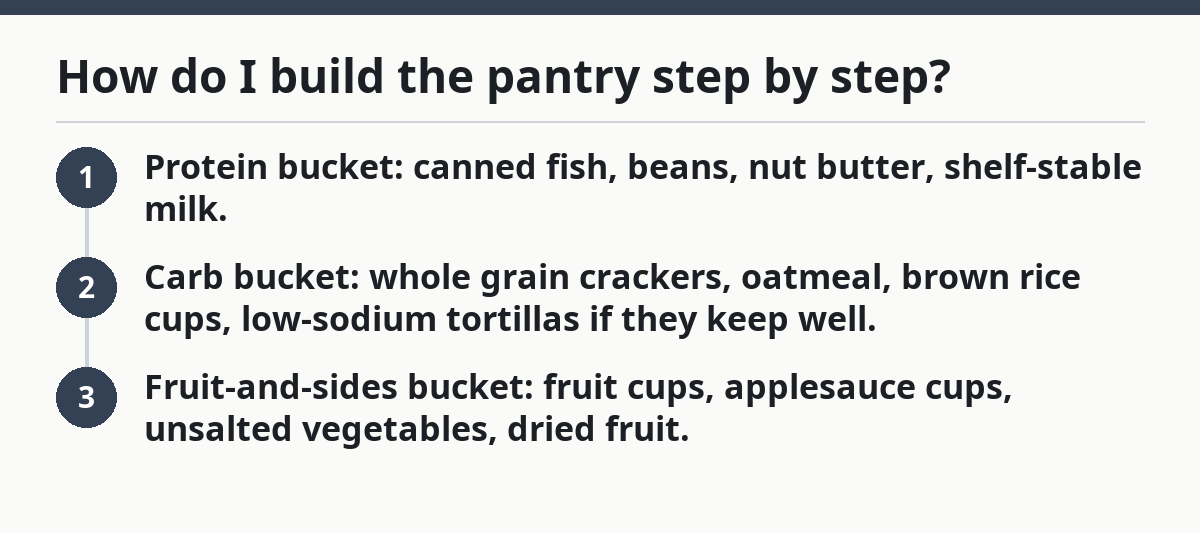
How do I build the pantry step by step?
Build it in one pass: choose the shelf, fill three meal buckets, and add tools that let you eat without electricity. If you work in zones, you won’t end up with six cans of soup and no breakfast, no opener, and no water.
Start with the shelf itself. Use one bin, one lower cabinet, or one section of a pantry that stays cool and dry. Keep it away from the stove, dishwasher, and sunny windows. A 12- to 18-inch-deep shelf is easier to manage than a crowded floor stack because you can see what you own.
Then build around three meal buckets:
- Protein bucket: canned fish, beans, nut butter, shelf-stable milk.
- Carb bucket: whole grain crackers, oatmeal, brown rice cups, low-sodium tortillas if they keep well.
- Fruit-and-sides bucket: fruit cups, applesauce cups, unsalted vegetables, dried fruit.
Finally, add the support items that people forget until they need them. A manual can opener belongs in the pantry, not in a kitchen drawer you may not be able to reach. Add a bottle of drinking water, a cup, a spoon, and a way to label dates.
Use this order:
- Pick one storage spot. A cool, dry cabinet cuts the chance of heat damage and makes rotation easier.
- Stock 3 to 5 days of basics. That gives you enough room to cover a short outage without overbuying food you won’t use.
- Choose foods with two uses. Tuna works in a cracker meal or eaten plain; beans can be a side or a protein base.
- Put the opener with the food. If the opener is missing, canned food is a decoration.
- Label the front edge. A masking-tape date on the shelf keeps older cans from getting buried.
A plain brown bin can work fine. It does not need to look fancy; it just needs to stay visible.
What foods belong in a heart-healthy emergency pantry?
The safest foods for this kind of pantry are the ones that are safe cold, low in sodium, and complete enough to eat as a full meal. That’s the filter. If a food needs a stove, a blender, or a lot of salt to taste like food, it does not belong at the center of your emergency pantry.
Here’s the catch: “shelf-stable” does not automatically mean “heart-friendly.” Some boxed meals, soups, and sauces are loaded with sodium. A can of beans can be a smart backup or a salt bomb, depending on the label. Look for low-sodium or no-salt-added versions whenever possible.
Good anchor foods include:
- Canned fish: tuna, salmon, sardines packed in water or olive oil.
- Beans: black beans, chickpeas, kidney beans, lentils.
- Whole grain crackers: sturdy enough to hold nut butter or fish.
- Nut butter: peanut or almond butter in jars or single-serve packets.
- Shelf-stable milk: plain milk or unsweetened plant milk in cartons.
- Fruit cups: packed in juice, not heavy syrup.
If you want a check on labels, the American Heart Association has general guidance on sodium, and the FDA has a useful label guide for choosing lower-sodium packaged foods. Those two pages are worth bookmarking for shopping day. The FDA’s “How to Understand and Use the Nutrition Facts Label” page is a good one to start with, and the American Heart Association’s sodium guidance is useful for quick label reading. For emergency planning basics, FEMA’s Ready.gov guidance is also worth a look.
One practical rule helps a lot: each meal should have one protein, one grain, and one fruit or vegetable. That keeps the pantry from becoming a snack shelf. It also keeps you from relying on crackers alone, which is a fast path to hunger an hour later.
What should I store for no-cook meals?
Store foods that can make a meal with zero heat, zero cutting, and zero waiting. That matters when power is out, the kitchen is dark, and you do not want to open five containers just to eat once.
Picture this: you’re trying to feed yourself at 7 p.m., and the outage has already killed the stove and the microwave. You need something that tastes like a meal, not a snack tray. That is why no-cook planning belongs in the pantry from the start.
A smart no-cook setup looks like this:
- Crackers + nut butter + fruit cup
- Canned tuna or salmon + crackers
- Beans + shelf-stable milk only if the beans are ready to eat and you have a way to season them lightly
- Fruit cup + nut butter + crackers
- Shelf-stable milk + whole grain crackers + canned fish
The goal is not gourmet food. It is steady energy, enough protein, and a little comfort. If you can eat it with a spoon or straight from the package, that’s a win.
Keep a few small extras with the food:
- plastic spoons
- napkins
- a bowl or wide mug
- a trash bag
- a flashlight
That sounds basic because it is basic. In an outage, basic tools keep you from wasting food or spilling water in the dark.
A common mistake is buying only “emergency” items that people dislike and never eat during normal weeks. That backfires. Stock foods you already know how to eat cold. If you hate sardines, don’t make sardines your only fish. Choose foods you’ll actually open under stress.
How should I store and rotate the pantry?
Store it cool, dry, and visible, then rotate it with a simple first-in, first-out system. Without rotation, emergency food turns into expired clutter, and clutter is expensive.
The best storage spot is a place that stays under normal household heat swings as much as possible. Avoid the garage if it gets very hot or very cold. A pantry shelf indoors is better. Keep food off the floor and away from pipes that can leak.
Use a rotation method that takes less than 5 minutes:
- Put newer cans behind older cans.
- Write the month and year on the top of each can if the label is hard to read.
- Check the pantry every 30 days.
- Move one or two items into your regular meals each week.
- Replace what you use the same day or the next grocery run.
That last step matters. If you eat the emergency tuna for lunch on Tuesday, buy a replacement before the pantry stays empty.
A few storage habits save you trouble:
- Keep food sealed. Once a package is open, the clock changes fast.
- Use a lidded bin for loose items. It protects crackers from crushing.
- Store water separately. Don’t let a leaky bottle soak labels or boxes.
- Keep one opener in the pantry and one in the kitchen. A backup tool costs less than a failed dinner.
One more thing: if a can is bulging, rusted through, or leaking, throw it out. No meal is worth a bad can. That is not a pantry item anymore.
What should I do before a storm or blackout?
Before a storm or blackout, move the pantry to the front of your attention and make it easy to grab in one minute. A little prep before the outage beats hunting for food with a dead phone and a dark kitchen.
Picture this: weather alerts are coming in, the fridge is full, and you have one evening to get ready. You do not need a giant stockpile. You need a short checklist that makes the next 24 to 72 hours easier.
Use this outage prep list:
- Fill clean water containers if local guidance says it’s safe to do so.
- Set aside a flashlight, batteries, phone charger, and manual can opener.
- Pull out foods that need no cooking.
- Put one meal per person in an easy-to-see basket.
- Check for pet food if pets are part of the household.
- Keep the pantry list on paper in case your phone dies.
If you have heart conditions that are sensitive to fluid or sodium limits, keep your usual guidance in mind and check with a clinician or pharmacist if you’re unsure how an emergency food plan fits your routine. For people managing blood pressure meds or fluid restrictions, that check matters even more.
The best part of this prep is that it does not take over the whole house. A single bin, a small water reserve, and a few labeled meals can cover the awkward part of an outage: the first day, when stores are closed and everyone is tired.
What mistakes make a backup pantry fail?
The biggest mistakes are too much sodium, too much cooking, and too little water. Those three problems turn a backup pantry into a shelf full of things you cannot use when the power is out.
Here’s the truth: most bad emergency pantries fail before the storm even starts. They’re built from impulse buys, then ignored. A can of soup that tastes fine in the store may carry far more sodium than you want in a heart-healthy plan. A box of pasta means nothing if the burner is off. And dry crackers without water are a poor stand-in for dinner.
Common mistakes and the cost:
- Buying only soups and ramen. Cost: high sodium, low control. Better choice: beans, canned fish, plain crackers, fruit cups.
- Skipping the opener. Cost: canned food you can’t reach. Better choice: keep a manual can opener in the pantry.
- Ignoring water. Cost: meals that are hard to swallow or impossible to round out. Better choice: store drinking water separately.
- Stocking foods you never eat. Cost: waste. Better choice: build from foods you already know.
- Letting the pantry drift into clutter. Cost: expired cans and crushed boxes. Better choice: monthly rotation.
If you want a clean standard to follow, aim for foods that are low-sodium, shelf-stable, and safe to eat without heat. That simple filter cuts out a lot of junk.
The FEMA-style emergency advice you’ll see in preparedness guides has one message in common: keep supplies simple and ready. The same idea works here. Simplicity is not boring. It is how the pantry still works when the lights don’t.
Key Takeaways
- A heart-healthy emergency pantry should work without power and without a stove.
- Build around canned fish, beans, whole grain crackers, nut butter, shelf-stable milk, and fruit cups.
- Keep a manual can opener with the food, not in a separate drawer.
- Choose low-sodium or no-salt-added versions whenever possible.
- Store food cool, dry, and visible, then rotate it every 30 days.
- Make sure the pantry can support no-cook meals for a short outage.
- Add water, spoons, napkins, and a flashlight so the food is usable, not just present.
What foods should I keep for a heart-healthy emergency pantry?
Keep foods that are safe to eat without heat and easy to rotate: canned fish, beans, whole grain crackers, nut butter, shelf-stable milk, and fruit cups. Choose low-sodium or no-salt-added versions when possible, and keep a manual can opener with the stash. That combination covers protein, fiber, and quick calories during a power outage.
How do I store shelf-stable foods for a power outage?
Store them in a cool, dry place indoors, off the floor, and away from heat or leaks. Put older items in front, newer items behind them, and check the pantry about once a month. If a can is swollen, rusted through, or leaking, discard it.
What can I eat if I cannot cook during an emergency?
Eat foods that need no heat: crackers with nut butter, canned fish with crackers, fruit cups, and ready-to-eat beans if you have them. Shelf-stable milk can round out the meal. The point is to make a full plate from items you can open and eat right away.
Drafted with AI; not yet reviewed by a person.