Last updated: November 20, 2026
A heart-healthy sauce, dressing, and marinade rotation means keeping a small set of low-sodium, low-added-sugar formulas on repeat so meals stay interesting without piling on salt or waste. The goal is not a perfect pantry; it is a short list of flexible bases built from vinaigrette, tahini, mustard, herbs, and citrus.
Key takeaways
- Keep the system small enough to remember: a few base formulas beat a crowded fridge.
- Reuse the same ingredients in different ratios so one grocery trip covers several meals.
- Match the sauce to the food: bright dressings for vegetables, thicker sauces for proteins, and simple marinades for grilling or roasting.
- Store each mix with a clear label and a short life window so leftovers get used on time.
- This approach works best for readers who want heart-healthy diabetic meals that still taste like real food.
What should this rotation do?
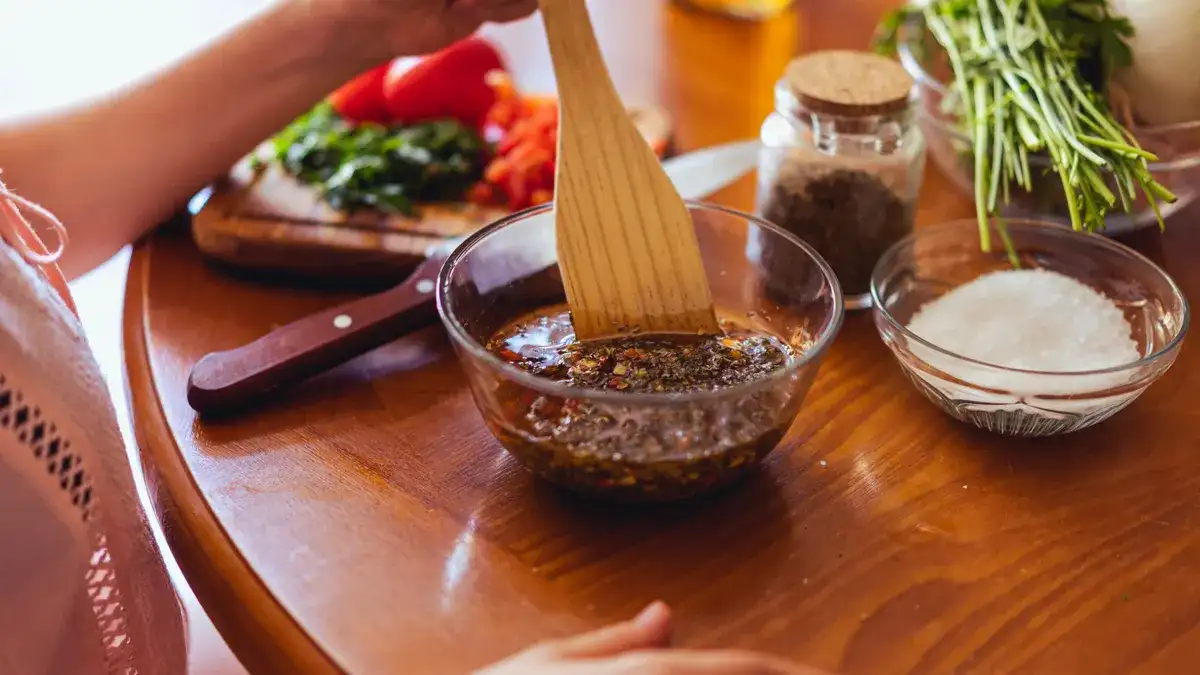
This rotation should give each week 3 to 4 flavor paths that can move across salads, roasted vegetables, beans, chicken, fish, and tofu. That keeps shopping simple and cuts the chance that a single jar gets pushed to the back of the fridge.
A good rotation solves three problems at once. It lowers the urge to reach for salty bottled sauces, it keeps added sugar in check, and it prevents the “same dinner again” problem that makes healthy eating feel narrow. The system also fits a heart-healthy diabetic routine because the same sauce can add flavor without relying on sweet glazes or heavy cream.
The easiest way to think about it is as a small set of flavor families. One family is sharp and thin, like vinaigrette. Another is creamy but still light, like tahini with lemon. A third is savory and fast, like mustard with herbs. A fourth is fresh and bright, built from citrus, garlic, and parsley or dill.
This is not the right method for someone who wants one giant batch sauce for every meal. A single all-purpose sauce gets boring fast and usually forces a compromise on flavor or texture. It also does not suit a kitchen where meals change from salad to roast chicken to grilled fish in the same week.
For the broader pantry map, the heart-healthy pantry flavor systems hub is the next stop. This page stays focused on the rotation itself: what to make, how to reuse it, and when to swap it out.
How do you build the rotation?
You build the rotation by choosing 4 base formulas, assigning them to the week, and repeating ingredients across them on purpose. The point is to buy fewer items and still get different results from each sauce.
-
Choose 4 flavor lanes on Sunday or any 7-day start: bright, creamy, savory, and citrusy.
This gives the week structure without locking every meal into the same taste. -
Measure one vinaigrette base at a 1:3 ratio of acid to oil.
Use vinegar or lemon juice for the acid, then whisk with olive oil so the dressing stays light enough for greens and grain bowls. -
Mix one tahini sauce with 2 tablespoons tahini, 1 tablespoon lemon juice, and water until spoonable.
This makes a thicker sauce that clings to roasted vegetables, chickpeas, or grilled chicken without needing mayo. -
Stir one mustard sauce with 1 tablespoon mustard, herbs, and a splash of vinegar.
This gives a sharp, low-fuss sauce for fish, turkey, tofu, and steamed vegetables. -
Blend one citrus marinade with lemon or lime juice, garlic, herbs, and a little oil.
Use it for proteins before roasting or grilling so the food picks up flavor in 20 to 30 minutes instead of needing a heavy glaze. -
Label each jar with the name and the date.
Clear labeling keeps the rotation honest, which matters when sauces are meant to last only a few days. -
Assign each sauce to 2 meals in the same week.
Repeating a sauce twice is what keeps the system from becoming wasteful while still giving enough variety.
A useful rule is to repeat ingredients, not identical sauces. Lemon can show up in vinaigrette, tahini sauce, and marinade. Mustard can anchor a dressing and also sharpen a marinade. Herbs can cross all four formulas, which keeps the grocery list short.
What base formulas work best?
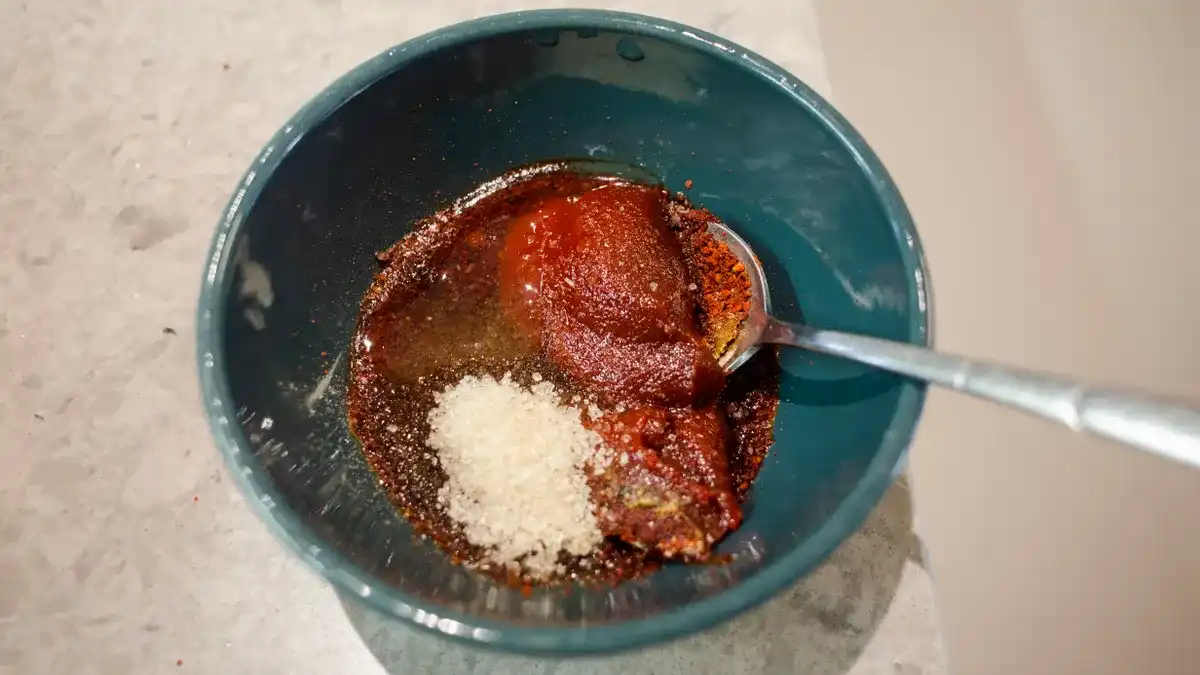
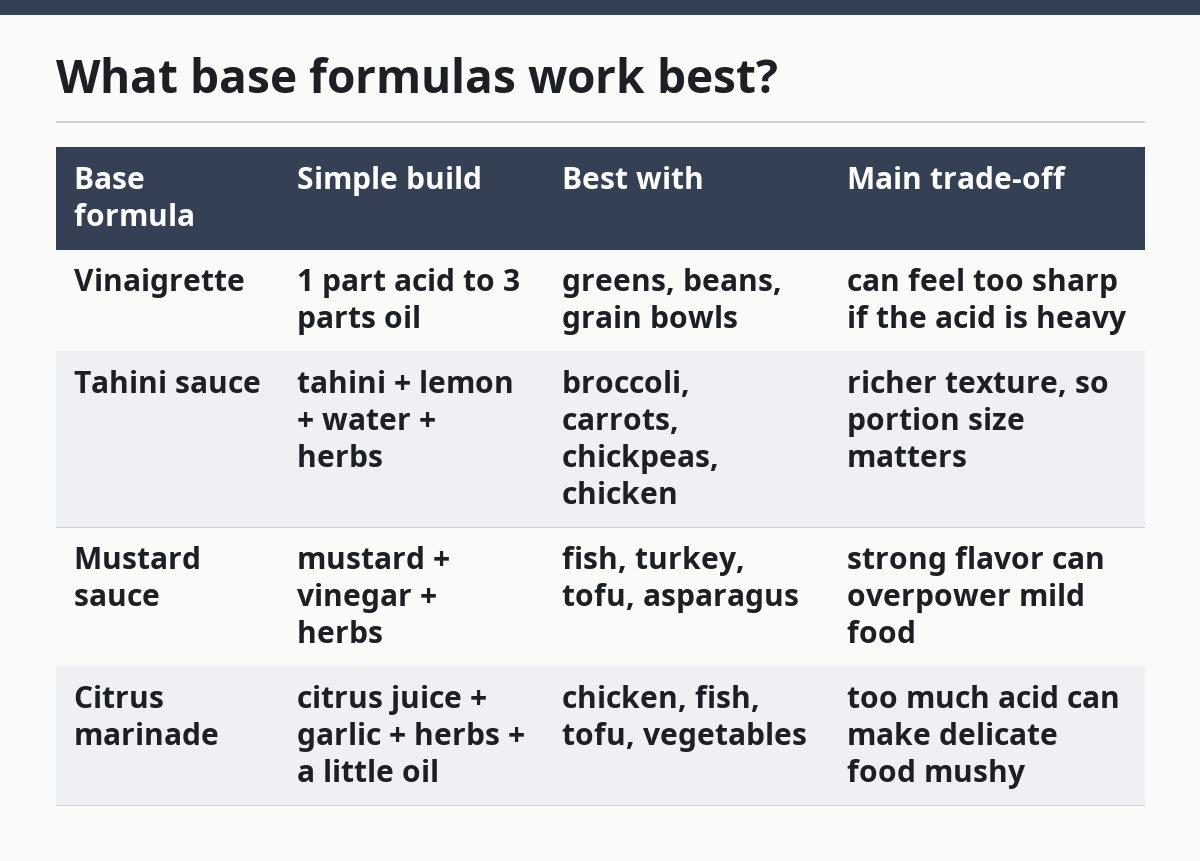
The best base formulas are vinaigrette, tahini, mustard, and citrus because each one behaves differently on the plate. That difference matters: a thin sauce coats salad leaves, a thicker one stays on roasted vegetables, and a marinade needs enough acid to season the food without drowning it.
| Base formula | Simple build | Best with | Main trade-off |
|---|---|---|---|
| Vinaigrette | 1 part acid to 3 parts oil | greens, beans, grain bowls | can feel too sharp if the acid is heavy |
| Tahini sauce | tahini + lemon + water + herbs | broccoli, carrots, chickpeas, chicken | richer texture, so portion size matters |
| Mustard sauce | mustard + vinegar + herbs | fish, turkey, tofu, asparagus | strong flavor can overpower mild food |
| Citrus marinade | citrus juice + garlic + herbs + a little oil | chicken, fish, tofu, vegetables | too much acid can make delicate food mushy |
Vinaigrette is the easiest place to start because it is fast and familiar. A 1:3 ratio makes a dressing that tastes bright rather than oily, and it works with almost any salad green or roasted vegetable. For heart-healthy cooking, it is usually the cleanest default when the goal is flavor without heaviness.
Tahini is the smartest creamy option because it brings body without dairy. It does have more richness than vinaigrette, so a small spoonful goes farther than a puddle of dressing. That makes it useful for people who want a satisfying texture but do not want a thick restaurant-style sauce.
Mustard gives the rotation a sharp edge. It is especially useful when a meal feels bland after cooking, because a teaspoon can wake up fish, greens, or beans fast. It also pairs well with herbs like dill, parsley, or thyme.
Citrus works best as a marinade or finish, not as the only base for every meal. Lemon and lime keep food lively, but too much acid can dry out delicate proteins if the marinating time runs long. A short window, often 20 to 30 minutes for small pieces, is enough to carry flavor without turning the food soft.
How should the weekly flavor rotation look?
The weekly flavor rotation should spread these bases across 5 to 7 days so no jar sits untouched for long. That keeps the fridge tidy and makes it easier to cook from what is already there.
A simple pattern looks like this: vinaigrette for the first salad or grain bowl, tahini for roasted vegetables and a protein, mustard for a quick lunch plate, and citrus for the next night’s marinade. If a fifth sauce is needed, repeat the strongest successful flavor in a slightly different form, such as turning the vinaigrette into a herb-heavy herb dressing.
The best way to avoid boredom is to change the herb and the acid, not the whole system. A lemon vinaigrette and a lime vinaigrette feel different. So do dill and parsley. So do garlic and ginger. That means one grocery list can still produce several distinct meals.
This is also where repeat ingredients pay off. A single bunch of parsley can show up in vinaigrette, tahini sauce, and mustard dressing. One lemon can be used for zest, juice, and a finishing squeeze. That reuse matters because it reduces the chance of tossing half-used produce after 3 days.
A week may also include one plain backup sauce. That is usually just olive oil, vinegar, and herbs. It is the “reset” option for nights when nothing else sounds right. A backup like that keeps the rotation from falling apart when the planned sauce has run out.
How long do these sauces keep?
These sauces keep only as long as their most fragile ingredient allows, so a short storage habit is part of the system. The safest habit is to make smaller batches, keep them cold, and use a label with the date.
Vinaigrettes often keep better than creamy sauces because acid and oil are stable partners. Even so, herbs, garlic, and fresh citrus can lose quality quickly, so the flavor drops off before the jar looks bad. Tahini sauces can thicken in the fridge, so a splash of water is usually needed before serving.
Marinades deserve the strictest handling because they touch raw food. If a marinade has contacted raw meat, fish, or poultry, it should not be reused as a table sauce unless it has been handled safely and cooked. That is a hard line worth keeping, because it protects the rest of the meal.
A practical approach is to make only what fits into 2 to 3 meals. That is enough for a weeknight rotation and small enough that the flavors stay fresh. It also reduces waste, which is one of the main reasons to build the system in the first place.
If a sauce smells off, changes color sharply, or grows mold, it should go. When in doubt, discard it. Heart-healthy eating is not helped by guessing games with the fridge.
What mistakes waste the system?
The biggest mistake is making too many sauces at once. That turns a simple rotation into a shelf of half-used jars, and the result is usually more waste, not more choice.
A second mistake is using the same flavor profile in every jar. Four versions of garlic and lemon still feel like one note after a few days. The fix is to spread the flavors out: one bright, one creamy, one sharp, one herbal.
A third mistake is over-salting store-bought formulas by trying to “fix” them with more of everything. That can push sodium higher than needed and blur the real flavor of the food. A better move is to dilute with lemon juice, vinegar, water, or unsalted herbs instead of adding more salt.
A fourth mistake is pairing heavy sauces with already rich food every night. A creamy tahini sauce on top of fried food or salty cured meat works against the point of the rotation. Better pairings are lighter proteins and vegetables, where the sauce adds taste without compounding heaviness.
Here are the best matches in a quick view:
| Sauce type | Good match | Poor match |
|---|---|---|
| Vinaigrette | leafy greens, beans, grain bowls | very rich casseroles |
| Tahini sauce | roasted vegetables, chickpeas, chicken | already creamy pasta |
| Mustard sauce | fish, turkey, tofu | sweet glazed meats |
| Citrus marinade | chicken, fish, vegetables | long-soaked delicate cuts |
The fifth mistake is not writing the rotation down. A small list on the fridge door or in a note app saves time because the next meal does not start from zero. A 4-item list is easier to use than a memory test.
How do sauces pair with proteins and vegetables?
Sauces pair best when the food’s texture matches the sauce’s weight. Light foods need bright sauces, and sturdy foods can handle thicker ones.
For proteins, fish likes mustard and citrus because both cut through richness without burying the fish. Chicken works with all four formulas, which makes it the easiest protein in a rotation. Tofu does well with vinaigrette or mustard, then a short marinade if more flavor is needed.
For vegetables, greens want vinaigrette, while roasted vegetables like tahini or herb dressing. Broccoli, cauliflower, carrots, and Brussels sprouts all hold up well to a thicker sauce once they leave the oven. Tomatoes, cucumbers, and lettuce need something lighter because they bring enough texture of their own.
Beans and lentils sit in the middle. They accept vinaigrette, mustard, and herb-heavy sauces well, and they can handle a modest tahini drizzle. That makes them useful for heart-healthy diabetic meals because they add fiber and stay satisfying without needing a heavy finish.
A good rule is to put the sauce on last unless the recipe needs a marinade window. That keeps the texture clean. It also lets the same sauce work on a salad one night and on a plate of roasted vegetables the next.
The result of a good pairing is simple: the food tastes finished, not drowned. That is the point of the rotation. It is not just about making sauces; it is about making them useful across the whole week.
How do you keep the rotation realistic?
The rotation stays realistic by limiting the pantry to a few repeat ingredients and a few repeat patterns. A 4-sauce system is easier to maintain than a long list of special blends.
A practical rhythm is to shop, mix, label, and cook in the same order each week. That reduces the chance of extra ingredients piling up. It also helps with budget control because the same lemon, mustard, herbs, and oil can serve several meals.
For readers focused on heart-healthy diabetic recipes, the best rotation is the one that gets used. That means a sauce should be quick enough for a weeknight, simple enough to repeat, and flexible enough to move between salads, vegetables, and proteins. If a sauce needs too many special ingredients, it does not belong in the rotation.
This system is also the right size for people who want more flavor without more decision fatigue. It gives structure without turning dinner into a project. That is what makes it sustainable.
How many sauces should you keep on hand?
Keep a small set that you can use up in a week. A rotation with 3 or 4 bases is usually enough because it covers bright, creamy, sharp, and herbal flavors without filling the fridge with jars that compete for attention.
How do you rotate condiments without wasting them?
Rotate condiments by assigning each one to two meals before you buy or mix another batch. Label the jar with the date, keep the batch size modest, and repeat ingredients across recipes so leftovers can move from salad to protein to vegetables.
What base formulas work for multiple meals?
Vinaigrette, tahini, mustard, and citrus work best because each one handles a different job. Vinaigrette suits greens and beans, tahini suits roasted vegetables and proteins, mustard brings sharpness to fish or tofu, and citrus works well as a short marinade or finishing sauce. For heart-healthy cooking, that mix gives range without needing a large pantry.
Drafted with AI; not yet reviewed by a person.