
Last updated: November 19, 2026
Quick Answer: 6 reliable heart-healthy meal types cover most needs: grain bowls, bean soups and stews, fish-and-vegetable plates, breakfast bowls, salad meals, and whole-grain wraps. Heart-Healthy Meal Types: The Complete Guide is built around vegetables, beans, whole grains, fruit, nuts, seeds, fish, and unsaturated fats, while keeping sodium, saturated fat, and added sugar in check. That is the simplest useful answer for someone who wants to eat in a way that supports blood pressure, cholesterol, and long-term cardiovascular risk without turning every meal into a spreadsheet.
The trick is that “heart-healthy” is not one meal plan. It is a small set of heart-healthy meal types that solve different problems: one is easy to pack for work, one keeps dinner fast, one helps lower LDL cholesterol, one helps control blood pressure, and one fits a budget. A generic article often stops at “eat more vegetables.” That is not enough for a person who has to decide what to buy, what to cook, and what to skip on a Tuesday night.
What counts as a heart-healthy meal type?
A heart-healthy meal type is a repeatable pattern, not a single recipe. The pattern usually has a high-fiber base, a protein source that is low in saturated fat, and a cooking method that does not add much sodium or trans fat. The American Heart Association recommends dietary patterns rich in vegetables, fruits, whole grains, legumes, low-fat or fat-free dairy, fish, nuts, and liquid vegetable oils, while limiting sodium, added sugars, and saturated fat; that is a good working definition for meal planning. https://www.heart.org/en/healthy-living/healthy-eating/eat-smart/nutrition-basics
The useful distinction is between “meal type” and “diet label.” Mediterranean, DASH, vegetarian, and pescatarian eating patterns can all produce heart-healthy meals, but the meal type is the thing on the plate: a grain bowl, a sheet-pan dinner, a soup, a breakfast bowl, a salad, or a wrap. That matters because a reader usually does not need a philosophy. The reader needs a lunch that will not leave them hungry at 3 p.m. and a dinner that will not spike sodium past the day’s target.
For heart health, the strongest meal types tend to share four traits. First, they are fiber-forward, often landing at 8 to 15 grams per meal through oats, beans, lentils, barley, brown rice, vegetables, fruit, or chia. Second, they use unsaturated fats from olive oil, nuts, seeds, avocado, or fatty fish instead of butter, cream, or fatty cuts of meat. Third, they keep sodium modest by relying on herbs, acid, spices, and aromatic vegetables rather than bottled sauces and processed meats. Fourth, they are filling enough to replace ultra-processed convenience food, which is where many people lose the day.
A plain grilled chicken breast with white rice and no vegetables can be “healthy” in a narrow sense, but it is not a strong heart-healthy meal type. It lacks fiber, it is easy to eat too quickly, and it often ends up paired with salty sauce or large portions. A bean-and-vegetable bowl, by contrast, gives fiber, potassium, and volume in one dish. That is why the meal type matters more than a single ingredient.
Which meal types are best for heart health?
Several heart-healthy meal types fit the goal well, including grain bowls, bean-based soups and stews, fish-and-vegetable plates, breakfast bowls, salad meals, and wrap-style lunches. Each one solves a different use case, and no single type wins every category.
A grain bowl works well when the plate needs balance. Start with brown rice, quinoa, farro, barley, or another whole grain, add beans or tofu, then pile on roasted vegetables and a sauce built from yogurt, tahini, olive oil, lemon, or herbs. This type is strong for fiber and is easy to scale up without turning into a sodium bomb. Its weakness is that calorie density can creep up if the grain, dressing, nuts, and avocado all get heavy at once. The American Heart Association’s Plate Method offers a similar visual structure for balanced meals. https://www.heart.org/en/healthy-living/healthy-eating/eat-smart/nutrition-basics/aha-plate-method
A bean-based soup or stew is a forgiving heart-healthy meal type. Lentil soup, black bean chili, white bean minestrone, and split pea soup are filling because water and fiber slow eating and stretch portions. They also tend to fit a budget better than fish or fresh produce-heavy plates. The drawback is that if the recipe leans on cured meat, bouillon, or canned broth without rinsing or balancing, sodium can climb fast. If you are using those ingredients often, it is wise to check the label and, for a medical nutrition target, consult a clinician or registered dietitian. https://www.cdc.gov/salt/index.htm
A fish-and-vegetable plate is a strong dinner choice when the goal is omega-3 intake with a lighter protein. Salmon, sardines, trout, and mackerel are common choices because they bring healthy fats that many heart guidelines favor. The problem is cost and consistency. Fresh fish can be expensive, and some people do not enjoy the taste or smell. Canned salmon or sardines can work, but they are not for everyone. The FDA and EPA note that many fish options fit a healthy pattern and provide guidance on choosing them safely. https://www.fda.gov/food/consumers/advice-about-eating-fish
Breakfast bowls work when mornings are the weak point. Oatmeal, chia pudding, Greek yogurt with fruit and nuts, or savory oats with egg and greens can keep the first meal high in fiber and low in sugar. Because breakfasts are often rushed, the limitation is that many “healthy breakfasts” become dessert in disguise once flavored yogurt, granola, honey, and syrup stack up.
Salad meals can be excellent if they are built like a meal, not a side dish. That means a strong base of greens and vegetables plus beans, eggs, tofu, fish, chicken, or edamame, then some whole grains or a starchy vegetable to make it stick. The common mistake is dressing overload or too little protein, which leaves the person hungry and back in the snack drawer an hour later.
Wrap-style lunches are useful for portability. A whole-grain tortilla with hummus, greens, sliced vegetables, beans, tuna, or grilled chicken can be heart-smart and cheap. The downside is that wraps are easy to underfill or overfill. Too little filling and the person is hungry. Too much processed deli meat or cheese and sodium rises quickly.
What should a heart-healthy plate look like?
A heart-healthy plate should usually be half vegetables and fruit, one quarter whole grains or starchy vegetables, and one quarter protein, with fats used as accents rather than the main event. That simple structure works because it pushes fiber up and keeps saturated fat and sodium easier to control.
The Plate Method used in many nutrition settings is the best known version of this idea. The exact proportions can vary, but the useful habit is the same: vegetables do the heavy lifting, whole grains provide staying power, and protein stays lean or plant-based. A plate built this way can look very different from meal to meal, which is the point. A salmon plate with roasted Brussels sprouts and barley does not need to look like a lentil bowl to be heart-healthy.
The biggest hidden issue is portion creep. Olive oil, nuts, cheese, avocado, and whole grains are all nutritious, but they are also calorie-dense. A person trying to support heart health and body weight at the same time can accidentally overshoot calories by making every meal a “superfood” bowl loaded with multiple fats. The answer is not to fear those foods. It is to use them in measured amounts. A tablespoon of olive oil or a small handful of nuts can add flavor and satisfaction without dominating the plate.
Another practical point: potassium, magnesium, and fiber matter as much as “good food” language suggests. Beans, lentils, leafy greens, potatoes with skin, bananas, citrus, tomatoes, and yogurt can all help fill those gaps. That matters because a heart-healthy meal is not only about excluding salt and butter. It is about making the overall pattern better for blood pressure, lipids, and satiety.
A person who eats mostly restaurant food will struggle more with this plate than someone who cooks at home. That is not moral failure; it is a sourcing problem. Restaurant meals often hide sodium in dressings, marinades, breads, soups, and sauces. A heart-healthy plate from a restaurant usually needs a request for sauce on the side, grilled instead of fried protein, and a vegetable or bean side in place of fries.
How do I build a heart-healthy meal in 10 minutes?
A heart-healthy meal in 10 minutes comes from assembling components, not cooking from scratch. That means using prewashed greens, canned beans, microwave grains, rotisserie chicken without the skin, frozen vegetables, canned fish, or plain yogurt as building blocks.
One fast pattern is the bowl. Start with microwavable brown rice or quinoa, add canned beans that have been rinsed, pile on frozen vegetables heated in the microwave, then finish with salsa, lemon, or a spoon of tahini. If extra protein is needed, add eggs, tofu, canned salmon, or plain Greek yogurt as a sauce base. This is fast because the work has already been done in the pantry and freezer.
Another pattern is the sandwich or wrap. Use whole-grain bread or a whole-wheat tortilla, then add hummus, sliced tomato, greens, cucumber, avocado, and a protein such as tuna, canned salmon, egg, or low-sodium turkey. The key move is to keep deli meat and cheese from becoming the default. Those foods can fit, but they are not the strongest heart-healthy choice if they are the main filling every day.
A third pattern is the soup plus side. A low-sodium canned soup can be improved with frozen vegetables, beans, or leftover chicken, and then paired with fruit or a small whole-grain roll. This is useful on days when cooking is not realistic. The drawback is that even “healthy” soups vary wildly in sodium, so the label matters. If the soup is doing all the work, the meal often ends up short on protein and too high in salt.
The 10-minute rule has a limit. It works for weeknights and lunches, but not for every meal. People who rely only on convenience foods often get trapped in low-protein breakfasts and high-sodium dinners. A better long-term plan includes one or two batch-cooked foundations each week, such as roasted vegetables, cooked grains, hard-boiled eggs, or a pot of beans. That keeps the fast meal from becoming a junk-food emergency.
What are the biggest mistakes with heart-healthy meal types?
The biggest mistake is assuming “healthy” ingredients automatically make a healthy meal. A salad drowned in creamy dressing, a grain bowl loaded with cheese and salty sauce, or oatmeal packed with sugar can miss the mark even when the base ingredients look right.
The second mistake is chasing fat-free labels and ignoring sugar or sodium. Many packaged “light” foods make up for lost flavor with added sugar or salt. That can be a problem for blood pressure and overall diet quality. A heart-healthy meal type should be judged by the full package, not the marketing on the front of the box.
The third mistake is leaning too hard on meat as the center of every meal. Chicken breast is fine. Fish is better in many cases. Beans, lentils, tofu, and edamame are often even more useful because they bring fiber, which animal proteins do not. That does not mean meat has to disappear. It means the plate should not depend on it for structure every time.
The fourth mistake is under-seasoning food and then giving up. A low-sodium meal does not have to taste flat. Garlic, onion, cumin, paprika, pepper, coriander, dill, rosemary, thyme, citrus, vinegar, and mustard can do a lot of work. People often blame heart-healthy food for being boring when the real issue is that the food was never seasoned properly in the first place.
A fifth mistake is ignoring what the meal needs to do in real life. A meal that looks perfect on paper but leaves a person hungry at 10 p.m. is not useful. For many readers, the better question is not “What is the healthiest meal?” but “What meal keeps me full, keeps sodium down, and stops me from raiding the pantry later?” That is why meal type matters. Soup may work for lunch but fail for someone who needs a more substantial dinner. A salad may be ideal at noon and useless at 8 p.m. after a long shift. The right choice changes with appetite, schedule, and budget.
Which heart-healthy meal types are not for everyone?
High-fiber meal types are not ideal for someone who has to eat before a run, has a sensitive stomach, or is recovering from a digestive flare. Beans, cruciferous vegetables, and very dense salads can cause bloating in some people, especially if they are new to them. In that case, smaller portions, cooked vegetables, and gradual fiber increases are smarter than forcing a giant bean bowl.
Fish-heavy meal types are not for everyone either. Some people dislike the flavor, some households avoid fish for cultural reasons, and some budgets cannot support it often. A person in that group can still eat heart-healthy meals through legumes, tofu, eggs, nuts, low-fat dairy, and plant oils. Fish is useful, not mandatory for every plate.
Low-carb versions of heart-healthy eating can be a trap when they cut whole grains and beans too aggressively. A plate that removes bread, rice, beans, and fruit may look disciplined, but it can lose fiber and satiety. That matters because a heart-healthy meal type should improve the overall pattern, not just shrink a carb count. If someone has diabetes, kidney disease, high triglycerides, or a specific medical nutrition target, the best meal pattern should be set with a clinician or registered dietitian.
People with very high sodium sensitivity need special care with soups, sauces, bread, deli meats, pickles, cheeses, and restaurant food. A meal can look clean and still deliver a lot of salt through those channels. Someone trying to lower blood pressure may need to treat condiments as part of the meal, not as harmless extras, and a clinician or registered dietitian can help tailor the plan. https://www.nhlbi.nih.gov/education/sodium-and-your-diet
The honest answer is that heart-healthy meal types are flexible, but not universal. They work best when the reader chooses the version that fits the body, the budget, the schedule, and the food culture they actually live in.
The practical shortlist: the meal types I would start with
The most useful starting point is a small set of meals that can repeat without boredom. A grain bowl, a bean soup, a fish plate, an egg-and-vegetable breakfast, and a wrap lunch cover most schedules without forcing a person into one rigid plan.
For weekday dinners, the strongest default is a bean-and-vegetable bowl or soup because it is inexpensive, filling, and easy to season well. For lunch, the strongest default is a wrap or salad meal built with enough protein and fiber to survive the afternoon. For breakfast, oats or yogurt with fruit and nuts usually beats a pastry, sweet cereal, or breakfast sandwich heavy on sausage and cheese. For a weekend meal, fish with vegetables and a whole grain gives variety and a stronger omega-3 profile.
A simple before-and-after comparison makes the shift easier to see:
| Metric | Before | After | Change | Timeline |
|---|---|---|---|---|
| Fiber at dinner | White rice + chicken + no vegetables | Lentils + vegetables + quinoa | Higher fiber density | Same meal slot |
| Sodium exposure | Sauce, deli meat, packaged side | Herbs, citrus, beans, fresh produce | Lower salt load | Same day |
| Satiety | Short-lived | Longer-lasting | Better fullness | Same meal |
| Cooking time | 20–30 minutes | 10–20 minutes with pantry staples | Faster assembly | Weeknight |
| Budget pressure | Higher with meat-centered meals | Lower with beans, oats, and frozen produce | Easier weekly spend | Ongoing |
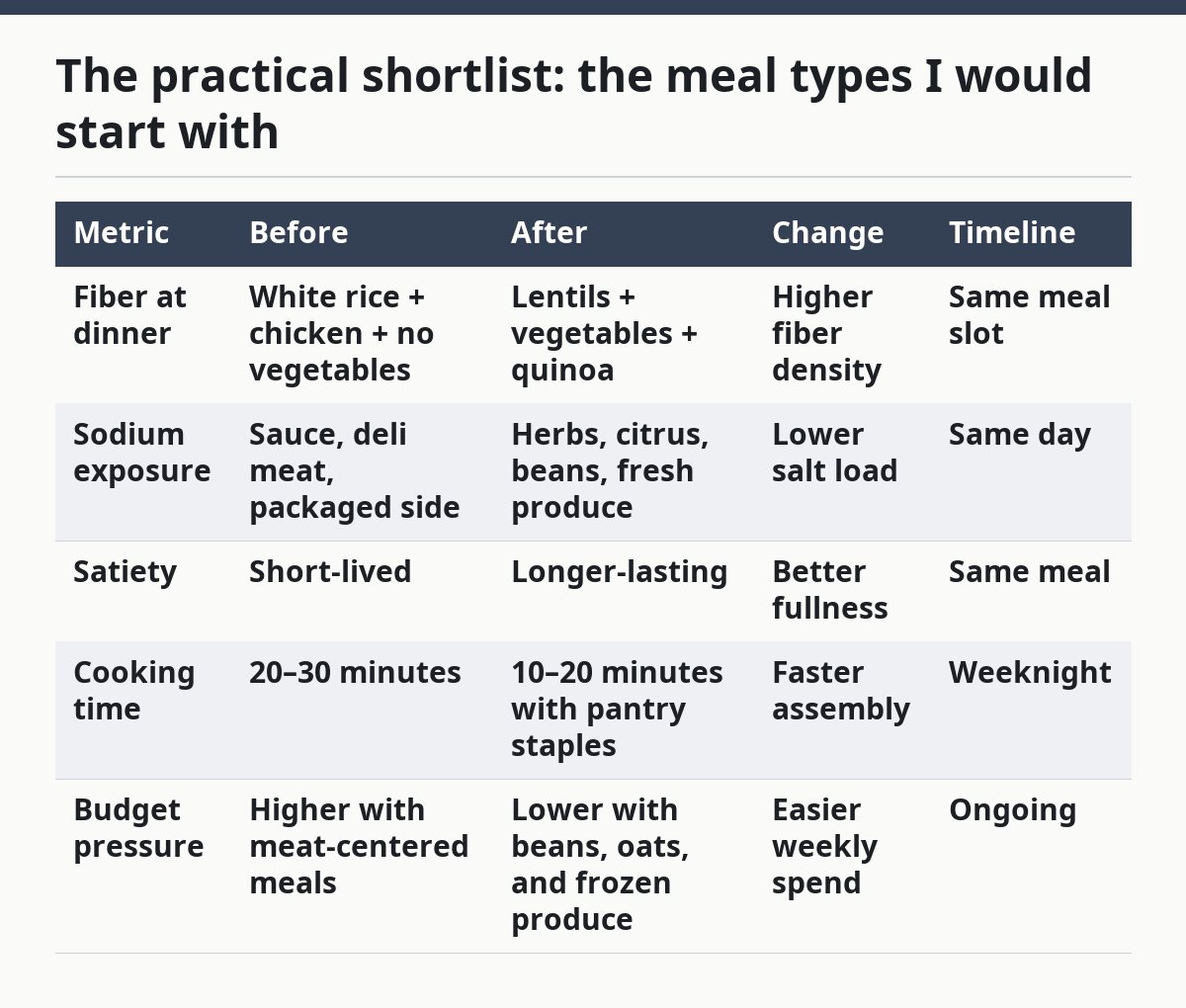
The point of the table is not to pretend every meal will be perfect. It is to show what changes when the meal type changes. A heart-healthy approach works because it keeps repeating those small wins: more fiber, less sodium, better fats, and enough food to stay satisfied. That is what makes the difference over time.
What is the simplest way to make this stick?
The simplest way to make heart-healthy meal types stick is to choose three default meals and rotate them for 2 weeks before trying anything fancy. One breakfast, one lunch, one dinner pattern is enough to create momentum.
For example, breakfast could be oatmeal with berries and walnuts three mornings a week. Lunch could be a bean wrap or grain bowl twice a week. Dinner could be salmon or tofu with roasted vegetables once or twice a week, with soup or chili filling the remaining nights. That kind of repetition lowers decision fatigue. It also exposes the real obstacles quickly: not enough time, too little appetite in the morning, or a pantry that is not set up for fast assembly.
The other piece is shopping. A heart-healthy kitchen usually needs a few staples on hand: oats, beans, lentils, whole grains, frozen vegetables, canned fish, low-sodium broth, fruit, nuts, olive oil, vinegar, and herbs or spices. Without those basics, the best meal plan collapses into takeout. That is why the meal type conversation is not just about nutrition theory. It is about making the healthy choice the easiest choice on a regular Tuesday.
For most readers, the winning strategy is not perfect eating. It is a dependable rotation of meals that are high in fiber, sensible in sodium, and realistic at home. That is the version that survives busy weeks, not the version that looks best on a social feed.
Key takeaways
- Heart-healthy meal types are repeatable patterns, not one-off recipes.
- The strongest defaults are grain bowls, bean soups, fish-and-vegetable plates, breakfast bowls, salads built as meals, and whole-grain wraps.
- Fiber, unsaturated fat, and sodium control matter more than “healthy” labels on packaging.
- Portion size still matters for calorie-dense foods like oil, nuts, cheese, and avocado.
- The best meal type is the one that fits the schedule, the budget, and the appetite without pushing salt or saturated fat too high.
- If a person has diabetes, kidney disease, blood pressure concerns, or another medical condition, a registered dietitian or clinician can help tailor the pattern.
Drafted with AI; not yet reviewed by a person.
