Last updated: November 19, 2026
Quick answer: build a heart-healthy weekly dinner shopping list around 5 to 7 dinners, with vegetables, beans, whole grains, and lean proteins repeated on purpose. A heart-healthy weekly dinner shopping list keeps you from staring at the pantry at 6 p.m. and grabbing the same salty shortcut again.
The steps below show how to plan the list, cut waste, and still leave room for real-life dinners.
Start with the dinners you’ll actually cook
How to Build a Heart-Healthy Store List for One Week of Dinners starts with a simple rule: choose the dinners first. Picture this: you’re standing in the kitchen on a Sunday with a pen, a phone, and 20 minutes before the store run. You do not need a giant meal plan. You need 5 to 7 dinners that fit your week, share ingredients, and don’t leave three half-used bags of spinach in the crisper.
The heart-healthy move is simple: choose a few dinners built around vegetables, beans, whole grains, and lean proteins. That mix covers more ground than a “healthy” list full of random items. One week might include salmon with brown rice, black bean tacos, chicken and roasted broccoli, pasta with tomato sauce and spinach, and a stir-fry with tofu or shrimp.
Write each dinner in one line. Then circle the ingredients that repeat. That’s where the shopping list starts. If three dinners need onions, garlic, and a leafy green, buy those once and use them across the week. Repetition can make shopping cleaner and cooking faster.
Use this quick screen before you move on:
- 1 starch per dinner: brown rice, whole-wheat pasta, potatoes, oats for savory bowls
- 1 protein per dinner: beans, lentils, fish, skinless poultry, tofu
- 2 vegetables per dinner: one sturdy, one tender
- 1 flavor base for the week: onions, garlic, herbs, lemon, vinegar
Avoid building the week around meals that need rare ingredients you’ll use once. That’s how a “healthy” list turns into waste. A dish that needs one special sauce, one odd spice blend, and one half-used vegetable is usually a bad weekly pick.
What should be on a heart-healthy grocery list?
A heart-healthy grocery list should include produce, whole grains, beans, lean proteins, and a few low-sodium condiments. That core mix gives you dinner options without a cart full of processed food.
Start with the store perimeter, then fill in the middle aisles with purpose. Buy the parts of dinner, not just the idea of dinner. A good list usually has:
- Vegetables: fresh, frozen, or canned with no-salt-added labels
- Beans and lentils: canned or dry
- Whole grains: brown rice, oats, quinoa, whole-wheat pasta, whole-grain bread or tortillas
- Proteins: fish, chicken breast, turkey, tofu, plain Greek yogurt, eggs if they fit your plan
- Condiments: olive oil, mustard, salsa, low-sodium broth, vinegar, tomato sauce with no added salt when you can find it
- Fruit: useful for sides or quick breakfasts, even if this trip is for dinners
Read labels on the packaged items you do buy. The American Heart Association recommends keeping sodium in check, and the USDA’s MyPlate page on healthy food choices also helps keep the list grounded in real meals. For heart-healthy shopping, compare brands instead of trusting the front of the box. The American Heart Association’s guidance on sodium is a good place to cross-check your cart.
Here’s the catch: a heart-healthy list is not a “buy only perfect foods” list. Canned beans, frozen vegetables, and plain pasta can all belong on it. What matters is the full cart, not one villain item.
Build the list by aisle, not by mood
Build the list by aisle so you don’t double-buy onions, miss the beans, or wander back for a second trip. That sounds basic, but it is the difference between a clean 25-minute shop and a basket full of random gaps.
Group your dinner plan under five headings: produce, proteins, grains, beans, and condiments. Then list items once, with the amounts tied to meals. If two dinners use the same bag of broccoli, one bag may be enough. If you need rice twice, buy one larger bag instead of two tiny ones. Bulk works when the ingredient keeps well; fresh works when it will be used soon.
Next, write the dinners for the week on paper or your phone. Then list repeated ingredients only once, with the total amount needed. Sort items by aisle: produce, meat or seafood, dairy, dry goods, frozen. Mark flexible items like spinach, peppers, or salmon that can swap between meals. Check the pantry for oils, salt-free spice blends, and unopened grains before you leave.
This is also where bulk vs. fresh matters. Buy dry beans if you already batch-cook or have time to soak them. Buy canned beans if you want speed. Buy fresh greens if they’ll show up in two dinners; buy frozen if they might sit too long. Frozen broccoli, spinach, and peas are useful because they don’t wilt in three days.
Skip the trap of adding “healthy snacks” to a dinner list unless you need them. That turns a focused shop into a loaded cart. Stick to the dinners first.
How do I shop for a week of healthy dinners?
Shop for a week of healthy dinners by matching each meal to one protein, one grain, and at least two vegetables, then buying the shared ingredients first. That keeps the cart tight and the meals connected.
Picture this: you’ve got Monday through Friday mapped out, and your cart only needs to support those meals. You do not need to shop like you cook every recipe from scratch. You need enough overlap that the same bag of carrots, box of brown rice, or jar of salsa can carry two or three dinners.
A simple 5-dinner pattern looks like this:
- Meal 1: salmon, brown rice, broccoli
- Meal 2: black bean tacos, cabbage, salsa
- Meal 3: chicken, sweet potato, green beans
- Meal 4: whole-wheat pasta, tomato sauce, spinach, white beans
- Meal 5: tofu or shrimp stir-fry, rice, mixed vegetables
That kind of plan makes shopping easier because the list shrinks around shared items. One onion can work in pasta, tacos, and stir-fry. One lemon can finish fish and brighten beans. One tub of plain yogurt can become a sauce, a topping, or a side.
Now, quantity is the next question. Do not overthink exact grams unless your household eats very predictably. For most weeks, the better question is whether the ingredient appears in two or more dinners. If yes, it earns a spot on the list. If not, leave it off unless you know you’ll use it another way.
The weekly list is best when it still looks sensible on Thursday. It should have enough overlap to save money and time, but not so much overlap that every dinner tastes the same.
What do I buy fresh and what do I buy frozen or canned?
Buy fresh for fast-cooking produce, and buy frozen or canned for backup ingredients that still need to taste good on day 4 or day 5. That split cuts waste and keeps dinner moving when the week gets messy.
Fresh makes sense for tomatoes, lettuce, herbs, avocados, and delicate greens if you’ll use them early. Frozen makes more sense for broccoli, spinach, peas, cauliflower, and berries if you want less spoilage. Canned beans, canned tomatoes, and no-salt-added broth are the pantry backbone of a weeknight list. They wait for you. Fresh food does not.
Use this rule: if the ingredient is meant to be crisp or bright, buy fresh. If it is meant to be cooked, mixed, or simmered, frozen or canned is often fine. A can of beans can become tacos, soup, or grain bowls. A bag of frozen vegetables can rescue a stir-fry on a tired night.
Watch sodium on canned foods. Drain and rinse canned beans and vegetables when the label allows it; that simple step removes some of the surface salt. For sauces and broths, choose the lowest-sodium version you can find that still tastes like food. The goal is not zero salt forever. It is a cart that does not quietly load up on it.
Here’s the catch: fresh produce can fail you fast. A beautiful bunch of spinach that only gets used once is a waste. Frozen spinach, frozen broccoli, and canned tomatoes can make a week of dinners more reliable.
How do I avoid buying too much produce?
Buy produce for a plan, not for hope. That means matching the amount of vegetables to the number of dinners they’ll actually touch, then choosing a few hardy items that can stretch across the week.
The biggest produce mistake is treating every vegetable like it will get eaten twice. If you are not sure what amounts fit your household, consult a registered dietitian or another qualified professional. The Cleveland Clinic has practical food-waste tips, and the same advice applies here: leafy greens, herbs, berries, and sliced mushrooms can go bad quickly. Cabbage, carrots, onions, sweet potatoes, and winter squash last longer and handle multiple meals better. If you want less waste, lean hard on those durable items.
Use this short list to keep the cart honest:
- Buy 2 to 3 hardy vegetables that can show up in more than one dinner.
- Buy 1 to 2 delicate vegetables for early-week meals.
- Choose frozen backup vegetables for the end of the week.
- Skip loose add-ons unless they fit a meal already on the list.
A good produce plan might be one bag of spinach, two onions, a head of cabbage, a few carrots, and a frozen bag of broccoli. That covers salads, sides, stir-fries, and pasta. It also avoids filling the drawer with leftovers nobody wants to trim on Friday.
Do not buy extra produce just because it looks healthy. That is how good intentions end in slimy greens. The better habit is to ask, “Which dinner uses this?” If you cannot name the meal, leave the item in the bin.
The 10-minute final check before you leave
The final check is a 10-minute sweep for overlap, missing ingredients, and salt-heavy shortcuts. This is the step that saves the second trip.
Before you hit the register, scan the list for three things: enough protein for each dinner, enough vegetables for at least one side or mix-in per meal, and enough grain or starch to anchor the plate. Then check the pantry for items you might already have, like olive oil, vinegar, mustard, garlic powder, or rice.
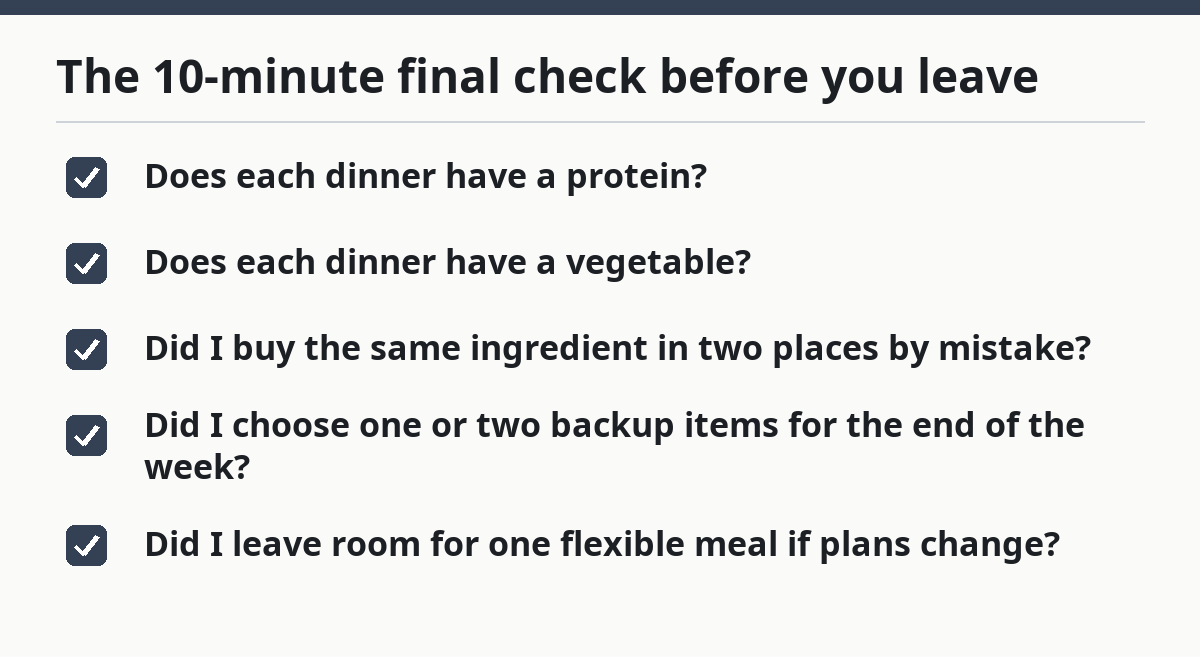
Use a quick yes/no pass:
- Does each dinner have a protein?
- Does each dinner have a vegetable?
- Did I buy the same ingredient in two places by mistake?
- Did I choose one or two backup items for the end of the week?
- Did I leave room for one flexible meal if plans change?
That last point matters. A heart-healthy store list should survive a canceled dinner, a late work night, or a day when you do not feel like cooking. Keep one fallback meal on the list: eggs with vegetables, bean soup, or whole-wheat pasta with tomato sauce and spinach. That way the week does not fall apart when one dinner gets skipped.
A useful dinner list is not fancy. It is repeatable. If it gives you a full week of meals with less waste and fewer salty backups, it did its job.
Key Takeaways
- Start with 5 to 7 dinners and build the cart around overlap.
- Center the list on vegetables, beans, whole grains, and lean proteins.
- Buy hardy produce, frozen vegetables, and canned staples to cut waste.
- Group items by aisle so you do not miss basics or buy duplicates.
- Leave one flexible dinner in the plan so the week can bend without breaking.
FAQ
What should be on a heart-healthy grocery list?
A heart-healthy grocery list should focus on vegetables, fruits, beans, whole grains, lean proteins, and lower-sodium condiments. That mix supports dinner without leaning on processed foods. Frozen vegetables, canned beans, brown rice, oats, fish, tofu, chicken, and olive oil all fit into that pattern.
How do I shop for a week of healthy dinners?
Shop by meal, then collapse the list into shared ingredients. Pick 5 to 7 dinners, write down each ingredient once, and sort the list by aisle. That keeps the cart focused and makes it easier to buy enough food without stuffing the fridge.
How do I avoid buying too much produce?
Buy produce for meals you can name, not for meals you might cook someday. Choose a few durable vegetables, add one or two delicate items for early-week use, and keep frozen vegetables on hand for later. That mix cuts waste and keeps the week flexible.
Drafted with AI; not yet reviewed by a person.