Last updated: November 19, 2026
Key Takeaways
- Plan the snack ahead, plate it, and keep the portion small before hunger builds.
- A night snack is heart-healthy when saturated fat, sodium, and added sugar stay modest.
- Pair protein with fiber, then keep the serving small enough to finish in 5 to 10 minutes.
- Choose foods that are easy to portion, easy to digest, and less likely to lead to overeating.
Heart-healthy snacks for between-meal hunger at night are small, satisfying foods that take the edge off after dinner without turning into a second meal. In this guide to Heart-Healthy Snacks for Between-Meal Hunger at Night, the best choices usually combine protein, fiber, or healthy fat in a portion you can finish in 10 minutes, not 30.
The safest way to handle evening snack planning
Evening snack planning works best when the snack is pre-decided, plated, and sized before you get hungry. That simple routine keeps a night snack from becoming a bowl of cereal, a stack of crackers, and whatever else happens to be in reach.
A useful starting point is a snack that lands around 150 to 250 calories for many adults, though your needs may differ with body size, activity, medications, and medical goals. A small snack should calm hunger, not replace dinner or become a late-night feast. If you have diabetes, heart disease, kidney disease, reflux, or are trying to lose weight, consult a clinician or registered dietitian for individualized guidance; the American Heart Association recommends personalizing heart-healthy eating plans, and the National Institute of Diabetes and Digestive and Kidney Diseases also advises medical guidance for condition-specific meal planning. American Heart Association, NIDDK
The easiest formula is this: choose 1 protein, 1 fiber-rich food, and, if needed, 1 small fat source. That usually gives enough staying power to bridge the gap until morning. It also keeps sodium, added sugar, and portion size under control, which matters more at night because mindless eating is easier when you are tired.
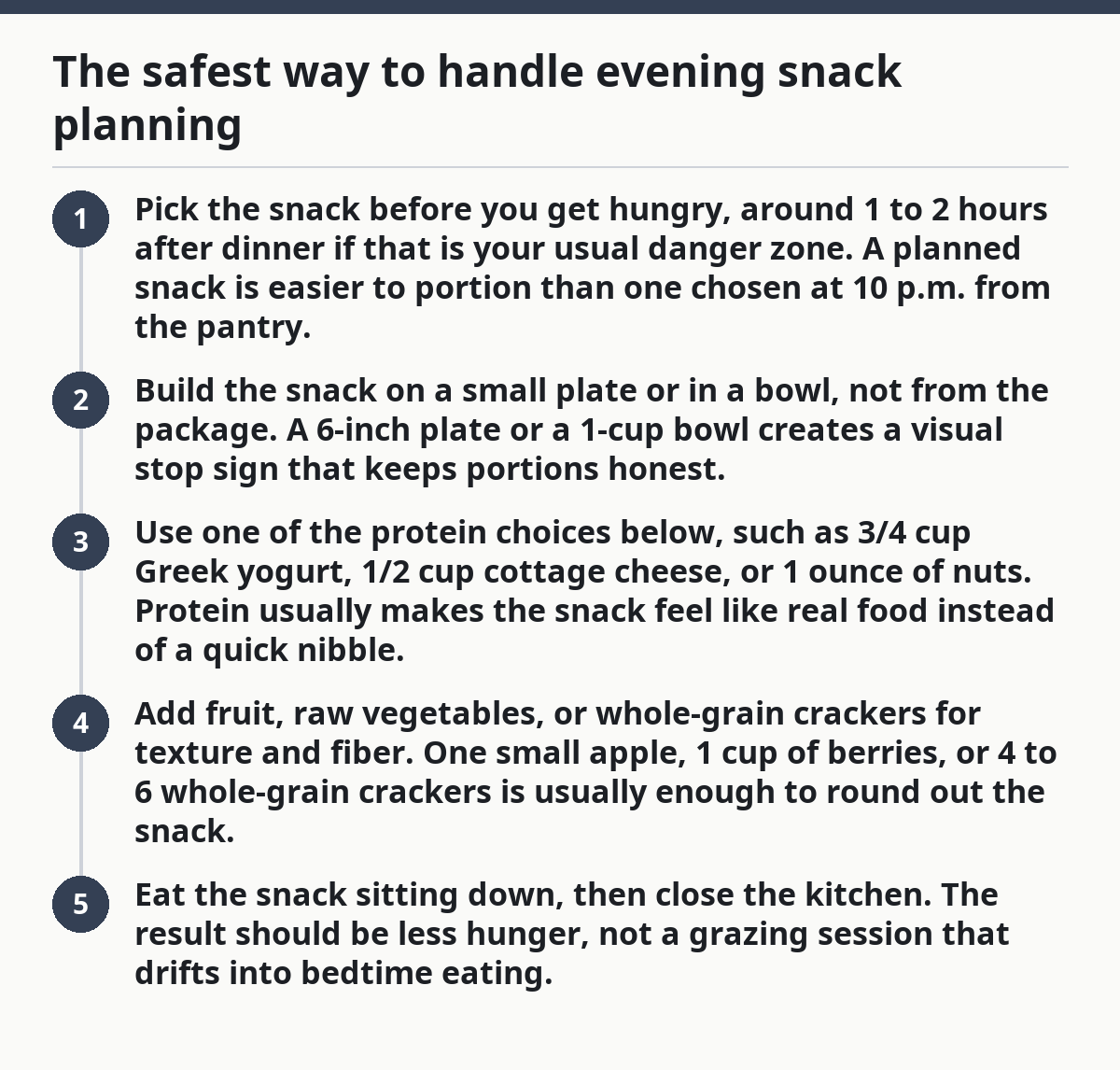
Here is the core procedure I would use for evening snack planning:
- Pick the snack before you get hungry, around 1 to 2 hours after dinner if that is your usual danger zone. A planned snack is easier to portion than one chosen at 10 p.m. from the pantry.
- Build the snack on a small plate or in a bowl, not from the package. A 6-inch plate or a 1-cup bowl creates a visual stop sign that keeps portions honest.
- Use one of the protein choices below, such as 3/4 cup Greek yogurt, 1/2 cup cottage cheese, or 1 ounce of nuts. Protein usually makes the snack feel like real food instead of a quick nibble.
- Add fruit, raw vegetables, or whole-grain crackers for texture and fiber. One small apple, 1 cup of berries, or 4 to 6 whole-grain crackers is usually enough to round out the snack.
- Eat the snack sitting down, then close the kitchen. The result should be less hunger, not a grazing session that drifts into bedtime eating.
The mistake to avoid is treating “healthy” as a free pass. A handful of nuts is helpful; three handfuls are not. A cup of yogurt can be a smart choice; a yogurt parfait loaded with granola and honey can quickly look like dessert. The American Heart Association’s diet guidance is a useful reminder that portions still matter. (Source: American Heart Association)
What makes a night snack heart-healthy?
A night snack is heart-healthy when it keeps saturated fat, sodium, and added sugar modest while still giving enough protein or fiber to satisfy hunger. That usually means simple foods in recognizable portions rather than snack products made to taste like a meal.
The American Heart Association’s general approach to heart-healthy eating points in this direction: more fruits, vegetables, whole grains, beans, nuts, and low-fat dairy, with less sodium, added sugar, and saturated fat. For snack planning, that means looking for foods that do real work, not just foods labeled “light” or “fit.” American Heart Association
A few standards help more than a long ingredient list:
- Protein: Greek yogurt, cottage cheese, edamame, or a small serving of nuts.
- Fiber: Fruit, vegetables, whole-grain crackers, or a small piece of whole-grain toast.
- Fat quality: Nuts, seeds, or a little avocado instead of butter-heavy spreads.
- Sodium: Watch dips, cheese, and packaged crackers. A snack can look modest and still be salty enough to matter if it is built from processed foods.
That said, “heart-healthy” does not mean “eat as much as you want.” Nuts are a good example. They bring unsaturated fat and some fiber, but the same quality that makes them useful also makes them easy to overeat. A 1-ounce portion is a better late-night choice than an open container.
This is also where evening snack planning pays off. If the snack is designed ahead of time, you are less likely to assemble a plate that creeps past snack size and into meal size. That matters most for people who snack because of habit, stress, or fatigue rather than true hunger.
The right snack is not the one with the loudest health label. It is the one that settles hunger, tastes good enough to eat slowly, and still leaves room for sleep.
Satisfying combinations that feel like a snack, not a meal

The most satisfying night snacks pair protein with fiber, then keep the total portion small enough to finish in 5 to 10 minutes. That combination usually beats a single food by itself, especially when you want something that holds you until morning.
A few combinations work well because they are easy to portion and do not require much prep:
- Greek yogurt with berries: Use 3/4 cup plain Greek yogurt plus 1/2 cup berries. The yogurt brings protein; the berries add sweetness and volume without much heaviness.
- Apple with peanut butter: Use 1 small apple and 1 tablespoon peanut butter. This gives a crisp, sweet bite with enough fat and protein to slow hunger.
- Whole-grain crackers with hummus: Use 4 to 6 whole-grain crackers with 2 tablespoons hummus. The crackers add crunch, and hummus adds fiber and plant protein.
- Cottage cheese with sliced peach or pineapple: Use 1/2 cup cottage cheese with 1/2 cup fruit. This is a good choice when you want something cold, simple, and higher in protein.
- Nuts with fruit: Use 1 ounce nuts with 1 piece of fruit, such as a clementine or kiwi. This works well if you want a small snack that does not require refrigeration.
- Veggies with hummus or yogurt dip: Use cucumber, bell pepper strips, or baby carrots with 2 tablespoons dip. This is the lightest option on the list and good when hunger is mild.
The trade-off is that these combinations still need boundaries. Hummus is nutritious, but a large bowl of crackers and hummus is not a snack anymore. Greek yogurt is a smart base, but flavored versions can bring a lot of added sugar. Cottage cheese is useful, but sodium can vary a lot by brand, so reading the label matters.
A practical rule is to stop once the snack hits one small bowl or one plate. If you are still hungry after that, the problem may not be the snack. It may be that dinner was too light, too early, or low in protein.
Which snack ingredients work best at night?
The best night ingredients are the ones that are easy to portion, easy to digest, and less likely to trigger overeating. That makes Greek yogurt, nuts, fruit, whole-grain crackers, hummus, and cottage cheese especially useful for evening snack planning.
Greek yogurt is one of the strongest options because it brings a lot of protein for a small serving. Plain Greek yogurt gives you more control than sweetened cups, and you can add your own fruit if you want sweetness. The drawback is texture and tang; some people simply do not enjoy it plain.
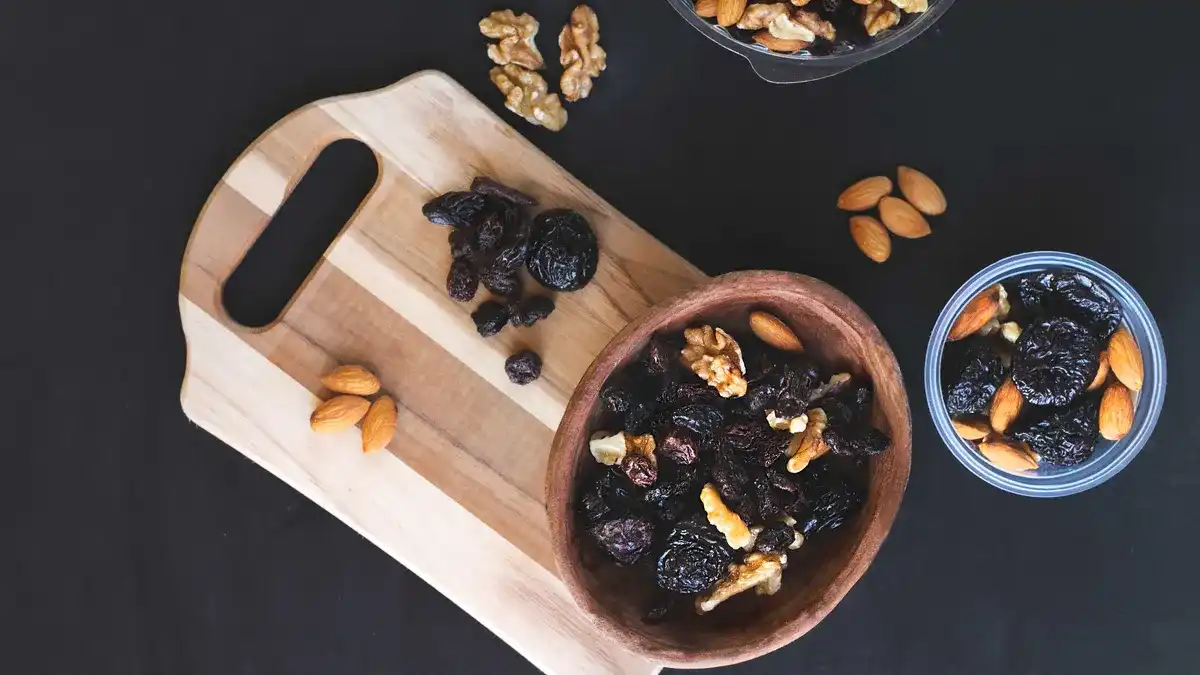
Nuts are useful when you want something crunchy and filling. Almonds, walnuts, pistachios, and unsalted mixed nuts are all reasonable choices. The downside is portion creep. A 1-ounce handful is a snack; eating directly from a large container is how an intended snack turns into a much larger intake.
Fruit helps when the craving is for something sweet. Berries, apples, pears, grapes, oranges, kiwi, and melon all work. Fruit is a better late-night choice than candy or baked desserts because it adds water and fiber, but it may not be enough on its own if you are genuinely hungry.
Whole-grain crackers are best when you want something dry and salty. They pair well with hummus, cottage cheese, or a thin spread of nut butter. The warning is simple: crackers disappear fast, so the package should stay in the cabinet while the portion sits on a plate.
Hummus brings fiber and a savory taste that can feel more “real” than a sweet snack. It is especially useful with vegetables or crackers. Some brands are saltier than others, so it is worth checking the label if sodium is a concern.
Cottage cheese is a strong late-night protein option, especially for people who want a cold snack that tastes neutral. It can be paired with fruit or eaten plain with pepper. The drawback is that some varieties are fairly salty, and some people find it too heavy close to bedtime.
What to do when the craving is sweet versus savory
Sweet cravings usually do better with fruit plus protein, while savory cravings usually do better with crunch plus dip. Matching the snack to the craving helps you stay satisfied without overeating.
If you want sweet, start with fruit and add one protein source. A small bowl of berries with Greek yogurt, a sliced apple with nut butter, or cottage cheese with peaches can satisfy the dessert urge without turning into dessert. This works because sweetness comes from fruit, not from added sugar.
If you want savory, build around vegetables, hummus, whole-grain crackers, or a small portion of cheese or cottage cheese. The crunch and salt signal “snack” without demanding a large serving. Raw carrots with hummus, cucumber slices with cottage cheese, or crackers with tuna are all practical choices.
The mistake is trying to force the wrong category. If you crave sweet and reach for plain pretzels, you may end up back in the kitchen 15 minutes later. If you crave savory and choose a banana alone, you may still feel unfinished. A matched snack is more likely to end the hunger cycle the first time.
One useful trick is to decide whether the craving is for taste or for volume. If you want volume, choose fruit or vegetables. If you want richness, choose nuts or yogurt. If you want salt and crunch, choose crackers with a dip. That one decision narrows the options fast and keeps the snack from wandering into second-dinner territory.
Common mistakes that make a healthy snack backfire
The most common mistake is eating from the container, because that makes portion control almost impossible. A handful of nuts can quietly become several handfuls, and crackers vanish faster than most people expect. Put the serving on a plate or in a bowl first.
Another mistake is choosing only carbohydrate at night. A bowl of cereal, toast, or crackers can calm a craving for 10 minutes and then leave hunger hanging around again. Pairing those foods with protein or fat usually gives a steadier result.
A third mistake is using a snack to fix fatigue, stress, or thirst. If you are tired, a snack will not solve sleep debt. If you are thirsty, water may be what you wanted all along. If you are stressed, the snack may be a comfort cue rather than true hunger.
A fourth mistake is treating “low fat” as the only goal. Many low-fat packaged snacks are still high in sodium or added sugar. That matters at night because those ingredients can make a snack less satisfying and less heart-friendly than expected.
One more issue is timing. Eating a large snack right before lying down can feel heavy and may bother people who deal with reflux. A smaller snack 1 to 2 hours before bed is often easier than eating in bed or snacking continuously until lights out.
If night hunger is frequent, especially after a full dinner, it is worth asking why. A meal with more protein, more fiber, or a better dinner time may solve the problem better than any snack list.
A simple night snack formula you can use tonight
A reliable night snack formula is 1 protein plus 1 produce item or whole grain, kept to one small serving each. That keeps the snack practical, heart-aware, and less likely to become a second meal.
Use this as a repeatable template:
- Protein anchor: 3/4 cup Greek yogurt, 1/2 cup cottage cheese, 1 ounce nuts, or 2 tablespoons hummus with a second food.
- Add-on: 1 small apple, 1 cup berries, 4 to 6 whole-grain crackers, or 1 cup raw vegetables.
- Portion boundary: one bowl, one plate, or one snack box. No refill unless dinner was skipped or unusually small.
That formula is flexible enough for both sweet and savory nights. It also travels well if your kitchen closes early and you need something you can portion quickly before bed. The goal is not perfection. It is a snack that ends hunger without dragging you into overeating.
The best sign that evening snack planning is working is simple: you finish the snack, feel settled, and stop thinking about food. If you are still hunting for something else, the snack was probably too small, too light on protein, or too easy to overeat because it came from a package.
For readers building a broader routine, this fits naturally with the Heart-Healthy Snack Planning hub, where snack choices can be organized by time of day, hunger level, and what is already in the kitchen.
What are the best heart-healthy snacks at night?
The best heart-healthy snacks at night are small combinations that include protein, fiber, or healthy fat without much added sugar or sodium. Plain Greek yogurt with berries, cottage cheese with fruit, hummus with vegetables, and a 1-ounce portion of nuts are all solid choices. The best one is the one that satisfies you without becoming a second meal.
How do i choose a late-night snack that is not too heavy?
Choose a late-night snack that fits on a small plate and includes one protein food plus one lighter side. A 3/4 cup serving of Greek yogurt with fruit, or 4 to 6 whole-grain crackers with hummus, is usually easier to digest than a large bowl of mixed foods. If reflux, diabetes, or another condition is part of the picture, consult a clinician or dietitian for a more personal target. NIDDK
Drafted with AI; not yet reviewed by a person.