Last updated: November 19, 2026
Quick Answer: The simplest heart-healthy breakfast technique is to build one meal around a fiber-rich base, a protein source, and a small amount of unsaturated fat, then keep added sugar and sodium low. This Heart-Healthy Breakfast Technique and Breakfast Components — The Complete Guide shows how to do that with everyday foods.
A heart-healthy breakfast technique is built, not guessed: start with fiber, add protein, choose unsaturated fat, and keep sodium and added sugar low. That simple pattern does more for blood pressure, LDL cholesterol, and mid-morning hunger than a bowl of “healthy” cereal or a pastry ever will, and this Heart-Healthy Breakfast Technique and Breakfast Components — The Complete Guide keeps the focus on practical choices that support that pattern.
Key Takeaways
- A good breakfast for heart health usually combines three pieces: a high-fiber carbohydrate, a protein source, and a small amount of unsaturated fat.
- The biggest misses are usually hidden sugar, low fiber, and too much sodium, not the obvious foods people already know to avoid.
- Oats, plain Greek yogurt, eggs, beans, nuts, seeds, fruit, and whole-grain toast are the building blocks that show up most often in practical breakfast plans.
- Portion size matters as much as ingredient choice. A large smoothie or oversized bowl can turn a solid breakfast into a calorie-heavy one.
- A repeatable breakfast technique can make mornings easier because it reduces decision-making, especially on busy weekdays.
- This guide is for adults trying to support cardiovascular health with everyday food choices, not for anyone who needs a medically prescribed diet, weight-gain plan, or tight sodium restriction without clinician guidance.
What makes a breakfast heart-healthy?
A heart-healthy breakfast is one that gives you fiber, protein, and unsaturated fat without a big load of added sugar, refined flour, or sodium. That pattern matters because it helps control appetite and supports better overall diet quality across the day.
For breakfast, the word “heart-healthy” should not mean “light” or “low-fat” in the old sense. A plain bagel with jam may look harmless, but it can be mostly refined starch and sugar. A better breakfast often looks less flashy: oatmeal with berries and walnuts, eggs with whole-grain toast and fruit, or plain yogurt with chia and sliced peaches.
The American Heart Association’s dietary guidance points people toward vegetables, fruits, whole grains, beans, nuts, seeds, fish, lean proteins, and plant oils. That same pattern works at breakfast too, even if breakfast is the meal most likely to get turned into dessert. The important shift is not perfection; it is composition. A breakfast built from one sweet item rarely stays heart-healthy for long. A breakfast built from a grain, a protein, and produce usually does.
Two practical numbers help. First, adult women generally need about 25 grams of fiber per day and adult men about 38 grams per day, according to the National Academies; breakfast should contribute meaningfully, not be ignored until dinner. Second, the Dietary Guidelines for Americans recommend keeping added sugars under 10% of calories per day. If breakfast starts with sweetened yogurt, syrup, pastries, or flavored coffee drinks, that ceiling gets hit fast.
The technique is simple: choose a base, add protein, add color, and keep the sweet part small. That formula is useful for busy mornings, and it is wrong only for people whose medical team has told them to follow a different nutrition plan.
What should a heart-healthy breakfast include?
A heart-healthy breakfast should include at least one fiber-rich carbohydrate, one protein source, and one source of unsaturated fat. That combination gives the meal staying power and keeps the nutrition profile closer to what cardiovascular guidelines favor.
The carbohydrate should usually come from oats, whole-grain bread, high-fiber cereal, fruit, or beans. Oatmeal is especially strong because soluble fiber from oats can help lower LDL cholesterol when it is part of an overall heart-smart diet. Whole-grain toast, barley flakes, and bran-based cereals also work, as long as the sugar is not doing most of the work.
Protein can come from eggs, plain Greek yogurt, cottage cheese, milk, soy milk, tofu, tempeh, beans, or nut butter. The point is not to chase the highest possible protein number. It is to keep the meal from becoming all carbohydrate, which often leaves people hungry again before lunch. A breakfast with 20 to 30 grams of protein is a reasonable target for many adults, though exact needs vary by body size, age, and medical status.
Unsaturated fat belongs in the meal too, but in measured amounts. Nuts, seeds, avocado, tahini, and olive oil help the meal feel complete. A tablespoon of chia or ground flax in oatmeal is not just decoration; it adds fiber and healthy fat. A small handful of walnuts on yogurt does more than make the bowl look finished.
Fruit should usually show up here as well, not as juice. Berries, citrus, apples, pears, peaches, and bananas all fit. Whole fruit contributes fiber and volume, while juice strips away the part that helps with fullness.
What should stay small or rare? Bacon, sausage, croissants, sugary cereals, pastries, sweet coffee drinks, and highly processed breakfast sandwiches. Those foods can fit into a diet sometimes, but they are poor default choices for a heart-focused breakfast.
How do I build one without overthinking it?
The easiest technique is the 3-part plate method: make one part fiber, one part protein, and one part produce or healthy fat. That keeps the meal balanced without requiring calorie counting or a spreadsheet.
A practical version looks like this:
- 1 fiber base: oatmeal, whole-grain toast, high-fiber cereal, or beans
- 1 protein: eggs, yogurt, soy yogurt, cottage cheese, tofu, or nuts
- 1 produce item: berries, sliced apple, orange, tomato, spinach, or avocado
- 1 small fat add-on, if needed: walnuts, chia, flax, almonds, peanut butter, or olive oil
The point of the method is consistency. If breakfast is different every day, the odds of ending up with a muffin and coffee go up. If the structure stays the same, the food choices get easier. This matters on rushed weekday mornings, when the problem is not lack of knowledge but lack of friction-free decisions.
A few examples show the pattern in action:
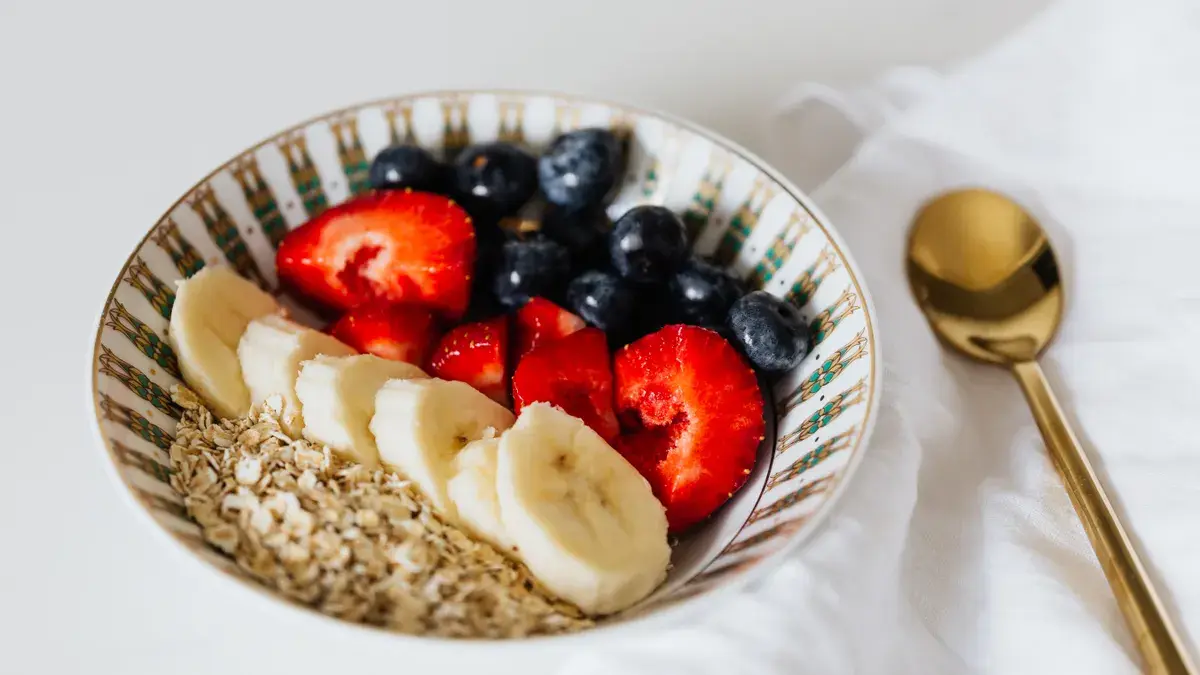
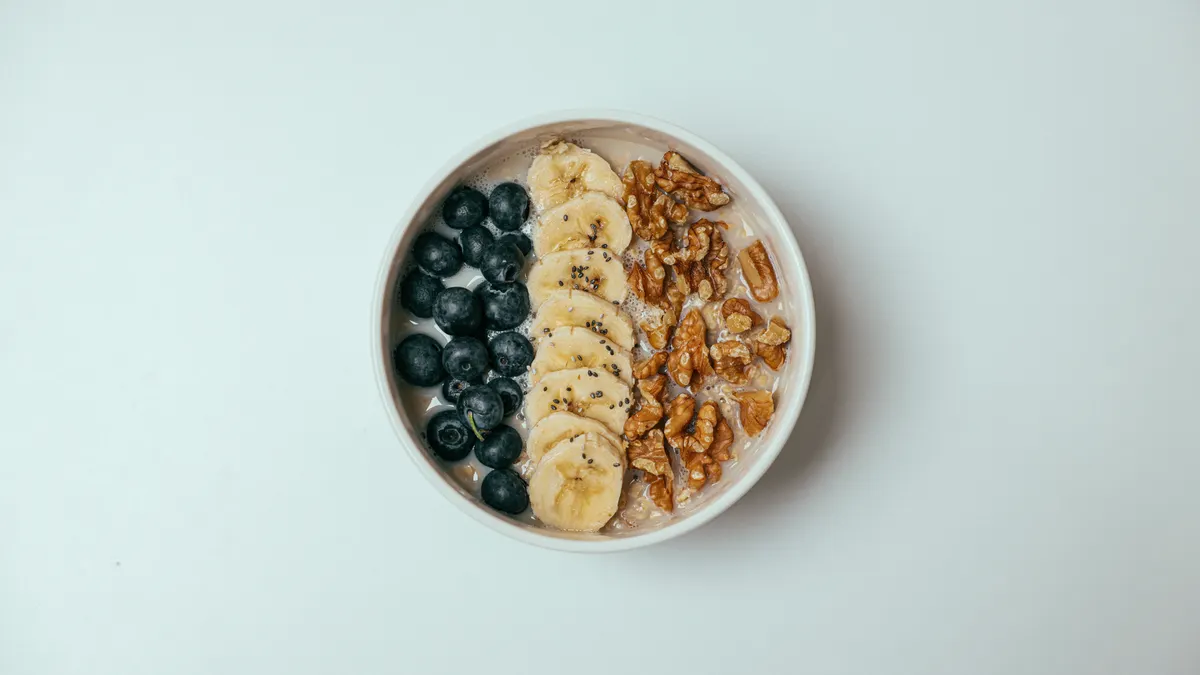
- Oatmeal cooked with milk, topped with blueberries, chia seeds, and walnuts
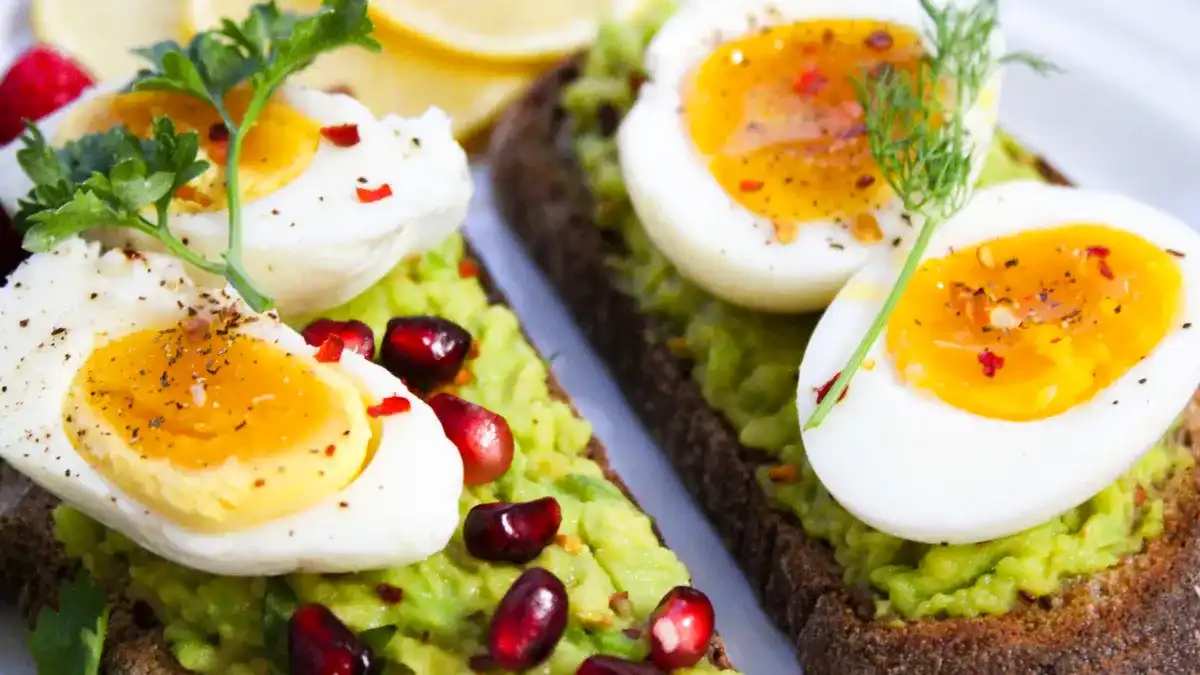
- Two eggs with spinach, whole-grain toast, and a side of orange slices
- Plain Greek yogurt with strawberries, ground flax, and a spoonful of unsalted almonds
- Whole-grain toast with peanut butter, sliced banana, and a glass of milk
- Black bean breakfast bowl with salsa, avocado, and a small corn tortilla
The technique also helps with portion control. A giant smoothie made with fruit, nut butter, honey, and juice can be much larger than it looks. The same is true for granola bowls. The ingredients may sound healthy, but the serving size can quietly drift into lunch territory. A smaller bowl with protein and fiber is usually the better cardiovascular choice.
If time is the problem, prepare pieces ahead of time. Cook oats for two mornings, wash berries, hard-boil eggs, portion nuts into small containers, or keep plain yogurt in the front of the refrigerator. That is not glamorous advice, but it is the kind that actually gets used.
Which breakfast components matter most for heart health?
Fiber-rich carbs, unsaturated fats, lean protein, and low-sodium ingredients matter most because they influence fullness, cholesterol intake, blood pressure, and added sugar all at once. The mistake most people make is treating “healthy breakfast” as one food instead of a combination, and if you have a medical condition or need a special diet, it is best to check that pattern with a clinician or registered dietitian.
Oats and other whole grains
Oats are one of the strongest breakfast bases because they are easy to use and naturally high in soluble fiber. A bowl of oatmeal with no added sugar is a very different food from instant flavored oatmeal packets. Plain oats let the eater control sweetness and sodium.
Whole-grain bread and high-fiber cereal also belong here. The label matters. “Whole grain” should appear near the top of the ingredient list, and the fiber should be high enough to do real work. A toast that is barely darker than white bread is not automatically better.
Fruit
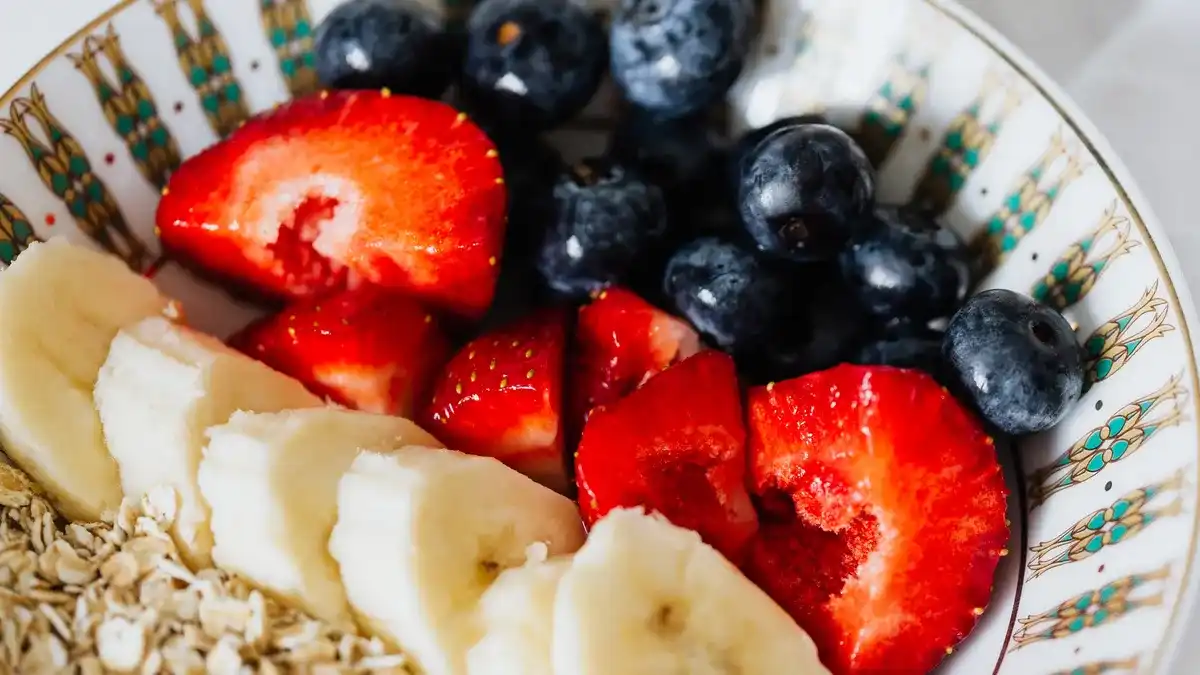
Fruit contributes fiber, potassium, and volume with very little preparation. Berries are especially useful because they work in oatmeal, yogurt, and smoothies without needing added sugar. Apples and pears are solid too because they bring crunch and structure.
Fruit juice is not the same thing. Even 100% juice lacks the fiber that makes whole fruit useful for fullness and better blood sugar control in the context of a balanced breakfast.
Protein
Protein stabilizes the meal. Eggs are flexible, but they are not the only answer, and plain Greek yogurt, cottage cheese, soy foods, and beans can all serve the same purpose with different trade-offs.
Eggs deserve a practical note. They fit in a heart-healthy breakfast when they are not paired with bacon, sausage, butter-heavy toast, or a large pile of cheese every morning. How they are prepared matters as much as the egg itself.
Healthy fats
Nuts, seeds, avocado, and nut butter support the meal when portions stay controlled. A tablespoon or two is usually enough. More is not always better, especially if the rest of the breakfast already includes calorie-dense foods.
Ground flax and chia are especially efficient because they contribute fiber and fat together. They are easy to stir into oats, yogurt, or smoothies.
Flavor
Spices and herbs matter more than they get credit for. Cinnamon, black pepper, cumin, dill, parsley, and chili flakes can replace the sodium and sugar many people use to force breakfast to taste interesting. A tomato-and-spinach egg scramble seasoned well is far more heart-friendly than a salty breakfast sandwich from a drive-thru.
Which breakfast mistakes hurt heart health the most?
The worst breakfast mistakes are high added sugar, low fiber, high sodium, and portion sizes that disguise themselves as “healthy.” Those four problems show up in pastries, flavored drinks, packaged bars, fast-food sandwiches, and giant smoothies.
A sweet breakfast is not automatically bad, but sweet should not be the main event. Pancakes with syrup, frosted muffins, sweetened cereals, breakfast cookies, and flavored yogurt cups can look reasonable and still behave more like dessert than fuel. The heart-health issue is not only sugar. It is the combination of refined flour, low fiber, and rapid hunger afterward.
Sodium is the sleeper problem. Breakfast meats, cheese-heavy sandwiches, biscuits, and frozen breakfast burritos can load a meal with a large share of the day’s sodium before lunch arrives. That matters because many people trying to support blood pressure do not think about breakfast as a salty meal. They should.
Portion size is another trap. A smoothie can contain fruit, yogurt, nut butter, oats, seeds, and milk and still be too large for the goal if it is built without restraint. Granola is similar. A few spoonfuls are useful; a full bowl can become calorie dense very quickly.
The mistake that costs most people the most is not one bad food. It is the habit of combining three or four marginal choices in the same meal: sweet coffee, flavored yogurt, a refined grain, and a pastry. That breakfast feels normal, but it does not match the heart-healthy pattern.
This is where the advice has to be honest: if breakfast is your favorite meal and you want to keep it satisfying, you cannot make it all “light.” A breakfast that is too small or too bland often fails by 10 a.m. Then the person eats a bigger snack, and the day becomes a cycle of grazing. A useful breakfast has to be satisfying enough to repeat.
Can a heart-healthy breakfast still be quick?
Yes, a heart-healthy breakfast can take under 10 minutes if the ingredients are already in place. Speed is mostly a planning problem, not a cooking problem.
The fastest options are the ones that require almost no assembly:
- Overnight oats made the night before
- Greek yogurt with berries and nuts
- Toast with nut butter and fruit
- Hard-boiled eggs with whole-grain toast
- Leftover beans or roasted vegetables folded into eggs or a wrap
The cleanest shortcut is batch prep. Make one grain, one protein, and one fruit ready for 2 to 3 days. That could mean a pot of oatmeal, a dozen hard-boiled eggs, washed berries, or pre-portioned nuts. Refrigeration and containers do most of the work.
If breakfast happens away from home, the same rules still apply. At a café, plain oatmeal, eggs, or a yogurt-and-fruit option is usually better than a pastry case. At a convenience store, look for unsweetened yogurt, nuts, fruit, milk, or a simple egg sandwich rather than a glazed baked item. If the only available option is less ideal, a small portion is better than pretending the food does not matter.
A heart-healthy breakfast can also be repetitive. That is not a flaw. Many people do better eating the same 3 or 4 combinations on rotation because it removes decision fatigue. Variety is nice, but cardiovascular health does not require a new breakfast every morning.
What does a real before-and-after breakfast upgrade look like?
A real breakfast upgrade usually changes three things at once: the fiber goes up, the sugar goes down, and the protein becomes more obvious. That is the kind of change that matters more than swapping one trendy ingredient for another.
| Metric | Before | After | Change | Timeline |
|---|---|---|---|---|
| Fiber source | Sweet pastry or refined cereal | Oats or whole-grain toast | More fiber, less refined flour | Single breakfast swap |
| Added sugar | Flavored yogurt or syrup-heavy meal | Plain yogurt, fruit, or unsweetened oats | Lower added sugar | Immediate |
| Protein | Minimal or none | Eggs, Greek yogurt, tofu, or nuts | More satiety support | Immediate |
| Sodium | Breakfast sandwich or processed meat | Eggs, oats, fruit, or nut butter | Lower sodium load | Immediate |
| Staying power | Hunger by mid-morning | More even fullness until lunch | Better meal balance | Same day |
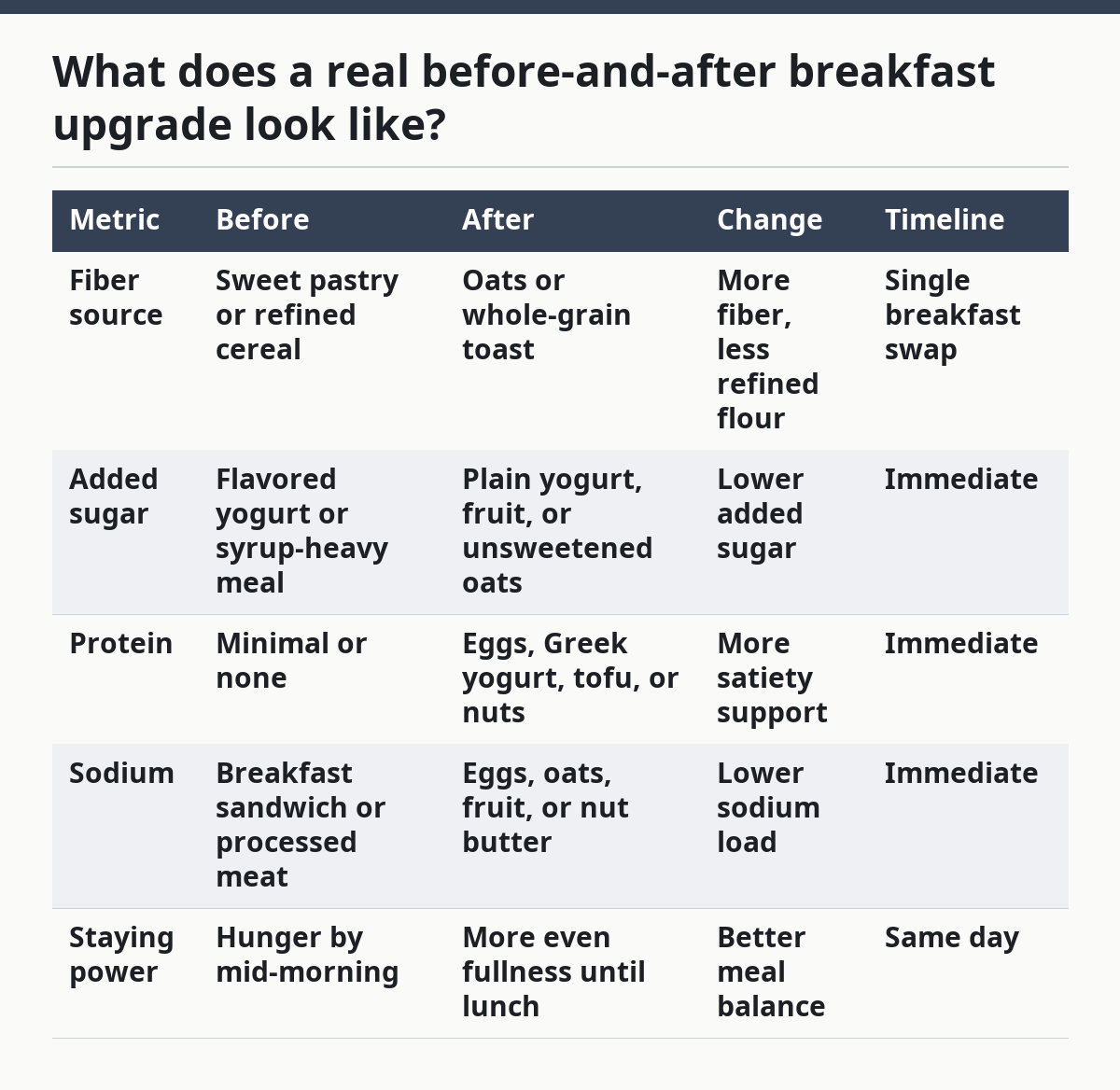
A useful upgrade is the move from flavored yogurt and granola to plain Greek yogurt, berries, and walnuts. The first version can be dessert-like and easy to overeat. The second version keeps the sweetness but shifts the balance toward protein, fruit, and healthy fat.
Another common upgrade is from a bagel with cream cheese to whole-grain toast with eggs and tomato. The second breakfast is not fancy. It is simply better aligned with heart-health goals because it carries fiber, protein, and lower refined carbohydrate load.
The best upgrade is the one a person can repeat five mornings a week. That is the real standard. A breakfast that looks perfect once and disappears after three days is not useful. A less dramatic breakfast that becomes routine is the better choice.
This is also where trade-offs matter. Some people do not tolerate high fiber in the early morning, especially if they have digestive issues. Others need more calories because they are very active, pregnant, recovering from illness, or trying to gain weight. In those cases, the heart-healthy pattern still applies, but the amount and timing need individual adjustment with a clinician or dietitian.
Who is this breakfast pattern not for?
This breakfast pattern is not for someone who needs a medically tailored plan without professional guidance, such as a low-sodium renal diet, a diabetes meal plan with specific carbohydrate limits, or a prescribed high-calorie recovery diet. It is a general cardiovascular pattern, not a one-size-fits-all medical order.
It is also not ideal for people who try to “healthify” breakfast by adding too many calorie-dense extras at once. Almond butter, granola, chia, flax, avocado, and oats can all be part of a great meal, but stacking all of them together can make the breakfast far larger than intended. Heart-healthy does not mean unlimited.
People who hate morning meals are another edge case. If breakfast makes you feel unwell, forcing a big breakfast is not the answer. Some people do better with a small early option, then a larger meal later in the day. The cardiovascular goal is the overall pattern, not the clock.
The biggest mistake is turning this into a moral scorecard. A croissant once in a while is not the problem. A breakfast routine built around pastries, processed meats, sugary drinks, and low-fiber foods is the problem. The technique here is meant to change the default, not create guilt.
What is the simplest heart-healthy breakfast formula to remember?
The simplest formula is: whole grain or oats, protein, fruit, and a little unsaturated fat. That formula is easy to repeat, easy to shop for, and easy to adjust.
If the breakfast has all four, it is usually on the right track. If it has only one, especially if that one is sweet or refined, it probably is not.
A few reliable combinations do most of the work:
- Oatmeal + berries + walnuts
- Eggs + whole-grain toast + fruit
- Plain yogurt + chia + peaches
- Bean toast + tomato + avocado
- Tofu scramble + vegetables + whole-grain toast
That is the real guide. Not perfection, not novelty, and not a shelf full of specialty products. Just a breakfast that starts with fiber, includes protein, keeps added sugar low, and tastes good enough to repeat tomorrow.
Drafted with AI; not yet reviewed by a person.