Last updated: November 19, 2026
No-cook breakfast options can still be heart-healthy, filling, and fast if they lean on fiber, unsalted nuts, fruit, and unsweetened dairy. If you are looking for the best heart-healthy breakfasts that require no cooking, the goal is simple: build breakfast around protein plus slow-digesting carbs, then keep added sugar and sodium low.
A plain bowl of Greek yogurt with berries beats a pastry. A carton of cottage cheese with peaches beats skipping breakfast entirely. In 2 to 5 minutes, you can put together a no-cook breakfast that fits a heart-healthy pattern without turning your morning into a project.
If you want a broader framework for the rest of the day, the guide to heart-healthy breakfast strategies sits under that larger plan.
Key takeaways
- No-cook breakfasts work best when they combine protein, fiber, and unsaturated fat.
- Greek yogurt, cottage cheese, fresh fruit, nuts, seed butter, and whole grain cereal are the strongest building blocks.
- Portable options usually need a container, a spoon, and 1 to 2 shelf-stable items.
- Oversized portions, sugary add-ons, and salty packaged sides can undo the heart-healthy setup.
- If breakfast keeps leaving you hungry, add fiber first, not extra refined carbs.
What makes a no-cook breakfast heart-healthy?
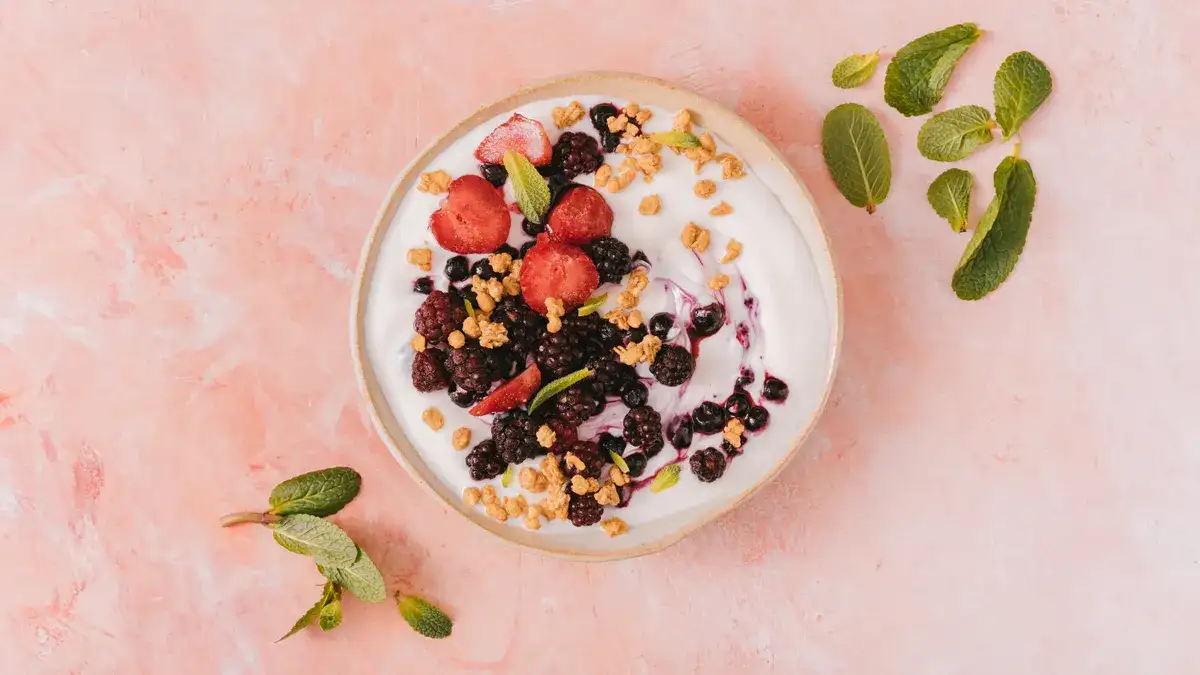
A heart-healthy no-cook breakfast is one that gives you protein, fiber, and mostly unsaturated fats without a lot of added sugar or sodium.
That sounds simple, but most grab-and-go breakfasts fail in one of three ways. They are mostly refined grain, like a plain bagel. They are mostly sugar, like a flavored yogurt cup with a sweet topping. Or they are mostly fat, but not the kind that helps, as in pastries or heavily salted nut mixes.
The easiest fix is to use a 3-part structure:
- Protein base — Greek yogurt or cottage cheese.
- Fiber-rich fruit or whole grain — berries, apple slices, pear, or whole grain cereal.
- Fat with restraint — nuts, chia, flax, or a spoon of seed butter.
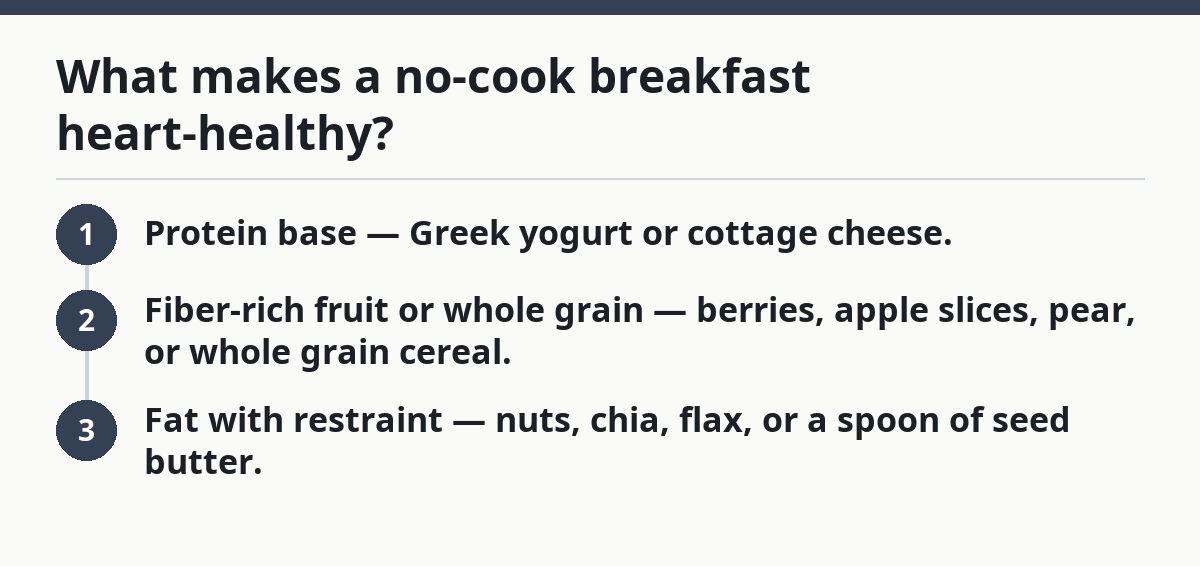
That structure matters because it slows digestion and helps the meal feel complete. It also keeps breakfast from turning into a snack that disappears in 15 minutes. The American Heart Association’s general advice on heart-healthy eating supports this pattern: emphasize fruits, vegetables, whole grains, lean protein, and unsaturated fats, while limiting added sugars and sodium.
The one group this approach is not for is anyone trying to build a very low-carb breakfast. A fruit-and-cereal bowl can still be heart-conscious, but it will not fit a strict keto plan. It also does not solve every blood sugar issue by itself; if you have diabetes or another condition that changes how you eat, a registered dietitian or clinician should steer the plan.
7 no-cook breakfast combinations that actually work
These breakfasts work because each one can be assembled in a bowl, cup, or container with no heat and no waiting. The best heart-healthy breakfasts that require no cooking also tend to be the ones you can repeat without needing a new shopping list every morning.
1) Greek yogurt, berries, and walnuts
Use 3/4 to 1 cup plain Greek yogurt, 1/2 cup berries, and 1 to 2 tablespoons chopped walnuts. The yogurt gives protein, the berries bring fiber and volume, and the walnuts add crunch plus unsaturated fat.
This is the cleanest answer if you want something fast and light but not flimsy. The drawback is obvious: plain yogurt tastes sharper than flavored yogurt, so people who expect dessert may dislike it. Sweetened yogurt can solve the taste problem, but it usually adds sugar you do not need. If you want more flavor, add cinnamon or a few sliced strawberries instead of syrup.
2) Cottage cheese with sliced peaches and flax
Use 3/4 cup cottage cheese, 1/2 cup sliced fresh or thawed fruit, and 1 teaspoon ground flaxseed. Cottage cheese is high in protein, and fruit softens its saltier edge.
This is a strong choice for someone who wants a savory-leaning breakfast but still wants something easy. The trade-off is sodium. Cottage cheese varies a lot by brand, so a lower-sodium version is worth seeking out if you eat it often. This is not the breakfast for anyone who needs a dairy-free option, and it will feel heavy to people who prefer a lighter morning meal.
3) Whole grain cereal with milk and almonds
Choose a whole grain cereal with at least 3 grams of fiber per serving if you can find it, then add low-fat milk or unsweetened soy milk and a small handful of almonds. The point is not to chase the crunchiest cereal box; it is to choose one with real fiber and modest sugar.
This works well when you want something familiar. It is also one of the easiest no-cook breakfasts to make portable if you keep cereal in a small container and add milk at the last minute. The main downside is that many cereals marketed as “healthy” are still sweet. Read the label and skip anything that tastes like candy in disguise.
4) Apple or pear slices with seed butter and yogurt
Pair one piece of fruit with 1 to 2 tablespoons seed butter and a small cup of plain yogurt. The fruit gives fiber and water, the yogurt supplies protein, and the seed butter adds staying power.
This is a practical option for someone who wants a breakfast that feels like a snack tray. It is also useful if you do not like eating a bowl of dairy first thing. The drawback is calorie creep: seed butter is dense, and spooning in “just a little more” can turn breakfast into a heavy meal quickly. Keep the portion tight, especially if you already plan to eat a second breakfast later.
5) Chopped fruit with cottage cheese and pumpkin seeds
Use 1 cup melon, grapes, or berries with 1/2 to 3/4 cup cottage cheese and 1 tablespoon pumpkin seeds. This gives texture without needing to cook or toast anything.
This is a good warm-weather breakfast or a desk breakfast that needs to stay cold in a cooler bag. It is less satisfying for people who want something sweet and grain-based. The seeds help, but they are not a substitute for a true whole grain if you need more lasting fullness. It also depends on cold storage, so it is not ideal for a commute without an insulated lunch bag.
6) Greek yogurt bowl with oats, fruit, and chia
Stir 1/4 cup dry oats into 1 cup Greek yogurt, then top with berries and 1 teaspoon chia seeds. The oats soften enough in the yogurt, even without cooking, and chia adds fiber.
This is a smart option when you want a thicker breakfast that feels more substantial than fruit and yogurt alone. It is not the same as overnight oats, which belong on a different page; here, the oats are simply mixed in and eaten right away or after a short rest. The drawback is texture. Some people love the chew, others find dry oats in yogurt unpleasant. If that is you, this is not your breakfast.
7) Banana with nut butter and a side of yogurt
Spread 1 tablespoon nut or seed butter on a banana, then add a small cup of plain yogurt on the side. It takes about 3 minutes and gives you a better balance than a banana alone.
This is the emergency breakfast for mornings when the pantry is thin. It is portable, cheap in a broad sense, and easy to eat on the way out. The weak point is that a banana plus nut butter can still leave some people hungry before lunch unless the yogurt portion is solid. Choose this when speed matters more than variety.
How do I build a filling no-cook breakfast?
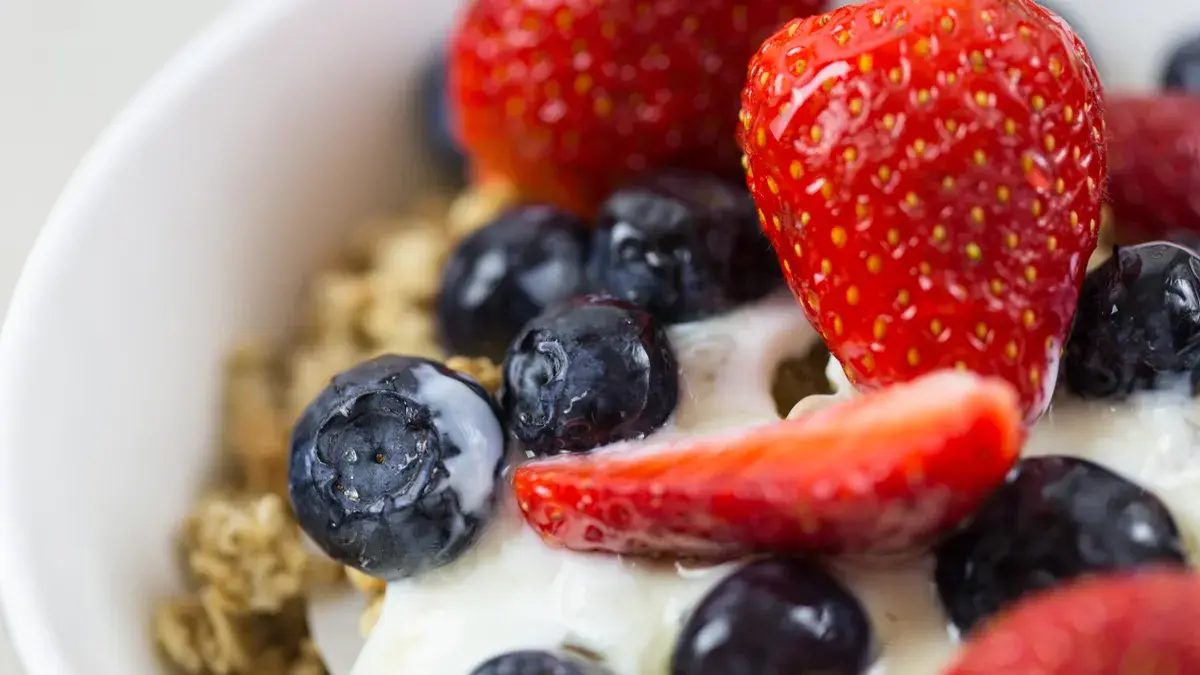
A filling no-cook breakfast starts with 15 to 25 grams of protein, then adds fiber and a measured fat source.
That is the easiest way to stop “healthy” breakfast from becoming “hungry again by 10 a.m.” The formula is simple enough to repeat without measuring every gram forever:
- Pick one protein base, such as 3/4 to 1 cup Greek yogurt or 3/4 cup cottage cheese. That gives the meal structure.
- Add one high-fiber fruit, such as 1/2 cup berries, one apple, or one pear. This adds volume without making the meal heavy.
- Choose one carbohydrate anchor, such as 1/2 cup whole grain cereal or 1/4 cup dry oats mixed in. This keeps the meal from feeling like a snack only.
- Finish with one fat source, usually 1 tablespoon nuts, seeds, or seed butter. This adds staying power without needing cooking.
- Stop there. A second handful of nuts or another spoon of yogurt is where “balanced” starts turning into oversized.
The common mistake is building breakfast from fruit alone or cereal alone. Fruit by itself is refreshing, but it rarely lasts. Cereal by itself often digests fast, especially if it is sweetened. The fix is not more food across the board; it is better pairing.
If you eat breakfast before a workout, the same pattern still works, but keep it lighter on fat and fiber if your stomach is sensitive. If you have reflux, high-fat add-ins like lots of nut butter may make the meal less comfortable. That is a personal tolerance issue, not a moral one. The right breakfast is the one you will actually eat consistently.
Portable breakfast ideas for the door, desk, or commute
Portable no-cook breakfasts travel best in a lidded container, a small spoon, and, if needed, an insulated bag with an ice pack.
That matters because a breakfast that works at the kitchen table can fail badly in a backpack. Dairy needs cold storage. Fruit leaks. Granola can go stale. The best portable breakfasts keep the parts separate until you are ready to eat.
A few reliable formats:
- Yogurt cup + topping container: Pack plain Greek yogurt in one container and berries, nuts, or seeds in another. This keeps the texture from turning watery and sad.
- Cottage cheese box: Use a small, sealed container with fruit on top or on the side. This is the simplest high-protein portable breakfast.
- Cereal kit: Measure whole grain cereal into a dry container and bring milk separately, or buy shelf-stable unsweetened milk if you use it.
- Fruit + seed butter pack: An apple, a banana, or pear travels well with a small, portioned container of nut or seed butter.
- Dairy-free option: Fruit, nuts, and a whole grain cereal packet can work without refrigeration for the first hour or so, but the meal is less protein-rich than the dairy options.
The mistake here is trying to travel with a bowl already mixed and expecting it to survive 45 minutes untouched. It usually will not. Another mistake is picking a breakfast that needs a knife, a blender, or a hot station. If the whole point is no cooking, a portable breakfast should fit into one hand and one container.
The mistakes that make no-cook breakfasts worse, not better
The most common mistakes are too much sugar, too little protein, and too much salt from packaged foods.
The fixes are straightforward, but each mistake has a cost.
Mistake 1: choosing flavored yogurt as the base.
Cost: breakfast becomes dessert quickly, and added sugar can climb without making you fuller.
Do this instead: buy plain Greek yogurt and add fruit, cinnamon, or a small spoon of nuts.
Mistake 2: treating granola like a free food.
Cost: many granolas are calorie-dense and sweet enough to overwhelm an otherwise solid bowl. If you have diabetes or another condition that affects blood sugar, check with a registered dietitian or clinician before using it often.
Do this instead: use a small sprinkle, not a second cereal layer, and check the package label or the American Heart Association guidance on added sugars and sodium.
Mistake 3: skipping protein because fruit “feels light.”
Cost: you get hungry fast, then end up snacking before lunch.
Do this instead: pair fruit with yogurt, cottage cheese, or a measured serving of nut butter.
Mistake 4: leaning on salted nuts or salty cheese.
Cost: sodium rises faster than most people expect, especially if the rest of the day includes packaged meals.
Do this instead: choose unsalted nuts when you can and keep the cheese portion modest.
Mistake 5: making breakfast so “healthy” that it tastes punishing.
Cost: you stop eating it after 3 mornings.
Do this instead: keep one element pleasant, such as ripe fruit or a favorite cereal with decent fiber.
A generic article often says “use healthy ingredients” and stops there. That is not enough. The better rule is to make the breakfast boringly repeatable. If it only works when you are in the mood, it is not a useful breakfast.
What should I keep on hand so this stays easy?
Keep 6 to 8 staples in the fridge and pantry, and you can assemble breakfast in under 5 minutes most mornings.
A practical no-cook setup is simple:
- Plain Greek yogurt
- Cottage cheese
- Fresh fruit like berries, apples, bananas, pears, or peaches
- Unsalted nuts
- Seed butter
- Whole grain cereal
- Ground flax or chia
- Low-fat milk or unsweetened soy milk
This is not a shopping list for perfection. It is a short list that lets you mix and match without thinking too hard at 7 a.m. If you buy one or two fruit options each week and refill the protein base twice, breakfast stops being a separate project.
If you want the most efficient shelf-stable trio, keep whole grain cereal, seed butter, and nuts. If you want the most useful refrigerated trio, keep Greek yogurt, cottage cheese, and fruit. The pantry-only route is less protein-rich, but it still beats skipping breakfast or grabbing a pastry from the gas station.
The one group this setup does not serve well is someone who cannot tolerate dairy and also does not like seed butter or cereal. In that case, breakfast becomes more limited, and a dietitian can help you find a pattern that is still heart-conscious without being repetitive.
What is a good heart-healthy breakfast without cooking?
A good heart-healthy breakfast without cooking is usually plain Greek yogurt or cottage cheese paired with fruit, nuts, or whole grain cereal. That combination gives protein, fiber, and unsaturated fat without requiring heat. Keep added sugar low and choose unsalted or lightly processed ingredients when possible.
Drafted with AI; not yet reviewed by a person.