Last updated: November 20, 2026
Quick Answer: Most heart-healthy meals feel fuller with 3 texture layers: one soft base, one chewy element, and one crisp topper. How to Layer Texture in Heart-Healthy Meals So They Feel More Filling is about using contrast so the meal feels satisfying without extra salt or heavy sauces. The steps below show how to build texture layers in meals that keep a plate interesting from first bite to last.
Heart-healthy meals feel flat when every bite is the same texture. Layer crunch, creaminess, chew, and roasted edges so the meal feels fuller without leaning on extra salt or heavy sauces. The steps below show how to build texture layers in meals that keep a plate interesting from first bite to last.
In short: a filling heart-healthy meal usually needs at least two contrasting textures, one temperature contrast, and one ingredient that asks for chewing.
Key Takeaways
- Texture can make a simple meal feel more complete.
- Crunch, creaminess, chew, and browned edges do different jobs on the plate.
- Beans, nuts, seeds, whole grains, plain yogurt, avocado, and roasted vegetables each add a different feel.
- Soft food isn’t a problem if you pair it with something crisp or chewy.
- The goal is not more food. It’s better contrast.
Start with one soft base and one firm contrast
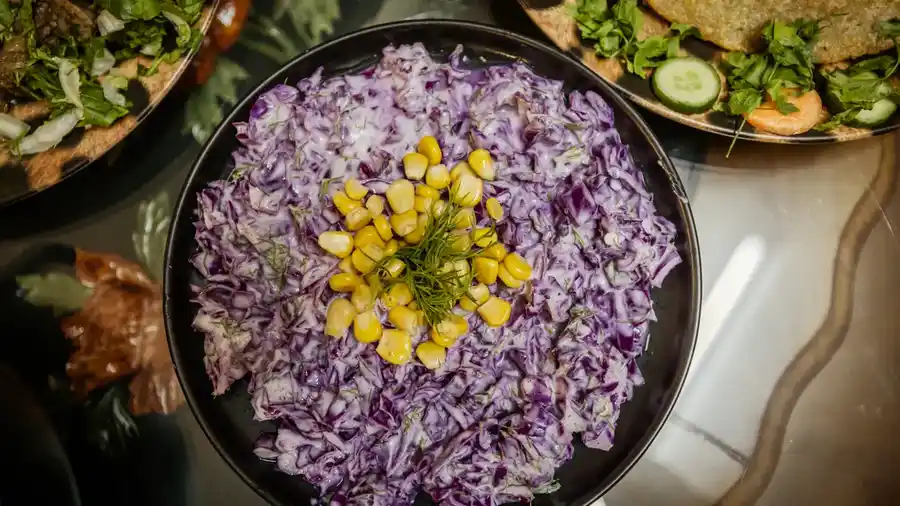
Picture this: you’ve made a bowl of beans and vegetables, but halfway through it still feels like baby food. The fix is not more sauce. It’s one soft base plus one firm contrast so the mouth keeps getting a different signal.
Start with a base such as beans, plain yogurt, mashed avocado, or cooked grains. Then add one texture that stands apart, like toasted nuts, seeds, raw vegetables, or roasted edges on the vegetables you already cooked. A meal with only soft parts can feel finished for a minute, then fade fast. A meal with contrast holds attention longer.
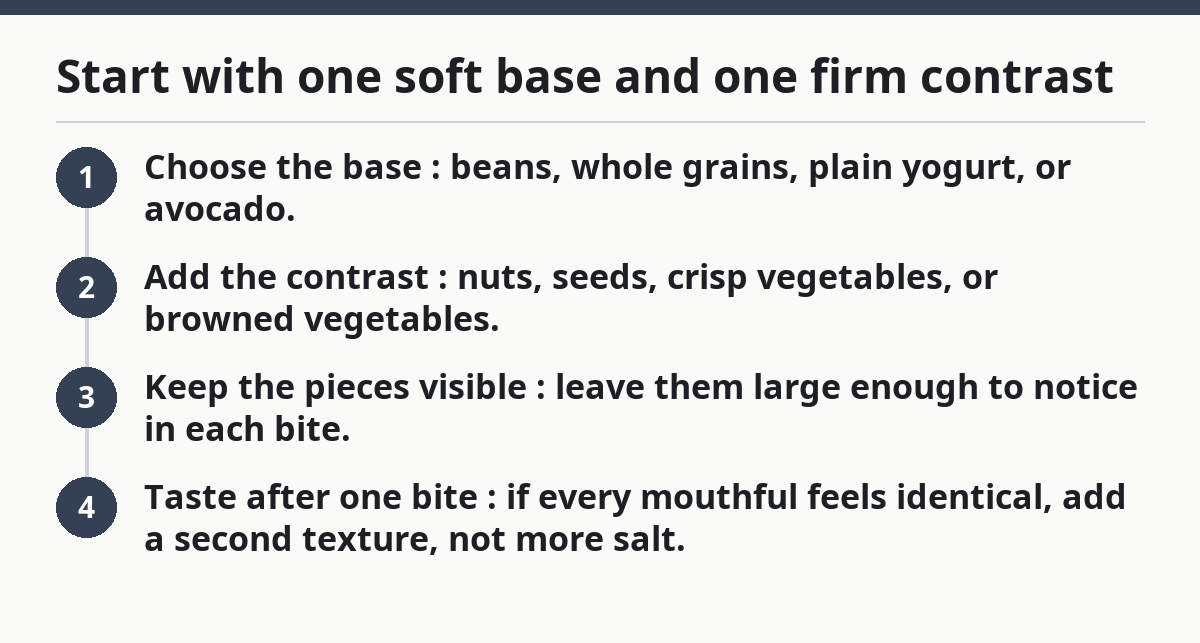
- Choose the base: beans, whole grains, plain yogurt, or avocado.
- Add the contrast: nuts, seeds, crisp vegetables, or browned vegetables.
- Keep the pieces visible: leave them large enough to notice in each bite.
- Taste after one bite: if every mouthful feels identical, add a second texture, not more salt.
That last part matters. A meal that looks mixed together can lose its best feature. If you stir everything into one paste, the crunch disappears. You still get flavor, but you lose the chew that helps the meal feel more satisfying. The American Heart Association’s heart-healthy eating guidance is a good reference point for the bigger picture, and the texture work here fits inside that frame.
How do you add crunch without making the meal feel heavy?
Crunch comes from small dry pieces added at the end, not from coating the whole plate in fried toppings. That’s the easiest way to make a meal feel brighter without turning it greasy.
Use 2 to 3 tablespoons of chopped nuts or seeds on a bowl, salad, or stew. Use them plain, lightly toasted, or mixed with herbs. Sunflower seeds, pumpkin seeds, chopped walnuts, and sliced almonds all work because they resist the fork and break in the mouth. If you want more volume, add sliced cucumber, radish, celery, shredded cabbage, or raw bell pepper on the side.
Here’s the catch: crunch loses its job when it sits in liquid for too long. If you put seeds into soup 10 minutes before serving, they soften and stop doing much. Put them on at the table instead.
- Best crunch add-ins: nuts, seeds, raw vegetables, toasted whole-grain crumbs.
- Best time to add them: right before eating.
- Worst place to hide them: in a sauce that sits for 20 minutes.
- Best amount: enough to notice in most bites, not enough to bury the base.
A few people try to solve blandness with only more crunch. That can backfire. If the meal has no creamy part or no chew, it can still feel thin. Crunch works best as the bright note, not the whole song. Think topping, not foundation.
Use creaminess to make the plate feel fuller
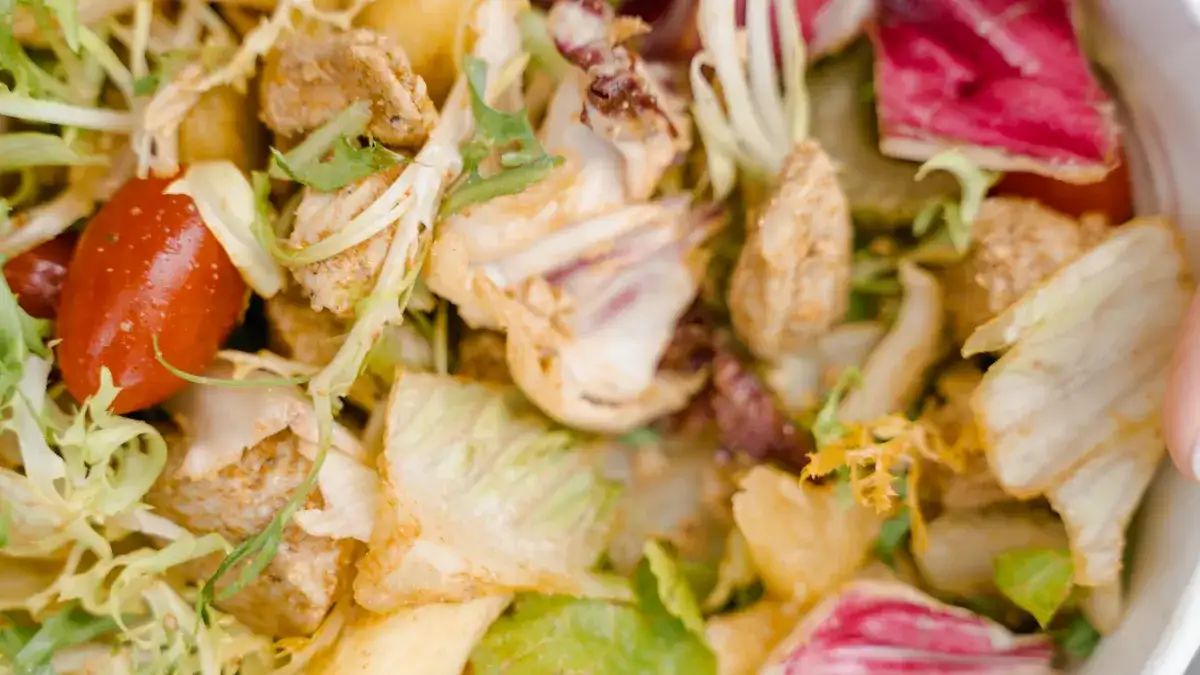
Creaminess makes a meal feel rounder, but it works best when the creamy part is plain and the texture still has something to push against. That means plain yogurt, mashed avocado, or a smooth bean puree can help, as long as the rest of the plate is not smooth too.
Plain yogurt is useful because it can act like a cool sauce or dip. Spoon it over roasted vegetables, stir it into a grain bowl, or serve it next to crunchy vegetables as a dip. Avocado does a similar job with more body. A few slices on toast or a bowl give the meal a soft, rich mouthfeel without needing heavy cream.
The mistake is turning the whole meal silky. If everything is blended, the food can feel easy to eat but oddly unsatisfying. The mouth wants a little resistance. That is why creamy food pairs well with seeds, nuts, roasted vegetables, and whole grains that still hold shape.
- Plain yogurt adds tang and a cool finish.
- Avocado adds soft body and a dense feel.
- Bean puree adds thickness without needing butter.
- Crisp garnish keeps the creamy part from feeling flat.
If dairy does not work for you, plain yogurt is not the only option. A spooned bean mash or avocado can give the same soft contrast. The point is the texture shift, not the ingredient label.
Which chewy foods make a meal feel more complete?
Chew gives a meal lasting presence, and whole grains and beans do that job better than soft starches alone. A dish that asks for a few more bites usually feels more like a meal and less like a snack.
Use whole grains with real bite: brown rice, farro, barley, quinoa, or oats cooked so they stay distinct. Pair them with beans, lentils, roasted vegetables, or yogurt. Beans also add chew, especially when they are left whole instead of mashed. They bring both softness and resistance in the same spoonful.
Now, you might be wondering whether chew matters if the food tastes good. It does. Flavor draws you in; texture keeps you there. A plate of very soft food can be pleasant and still leave you reaching for something else an hour later. A firmer grain or bean changes that.
- Cook grains to stay distinct: stop when they’re tender but not mushy.
- Keep some beans whole: mash only part of them if you want thickness.
- Mix in roasted vegetables: they add bite at the edges and softness in the center.
- Avoid over-stirring: too much stirring breaks the grain structure.
Chewy food is not the same as tough food. You do not want leathery vegetables or undercooked grains. You want enough resistance to slow the bite down a little. That small pause is part of what makes the meal feel complete.
Add roasted edges and temperature contrast
Roasted edges and temperature contrast make a meal feel layered before the first bite even reaches your mouth. A warm roasted vegetable next to a cool yogurt spoonful can change the whole plate.
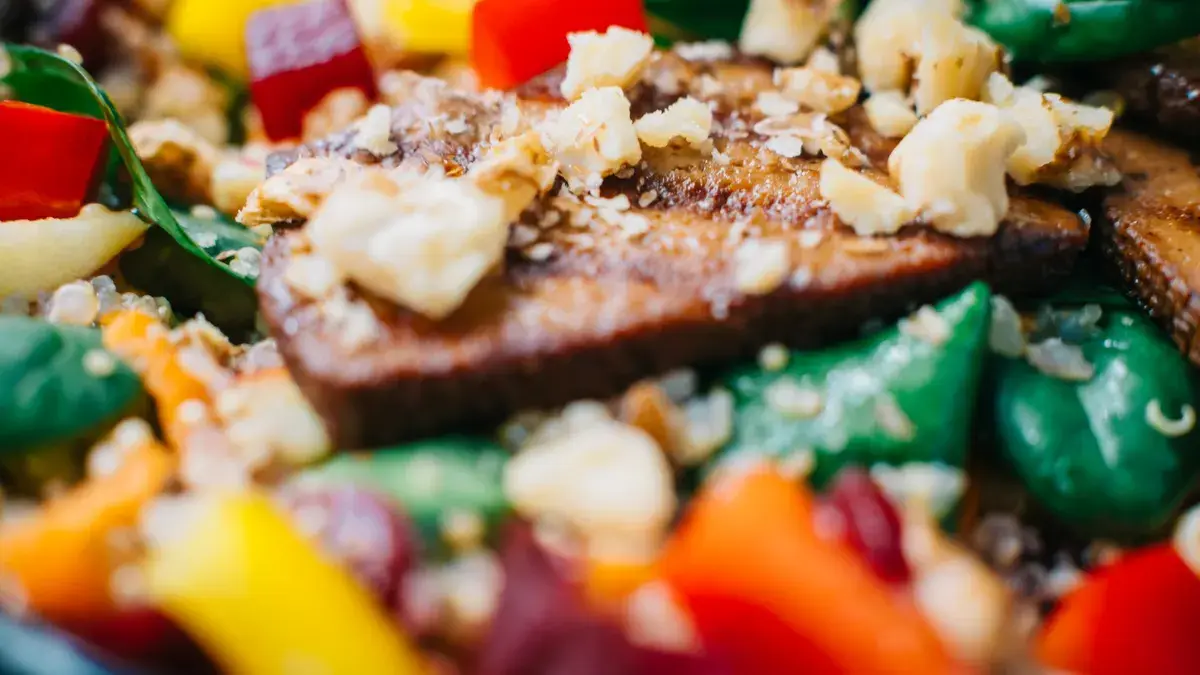
Roast vegetables until they show browned edges, not just softened flesh. That browning gives you a drier, firmer bite at the outside and a sweeter inside. Think carrots, broccoli, cauliflower, Brussels sprouts, zucchini, or sweet peppers. The goal is not char for its own sake. It’s the mix of crisp edge and tender center.
Then add one cool element. Plain yogurt, chilled avocado, or a raw vegetable garnish gives you a temperature break. The contrast matters because the mouth notices change fast. A hot, soft plate can feel one-note after a few bites. A cool topping resets it.
- Roast at a hot oven until the edges brown.
- Serve one cool component on the side or on top.
- Leave some vegetables in chunks so the edges stay visible.
- Use texture, not only seasoning, to finish the dish.
This is one place people often go wrong with heart-healthy cooking. They think the fix for satisfaction is richer sauce. The better fix is better browning. Browned vegetables bring more than taste; they bring shape, slight crispness, and the sense that the meal has layers.
For the cooking methods behind this kind of browning, the hub on Heart-Healthy Cooking Methods — The Complete Guide ties the technique to the bigger picture without repeating this texture-focused page.
How do you build texture layers in one meal?
You build texture layers in one meal by giving each part of the plate a job, then stopping before the textures blur together. The simplest version is soft base, chewy middle, crisp top.
Use a bowl, plate, or shallow dish and build in that order. Start with a base like whole grains, beans, plain yogurt, or avocado. Add roasted vegetables or another chewy element. Finish with nuts, seeds, or a raw garnish. If the meal needs a cool note, add it at the end so it stays separate.
- Set the base with a soft or creamy element.
- Add the main body with grains, beans, or roasted vegetables.
- Finish with the topper using nuts, seeds, or crisp vegetables.
- Taste for contrast from the first bite to the last.
- Adjust one layer only if the meal feels flat.
A common mistake is trying to fix every texture problem with one ingredient. That does not work well. If the meal is too soft, a spoonful of yogurt on top won’t solve it. If it’s too dry, more seeds won’t help. The fix is matching the right texture to the gap.
This is also why the same meal can feel different on different days. If the vegetables are roasted well and the garnish is added late, the dish feels fuller. If everything was mixed in advance, it often feels duller. The ingredients may be the same. The texture plan is not.
Common texture mistakes that make healthy meals feel thin
The biggest texture mistake is mixing everything into one soft layer, because it erases the bite that makes food feel filling. That leaves the plate with flavor but not enough variation.
Another mistake is leaning on smooth foods alone. Soup, mashed beans, yogurt sauces, and avocado all have a place, but too many of them in one dish can make it feel narrow. You still finish the plate, yet it does not register as a real meal. A third mistake is adding crunch too early. Nuts and seeds soften fast in warm liquid or steam, so the texture drops off before the plate is done.
- Too much blending removes chew.
- Too much sauce softens the top layer.
- Too much advance prep kills crispness.
- Too little browning leaves vegetables flat.
A better habit is to build in layers, then wait to finish the plate. Keep the crisp parts separate until the last minute. Keep the creamy part modest. Keep at least one ingredient that makes you chew for a few seconds. Those small choices do more than a long ingredient list.
This is not the right approach for someone who wants every bite to be fully smooth. It is for the reader who wants a heart-healthy meal that still feels like dinner, not a warmed-up puree. That trade-off is the whole point.
Why do some healthy meals feel unsatisfying?
Some healthy meals feel unsatisfying because they are all one texture, usually soft. A bowl of plain grains, steamed vegetables, or blended soup can be perfectly fine and still leave you wanting more. Adding crunch, chew, and roasted edges gives the mouth something to keep noticing.
How do you make a soft meal more filling?
A soft meal feels more filling when you pair it with a contrasting texture. Add nuts, seeds, raw vegetables, or toasted whole grains to create bite. A spoonful of plain yogurt or avocado can help too, but it works best when something on the plate still needs chewing.
What textures make dinner feel more complete?
Dinner feels more complete when it has at least one creamy element, one chewy element, and one crisp or browned element. That mix gives the plate range from the first bite to the last. Roasted vegetables, beans, whole grains, plain yogurt, avocado, nuts, and seeds all help build that structure.
Drafted with AI; not yet reviewed by a person.