Last updated: November 20, 2026
Heart-Healthy Dinners — The Complete Guide
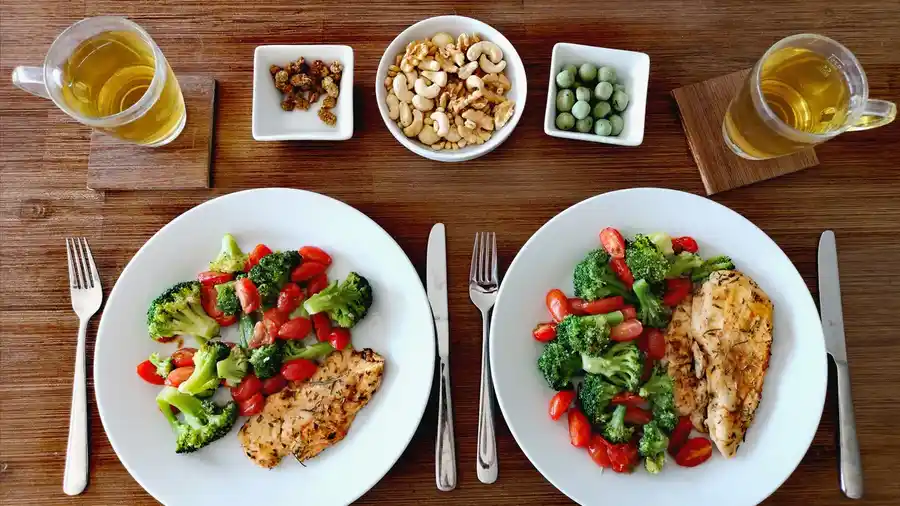
Quick answer: A heart-healthy dinner usually works best as a 3-part plate: half non-starchy vegetables, a quarter lean protein, and a quarter high-fiber starch. In Heart-Healthy Dinners — The Complete Guide: related questions, that simple pattern is the common thread for people who want a steadier meal for both heart health and diabetes.
Heart-healthy dinners are meals built around vegetables, beans, fish, whole grains, and modest portions of lean protein, while keeping sodium, saturated fat, and added sugar in check. For a person looking for heart-healthy diabetic recipes, the easiest path is a plate that is filling, steady on blood sugar, and not heavy on salt or fried food.
American Heart Association healthy eating guidance and American Diabetes Association nutrition guidance both point toward the same dinner pattern: more vegetables, more fiber, and fewer highly processed ingredients.
Key takeaways
- A heart-healthy dinner is less about one “superfood” and more about the full plate.
- Dinners that support heart health and diabetes often use high-fiber foods, lean protein, and simple cooking methods.
- Sodium, saturated fat, and large refined-carb portions are the main things to watch.
- A dinner that tastes bland usually needs better seasoning, not more salt.
- If kidney disease, food allergies, or insulin dosing issues are in play, a clinician or registered dietitian should guide the plan.
What makes a dinner heart-healthy?
A heart-healthy dinner is one that supports blood vessel health without overshooting salt, saturated fat, or calories from low-fiber foods. The American Heart Association’s guidance on healthy eating emphasizes vegetables, fruits, whole grains, beans, nuts, fish, and lean protein, while limiting sodium, saturated fat, and added sugars. See the AHA’s healthy eating guidance here: https://www.heart.org/en/healthy-living/healthy-eating
That does not mean every dinner needs to be plain chicken and steamed broccoli. It means the main part of the plate should come from foods that bring fiber, potassium, and unsaturated fats, while the smaller part comes from protein and starch. For a person with diabetes, that structure matters because it helps keep the meal steadier and easier to predict.
A useful rule is simple: build the plate around non-starchy vegetables first, then add protein, then add a measured starch such as brown rice, quinoa, sweet potato, or whole-grain pasta. That order makes dinner more filling without leaning on a huge serving of refined grains. It also gives the meal a better chance of fitting into a blood sugar plan.
This approach is not ideal for someone who wants a restaurant-style dinner with creamy sauces, bread baskets, and large portions of cheese. It is also not the right fit for someone who needs a very low-sodium renal diet unless the whole meal is adjusted with professional help. The basic idea stays the same, but the details can change.
How should a heart-healthy diabetic dinner be built?
A heart-healthy diabetic dinner should usually combine fiber, protein, and a controlled amount of carbohydrate. The American Diabetes Association’s nutrition guidance points toward nutrient-dense foods and away from added sugars and highly processed foods. Their nutrition page is here: https://diabetes.org/food-nutrition
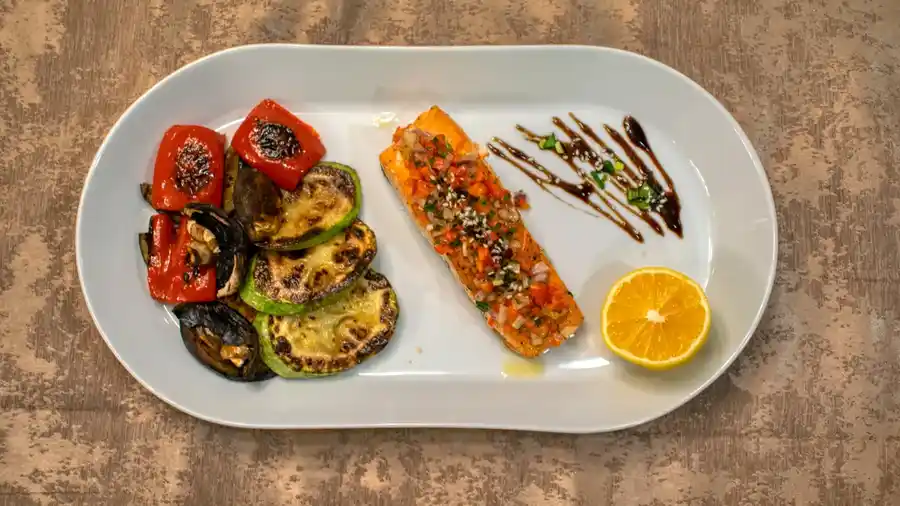
A simple plate method works well. Fill about half the plate with non-starchy vegetables such as broccoli, green beans, cauliflower, peppers, spinach, zucchini, or salad. Put a quarter of the plate to a lean protein like fish, skinless poultry, tofu, eggs, or beans. Use the last quarter for a high-fiber starch if you want one.
That layout matters more than chasing a perfect recipe. A salmon fillet with roasted Brussels sprouts and a small scoop of quinoa can be a better dinner than a “light” pasta dish that still leans on white pasta and a salty sauce. The plate method also makes dinner easier to repeat on busy nights because it does not require special ingredients every time.
The one part that many generic articles miss is consistency. A dinner that swings from very low-carb one night to bread, pasta, and dessert the next can be harder to plan around. For many people, a steady pattern works better than extremes. If blood sugar is already difficult to manage, a practical move is to keep portions consistent and ask a diabetes care team how that fits with medication timing.
Which foods help most at dinner?
The most useful dinner foods are the ones that do more than one job at once: they fill you up, support heart health, and fit a diabetes plan. Beans, lentils, fish, vegetables, oats, barley, brown rice, quinoa, nuts, seeds, avocado, and olive oil all belong on the short list.
Beans and lentils bring fiber and protein in the same bowl. That makes them useful in soups, grain bowls, salads, and chili-style dinners. Fish, especially oily fish, is often chosen because it can replace red or processed meat without losing much satisfaction. Vegetables add volume, color, and fiber with very few calories from starch.
The American Heart Association recommends fish as part of a heart-healthy pattern, and that fits neatly with dinner formulas that lean on vegetables and whole grains. For diabetes, meal planning guidance from the ADA can help keep the carb portion measured.
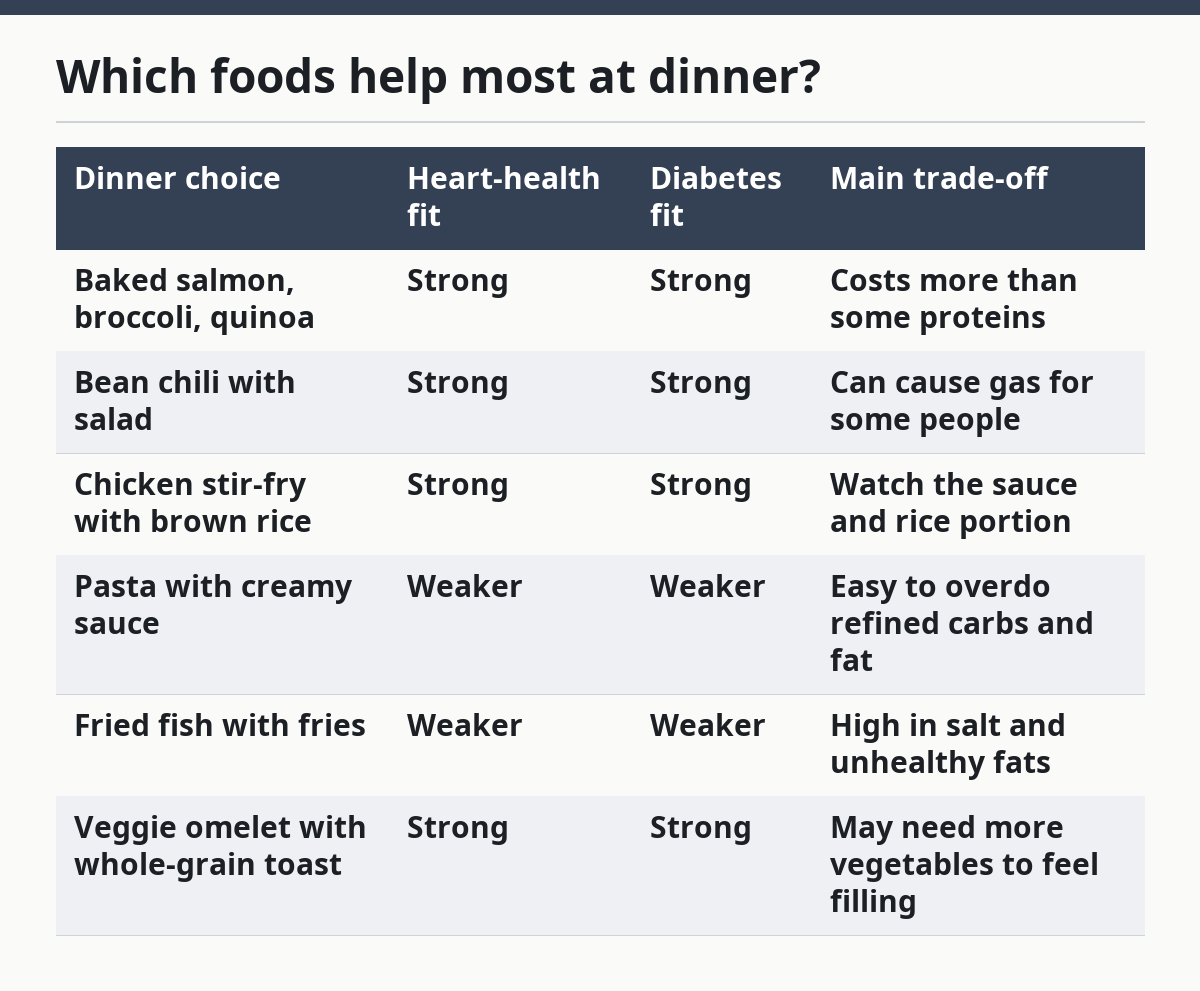
Here is a practical comparison of common dinner choices:
| Dinner choice | Heart-health fit | Diabetes fit | Main trade-off |
|---|---|---|---|
| Baked salmon, broccoli, quinoa | Strong | Strong | Costs more than some proteins |
| Bean chili with salad | Strong | Strong | Can cause gas for some people |
| Chicken stir-fry with brown rice | Strong | Strong | Watch the sauce and rice portion |
| Pasta with creamy sauce | Weaker | Weaker | Easy to overdo refined carbs and fat |
| Fried fish with fries | Weaker | Weaker | High in salt and unhealthy fats |
| Veggie omelet with whole-grain toast | Strong | Strong | May need more vegetables to feel filling |
That is where the real trade-off shows up: the “good” dinner on paper is not always the one a person will eat again next week. A meal that tastes good enough to repeat beats a perfect meal that sits untouched. The goal is a routine, not a one-night performance.
What should be limited at dinner?
The main things to limit are sodium, saturated fat, added sugar, and oversized portions of refined starch. Those four are the usual reasons a dinner looks healthy but does not act healthy.
Sodium is the easiest one to miss. It hides in bottled sauces, seasoning packets, canned soups, deli meat, frozen meals, and takeout. A dinner can look vegetable-heavy and still carry more salt than expected if the sauce is doing all the work. The fix is not flavorless food; it is using garlic, onion, pepper, cumin, chili, lemon, vinegar, and herbs more often.
Saturated fat usually shows up in fatty meats, butter-heavy sauces, cream, cheese-heavy casseroles, and fried foods. That does not mean cheese is banned. It means cheese should be a finishing touch, not the base of the meal.
Added sugar is another hidden issue, especially in glazes, bottled teriyaki, sweetened yogurt-based sauces, and packaged marinades. Even a dinner that starts with fish or chicken can become a poor fit if the sauce is sugar-heavy.
The last issue is portion creep. A “healthy” grain can still work against a diabetes plan if the serving is too large. The same goes for potatoes, rice, and pasta. The food itself is not the problem; the amount is.
What are the easiest heart-healthy dinner formulas?
The easiest formulas are the ones that can be repeated without a recipe book. A protein, a vegetable, and a smart starch is the simplest structure, and it works because it is flexible.
Three reliable dinner formulas are:
- Sheet-pan dinner: salmon or chicken with broccoli, carrots, onions, and olive oil.
- Skillet dinner: tofu or turkey with peppers, zucchini, and cauliflower rice.
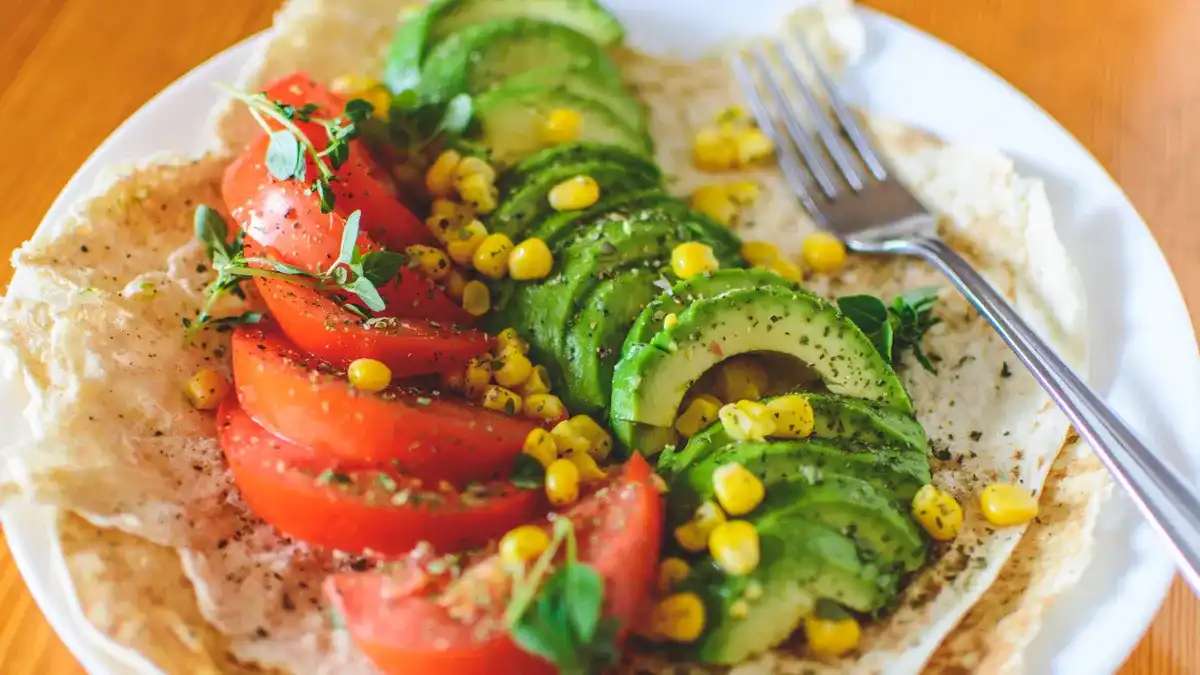
- One-bowl dinner: beans or lentils with greens, tomatoes, avocado, and a small scoop of whole grain.
These formulas matter because they reduce decision fatigue. A person does not need a new meal every night; they need a few meals that can rotate. That is especially helpful for someone balancing diabetes, because predictable meals make portions easier to judge.
The downside is repetition. If the same pattern appears too often, dinner gets boring and people drift back to takeout. That is why seasoning changes matter. A sheet-pan meal can taste very different with lemon and dill, chili powder and cumin, or garlic and rosemary. The ingredients stay the same, but the meal does not feel stuck.
How do you make dinner taste good without salt?
Dinner tastes better without much salt when acid, herbs, spices, and browning do the work. Lemon juice, vinegar, garlic, ginger, paprika, cumin, black pepper, oregano, basil, and fresh herbs can make a meal feel complete without leaning on a shaker.
Roasting helps because it concentrates flavor. So does searing a protein before it finishes in the oven or pan. A plain vegetable often becomes much more satisfying once it has browning on the edges. That matters because “healthy” food should still feel like dinner.
Texture is part of flavor too. A soft meal can feel dull even when it is seasoned well. Adding crunch from chopped nuts, toasted seeds, cucumbers, celery, or raw peppers can make a plate more satisfying. A drizzle of olive oil or a spoonful of avocado can also help a meal feel finished.
A common mistake is thinking a heart-healthy dinner has to be a low-fat, low-salt, no-fun meal. That is the wrong standard. The better standard is whether the meal is satisfying enough to repeat, with portions that still fit the person’s health plan.
A simple week of dinner ideas
A simple week of dinners should repeat a few patterns instead of reinventing the plate each night. That approach saves time and makes grocery planning easier.
Here is a practical rotation:
- Baked salmon, roasted broccoli, and quinoa
- Bean chili with a side salad
- Chicken stir-fry with peppers, onions, and brown rice
- Tofu and vegetable skillet with cauliflower rice
- Turkey lettuce wraps with avocado and tomatoes
- Lentil soup with a whole-grain slice of toast
- Veggie omelet with mushrooms, spinach, and whole-grain toast
This list works because it balances protein, fiber, and variety across the week. It also gives room for leftovers, which is often the difference between a plan that works and one that gets abandoned. Leftover roasted vegetables can become a grain bowl, a wrap filling, or a soup starter.
Because the plan is built around a few repeatable patterns, it is not the best fit for someone who hates leftovers or cannot tolerate beans, tofu, fish, or eggs. It is also not enough on its own for someone with a complex medical diet. In that case, a registered dietitian should help shape the menu around medication, kidney function, and personal food limits.
What is the bottom line?
A heart-healthy dinner is usually a simple plate built from vegetables, lean protein, and a measured starch, with salt and heavy sauces kept low. For people searching heart-healthy diabetic recipes, the useful formula is the one that keeps blood sugar steadier and still feels like real food.
A dinner does not need to be exotic or expensive to work. It needs a clear structure, a few reliable seasonings, and portions that match the person eating it. If a meal supports both the heart and diabetes plan, it is doing its job.
Related questions about heart-healthy dinners
What is the best dinner for heart health and diabetes?
A dinner for heart health and diabetes is usually one built from non-starchy vegetables, lean protein, and a controlled portion of high-fiber carbohydrate. A plate with salmon, roasted vegetables, and quinoa is a strong example because it gives protein, fiber, and better texture without relying on heavy sauce.
Are potatoes okay in a heart-healthy dinner?
Potatoes can fit, but portion size matters and the cooking method matters. Baked or roasted potatoes are better than fried ones, and they usually work best with the skin on and without piles of butter, cheese, or sour cream.
Is pasta ever heart-healthy?
Pasta can fit if the portion is modest and the rest of the plate is built well. Whole-grain pasta with vegetables, beans, and a tomato-based sauce is a better choice than large servings of white pasta with cream sauce.
What should I cook if I need a low-salt dinner?
A low-salt dinner usually starts with fresh ingredients and simple seasoning. Roasted chicken or tofu with vegetables, lemon, garlic, pepper, and olive oil is a practical place to begin, since the flavor comes from the food instead of the salt.
Do I need to avoid all fat at dinner?
No, fat does not need to be removed; the type of fat matters more. Olive oil, nuts, seeds, avocado, and fish are common choices in a heart-healthy pattern, while heavy cream, butter-heavy sauces, and fried foods are the ones that usually need limits.
Drafted with AI; not yet reviewed by a person.