Last updated: November 19, 2026
Quick Answer: build a weekly meal schedule with 2 cook nights, 2 leftover nights, 1 backup night, and 1 sheet-pan or grain-bowl meal so you stop deciding dinner from scratch every day.
A heart-healthy meal schedule for a busy week without cooking every night should turn your busiest nights into repeatable meals, not perfect ones. The steps below show how to map the week, shop once, and keep dinner moving without cooking every night.
What a heart-healthy weekly meal schedule actually does
A heart-healthy meal schedule for a busy week without cooking every night gives each night a job before the week starts. It decides what gets cooked, what gets reused, and what gets pulled from the fridge or freezer when time is short.
Because the schedule gets decided ahead of time, a written plan turns a 6:20 p.m. tired moment into a simple choice, not a fresh debate. That matters more than fancy recipes.
A good schedule is not the same thing as a strict meal plan. It leaves room for leftovers, swaps, and one night that needs almost no effort. That flexibility is what keeps it alive past Thursday.
- Cook-once, eat-twice: one dinner becomes two meals.
- Prep window: a 20- to 45-minute block for chopping, cooking, or portioning.
- Backup night: a night built for frozen portions, salad, or takeout.
If you want the broader system behind this, the hub on Heart-Healthy Meal Planning for Daily Routines fits this page well.
How do I make a heart-healthy meal schedule for a busy week?
You make a heart-healthy meal schedule for a busy week without cooking every night by choosing 3 anchor dinners, 2 leftover nights, 1 easy backup, and 1 free slot, then shopping to match that structure. That gives you dinner coverage for the full week without asking you to cook every night.
Because the schedule is set before the week starts, you can open the fridge on Sunday and see the week instead of a pile of random ingredients. That’s the goal. The schedule should reduce decisions, not create a second job.
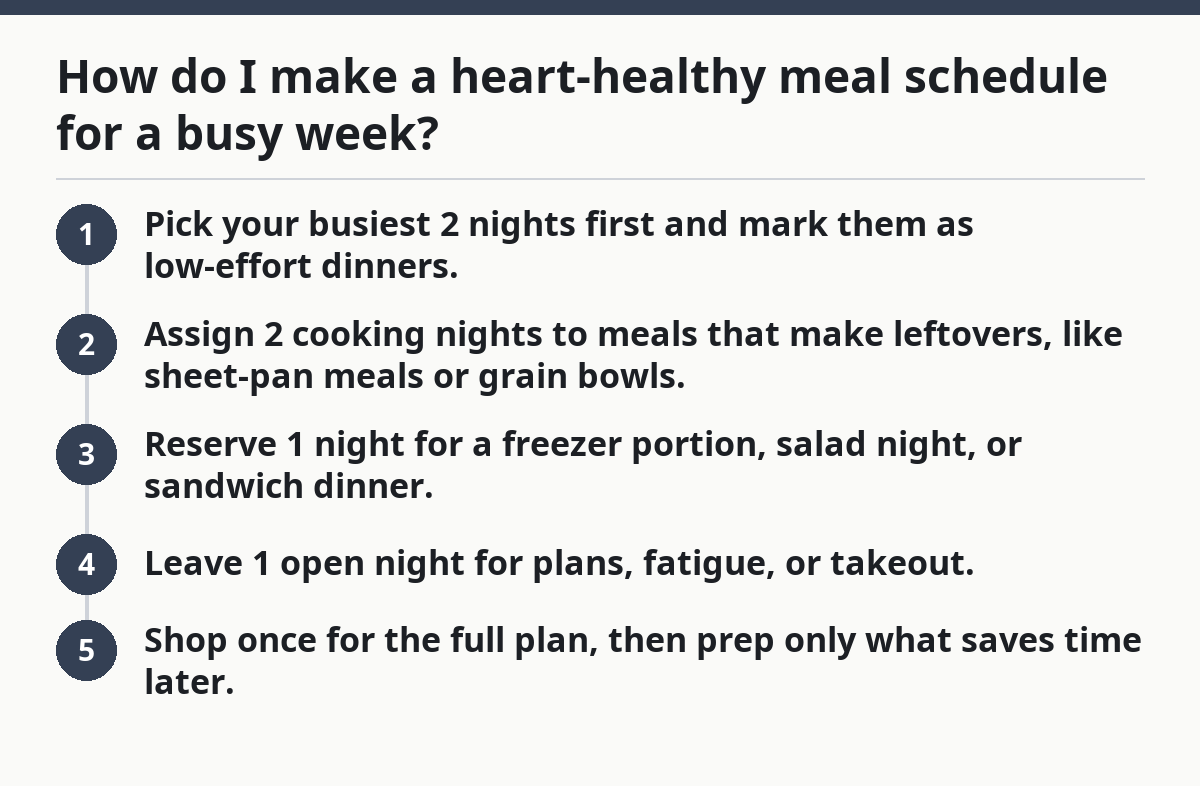
Use this order:
- Pick your busiest 2 nights first and mark them as low-effort dinners.
- Assign 2 cooking nights to meals that make leftovers, like sheet-pan meals or grain bowls.
- Reserve 1 night for a freezer portion, salad night, or sandwich dinner.
- Leave 1 open night for plans, fatigue, or takeout.
- Shop once for the full plan, then prep only what saves time later.
That pattern works because it keeps the week from collapsing after one missed night. It also keeps heart-healthy choices in reach: vegetables, beans, fish, chicken, whole grains, fruit, and unsalted nuts are easier to use when they already have a place on the calendar.
Build your week around 2 cook nights and 2 leftover nights
Two cook nights and two leftover nights are enough for most busy weeks. That ratio gives you fresh food without asking you to stand at the stove every evening.
When Monday is full, Tuesday is the first real opening, and Wednesday disappears again, cooking on Tuesday and Thursday lets each meal stretch into a second dinner. That cuts the week’s work almost in half.
A simple structure looks like this:
- Monday: backup night or leftovers.
- Tuesday: cook a sheet-pan dinner.
- Wednesday: eat the leftovers.
- Thursday: cook a grain bowl or soup base.
- Friday: eat the leftovers.
- Saturday: easy dinner or social night.
- Sunday: prep and shop.
Leftovers do not need to look identical. Roast chicken can become a grain bowl the next night. Beans and vegetables can move from a skillet to a salad. Cooked salmon can sit on greens with a whole-grain side. That keeps the food interesting without adding new cooking.
- Sheet-pan meals save dishes and work well with salmon, chicken, tofu, broccoli, carrots, and onions.
- Grain bowls stretch brown rice, farro, barley, or quinoa across two meals.
- Salads become a dinner when you add protein, beans, avocado, nuts, and a whole grain.
A common mistake is trying to make every night “fresh.” That sounds noble and usually fails by Wednesday. The cost is takeout, skipped dinners, or salt-heavy convenience food. Use leftovers on purpose instead.
For related planning help, see Heart-Healthy Dinner Ideas and Heart-Healthy Meal Prep on a Budget.
What should I prep on Sunday so weeknights stay easy?
You should prep the items that shorten weeknight cooking by at least 15 minutes. That usually means one grain, one protein, and a few washed or cut vegetables, not a full day of batch cooking.
With 30 to 45 minutes on Sunday and one clean counter, you can still set up the week if you choose the right tasks. The job is to remove friction, not to build an entire second kitchen shift.
Start with this short list:
- Cook one grain, such as brown rice, quinoa, or farro.
- Wash salad greens and hardy vegetables like peppers, carrots, cucumbers, and broccoli.
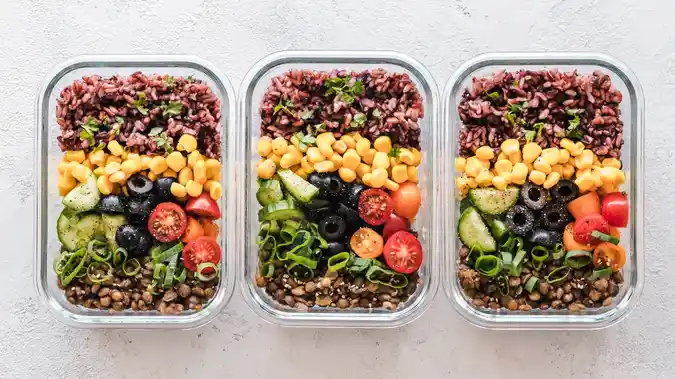
- Portion cooked food into meal prep containers for 2 to 3 days.
- Label one or two freezer portions for the backup night.
- Mix one dressing or sauce so a plain bowl turns into dinner fast.
Meal prep containers matter because they keep leftovers visible and easy to grab. If the food lives in one big pan, it gets forgotten. If it’s portioned, Wednesday dinner feels closer.
Use the freezer for one or two “rescue meals” only. A soup, chili, or cooked grain portion can save a night when work runs long.
A simple Sunday prep block
- 15 minutes: start a grain and wash produce.
- 15 minutes: roast vegetables or cook a protein.
- 10 minutes: portion leftovers into containers.
- 5 minutes: set out Monday or Tuesday ingredients.
On the flip side, don’t turn Sunday into an all-day cooking marathon. That usually breaks because real life shows up. A short prep block is easier to repeat next week.
Which heart-healthy dinners work best for a busy schedule?
The most practical heart-healthy dinners for a busy schedule are sheet-pan meals, grain bowls, salads with protein, and simple leftovers that reheat well. Those meals rely on a few core ingredients and hold up when you need to stretch them across 2 nights.
When you need dinner in 25 minutes, not 90, choose food that still looks like dinner after a day in the fridge. That means sturdy vegetables, lean protein, beans, and whole grains.
Good options include:
- Sheet-pan salmon with broccoli and sweet potatoes.
- Chicken and vegetable grain bowls over brown rice or quinoa.
- Bean salads with chopped vegetables, olive oil, lemon, and herbs.
- Turkey or lentil chili with a side salad.
- Stir-fry style bowls with frozen vegetables and tofu.
These meals work because they share ingredients. A bunch of spinach can go into a salad, then into a grain bowl the next night. A tray of roasted carrots can slide from dinner plate to lunch container.
A heart-healthy schedule also keeps sodium lower by relying less on packaged entrées and more on plain ingredients, home-cooked grains, and simple sauces. The American Heart Association offers guidance on sodium and overall eating patterns, and the NIH’s MedlinePlus pages on healthy eating are useful too.
- American Heart Association: https://www.heart.org/
- MedlinePlus: https://medlineplus.gov/healthyeating.html
Do not build the week around meals that only taste good piping hot or take 60 minutes to assemble. Those are poor fits for a schedule meant to reduce work.
For more ideas that fit the same pattern, see Heart-Healthy Salads for Dinner and Sheet-Pan Heart-Healthy Meals.
How do I shop once and avoid nightly dinner decisions?
You shop once by turning your meal schedule into a short ingredient list, then buying overlapping ingredients that serve 2 or 3 dinners. That removes the “what’s for dinner?” question before the week starts.
With a plan in your phone instead of guesses from memory, one grocery trip saves time and cuts waste because the same foods serve more than one meal.
Use this shopping method:
- List proteins: chicken, salmon, tofu, beans, eggs, or turkey.
- List produce: 3 vegetables for dinners and 2 for salads or snacks.
- List grains: brown rice, quinoa, whole-wheat wraps, or farro.
- List extras: plain yogurt, olive oil, citrus, nuts, and herbs.
Buy ingredients that can cross over. Spinach works in salads and bowls. Cucumbers work in salads and side dishes. Beans can fill a salad, a grain bowl, or a backup dinner. That overlap is what keeps the week simple.
A common mistake is shopping for five separate recipes. The cost is extra food, extra spoilage, and more chopping. A better move is to plan 3 ingredient families and reuse them across the week.
Shopping timing that helps
- Weekend shop: best if Sunday is your prep day.
- Midweek top-up: useful if you run out of greens, fruit, or milk.
- Freezer check first: use what you already have before you buy more.
If your schedule changes often, keep 1 backup dinner in the freezer and 1 shelf-stable grain in the pantry. That way the week does not break when one night disappears.
What should I do when the week goes wrong?
You should switch to your backup night instead of restarting the whole plan. That keeps the schedule intact even when a meeting runs late, a kid has practice, or you just do not have the energy to cook.
When Thursday arrives and the chicken is still raw, a backup system turns that into a small change, not a failed week.
Use one of these fallback moves:
- Heat a frozen portion and add a bagged salad.
- Build a grain bowl from leftover rice, beans, and vegetables.
- Serve breakfast for dinner with eggs, fruit, and whole-grain toast.
- Make a simple sandwich or wrap with hummus, greens, and sliced vegetables.
The point is not perfect nutrition every night. The point is keeping heart-healthy choices in the rotation so convenience food does not take over by default.
What a realistic week looks like on one page
A realistic week looks like 2 cooked dinners, 2 leftover dinners, 1 backup night, and 2 flexible nights. That is enough structure for a busy person without turning the schedule into a rigid script.
When you write the week on one sheet of paper and can see the whole thing in under a minute, it becomes easier to spot trouble before it starts. If Monday and Thursday are both brutal, those become low-effort nights before the week begins.
A simple example:
- Monday: freezer portion and salad
- Tuesday: sheet-pan chicken, broccoli, and sweet potatoes
- Wednesday: leftover chicken grain bowl
- Thursday: bean and vegetable chili
- Friday: leftover chili with fruit
- Saturday: sandwiches or wraps
- Sunday: shopping and 30-minute prep
That layout is realistic because it respects time. It does not ask for new cooking on every night, and it still leaves room for a heart-healthy pattern built around vegetables, beans, whole grains, and lean protein.
Key Takeaways
- A weekly meal schedule works best when it lowers decisions before the week starts.
- Two cooking nights, two leftover nights, and one backup night cover most busy weeks.
- Sheet-pan meals, grain bowls, and salads are strong fits because they reuse ingredients well.
- Sunday prep should stay short and focused: grains, produce, portions, and one fallback meal.
- Shopping once works when ingredients overlap across more than one dinner.
- A good schedule bends when life changes; it does not fall apart.
How many days should I plan meals ahead?
Plan far enough ahead to cover the days you already know will be busy, usually the next 5 to 7 days. That range is long enough to cut daily decisions without forcing you to map out every lunch and snack. If your week changes a lot, plan the hardest nights first and leave space for one flexible dinner.
How do I stop dinner from becoming a daily decision?
Write the dinner plan before the week starts and give each night a role. Once Monday is a backup night and Tuesday is a cook night, you are no longer deciding from scratch after work. A written schedule does the thinking once so you don’t repeat it seven times.
What is a realistic weekly meal plan?
A realistic weekly meal plan uses leftovers on purpose and leaves one night open. It should fit your actual schedule, not your ideal one, and it should repeat a few simple meal types like sheet-pan dinners, grain bowls, and salads. If it needs an extra hour every night, it is too big.
Drafted with AI; not yet reviewed by a person.