Last updated: November 19, 2026
Key Takeaways
- Start with the finishing layer, since it sets the direction for the plate.
- Build the meal with one sauce, one protein or bean, one high-fiber base, and one crisp or juicy side.
- Some toppings make a meal feel more complete.
- Texture contrast helps a heart-healthy meal stay satisfying without extra saturated fat or salt.
A quick answer: build a heart-healthy meal around one sauce or topping by choosing a 2- to 3-tablespoon finishing layer first, then pairing it with one protein, one fiber-rich base, and one fresh side. This heart-healthy meal around one sauce or topping approach keeps the plate organized without making it heavy. The steps below show how to do that with salsa, chimichurri, tzatziki, pesto, chopped herbs, toasted seeds, and plain yogurt.
Start with the sauce or topping, not the protein
The heart-healthy meal around one sauce or topping starts with a small, bold finishing layer that adds acid, herbs, crunch, or creaminess without turning the plate heavy. Use the sauce as the flavor anchor, then build the rest of the meal to match it. The steps below show how to do that with salsa, chimichurri, tzatziki, pesto, chopped herbs, toasted seeds, and plain yogurt.
Pick the finishing layer first, because it sets the direction for the whole plate. A spoonful of salsa pushes the meal toward bright and smoky; chimichurri leans herbal and sharp; tzatziki brings cool dairy tang; pesto gives a rich, green finish. That choice tells you what grains, vegetables, and protein will taste right with it.
Think of it as choosing a 2- to 3-tablespoon “flavor cap” for the plate. That amount is enough to make food taste finished without drowning the main ingredients. According to the American Heart Association, most adults should aim for no more than 2,300 mg of sodium a day, with an ideal limit of 1,500 mg for many people. A topping that is too small gets lost. One that is too heavy can push the meal into sauce-first, food-second territory.
Here’s the catch: the topping has to match the food’s texture, not just its taste.
- Salsa works well with roast chicken, black beans, corn, and baked fish.
- Chimichurri likes grilled meat, roasted potatoes, and charred vegetables.
- Tzatziki fits cucumber, tomato, chickpeas, and lamb-style spice.
- Pesto pairs with tomatoes, zucchini, white beans, and pasta made from whole grains.
- Chopped herbs can finish almost anything, especially eggs, soups, and grain bowls.
- Toasted seeds add crunch to soft foods like yogurt bowls, cooked greens, and squash.
If the topping and the plate both feel soft, flat, or mild, the meal usually tastes unfinished. Add a bright topping before you add more salt. The American Heart Association also recommends limiting saturated fat to about 13 grams per day on a 2,000-calorie diet, so flavor does not have to come from richer ingredients.
How do you build a heart-healthy meal around one sauce or topping?
You build it by matching one sauce, one main protein or bean, one high-fiber base, and at least one crisp or juicy side. The topping leads, but the rest of the plate needs enough contrast to carry it. That is the basic structure for a heart-healthy meal around one sauce or topping.
A simple template works well:
- Choose the topping — salsa, chimichurri, tzatziki, pesto, chopped herbs, toasted seeds, or plain yogurt.
- Choose the protein — fish, skinless chicken, tofu, beans, lentils, eggs, or plain Greek-style yogurt-based meals.
- Choose the base — brown rice, quinoa, whole-wheat pasta, potatoes with skin, or intact grains.
- Add a plant with a different texture — roasted broccoli, cucumber, cabbage, tomatoes, peppers, or leafy greens.
- Finish at the table — spoon on the sauce right before eating, then adjust with lemon, pepper, or herbs if needed.
The trick is balance, not strictness. A meal with salmon, quinoa, cucumber, and tzatziki tastes complete because it has richness, chew, cold crunch, and tang. A bowl of plain chicken and rice with the same sauce feels one-note unless you add a crisp vegetable.
For heart-healthy cooking, the American Heart Association’s meal-planning and sodium guidance is a good reference point, especially if you tend to over-salt food. The USDA MyPlate guide is another useful check for plate balance. Both are worth keeping nearby when you plan dinner.
That balance also helps with structure from meal to meal. If you keep the same template, you can swap the sauce and still keep the heart-healthy meal around one sauce or topping pattern intact.
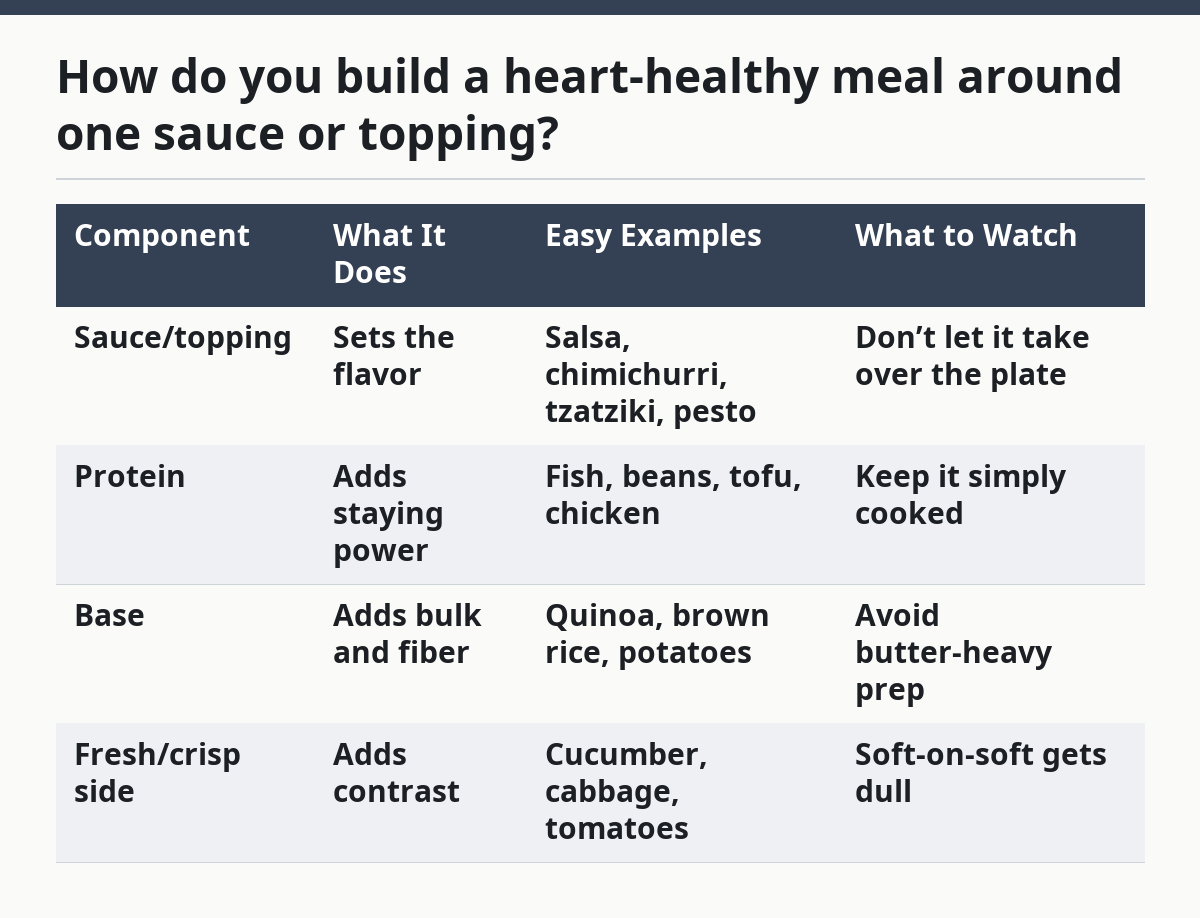
| Component | What It Does | Easy Examples | What to Watch |
|---|---|---|---|
| Sauce/topping | Sets the flavor | Salsa, chimichurri, tzatziki, pesto | Don’t let it take over the plate |
| Protein | Adds staying power | Fish, beans, tofu, chicken | Keep it simply cooked |
| Base | Adds bulk and fiber | Quinoa, brown rice, potatoes | Avoid butter-heavy prep |
| Fresh/crisp side | Adds contrast | Cucumber, cabbage, tomatoes | Soft-on-soft gets dull |
Which toppings make food taste finished?
Some toppings make the meal taste like it has a point. Acid, herbs, and crunch do that job fast, and they do it without needing much oil, cheese, or salt.
Picture this: you’ve got a plain bowl of grains, a piece of salmon, and some roasted carrots. Without a finishing layer, the plate tastes orderly but flat. Add 1 tablespoon of chimichurri or a handful of chopped dill and parsley, and the same meal suddenly feels complete.
Use toppings for different jobs:
- Acid from salsa, yogurt, or lemony herbs cuts through rich foods.
- Herbs like parsley, cilantro, mint, and dill bring a fresh top note.
- Crunch from toasted seeds, chopped nuts, or crisp vegetables keeps soft foods interesting.
- Creaminess from plain yogurt or a thin pesto clings to food and rounds sharp edges.
A common mistake is using only one soft element. Mashed potatoes, soft fish, and a creamy sauce can all taste heavy together. On the flip side, a crisp topping on a soft base gives the mouth something to do.
The same rule works with a 10-minute dinner or a meal prepped for 3 days. The topping should be the last thing you add, not the first thing you cook into submission. That keeps the flavor bright and the texture alive.
Use texture contrast so the meal doesn’t feel heavy
Texture contrast keeps a heart-healthy meal satisfying without piling on saturated fat or extra salt. If the main food is soft, make the topping crisp or sharp. If the main food is roasted and firm, use a cooler or looser topping.
A good plate often has at least 2 textures that are easy to notice. Think tender salmon with crunchy cabbage and yogurt sauce. Think black beans with rice, salsa, and sliced radishes. Think roasted cauliflower with pesto and toasted pumpkin seeds.
Here’s the part many generic guides miss: the topping should do more than “taste good.” It should change the bite.
- Toasted seeds add crackle to soup, grain bowls, and roasted vegetables.
- Chopped herbs make a dense meal feel lighter.
- Plain yogurt cools spice and softens garlic or onion.
- Salsa adds juicy lift to dry foods like baked potatoes or grilled fish.
- Pesto gives a silky finish, but it works best when something else on the plate still has bite.
If everything on the plate is creamy, the meal can feel dull even when the flavor is strong. Add a crisp vegetable or a crunchy topper instead of more sauce. If everything is dry, the sauce has to work too hard. A juicy tomato salad or cucumber side can fix that in a minute.
One simple rule helps: build one soft item, one firm item, and one fresh item. That formula fits lunch, dinner, and leftovers.
When should you drizzle, spoon, or sprinkle?
You should add the topping at the end, and the format should match the food. Drizzle for thin sauces, spoon for chunky sauces, and sprinkle for dry toppings.
Timing matters because heat changes texture. A spoonful of tzatziki on hot food stays cool and distinct. A pesto stirred too early can disappear into the base. Chopped herbs added 10 minutes before serving lose their sharp edge. Toasted seeds stay crisp only if they go on right before the meal.
Use this approach:
- Drizzle chimichurri over grilled chicken or vegetables after cooking.
- Spoon salsa over fish, beans, or eggs at the table.
- Dollop tzatziki beside roasted potatoes or a grain bowl so each bite can pick it up.
- Toss lightly pesto with warm pasta or beans, not a bubbling-hot pan.
- Sprinkle chopped herbs and toasted seeds last, after the food is plated.
The best part is that small amounts go farther when the food is hot and freshly cooked. You do not need the whole plate covered. Two or 3 spoonfuls, spread in a few spots, often tastes better than a thick blanket.
A good test is simple: if the topping disappears into the food, you added it too soon or used too much heat. Save a little for the top. That last pinch or drizzle is what makes the meal taste finished.
How much sauce should you use on dinner?
You should start with 1 to 2 tablespoons per serving and add more only if the plate still tastes dry. That amount is enough for flavor without turning the meal into a sauce bowl.
This is where heart-healthy eating gets practical. A sauce can carry garlic, herbs, acid, and aroma, but it can also hide portions and overwhelm texture if you overdo it. A little goes a long way when the rest of the meal is built well.
Use these portion cues:
- 1 tablespoon for a very strong sauce or topping, like pesto.
- 2 tablespoons for lighter toppings, like salsa or plain yogurt sauce.
- A pinch or small handful for chopped herbs or toasted seeds.
- A spoonful on the side if you want control at the table.
The mistake is pouring until the food looks “enough.” That usually means the base is underbuilt. If the chicken or beans taste plain, fix the seasoning on the food first, then use the topping as the finish. Otherwise the meal can feel greasy or one-dimensional.
On the flip side, underusing a topping leaves the plate flat. If you’ve chosen the right sauce, let it show up. A measured spoonful on each bite is often better than a timid smear across the whole dish.
Build the rest of the plate to support the topping
You build the rest of the plate by choosing foods that make the topping shine, not compete with it. A sharp sauce needs a mild base. A creamy topping needs a crisp side. A herbal drizzle needs foods with some browning or salt.
Picture a dinner built around tzatziki. The meal works best with grilled chicken or chickpeas, cucumber or tomato, and a whole grain like farro or brown rice. Picture chimichurri instead. Now the plate wants roast beef, grilled mushrooms, potatoes, or charred zucchini. The topping changes the job of every other ingredient.
A few dependable pairings:
- Salsa with black beans, corn, baked sweet potato, and lime.
- Chimichurri with steak, salmon, mushrooms, or cauliflower.
- Tzatziki with chickpeas, cucumbers, tomatoes, and warm pita.
- Pesto with white beans, zucchini, whole-wheat pasta, or tomatoes.
- Chopped herbs with eggs, soup, fish, or grain bowls.
- Toasted seeds with salads, roasted squash, yogurt, or cooked greens.
This is the part that keeps the heart-healthy meal around one sauce or topping from feeling like a “diet plate.” The topping gives the meal personality, while the rest of the plate handles fiber, protein, and volume. If the meal still feels bland after that, the fix is usually a squeeze of lemon, a few more herbs, or a better sear on the main food—not a bigger pour of sauce.
The guiding idea is simple: one strong finishing layer can make the whole dinner feel planned, not patched together. That’s the real skill.
Heart-healthy meal around one sauce or topping: simple examples
A heart-healthy meal around one sauce or topping can be as simple as salmon, quinoa, cucumber, and tzatziki. That same pattern works with many foods, as long as the topping leads and the rest of the plate gives texture, fiber, and freshness.
Try these combinations:
- Salsa bowl: brown rice, black beans, roasted peppers, avocado, salsa, and chopped cilantro.
- Chimichurri plate: grilled chicken, roasted potatoes, green beans, and chimichurri.
- Tzatziki bowl: chickpeas, cucumbers, tomatoes, whole grains, and a spoonful of tzatziki.
- Pesto pasta dinner: whole-wheat pasta, zucchini, white beans, cherry tomatoes, and a little pesto.
- Herb-and-seed finish: baked fish, broccoli, farro, parsley, dill, and toasted pumpkin seeds.
The wrong move is to treat the topping like a fix for an unplanned meal. If that feels uncertain, talk with a registered dietitian or other health professional for meal-planning advice. It works best when the plate already has one roasted element, one fresh element, and one sturdy base. Then the sauce or topping makes the whole thing feel intentional.
A meal like this also gives you room to vary flavor without changing the structure. Swap salsa for chimichurri, or tzatziki for chopped herbs and seeds, and the plate changes character fast. That flexibility is why this method works for weeknights.
For a wider look at cooking methods that keep flavor high and effort manageable, the hub on Heart-Healthy Cooking Methods — The Complete Guide is the right next stop.
How do you make a meal taste complete?
A meal tastes complete when it has salt, acid, fat, and texture in the same bite. One sauce or topping helps with at least two of those jobs, but it works best with a protein, a fiber-rich base, and something fresh or crisp. A small squeeze of lemon or a few herbs can often finish the job.
What toppings make healthy food more satisfying?
The most satisfying toppings add contrast, not just flavor. Salsa, chimichurri, tzatziki, chopped herbs, and toasted seeds all help because they bring acid, freshness, or crunch. Plain yogurt works well too when you want creaminess without turning the meal heavy.
Drafted with AI; not yet reviewed by a person.