Last updated: November 19, 2026
Quick Answer: Build 3 to 5 repeatable meal options before you leave, then use them for airports, car days, and hotel stays. Travel meal planning is the easiest way to keep your food heart-friendly when your schedule changes by the hour. The goal is not perfect eating; it is building a few dependable meal patterns that work in airports, hotel rooms, gas stations, and restaurants without relying on whatever is nearest and fastest. This guide to Heart-Healthy Meals for People Who Travel Often focuses on simple choices that hold up on the road.
Travel breaks routine in predictable ways: long gaps between meals, salty convenience food, too little fiber, and oversized portions. A solid plan solves those problems with portable protein, fruit, whole grains, and a few fallback meals you can assemble in minutes. For a general framework beyond this trip-focused guide, the hub on heart-healthy meal planning for specific goals is the right next stop.
What a heart-healthy travel meal actually looks like
A heart-healthy travel meal has four parts: protein, fiber, produce, and a drink that is not loaded with sugar. That formula works in an airport terminal, a hotel breakfast room, or a roadside café because it does not depend on a kitchen.
A practical travel meal might be plain oatmeal topped with fruit and a handful of nuts; greek yogurt with berries and whole-grain crackers; or a salad with grilled chicken and beans. Packaged tuna can also fit the pattern when you pair it with whole-grain crackers and fruit. The point is not to chase a perfect recipe. The point is to avoid meals that are mostly refined starch and sodium, then end up hungry again in two hours.
This is the place where most generic advice fails. “Eat healthier” is not very helpful when the only choices are a muffin, a burger, or a vending machine. The better move is to decide in advance what your default combinations are. If you travel often, keep 3 to 5 combinations in rotation and buy the same ingredients every trip so you do not have to think under pressure.
One caution: if you have heart failure, kidney disease, diabetes, or another condition that changes your sodium, fluid, potassium, or carbohydrate needs, ask your clinician or dietitian how your travel plan should change. A “heart-healthy” choice on paper may still be the wrong choice for your medical situation.
What should I eat in an airport?
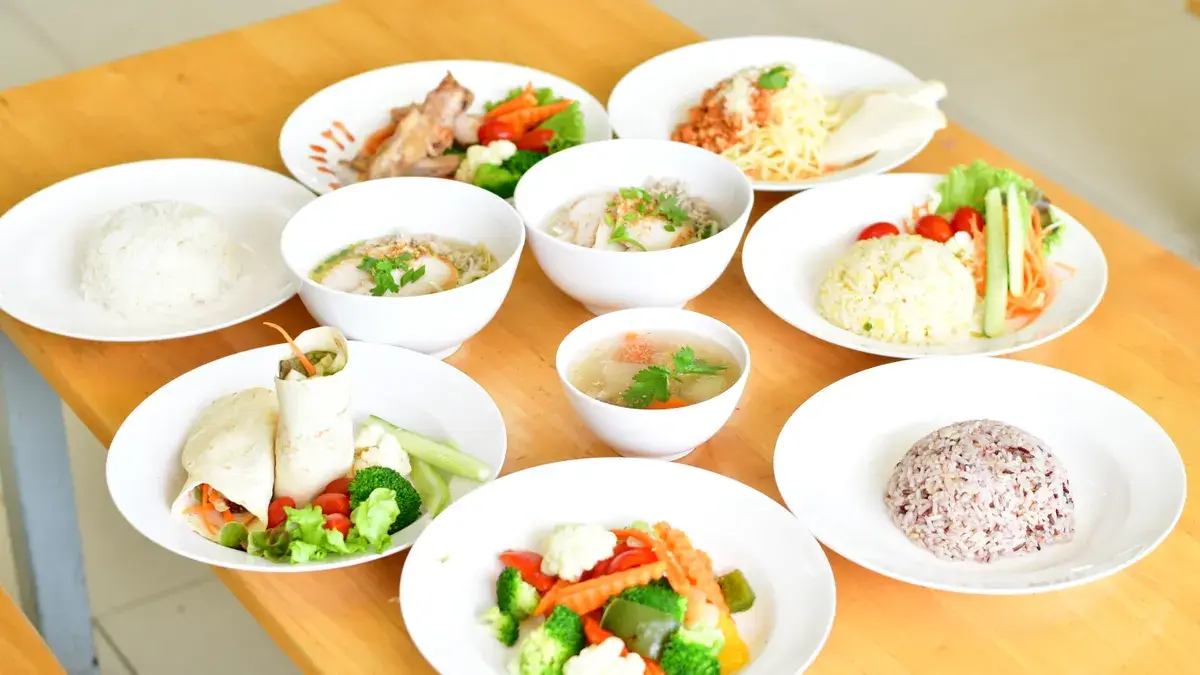
An airport meal should come from the best assembled option you can find, not from the most advertised option in sight. Look for a bowl, salad, sandwich, or breakfast plate that gives you lean protein, vegetables, and a whole grain instead of pastries and fried sides.
In practice, that often means:
- Oatmeal with fruit and nuts at breakfast.
- A turkey or egg sandwich on whole-grain bread, with mustard instead of creamy sauce.
- A salad with grilled chicken, salmon, or beans, with dressing on the side.
- Plain yogurt or greek yogurt with fruit if you are stuck between flights.
- Unsalted nuts and fruit if the food court line is a mess.
Ask for simple changes that most airport counters can handle in 30 seconds: no bacon, sauce on the side, extra vegetables, brown rice instead of fries, or half the cheese. You are not trying to redesign the menu. You are trying to keep sodium, saturated fat, and portion size from rising too far.
Pack one backup item in your carry-on so you have another option after a delay. A small bag of nuts, a piece of fruit that travels well, or a shelf-stable grain snack can bridge a 2-hour delay without turning into a full meal replacement. If you know you will be in airports for 6 to 10 hours, buy food before you are hungry. Hunger makes every food court look like a compromise.
One common mistake is choosing a “healthy-sounding” airport meal that still behaves like junk food. A smoothie with added syrup, a giant wrap, or a breakfast sandwich stacked with cheese and sausage can be as heavy as the fast-food meal you were avoiding. The fix is to read the ingredients in your head, not the marketing on the sign.
The road trip snack plan that keeps you out of drive-thrus
A useful road trip snack plan starts with a cooler plus a dry bag, because that gives you both freshness and backup. Without that split, you end up eating chips, candy, and gas-station pastries every 90 miles.
For a half-day drive, pack 2 to 3 snack types and 1 portable meal. Good choices include fruit, nuts, whole-grain crackers, single-serve greek yogurt in a cooler, and packaged tuna for a later meal. If you can keep items cold, add cut vegetables, hummus, or a sandwich on whole-grain bread. If you cannot keep anything cold, stick to foods that tolerate a hot car for several hours without turning into a mess.
A useful road trip pattern is:
- Eat a real breakfast before departure, such as plain oatmeal with fruit and nuts. That buys you a calmer first 3 to 4 hours on the road.
- Keep one snack within reach, not buried in the trunk. You are more likely to eat what you can grab without stopping.
- Stop for food before you are ravenous. A planned stop gives you time to find a better choice than the first exit.
- Make the meal the anchor, not the convenience store pastry. A sandwich plus fruit beats grazing on snack food all day.
- Carry water in a reusable bottle so thirst does not masquerade as hunger.
The trade-off is simple: healthier road food takes planning and a little cooler space. The payoff is fewer impulse purchases and less sodium by the end of the day.
Hotel-room meal ideas when there is no kitchen
A hotel room meal works when you can assemble it in 5 minutes with a microwave, a mini-fridge, or nothing at all. The trick is to bring ingredients that need little or no cooking.
If the room has a mini-fridge, keep greek yogurt, fruit, and a few vegetables chilled. If there is a microwave, plain oatmeal becomes easy breakfast food again. Many hotel lobbies also have hot water, which makes oatmeal or instant whole-grain cereal possible without a full kitchen.
A simple hotel-room setup might look like this:
- Breakfast: plain oatmeal made with hot water, plus fruit and nuts.
- Lunch: packaged tuna with whole-grain crackers, plus an apple.
- Dinner: salad kit from a nearby grocery store with added chicken, beans, or a hard-boiled egg.
- Snack: greek yogurt or a handful of nuts.
That mix matters because hotel food often falls into two traps: expensive restaurant portions or convenience snacks from the lobby shop. A small grocery run after check-in can solve both. Buy 3 fruit items, 1 container of greek yogurt, 1 box of whole-grain crackers, 1 bag of nuts, and one ready-to-eat protein option. That short list covers most of a two-day stay without forcing you into every meal out.
Because refrigeration changes what you can safely pack, think about portions and packaged food before you leave. The meal list above works best when you choose amounts you will actually finish, not oversized containers that become leftovers you cannot store well. That is especially useful on trips where you move from one hotel to another.
What this is not for: extended trips where you cannot refrigerate anything, or schedules so packed that you skip meals until late night. In that case, pre-packing more shelf-stable food is smarter than depending on the hotel.
Portable grocery picks that make the whole trip easier
Portable grocery picks are the ingredients that survive a suitcase, a backpack, or a rental car and still give you a decent meal. They are the backbone of travel meal planning because they reduce how often you have to shop under stress.
The core list is short:
- Fruit that travels well, like apples, oranges, or bananas.
- Nuts in small portions.
- Greek yogurt if you have refrigeration.
- Packaged tuna for a quick protein anchor.
- Whole-grain crackers for a simple base.
These foods are useful because they combine quickly and do not need a full pantry. A 10-minute grocery stop can cover breakfast, snacks, and one lunch. That is a better use of time than hunting for the one restaurant that happens to fit your food preferences.
Two details matter here. First, portion size. A large bag of nuts can turn into mindless snacking. Small portions are easier to use well. Second, storage. Yogurt and cut produce need cold storage. If you do not have it, choose fruit and shelf-stable items instead of hoping the room stays cool enough.
If you want to cross-check how to build balanced meals, the American Heart Association’s guidance on heart-healthy eating is a reliable reference point, and the U.S. Dietary Guidelines offer a practical view of overall pattern and portion balance. Those sources are useful for the general structure; this page is about making that structure survive travel. The Centers for Disease Control and Prevention also has practical advice on healthy eating patterns that can help when you are choosing foods on the go. For travel food safety, the USDA’s food safety guidance is useful when you are packing cold items.
Restaurant fallback meals when plans fall apart
A restaurant fallback meal is a simple order you can use anywhere when there is no time to think. It should be boring on purpose, because boring is often the safest choice on the road.
The fallback order usually has three pieces: a lean protein, a vegetable, and a non-fried starch. Examples include grilled fish with steamed vegetables and rice, a turkey sandwich with a side salad, or an omelet with vegetables and whole-grain toast. At lunch, a soup-and-salad combination can work if the soup is not cream-based and the salad is not buried under bacon, cheese, and heavy dressing.
You can also use the menu language to your advantage:
- Ask for grilled, baked, steamed, or roasted.
- Skip fried sides.
- Ask for sauces on the side.
- Choose water or unsweetened tea instead of sugar-heavy drinks.
- Split a large entrée if the portion is oversized.
The honest drawback is that restaurant food is rarely low-sodium by default. Even a sensible-looking plate can carry more salt than you expect. That does not mean you must avoid restaurants. It means you should use them as one part of the trip, not the whole plan, and let your grocery and airport choices do some of the work.
A second mistake is overcorrecting by eating almost nothing until dinner. That usually backfires into overeating late at night. Better to have a planned snack and a reasonable meal than to arrive at the restaurant starving.
The 10-minute travel meal plan I would use before any trip
A good travel meal plan takes 10 minutes the night before and saves hours of bad improvisation. It gives you a default for breakfast, one backup lunch, and two snacks, so every day does not start with a decision.
Use this simple routine:
- Decide where the weak spots are: airport, car, hotel, or restaurant.
- Pick one breakfast you can repeat, such as oatmeal with fruit and nuts.
- Pack one no-fridge lunch, such as packaged tuna with whole-grain crackers and an apple.
- Add two snacks, like nuts and another piece of fruit.
- If you have a fridge, add greek yogurt for the first night or morning.
- Put one meal in your bag, not your checked luggage, so delays do not wreck your plan.
- Save one restaurant fallback order in your head before you leave.
This routine works because it removes the worst decision-making moments. You are not trying to make every meal perfect. You are trying to avoid the common traps that travel creates: skipping meals, grabbing whatever is closest, and ending the day with a plate that is mostly salt and starch.
The plan is not ideal for someone who wants to cook full meals on the road or track every nutrient precisely. It is for people who travel often and need meals that survive moving parts. That makes it practical, not polished.
Key Takeaways
- Travel meal planning works best when you choose a few repeatable meal patterns, not a new strategy for every trip.
- Keep the basics portable: nuts, fruit, plain oatmeal, greek yogurt, packaged tuna, and whole-grain crackers.
- Airports, road trips, hotel rooms, and restaurants each need a different fallback.
- The safest travel meals are usually simple, assembled food with protein, fiber, and produce.
- If you have a medical condition that changes your diet, get personalized advice before you rely on a travel template.
What heart-healthy foods travel well?
The best travel foods are the ones that stay useful without much prep. Fruit such as apples or oranges, nuts, plain oatmeal, greek yogurt with refrigeration, packaged tuna, and whole-grain crackers all fit that job. They are easy to combine into a meal or snack without depending on a full kitchen.
How do you eat heart-healthy while traveling?
You eat heart-healthy while traveling by planning one reliable breakfast, one backup lunch, and two snacks before you leave. That usually means choosing protein, fiber, and produce at the airport, on the road, or in the hotel room, then using restaurant fallback meals when plans change.
What should i pack for a heart-healthy trip?
Pack 2 to 3 travel meals and snacks that do not depend on luck. A practical kit includes nuts, fruit, plain oatmeal, whole-grain crackers, and a shelf-stable protein such as packaged tuna. If you have a cooler or mini-fridge, add greek yogurt and other chilled items so your options last longer.
Drafted with AI; not yet reviewed by a person.