Last updated: November 19, 2026
Quick Answer: The best heart-healthy breakfast ingredients to keep in the fridge are eggs, plain yogurt, cottage cheese, berries, spinach, hummus, and low-sodium turkey, because they make it easy to build a meal with protein, fiber, and produce in minutes. Keep those on hand, and breakfast stops being a scramble. For food-safety basics, the USDA recommends keeping the fridge at 40°F / 4°C and using ready-to-eat foods promptly after opening.
Key takeaways
- Stock a few refrigerated proteins so breakfast has staying power without leaning on processed meats or sugary add-ons.
- Keep fruit and greens that survive several days in the fridge, not just one morning.
- Choose plain dairy and unsweetened yogurt when possible, then add your own fruit or nuts.
- Use hummus and low-sodium turkey as quick mix-ins for toast, wraps, and egg dishes.
- A short fridge list works better than a big grocery list because it is faster to use before food spoils.
What belongs in the fridge for a heart-healthy breakfast?
The best heart-healthy breakfast ingredients to keep in the fridge are eggs, plain yogurt, cottage cheese, berries, spinach, hummus, and low-sodium turkey because they give you protein, produce, and easy combinations without much prep. That is the core list I would build around if the goal is a faster breakfast with fewer ultra-processed choices.
Start with protein-rich foods. Eggs are a flexible option: boil a batch, scramble a few, or tuck one into toast. Plain yogurt and cottage cheese add creaminess and protein without needing syrup or flavored mix-ins. Low-sodium turkey fits days when you want something savory, but it should be a side ingredient, not the whole breakfast.
Then add produce that actually lasts. Berries keep better than sliced fruit, especially in shallow containers with a paper towel to catch moisture. Spinach is the workhorse green because it wilts fast in a pan, omelet, wrap, or sandwich. Hummus deserves a spot because it turns a few plain ingredients into a full breakfast in under 5 minutes.
A generic article often overfocuses on pantry oats and nut butters. Those are useful, but this page is about the fridge. If the food is not cold, it does not belong here. The point is to open the refrigerator at 7 a.m. and already have the pieces for a real breakfast, not a scavenger hunt.
Which refrigerator proteins make breakfast easier?
Eggs, plain yogurt, cottage cheese, and low-sodium turkey make breakfast easier because they can be used cold or cooked in under 10 minutes. If a fridge protein needs a long recipe before it becomes breakfast, it is not doing enough work on a weekday.
Eggs are a strong all-around choice. Keep them in their carton on a shelf, not in the door, where temperature swings are stronger. Hard-boiled eggs are the fastest version, but they are still best treated as a perishable food; use them within a week in the fridge for the best quality.
Plain yogurt is the simplest base for a bowl. It works with berries, sliced banana, chopped nuts, or a spoonful of seeds if those are already in your kitchen. Choose plain rather than flavored when you can, because flavored versions often bring a lot of sweetness with little control.
Cottage cheese is the sleeper ingredient. It is useful when you want a cold breakfast with more protein and almost no cooking. Spoon it onto whole-grain toast, layer it with berries, or mix in pepper and herbs for a savory plate. If dairy does not work for you, lactose-free versions are widely available, and soy yogurt can stand in for plain yogurt in many bowls.
Low-sodium turkey is the one meat worth mentioning here because it gives a fast savory option without turning breakfast into deli-counter overload. Use it in 1 to 2 slices with eggs or spinach, not as the main event every day. It is a weaker choice for someone avoiding processed meats altogether, and that is a fair line to draw.
What produce lasts through the week in a heart-healthy fridge?
Berries and spinach are the produce items that usually earn their keep through a 5- to 7-day stretch in the fridge. They are not the only fruits and greens that work, but they are the easiest to use before they turn soft or slimy.
Berries are the strongest pick because they are ready to eat with no peeling, coring, or slicing. Blueberries last especially well, while raspberries and blackberries are more delicate. Store them unwashed until you are ready to use them, then rinse gently and dry them well so they do not sit in water.
Spinach is the green I would keep first. It cooks down quickly into eggs, folds into a wrap, or disappears into a breakfast sandwich without a lot of bulk. Bagged spinach is convenient, but it needs use. If the leaves are wet when you bring them home, dry them before sealing the bag again, or they will break down faster.
A second tier of produce can help, but I would not treat it as the core list for this page. Avocados and cut melon can be useful, yet they ripen or spoil faster once cut. That makes them better extras than fridge staples. The same goes for sliced apples, which brown quickly unless you use acid or store them carefully. Those are fine foods, but they are not the simplest answer to this search.
The real mistake is buying fruit that looks healthy but takes too much handling for a weekday breakfast. If a food needs peeling, cubing, and cleanup before 8 a.m., it belongs in a meal-prep plan, not a quick fridge list.
How do I turn these fridge ingredients into breakfast fast?
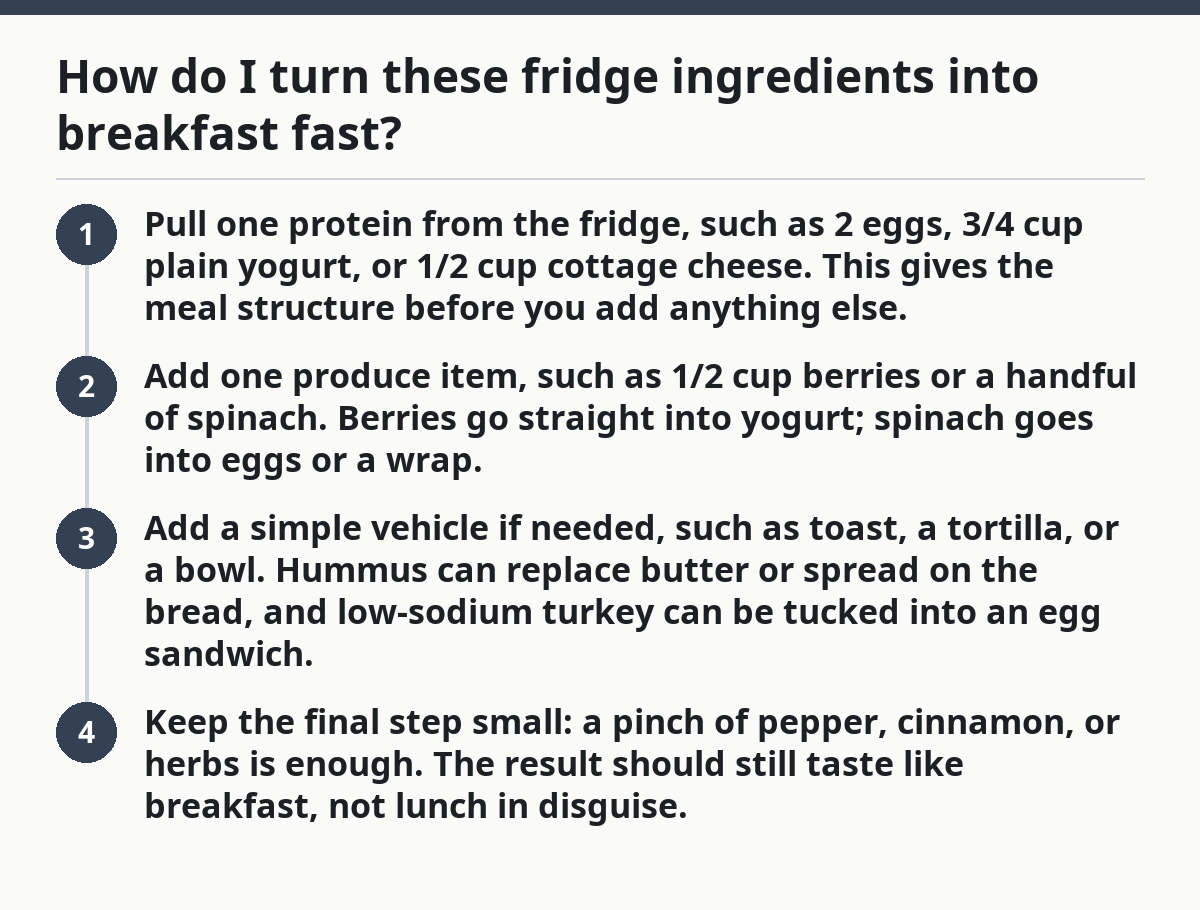
Use one protein, one produce item, and one easy wrapper or bowl in 3 steps: choose the base, add the fresh item, and finish with a simple texture. That pattern keeps breakfast quick without drifting into random snacking.
- Pull one protein from the fridge, such as 2 eggs, 3/4 cup plain yogurt, or 1/2 cup cottage cheese. This gives the meal structure before you add anything else.
- Add one produce item, such as 1/2 cup berries or a handful of spinach. Berries go straight into yogurt; spinach goes into eggs or a wrap.
- Add a simple vehicle if needed, such as toast, a tortilla, or a bowl. Hummus can replace butter or spread on the bread, and low-sodium turkey can be tucked into an egg sandwich.
- Keep the final step small: a pinch of pepper, cinnamon, or herbs is enough. The result should still taste like breakfast, not lunch in disguise.
This method works because it reduces choices. You are not building a recipe from scratch at 7 a.m.; you are combining 2 or 3 items that already belong together. A plain yogurt bowl with berries is breakfast. Eggs with spinach and a slice of toast is breakfast. Cottage cheese with berries is breakfast. That clarity matters more than a complicated formula.
One honest limitation: this approach is not for someone who hates cold dairy or does not keep eggs on hand. In that case, the fridge list needs a different anchor, and this page should not be stretched to cover every breakfast style at once.
What should I avoid keeping in the fridge for this purpose?
Skip fridge breakfast items that look convenient but work against the goal, especially heavily sweetened yogurt, high-sodium deli meat, and produce that spoils before you use it. A fridge full of the wrong foods still leaves you with a bad breakfast.
Flavored yogurts are the first trap. They can turn a simple bowl into dessert in a plastic cup. Plain yogurt gives you control; the sweet version makes the fridge do less of the work you want it to do.
Standard deli meat is another weak fit. It is usually saltier than needed for an everyday breakfast and can crowd out better choices like eggs or cottage cheese. Low-sodium turkey is the exception here, and even that should be one part of the plate rather than the whole plan.
Watch out for delicate produce that you never finish. A container of mixed fruit that sits for a week is not heart-healthy if it ends up in the bin. Berries are better because they are more forgiving, and spinach is better because it disappears into cooked food before it has time to fail.
There is also a timing mistake people make: stocking too much. A fridge overloaded with five different yogurts, three half-used greens, and two opened meats can turn a simple breakfast into food waste. Two or three versions of each category is usually enough. If you keep 1 plain yogurt, 1 protein option, and 1 produce option ready, you are more likely to use them before they go off.
How long do these fridge staples usually stay useful?
Most of these fridge staples are useful for several days to about a week, but the exact window depends on the item and how it is stored. A real-world fridge plan works best when you build around foods you can finish before quality drops.
Eggs usually last longer than the other breakfast items here when they are left in the shell and kept cold. Hard-boiled eggs are a different story: they are convenient, but they need to be used sooner because peeling and cooking change how long they keep well.
Plain yogurt and cottage cheese are best treated as use-soon staples after opening. The date on the carton matters, but the lid staying sealed, the spoon being clean, and the fridge staying cold all matter too. A 40°F / 4°C refrigerator is the standard target for safe cold storage; if your fridge runs warmer, quality drops faster.
Berries are most useful in the first few days after purchase, though some, like blueberries, can last longer than fragile berries. Spinach is similar: the leaves can be fine for several days, then suddenly go limp. Store both in the coldest practical part of the fridge, not in the door, where temperatures swing.
Low-sodium turkey should be handled with extra care because it is a ready-to-eat meat. Keep it sealed, cold, and used promptly after opening. If it smells off, feels slimy, or looks discolored, do not try to rescue it.
If you want a broader system for meal timing, the heart-healthy breakfast planning hub can help you turn these ingredients into a routine without overbuying. This page stays focused on the fridge foods themselves.
What is the smartest short list to keep on hand?
The smartest short list is eggs, plain yogurt, cottage cheese, berries, spinach, hummus, and low-sodium turkey, because those seven items cover sweet, savory, cold, and cooked breakfasts without much waste. If your fridge holds only those basics, you can make several combinations in under 10 minutes.
If I had to narrow it further, I would start with eggs, plain yogurt, berries, and spinach. That four-item base covers the widest range of breakfasts with the fewest moving parts. Add cottage cheese when you want a no-cook protein, hummus when you want a spread or dip, and low-sodium turkey when you want a savory sandwich or wrap.
This is not the right system for someone who wants a large breakfast buffet every day. It works best for a person who wants a realistic fridge setup, a short shopping list, and breakfasts that do not depend on perfect motivation. The point is not variety for its own sake. The point is having enough good ingredients within arm’s reach that the healthy choice is also the easy one.
Which fridge foods are best for a heart-healthy breakfast?
Eggs, plain yogurt, cottage cheese, berries, spinach, hummus, and low-sodium turkey are the best fridge foods for a heart-healthy breakfast because they are flexible, quick to use, and easy to combine. The strongest picks are the foods that add protein and produce without needing heavy sugar or a lot of prep.
What should I keep in the fridge for quick heart-healthy breakfasts?
Keep 3 protein staples, 2 produce staples, and 1 spread or savory add-on in the fridge for quick heart-healthy breakfasts. A practical mix is eggs, plain yogurt, cottage cheese, berries, spinach, hummus, and low-sodium turkey. That combination lets you build a bowl, toast, wrap, or egg plate in minutes instead of starting from zero.
Drafted with AI; not yet reviewed by a person.