Last updated: November 19, 2026
The best make-ahead breakfasts for long commutes are the ones that still taste good after 60 to 180 minutes in a bag, cup holder, or office fridge. For Best Make-Ahead Breakfasts for Long Commutes, that means sturdy foods, low-mess packaging, and textures that do not turn soggy or fall apart before the first bite.
Key takeaways
- Pick breakfasts that hold shape cold or at room temperature, not foods that depend on steam, crunch, or melty toppings.
- Egg muffins, overnight oats, breakfast burritos, fruit, whole-grain wraps, nuts, and yogurt all work, but each wins for a different commute length and cleanup level.
- The right container matters almost as much as the recipe; narrow jars, divided boxes, and insulated bags reduce leaks and squashing.
- The weakest choices for long drives are thin toast, flaky pastries, and anything assembled with wet toppings too early.
- If a breakfast needs a fork, lid, and balancing act, it is probably not ideal for stop-and-go traffic.
The commuter breakfast prep rule that matters most
For Best Make-Ahead Breakfasts for Long Commutes, the most useful commuter breakfast prep rule is to choose food that can sit for 1 to 3 hours without becoming wet, greasy, or awkward to eat one-handed. That is the standard I would use before chasing recipes, because the commute is the real enemy, not the morning.
For long commutes, the practical test is simple: can the food survive movement, temperature change, and delay? A breakfast that tastes great at the counter can fail in a car because condensation softens bread, steam wilts greens, and loose fillings slide out. This is why a burrito often beats a sandwich, and why a sealed jar often beats a paper wrapper.
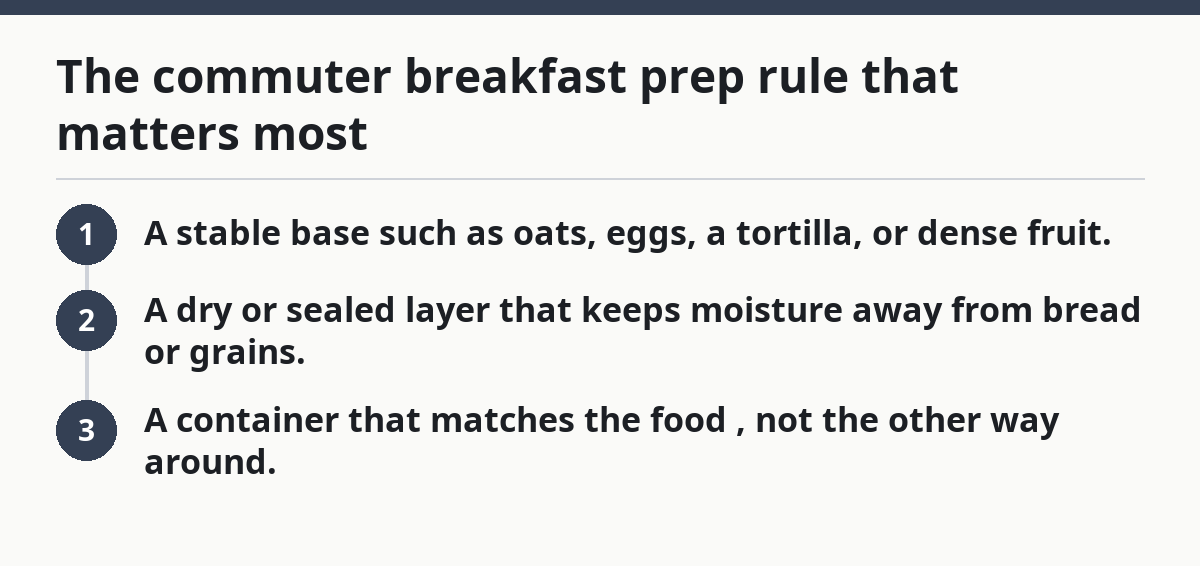
A good make-ahead commuter breakfast usually has three parts:
- A stable base such as oats, eggs, a tortilla, or dense fruit.
- A dry or sealed layer that keeps moisture away from bread or grains.
- A container that matches the food, not the other way around.
That last point is where many generic breakfast lists go wrong. They recommend “easy” recipes without saying that a flimsy pastry in a paper bag is not the same as a breakfast that can ride in traffic for 45 minutes plus another 30-minute train delay. Long commutes need foods that forgive lateness.
For a fuller planning framework, the hub on Heart-Healthy Breakfast Planning fits here. This article stays focused on commuting behavior: what travels, what squishes, and what you can eat without a fork in your lap.
If I had to choose the broadest rule in one line, it would be this: choose breakfasts that are good cold, not breakfasts that merely tolerate being cold.
What are the best make-ahead breakfasts for long commutes?
For Best Make-Ahead Breakfasts for Long Commutes, the best options are egg muffins, overnight oats, breakfast burritos, whole-grain wraps, fruit, nuts, and yogurt, with each one serving a different kind of morning. Some are handheld, some are spoonable, and some work best as a paired snack-and-main breakfast.
Here is the short version of what each one does well and where it fails:
- Egg muffins: These are a strong pick for a 20- to 60-minute drive because they are compact and easy to eat in two bites. They are not ideal if you dislike a softer, custardy texture once chilled.
- Overnight oats: Best for a desk breakfast or train ride, since a jar with a 12-ounce or 16-ounce opening is easy to open and eat with a spoon. The trade-off is that they are not handheld at all.
- Breakfast burritos: A strong handheld option when wrapped tightly in foil and reheated or eaten warm later. They can get dense and heavy, and too much salsa or salsa-like moisture turns the tortilla fragile.
- Whole-grain wraps: Better than a sandwich for holding fillings together. They work well with eggs, cheese, or nut butter, but overfilling them makes rolling messy.
- Fruit: Bananas, apples, grapes, and clementines are the cleanest add-on for any commute breakfast. Alone, they usually are not enough for a long morning.
- Nuts: A small handful in a 1/4-cup container adds staying power and does not bruise in transit. They are not a complete breakfast by themselves unless paired with another item.
- Yogurt: Best when packed in a lidded cup or jar and kept cold in an insulated bag. It is excellent for protein and easy eating, but it needs refrigeration and a spoon.
The smartest move is often not picking one item, but pairing one main item with one portable side. For example, overnight oats plus a banana, or a breakfast burrito plus an apple. That gives you something filling without forcing every calorie into one awkward container.
The item I would skip first is a breakfast that relies on crunch. Granola topped too early, toasted bread, and flaky pastry all lose their appeal fast when trapped in condensation.
How do you pack breakfast so it does not get soggy?
You pack breakfast so it does not get soggy by separating wet ingredients, using tight containers, and choosing ingredients that dry into a firm texture instead of a soft one. That matters more than the recipe title, because a good recipe can still fail in the wrong box.
Use this order when assembling a commute breakfast:
- Start with the driest component in the bottom of the container. For oats, that means oats and chia in a jar before milk or yogurt; for wraps, it means cheese, eggs, or beans closest to the tortilla. The result is less seepage into bread or grain edges.
- Keep sauces to 1 to 2 tablespoons per serving and pack them separately when possible. Salsa, hot sauce, jam, and dressing-like additions soften tortillas and muffins quickly. A separate mini container protects texture until you are ready to eat.
- Choose a container with a lid that seals flat, not loosely. A 12-ounce mason jar, a snap-lid divided box, or a screw-top cup reduces leaks in a backpack or car seat. The goal is containment, not just storage.
- Let hot food cool before sealing it. Five to 10 minutes of cooling helps reduce steam buildup, which is what turns a crisp tortilla or muffin top wet by 8 a.m.
- Pack the delicate item above the heavier one. Put fruit or a wrap on top, not under a heavier jar or thermos. The texture you save is the one that stays uncrushed.
This is where a lot of breakfast prep advice goes vague. It says “meal prep” without naming the failure point. For commuters, the failure point is usually moisture migration: the movement of water from one ingredient into another. That is why a burrito wrapped tightly in foil can hold together for hours, while the same fillings stacked open-faced on toast can collapse in 15 minutes.
A few exact habits help:
- Use paper towel or parchment between warm food and the container if condensation is a problem.
- Put wet fruit like cut melon in its own cup.
- Skip pre-saucing unless you are eating within about 30 minutes.
The reward for being picky here is simple: breakfast still tastes like breakfast at mile 18, not like leftovers from the bottom of a lunch bag.
Handheld options that survive traffic and delays
For Best Make-Ahead Breakfasts for Long Commutes, the most reliable handheld options are breakfast burritos, whole-grain wraps, and egg muffins because they can be eaten with one hand and do not require a bowl, spoon, or table. That makes them better than most toast-based breakfasts for drivers and riders who cannot stop.
A breakfast burrito is a strong all-around handheld choice when it is wrapped tightly in foil or parchment, then stored in an insulated lunch bag. Use fillings that stay cohesive: scrambled eggs, cheese, potatoes, beans, turkey sausage, or black beans. A burrito falls apart when it is overloaded with juicy tomatoes or too much salsa. It is not the best choice for someone who wants a light breakfast; the tortilla and fillings can feel heavy before a 7 a.m. meeting.
Whole-grain wraps work the same way, but they are easier to customize. A wrap with egg, spinach, and cheese is more portable than a sandwich because it rolls into a tighter shape. The drawback is that overstuffing a wrap creates seam splits and filling spill. If you need a clean bite every time, keep fillings to a thin layer.
Egg muffins are the most compact of the group. They fit in a small container, travel well for 1 to 2 hours, and are easy to eat cold. The downside is texture: they can turn rubbery if overbaked and bland if the seasoning is too timid. They also are not much of a breakfast alone unless you eat two or three.
This is the point where some readers choose the wrong breakfast for the wrong commute. If you drive a half hour and want one neat bite, egg muffins may be enough. If you face an hour-plus commute and need something that feels like a meal, a burrito or wrap is the safer pick. If you are not a fan of eating cold eggs, do not force egg muffins just because they are portable.
A useful rule: the longer the commute, the more the breakfast should behave like a sealed package, not a plated meal.
Eat-cold breakfast ideas that still feel like breakfast
For Best Make-Ahead Breakfasts for Long Commutes, the best eat-cold breakfast ideas are overnight oats, yogurt with add-ins packed separately, and fruit with nuts, because they stay stable without reheating. These are especially useful when the commute ends at a desk, not a microwave.
Overnight oats are the easiest cold breakfast to get right. A 12-ounce jar with rolled oats, milk, and optional chia seeds makes a thick spoonable breakfast that is less fussy than hot oatmeal. The trade-off is texture: if you add too much liquid, the result can feel loose and bland. If you add toppings too early, granola disappears into mush. Keep crunchy toppings in a small side bag and add them right before eating.
Yogurt works well when packed in a separate cup or jar and kept cold in an insulated bag. Plain Greek-style yogurt is especially convenient because it is thicker and less likely to spill than a thin, sweetened version. The limitation is obvious: yogurt needs reliable refrigeration, and some commuters do not have that. Without an ice pack, it is the first item on this list I would question.
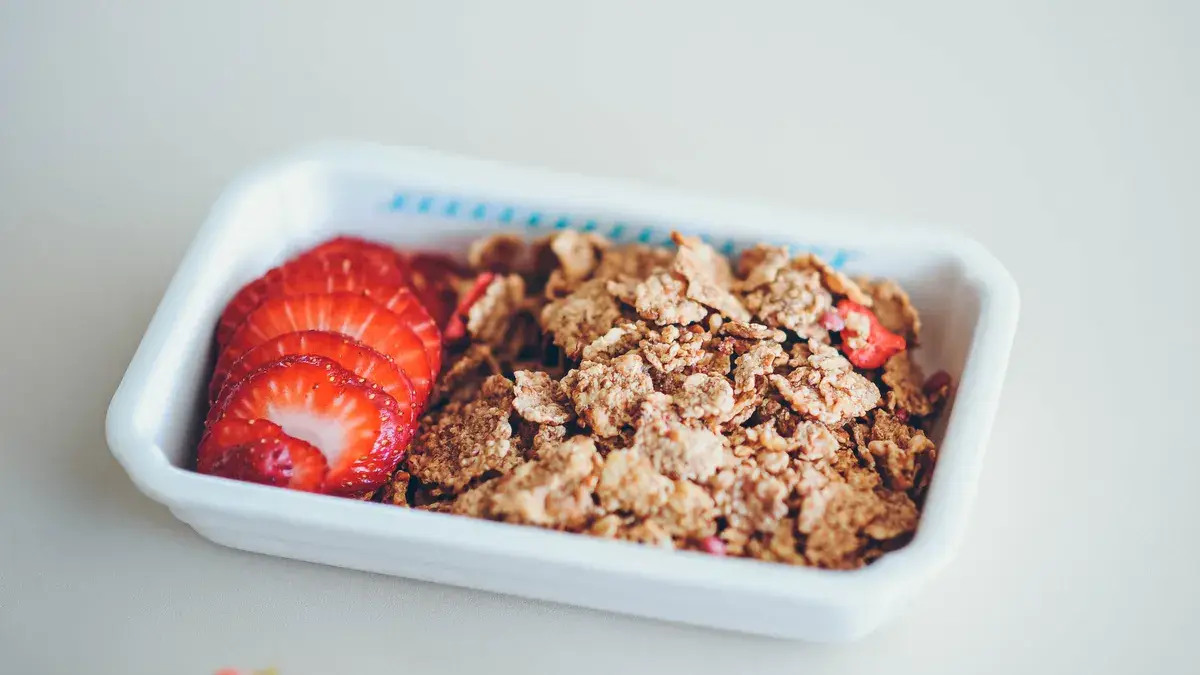
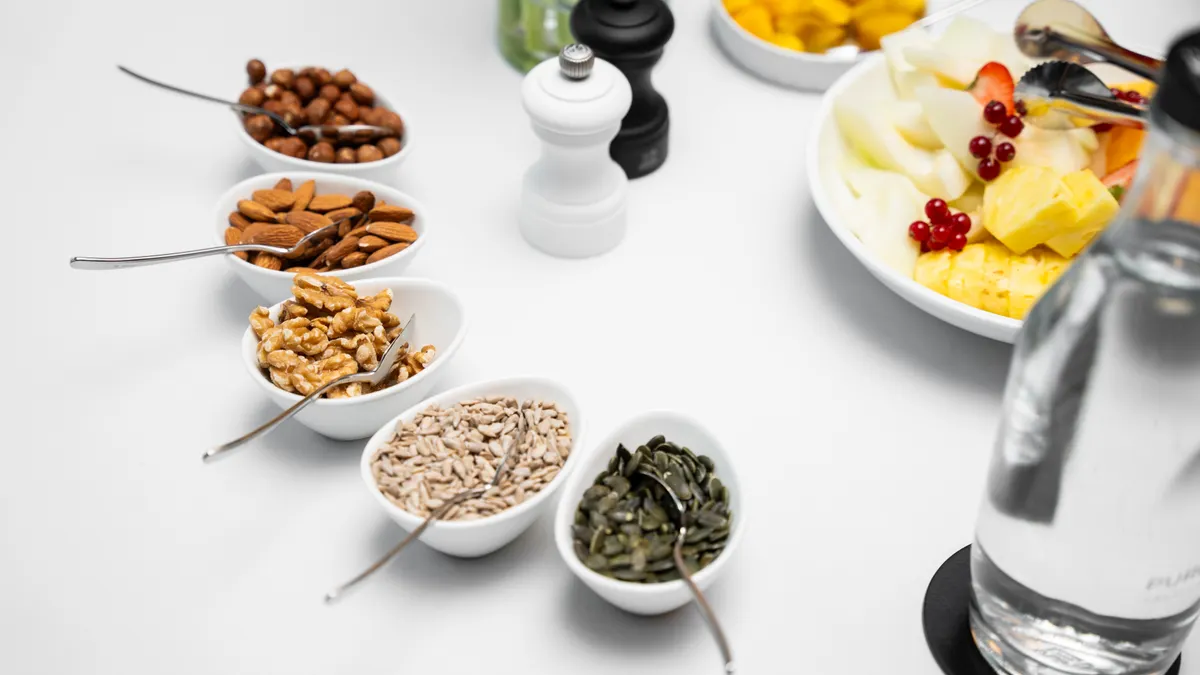
Fruit and nuts are the simplest cold pairing. A banana, apple, or clementine plus a measured handful of almonds, walnuts, or mixed nuts travels better than almost any pastry. This combination is not fancy, but it handles delays well and does not crumble into a bag. It also gives you a breakfast that can be eaten in stages: fruit at the platform, nuts in the car, and coffee after arrival.
The common mistake here is treating these foods as “snacks” rather than breakfast. For a long commute, a snack can be the smartest breakfast because it spreads out eating time. Two separate portions are often better than one large, wet bowl.
Which container and prep habits make the biggest difference?
The right container and a 10-minute prep routine make more difference than fancy ingredients. A breakfast in the wrong container can leak, steam itself soft, or get crushed before the commute ends.
Use these containers and habits instead of guessing:
- Mason jar or wide-mouth jar for overnight oats and yogurt. The straight sides make spooning easier, and the lid helps prevent leaks.
- Divided lidded lunch box for fruit, nuts, and muffins. Separate spaces keep moisture from spreading.
- Foil or parchment wrap for burritos and wraps. It holds shape better than loose paper napkins.
- Insulated lunch bag with a small ice pack for yogurt or any egg-based breakfast that needs to stay cold.
The prep routine itself can be short:
- Make the base the night before.
- Chill it fully, ideally overnight.
- Pack dry toppings separately in a 2- or 3-ounce container.
- Put the breakfast where it will not be crushed, such as the top of a tote bag or a side pocket.
- Leave a spoon, napkin, or extra wrapper in the bag so you are not improvising in traffic.
A sturdy container is not a luxury add-on; it is part of the recipe. The same oats, eggs, or wrap can feel like a neat breakfast or a mess depending on whether the lid actually stays on.
If I had to pick one habit with the biggest payoff, it would be this: package the breakfast as if it will be jostled for 45 minutes. That is the real commute test.
What breakfast should you skip for a long commute?
You should skip fragile, layered breakfasts that depend on crisp texture or immediate eating, especially pastries, toast-heavy builds, and anything with wet fillings on the outside. Those foods sound convenient until they sit in a bag for 20 minutes and lose all structure.
Avoid these patterns:
- Open-faced toast with avocado, egg, or tomato: it goes soft fast and rarely survives transport cleanly.
- Flaky pastries: they shed crumbs, then lose their crispness.
- High-sauce breakfast sandwiches: once the bread absorbs moisture, the sandwich turns dense and slippery.
- Granola bowls with fruit added early: the crunch disappears before breakfast starts.
This is also why some “healthy breakfast” ideas do not belong on a commuting page. A bowl that requires both hands, a spoon, and a stable surface may be fine at home and awkward in a moving car. For the same reason, I would not recommend delicate fruit salads or layered parfaits as a default commute breakfast unless they are packed with separate components.
The general trade-off is clear: the more beautiful the assembly, the more likely the breakfast is to fail in transit. The best commuting breakfast is usually a little plain, a little dense, and very dependable.
That does not mean boring. It means chosen for the right job.
What breakfast travels best for a long commute?
The breakfast that travels best for a long commute is usually one that is sealed, compact, and forgiving, such as a burrito, wrap, egg muffin, or jar of oats. The best choice depends on whether you need to eat with one hand, keep it cold, or wait until you reach a desk.
Drafted with AI; not yet reviewed by a person.